Culture

Culture

The good, the bad and the ugly in books, exhibitions, cinema, TV, dance, music, podcasts and theatre.

Faites vos jeux

Theatre

A short while ago Rupert Goold transplanted Prospero’s isle to an Arctic ice floe. A short while ago Rupert Goold transplanted Prospero’s isle to an Arctic ice floe. His latest hazard as theatrical travel agent is to whisk Antonio and Shylock off to Las Vegas. The hurly-burly of a modern casino turns out to be a buzzy metaphor for the high stakes for which everyone’s playing in The Merchant of Venice. There actually is a super-casino in Venice — bizarrely located in the very palazzo on the Grand Canal where Wagner died — but it’s much more fun for Goold to relocate to the US.

Barmy and bleak

Theatre

The Cherry Orchard is Chekhov’s barmiest and bleakest play. The Cherry Orchard is Chekhov’s barmiest and bleakest play. It’s also his richest. The madness starts immediately. To set the opening scene of a sprawling family drama at four o’clock in the morning seems eccentric to the point of rashness but Chekhov is a master of his craft. A wealthy widow, Ranyevskaya, has arrived at her estate after a long trip from Paris and she’s greeted by staff and relatives who’ve waited up all night to help her entourage settle into the house. This gives the scene a fragmented dynamism which allows a dozen characters and relationships to be gradually elucidated in conditions of perfect naturalism.

Family at war | 21 May 2011

Theatre

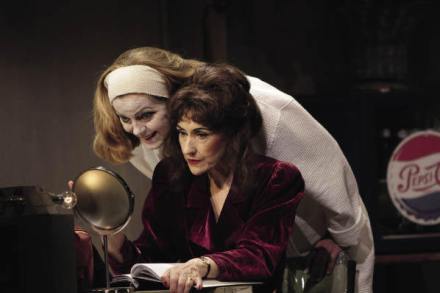
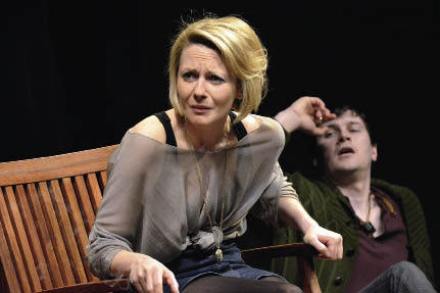
Edward Albee doesn’t like the word ‘revival’. His plays aren’t dead, he says, just lurking. His 1966 drama A Delicate Balance has been coaxed back into the limelight by James Macdonald in a sumptuous new version starring Penelope Wilton and Imelda Staunton. Edward Albee doesn’t like the word ‘revival’. His plays aren’t dead, he says, just lurking. His 1966 drama A Delicate Balance has been coaxed back into the limelight by James Macdonald in a sumptuous new version starring Penelope Wilton and Imelda Staunton. We’re in a New England mansion whose unshowy opulence is brilliantly suggested by designer Laura Hopkins. The chairs are elegant, costly and fading. The shelves are neatly crammed with dilapidated classics.

Bono without the jokes

Theatre

I rarely visit the Jermyn Street theatre because it’s too nice. I rarely visit the Jermyn Street theatre because it’s too nice. A small, raffish space just off Piccadilly, it has plush crimson seats and good-natured staff who never to fail to press a welcoming glass of claret into my hand. To criticise one of their shows would feel like abuse of hospitality. So in discussing Anthony Biggs’s production of Ibsen’s late play Little Eyolf let’s focus on the positive. The costumes are nice. Now we can move on. Though written when he was in his mid-60s, the play finds Ibsen in suicidal teenager mode and taking a perverse delight in cramming every scene with wrist-slashing reversals of fortune.

Double toil and trouble

Theatre

‘Shakespeare’s Lost Play Re-imagined’, thus Gregory Doran’s subtitle to Cardenio. The play appears to have been lost in the Globe fire of 1613, but why should the RSC’s chief associate director have wanted to ‘re-imagine’ and stage it as the inaugural production in the refurbished Swan? ‘Shakespeare’s Lost Play Re-imagined’, thus Gregory Doran’s subtitle to Cardenio. The play appears to have been lost in the Globe fire of 1613, but why should the RSC’s chief associate director have wanted to ‘re-imagine’ and stage it as the inaugural production in the refurbished Swan?

Lost in space | 7 May 2011

Theatre

The RSC isn’t limited to Shakespeare. The RSC isn’t limited to Shakespeare. It’s also one of the richest and most prolific fringe operations in the country. ‘We have between 30 and 40 writers working on plays for us at any one time.’ Golly. Some Stratford bigwig wants to tell the tale of the Russian space programme so a Casualty writer, Rona Munro, has been hired to knock out a script. The programme note is an act of contrition. ‘I have had to take some glaring liberties with time and space and imagined events,’ Munro confesses. A strange approach to scientific history. ‘I ask forgiveness of the dead,’ she goes on, ‘and the indulgence of the living, some of whom have been fictionalised.’ OK, love.

Pinter’s self-vandalising

Theatre

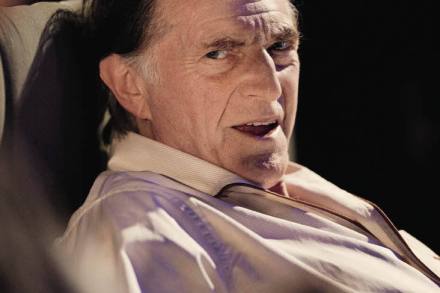
Let’s think about it. How did Harold Pinter write his masterpieces? And why are they praised so much more lavishly than the scribbles of his contemporaries? Let’s think about it. How did Harold Pinter write his masterpieces? And why are they praised so much more lavishly than the scribbles of his contemporaries? Moonlight, his 1993 play, has been slickly revived at the Donmar and it opens with a dying pensioner sprawling luxuriously in a double-bed and ranting at his wife. Across stage his sons engage in madcap vaudevillian banter. Other characters wander in and speak fluent nonsense. A girl, who is also a ghost, articulates charming drivel about moonshine and memory. The characters fail to communicate and the dramatist fails to communicate why they fail to communicate.

Love joust

Theatre

Throughout his career Clifford Odets was overshadowed by Arthur Miller. Nowadays, his plays tend to be classified on a topsy-turvy scale beginning with the least completely forgotten. One of the lesser forgotten, A Rocket to the Moon, is a flawed, steamy, bourgeois melodrama. At first it seems crammed with gestures that don’t quite gel. The setting, a New York dental practice, seems to symbolise the American dream with the handbrake on. The characters’ names hint at their function. Belle is a flouncing beauty, Mr Prince is jolly rich, Willy Wax is a slippery, priapic seducer. There’s an earnest deadbeat dentist, Ben Stark, whose name vividly evokes the lead in his boots.

Cheating the noose

Theatre

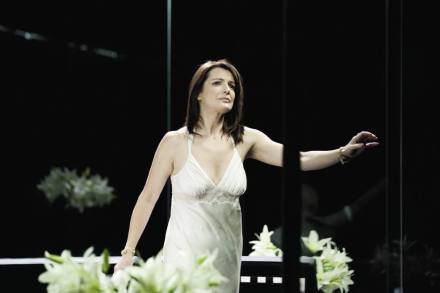
Incredibly boring. That’s how a cracking courtroom drama seems at first. Case closed. We know whodunnit already. Alma Rattenbury, a luscious middle-aged nympho, has bashed in the skull of her deaf old husband with the help of a teenage builder, George, who shares her bed. Incredibly boring. That’s how a cracking courtroom drama seems at first. Case closed. We know whodunnit already. Alma Rattenbury, a luscious middle-aged nympho, has bashed in the skull of her deaf old husband with the help of a teenage builder, George, who shares her bed. Newspapers carry lurid reports of a drunken Alma dancing in her husband’s blood and trying to seduce the policemen who came to arrest her.

Stirred into action

Theatre

Kommilitonen! is Peter Maxwell Davies’s new opera, to a text by David Pountney, who also directs the première production at the Royal Academy of Music. Kommilitonen! is Peter Maxwell Davies’s new opera, to a text by David Pountney, who also directs the première production at the Royal Academy of Music. It makes a stirring, invigorating evening, though at the end it isn’t clear which direction it is pointing in, while the whole mode of the work makes you feel that it must be pointing somewhere. The title means ‘Fellow Students’, and there are three separate strands, which become interwoven towards the end.

A pair of shockers

Theatre

Michael Attenborough, the spirited maverick who runs the Almeida, has lavished a first-rate production on David Eldridge’s new play. Michael Attenborough, the spirited maverick who runs the Almeida, has lavished a first-rate production on David Eldridge’s new play. All that’s missing from this slick, visually pleasing show is any thought or utterance worthy of adult scrutiny. The script introduces us to a TV presenter, Lucy, recently dismissed for smoking heroin in her dressing-room. Skint, hooked on drugs and profoundly depressed, she follows a predictable downward spiral into theft, prostitution and homelessness and from there to counselling and the delusional ‘contentment’ of abstinence.

Following in the family footsteps

Theatre

Lloyd Evans meets Niamh Cusack, who ‘absolutely wasn’t going to be an actress’ She doesn’t usually do it this way. When Niamh Cusack heard that the Old Vic was planning to stage Terence Rattigan’s final play, Cause Célèbre, she read a synopsis, found a part that excited her, and asked her agent to get her an audition. ‘I’ve never approached a production like that,’ she tells me. ‘But it’s a cracking play, really, well written — a rollicking courtroom drama with great characters and fascinating relationships.’ We meet in a dressing-room at the Old Vic and make ourselves comfortable amid the higgledy-piggledy apparatus of a Feydeau farce whose run is drawing to a close.

Sibling opposition

Theatre

Hard to like, impossible to discount. Neil LaBute delivers another of his exquisitely sordid insights into the damaged terrain of the privileged bourgeoisie with his new melodrama, In a Forest Dark and Deep. The setting is a small house near an American university. College lecturer Betty is being helped by her trailer-trash brother Bobby to clear out the detritus left by a departing tenant. LaBute’s storyline adheres very strictly to the timetable laid down by screenplay seminars: every 20 minutes a new revelation flips the plot entirely on its head. This tick-tock regularity gives the play an unwelcome air of artifice. First we learn that Betty is more a sugar mummy than a landlady to her absent tenant.

Day tripper

Theatre

Like a lot of classics, Blithe Spirit doesn’t quite deserve its exalted reputation. Like a lot of classics, Blithe Spirit doesn’t quite deserve its exalted reputation. Every time I see it I discover a little bit less. Catty, slight, charming, clever and a touch too pleased with itself, the play shapes up as nothing more than an ingeniously plotted sitcom. It’s no surprise to learn that it was written in six days. The Blitz and the threat of sudden death had fostered a mood of defiant merriment in the British people which the play, dashed off in 1941, captures very skilfully. Thea Sharrock’s production is competent, slick and faintly heartless. Robert Bathurst brings a nice blend of suavity and huffiness to the role of Charles.

A theatre reborn

Theatre

The jam factory is no more. In one of the great theatrical transformations of our day, the RSC has unveiled its modernisation of Elizabeth Scott’s unloved theatre of 1932; unloved for its ungainly brick bulk on the Avon riverside but no less for the distance of its seating from the proscenium stage. There was much to be said for the earlier proposal of simply razing the building to the ground and starting afresh. What has actually happened is a classic British compromise whereby the best of the old has been spliced together with what is hopefully the best of the new. The jam factory is no more.

Under the rainbow

Theatre

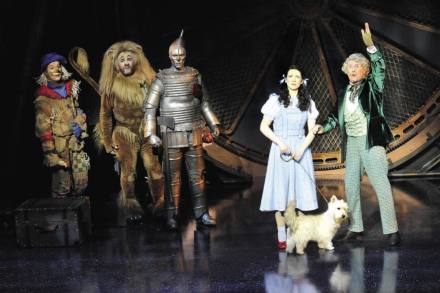
The pantomime, we’re often told, exists in no culture but Britain’s. Maybe we should look a bit harder. The Wizard of Oz is a children’s fantasy, epic in form, comic in idiom, populated by folksy stereotypes, which uses the metaphor of a journey to present a mythical clash between good and evil. It ends with order restored and virtue triumphant, and with the characters discovering that self-knowledge and wisdom are more valuable than the illusory contentments of wealth or power. All that’s missing is some bad acting and a few painfully ribald puns. The pantomime, we’re often told, exists in no culture but Britain’s. Maybe we should look a bit harder.

Eccentrics on parade

Theatre

A young aristocrat and the daughter of a banished duke fall in love at a wrestling contest. Both are forced from court by family intrigue, and take refuge in the same enchanted forest. She recognises him, but not vice versa, since to avert assault she has disguised herself as a boy. Confusions ensue. Stephen Unwin’s production of As You Like It (at the Rose Theatre, Kingston, until 26 March) is hoppled from the start by an antipathetic Orlando. A few minutes into the play he charges across the stage and attacks his eldest brother violently from behind. We can only sympathise as Oliver (William Tapley) plots to have him killed by Duke Frederick’s prize wrestler.

Literary junkyard

Theatre

We critics know everything about the theatre. We see the best shows, we get the finest seats in the house and we’re occasionally treated to a fuming glass of vin ordinaire to lubricate our ruminations. And yet what do we really know? We critics know everything about the theatre. We see the best shows, we get the finest seats in the house and we’re occasionally treated to a fuming glass of vin ordinaire to lubricate our ruminations. And yet what do we really know? Last week a family funeral forced me to miss the press night of Frankenstein and when I logged on to the NT website I found it proudly boasting that the entire run was a slam-dunk sell-out.

Flavour of freedom

Theatre

Richard Bean is a creative nomad, a pix-and-mix sort of playwright who lights on subjects seemingly at random. He’s written about Brussels, racism, agriculture, social mobility and trawlermen. Now he’s taken on climate change and he’s hit the mark with delicious accuracy. This is his best play so far. The Heretic is set in a university earth-sciences faculty where Diane, a paleogeophysicist, has found incontestable proof that sea levels aren’t rising. A decade ago she planted a betel nut tree on a beach in the allegedly drowning Maldives. But instead of sinking, the tree is thriving. Her departmental head, Kevin, tells her that her findings may damage the faculty’s ‘business model’ and endanger a juicy contract with a top firm of eco-insurers.

Let’s twist again

Theatre

An elderly stranger on a Jamaican train bets a young US Navy cadet that his lighter won’t light ten times in a row. If it does, the stranger’s Cadillac is his. If not, he forfeits the little finger of his left hand. The cadet accepts. Wouldn’t you? An elderly stranger on a Jamaican train bets a young US Navy cadet that his lighter won’t light ten times in a row. If it does, the stranger’s Cadillac is his. If not, he forfeits the little finger of his left hand. The cadet accepts. Wouldn’t you? Dr Landy offers a philosopher friend the chance of a lifetime: to live on as a brain, and one dangling eyeball, floating in a basin of nutritive solution. ‘It would be a tremendous experience!’ he says. For all I know, he’s right.

Cult of fear

Theatre

Forty years ago kids assumed that when they grew up they’d fly to Mars. They didn’t expect to find a world that was too scared to turn on a lightbulb. Forty years ago kids assumed that when they grew up they’d fly to Mars. They didn’t expect to find a world that was too scared to turn on a lightbulb. Our timidity owes itself to the failure of science to devise impressive new large-scale pieces of kit. Every breakthrough these days takes place at the micro, nano and millimetric level, while up at the mega end nothing new has appeared since the jet. Space rockets are just a refinement of ballistics technology. Apollo 11 was a firework. The Shuttle is a reuseable firework. And even that seems to have run out of gunpowder.

Educating Rachel

Theatre

The teeny-weeny Bush Theatre is grappling with the monster of the free schools debate. In Little Platoons by Steve Waters the issues are laid out rather simplistically, naively even, which is perhaps just as well with undereducated dimwits from London comps, like me, in the audience. The pivotal character is a disaffected music teacher, Rachel, who rabidly opposes the free school movement until she’s offered the headship of a zingy new academy whereupon, hey presto, her scepticism morphs into passionate support. Waters claims to be moderating the discussion as a disinterested umpire but his impartiality is, shall we say, only partial.

Trouble at home

Theatre

The Almeida relishes its specialist status. The boss, Michael Attenborough, isn’t keen on celebrity casting because he wants ‘the theatre to be the star’. It’s a niche operation for purists and connoisseurs, for seekers and searchers, and for those who can spell Verfremdungseffekt without having to check (as I just had to) what the penultimate letter is. We’re privileged to have a theatre in London that wants to raise the bar rather than the bar prices. The Almeida relishes its specialist status. The boss, Michael Attenborough, isn’t keen on celebrity casting because he wants ‘the theatre to be the star’.

Losing the plot

Theatre

An all-Hall haul this week. Sir Peter directs his daughter Rebecca in Twelfth Night at the National. This traditional and very fetching production opens in a sort of Elizabethan rock-star mansion where Orsino (Marton Csokas) lounges on a carved throne, in Lemmy locks and Ozzy cape, intoning the play’s gorgeous opening lyrics. Then the plot begins. There’s a she who dresses as a he and falls in love with another he who sends her to another she who loves the she who’s dressed as a he. Did you follow that? Don’t worry. Later, up pops another he who’s identical to the first she and they all get married. The audience is rarely at ease with any of this.

Non-stop larks

Theatre

Gently does it. The Fitzrovia Radio Hour takes us back to the droll and elegant world of light entertainment in the 1940s when the airwaves were full of racy detective shows and overheated melodramas about pushy Yorkshiremen and rogue Nazis. The show is set in a radio studio during a live performance and we watch the actors rattling through their scripts while scurrying here and there to provide the effects for an exceptionally complex soundtrack. Cabbages get walloped with machetes to suggest stabbing. A game of billiards is done with some doorknobs being chinked together. A melon gets squished to represent the sound of a horse having its head chopped off. It’s a neat idea.

Going for gold

Theatre

There’s gold out there. The search for lost masterpieces beguiles many a theatrical impresario but with it comes the danger that the thrill of the chase may convert a spirit of honest exploration into an obtuse reverence for the quarry. There’s gold out there. The search for lost masterpieces beguiles many a theatrical impresario but with it comes the danger that the thrill of the chase may convert a spirit of honest exploration into an obtuse reverence for the quarry. The huntsman starts to believe that neglect proves excellence. Sturdy Beggars, an independent troupe who accept no public subsidy, are mounting a season of ‘forgotten gems’ from Eastern Europe.

Twin peaks

Theatre

It’s that time of year. The great reckoning is upon us. Insurance is being renewed. Tax returns are being ferreted out. Roofing jobs are being appraised and budgeted for. And spouses are being trundled into central London for the annual session of dialysis at the theatre. It’s that time of year. The great reckoning is upon us. Insurance is being renewed. Tax returns are being ferreted out. Roofing jobs are being appraised and budgeted for. And spouses are being trundled into central London for the annual session of dialysis at the theatre. And here to meet them is Ayckbourn’s yuletide comedy Seasons Greetings, which features three hilariously miserable families bickering their way through the festival of ill-will. Ayckbourn is the Christmas blow-out of dramatists.

Classy act

Theatre

Michael Grandage, boss of the Donmar, is a most unusual director. He has no ideas. His rivals go in for party-theme, concept-album, pop-video Shakespeare (provincial folksiness in metropolitan disguise), but Grandage just goes in for Shakespeare. He arrives with no prejudices or pieties, only solutions. He’s the bard’s delivery boy. His current production of King Lear sweeps the stage clean of the usual Ozzy Osbourne clutter and reduces the inventory to just three items, a map, a chair and a pillory for Kent. Nothing else. This daring austerity opens things up and allows the mysterious, grotesque, lurching and inscrutable play to do its best and worst, to charm, horrify, move and appal us. There is nothing Grandage won’t consider omitting.

All over the place

Theatre

Deceptively attractive. Romeo and Juliet tempts directors and leads them on while keeping all its false doors and secret pitfalls out of view. Rupert Goold’s RSC production is two fifths good and three fifths indifferent. A respectable score. This lovely, tricky and rather silly play isn’t the work of a genius but of a jobbing apprentice with a careless, or perhaps ambitious, sense of what could be managed on stage. Goold adds a spot of extra bother here and there, overusing the balcony, bunging Arabic music into the masque ball, and botching the costumes. Spectacular irrelevance seems to be his guiding principle. The street brawls are enlivened by whooshes of flame surging up from beneath the boards like an oil-rig blow-out.