Culture

Culture

The good, the bad and the ugly in books, exhibitions, cinema, TV, dance, music, podcasts and theatre.

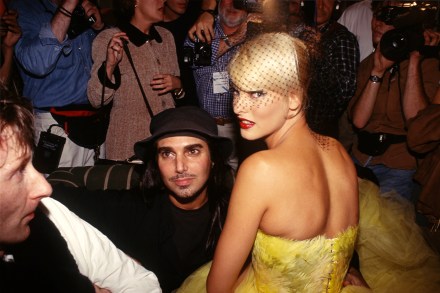
What happened to the supermodels of the 1990s?

Radio

‘What advice would you give to your younger self?’ has become a popular question in interviews in recent years. It’s meant to generate something profound but, musing privately, I always find it a puzzler. Sometimes I think that maybe I shouldn’t have wasted so much of my twenties talking nonsense in pubs, but on the other hand I really enjoyed it. So I usually settle on: ‘Don’t buy a sofa bed, especially not the kind with a concealed metal frame that you pull out.’ Unbelievably, I’ve done this twice. These vast, unwieldy contraptions cost a bomb, weigh a ton, make a terrible sofa and an uncomfortable bed. If you’re 16 and reading this, be warned.

Enjoyable and informative but where’s the drama? Political Currency reviewed

Radio

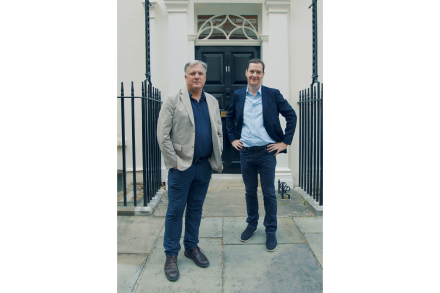
The first episode of George Osborne and Ed Balls’s new podcast, Political Currency, opened with an old clip of the pair arguing across the despatch box. Osborne had described his latest Budget as ‘steady as she goes’ and Balls was having none of it. ‘What kind of ship does he think he’s on, the Titanic?’ If producers hoped that the duo would bring something of this, er, biting dynamic to their podcast, they were in for a surprise. The opening number saw little in the way of sparring between the former opponents. Seated in a studio in east London, they spent most of the time doing what so many in their milieu are doing at the moment, chummily sharing their views and frustrations and trying to squeeze some entertainment out of it.

You’ll have a lump in your throat: BBC Radio 4’s Four Sides of Seamus Heaney reviewed

Radio

It’s now been ten years since Seamus Heaney died, and after a great poet’s death it’s natural, I suppose, that the keg of popular imagination works to distil a lifetime’s writing into a kind of Greatest Hits. His poems ‘Digging’, ‘Blackberry Picking’, ‘Mid-Term Break’ and the masterly sonnet sequence about his mother in ‘Clearances’ sit among the justifiable contenders, but even so there can be concentrations too far. A US presidential speech on any given topic is now unlikely to conclude, it seems, without Joe Biden mistily inserting the lines that Heaney wrote for the chorus in his Sophocles adaptation The Cure At Troy. You’ll recognise them: they’re the ones that end ‘The longed for tidal wave/ Of justice can rise up/ And hope and history rhyme’.

The rise of vampirism in Silicon Valley

Radio

The Immortals, which begins on Radio 4 this week, is not for the faint-hearted. While it professes to be about the human quest for longevity and the elusive ‘cure’ for getting older, it focuses largely upon the transferral of blood plasma from healthy young people to reluctantly ageing people, or, as anyone with good sense might put it, the desperate descent from vanity to vampirism. I was on the verge of switching over to something more anodyne when a 46-year-old tech entrepreneur began talking about being injected with plasma from his 17-year-old son.

Beautiful and illuminating: Radio 4’s the Venice Conundrum reviewed          

Radio

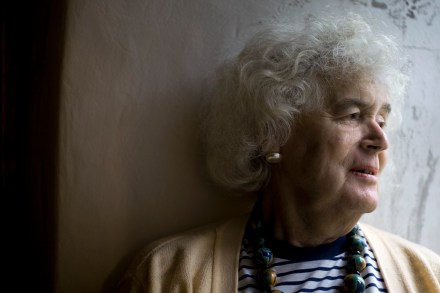
The playwright Carlo Gozzi marvelled at ‘The spectacle of women turned into men, men turned into women, and both men and women turned into monkeys’ in 18th-century Venice, and Jan Morris, visiting in the 1950s, did likewise. It would be more than a decade before Morris went under the knife, but already he was contemplating a transition more permanent than any he observed at carnival time. The Venice Conundrum, which aired on Radio 4 on Sunday, knitted together Morris’s most famous travel book with Conundrum, the story of his sex change, completed in the 1970s. I had my doubts about how well these two works would sit together, but the dramatisation was not only beautiful, but also hugely illuminating of Morris’s psyche as a traveller caught between two worlds.

The stuff of nightmares: Retrievals podcast reviewed

Radio

It is the stuff of nightmares, or a queasily dystopian film plot. A woman is undergoing a surgical procedure in a top-rated US clinic. The aim is ‘egg retrieval’, a process which collects eggs from the ovaries for use in IVF. It involves nerves and hope, long needles and pain – except the patient has been promised that the latter will be minimal, thanks to an injection of fentanyl, a powerful opioid. The pain certainly isn’t minimal, however. It’s excruciating. When the woman says how much it hurts, the nurse tops up the dose, and then says the patient has now received the maximum allowed. There might be a touch of reproof in the refusal, if you’re sensitive to such things, and most women are.

A comedy double act from John Cleese and Justin Welby: the Archbishop Interviews reviewed

Radio

I’m listening to John Cleese talking to Justin Welby in the new series of The Archbishop Interviews when the thought occurs to me that he might unwittingly be comparing himself to Christ. The comedian has just been discussing the failure of the literal-minded to comprehend sarcasm and irony, and the inanity of tabloid headlines, when he circles back to the topic of religion. Though not a believer himself, he is troubled by literal-mindedness in the reading of scripture. ‘Christ taught in parables,’ he notes, ‘and parables are not supposed to be taken literally.’ One can almost feel another headline coming on. Cleese has been waging a war against the wokerati for years.

Gripping and admirable: BBC Radio 4’s Fever: The Hunt for Covid’s Origins reviewed

Radio

It’s the whodunnit – or whatdunnit – that has kept scientists, politicians, journalists and armchair sleuths speculating ever since the first stories of a ‘mysterious viral pneumonia’ began leaking out of Wuhan: where did Sars-CoV-2, the virus that causes Covid-19, come from? Was it an unlucky natural occurrence, a bat virus which made the opportunistic leap from animals to humans somewhere in the pulsing zoonotic stew of a Wuhan wet market? Or did it stem from the accidental infection of a laboratory worker, most likely in the nearby Wuhan Institute of Virology (WIV), which by 2019 had collected nearly 20,000 bat samples, and more than 1,500 individual coronavirus sequences?

Perfect radio for a nation of grumblers: Radio 4’s Room 101 with Paul Merton reviewed

Radio

Welcome back to Room 101, which has returned to the radio – after nearly 30 years on TV – and reverted back to its one-to-one format with presenter Paul Merton. The programme sits comfortably within that peculiarly British corner of the landscape that champions The Archers, the Proms, Rich Tea biscuits and knitted dog coats. And its success makes sense. A nation of good-humoured grumblers is arguably more likely to be excited by a list of common grievances than by, say, an overly jubilant selection of Desert Island Discs. Why listen to someone talk about what makes them happy when you can witness a guy losing it over the incomprehensibility of parking signs? Merton indulges this demographic by channelling the spirit of I’m Sorry I Haven’t A Clue.

Looking for a male role model? Check out the silverback gorilla

Radio

One so often hears about famous people who are horrible when they think no one important is looking – barking at assistants, or snapping at waiters – that it’s heartening to learn of the opposite: kindness in circumstances that promise little obvious reward. The author and filmmaker Jon Ronson had just such a story last week about his pick for Radio 4’s Great Lives series: the late Terry Hall, lead singer of the Specials and Fun Boy Three, and an attractively morose and compelling presence on the 1970s and ’80s music scene.  The 12-year-old Ronson was at the front of an ‘excitingly feral’ Specials gig in Cardiff when he conceived ‘on a whim’ of the daring plan of pretending to faint, so that bouncers would lift him to watch the show from the side of the stage.

Prayer for the Day is the best thing to wake up to

Radio

As the owner of a radio alarm clock, I could theoretically start listening to the Today programme before I’m even awake, but I rarely do. I tell myself it’s too much for first thing; that it’s bound to put me in a bad mood with some interview or other; that Today can wait until tomorrow – or at least until I’ve had my breakfast and a blitz of the somewhat jollier Times Radio. The levée, I say in a Bertie Woosterish sort of way, demands something light. When you crave something thought-provoking but also comforting, nothing beats a few minutes of prayer But then I find myself waking up unintentionally early, switching to Radio 4 and discovering that Prayer for the Day is about to begin.

How productive is it to listen to productivity gurus?

Radio

I was making my way slowly through one of my dismally prosaic little to-do lists – ‘pay the water bill’ ‘wash hair’, etc. – when the voice of the journalist Helen Lewis came on Radio 4 talking about productivity. It’s the Holy Grail of modern life, apparently, and we are now constantly looking for ‘charismatic individuals’ to help us maximise it. Her writer friend Julian Simpson is obsessed with the topic, she said, even though he disarmingly admitted what some of us may quickly have suspected, that ‘my interest in productivity manifests itself when I need to be doing something else’.

Crossing Continents is the best of the BBC

Radio

Ask a member of Generation Z where in the world they would most like to live, and chances are they will say South Korea. K-pop and kimchi have made it indisputably fashionable, and if the Instagram account of one of my Korean friends is anything to go by, life there is really quite idyllic, provided you can forget who your neighbours are. It would take the average worker more than a century to save enough money to purchase an apartment  A recent episode of Crossing Continents on Radio 4 presented a very different side of the story. John Murphy, a superbly enquiring producer and presenter, went to visit some of the residents who are suffering as a consequence of the country’s financial success. The Republic of Korea enjoyed an average of 5.

In praise of From Our Own Correspondent 

Radio

Most of us are familiar with the notion of writer’s block, that paralysis of invention induced by the appalling sight of a blank page. Composer’s block is less widely discussed, although musicians seem equally afflicted by creative drought. Perhaps the best known case is that of the Russian composer Sergei Rachmaninov, the subject of Radio 3’s Sunday Feature, which describes how the great man finally fought his way out of a numbing three-year ‘apathy’ with the help of a hypnotist.  Rachmaninov fought his way out of a numbing three-year ‘apathy’ with the help of a hypnotist The composer had been catapulted into his long despair by the hostile reception to his First Symphony in 1897.

Do we need the BBC World Service?

Radio

In 1957 the BBC removed the head of the Russian Service. Anatol Goldberg was by all accounts a remarkable broadcaster, tasked with coordinating, producing and narrating the BBC’s radio output to the USSR at one of the most volatile periods of the Cold War. Internal reports praised his navigation of the ‘complications’ of Russian programming. So why was he demoted? The answer lies in the long history of British government interference in the World Service.  Today harmony reigns between state and Service: the government announced a one-off £20 million payment to the World Service in last week’s updated Integrated Review. Yet last year foreign-language broadcasting was facing a £28 million cut after the licence-fee freeze.

A short introduction to the philosophy of Moomin

Radio

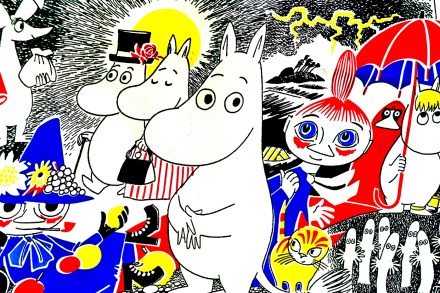
One of the lesser-known schools of modern philosophy is the Philosophy of Moomin. Like Cynicism or Epicureanism, it is difficult to pin down precisely, but subscribers speak of the importance of the individual, of liberalism and acceptance, and of the life-affirming joy of feeling. In the words of Moominpappa: ‘Just think, never to be glad or disappointed. Never to like anyone and get cross at him and forgive him. Never to sleep or feel cold, never to make a mistake and have a stomach-ache and be cured from it, never to have a birthday party, drink beer, and have a bad conscience… How terrible.

What’s the difference between Shamima Begum and Unity Mitford?

Radio

The debate sparked by Josh Baker’s BBC podcast on Shamima Begum, and her teenage flight to join Isis, has divided opinion sharply into two camps. According to one, she was a naive 15-year-old cynically groomed by hardened operatives in the most feared terror organisation in the world. No, says the other, she was a capable girl who – knowing of Isis atrocities – made a highly determined decision to join them. But can’t both things be true at once, as they are for so many young recruits to extremism?  From another era, class and race, we might remember Unity Mitford, who flaunted her admiration of Hitler Listening, one is immersed in the surreal mix of mundanity and horror which defined Begum’s world after leaving home in London’s Bethnal Green.

What a voice Plath had – stern yet somehow musical, long-vowelled, bear-like: Radio 4’s My Sylvia Plath reviewed

Radio

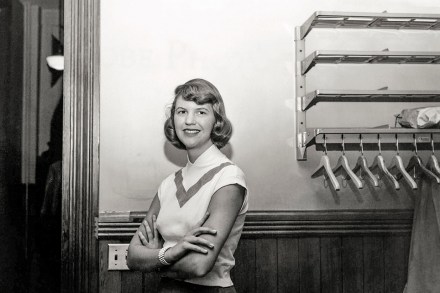
Can you ever truly know a poet? The question arises every time one publishes a collection that looks vaguely confessional. Is it real, we ask, or is it all persona? My Sylvia Plath, an Archive on 4 programme to mark the 60th anniversary of Plath’s death this month, presupposes that poets are to some degree unreachable. The ‘My’ belongs to Emily Berry, a contemporary poet, who knows that her Plath is different from another’s, is different from Plath’s own Plath, and so on.  Unexpectedly, given the emphasis on many Plaths and the gap between a writer and their verse, the framework of the programme is intensely personal. It comes as a shock when Berry reveals, some way in, that her own mother committed suicide when she was seven.

Listen to the world’s first radio play

Radio

Radio works its strongest magic, I always think, when you listen to it in the dark. The most reliable example is the Shipping Forecast, that bracing incantation of place names and gale warnings, which – with the lights out – can transform even the most inland bedroom into a wind-battered coastal cottage. But darkness can heighten disturbance, too, as I was reminded when listening to Danger by Richard Hughes, billed as the BBC’s first-ever radio drama. It was first broadcast in 1924, with the audience at home under instructions to maximise its effect by turning off all their lights.

Is Matthew Parris the modern Plutarch? Radio 4’s Great Lives reviewed

Radio

Whenever I listen to Great Lives on Radio 4, which is often, I am reminded of the gulf between fame and achievement. How is it that some people do so much, yet remain obscure, while others seem to be carried forward with perpetual momentum after doing just one thing? A good many of the lives dissected on the programme over the years have been completely unfamiliar to me. I’ll spend the half hour puzzling over why they are not better known. Where would we be without Great Lives? There is minimal appetite in trade publishing for books about esoteric figures. And just imagine pitching a biopic of Hertha Ayrton, Eleonora Duse or Jayaben Desai to Hollywood today. Radio is probably the only place left for forgotten souls.

An all too brisk and too narrow history of eugenics: Radio 4’s Bad Blood reviewed

Radio

Like so many of history’s great catastrophes, the story begins with an eccentric Victorian Englishman. Francis Galton was a maker of maps and compiler of tables; ‘Whenever you can, count,’ was his mantra. Galton was the first man to plot a weather map and the grandfather of forensic fingerprinting. His quixotic mania for quantification would lead him to try and draw up a ‘beauty atlas’ of the United Kingdom based on his own observations. In a footnote to one of his books, he expressed the need for a new term for the ‘science’ that obsessed him most: ‘We greatly want a brief word to express the science of improving stock.’ That is, improving, by breeding (and by other means), the genetic quality of the human race. He coined a new term: ‘eugenics’.

An author speaks out against social censorship: The Reith Lectures reviewed

Radio

‘The Age of Anxiety’, W. H. Auden’s book-length poem, has always been described as strange, and difficult. It is an eclogue, but set far from the countryside, in a bar in New York, in the middle of the second world war. It looks like a modern script on the page but metrically it sounds more like Old English. The text flits between conversation and inner thought and is steeped in Jungian philosophy, mysticism and mirrors. Puritanism has bred the assumption that ‘good people’ do not need free speech When I first read it in my twenties, I gave up on trying to understand it and simply allowed the words to wash over me. It’s an approach I recommend taking while listening to Robin Brooks’s haunting new dramatisation of the poem on Radio 3.

The extraordinary case of Malcolm MacArthur

Radio

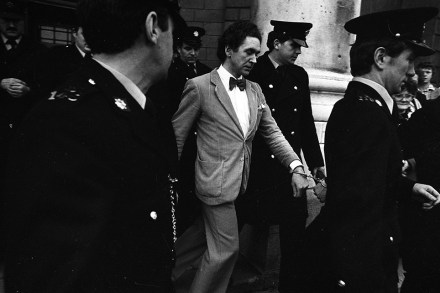
Non-fiction tells you what happened, fiction affirms the kinds of things that happen. According to Aristotle, anyway. So while journalism seeks out unlikely events, fiction creates pleasing inevitabilities. The problem as it pertains to our brave narrative podcasters is that they have to straddle the two worlds: their material must be interesting and unusual, but their final story should have the poetic coherence of good old unreality. They have to turn ‘some things that happened’ into ‘a kind of thing that happens’. Otherwise it’s all evidence and no charge, each event indistinguishable in its randomness from a bolt of lightning.

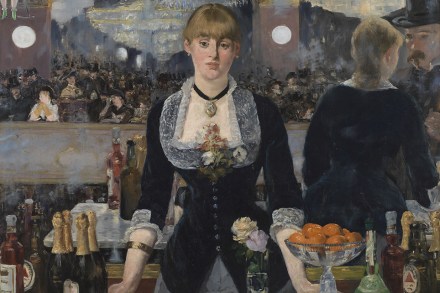
Manet’s Mona Lisa: Radio 4’s Moving Pictures reviewed

Radio

Elizabeth the First is a ten-part American podcast series that isn’t about Elizabeth I at all. The assumption of its producers seems to be that the Tudor monarch was all right – a bit of a trailblazer, one might say – but not really worthy of her title. The real ‘Elizabeth the First’ was actually Elizabeth Taylor. The series aims to present the actress as the first ‘influencer’ the world has ever known, even though poor old Taylor didn’t even know what Instagram was. Taylor did, however, court the media before the word ‘social’ was attached to it. And she didn’t need to take selfies because people were always shoving cameras inher face. The podcast is narrated by Katy Perry, the Californian singer who kissed a girl and liked it and then married Russell Brand.

Shocked and moved me far more than I anticipated: Hoaxed reviewed

Radio

I shied away from conspiracy stuff during the Trump era. Not the theories themselves, but the huge volume of content proclaiming that we lived in a post-truth age of misinformation and conspiracy. It wasn’t that I disagreed with the idea that something like this was happening, or the idea that it was bad. It was more a certain tone these podcasts, essays and articles shared – almost a shared idiom and turn of phrase. People talked about ‘truth’ and ‘facts’ and ‘evidence’ with unwavering self-certainty.

The genius of More or Less

Radio

In a week of slim audio pickings, I spent time reacquainting myself with some of the BBC classics and can confirm that, yes, More or Less still warrants a place in that category. Like Thinking Allowed, which also drew me back, the programme works wonders with data and statistics, and benefits from having a calm and unobtrusive presenter. While most of the questions put to the stoical Tim Harford are delightfully pedantic, some have that special quality of convincing you that, while you’ve never given the topic a second thought, you are in fact deeply invested in it, and absolutely must know whether or not the thing that’s been alleged is correct.

Welcome to the weird world of the New Right: Subversive podcast reviewed

Radio

Subversive is a podcast that documents the world of the ‘New Right’, a strange development in conservatism. Host Alex Kaschuta, one of the movement’s intellectual leaders, gives a good sense of the New Right’s weirdness. Trembling minor-key synths play in the theme and Alex purrs that we’re about to hear a two-hour long conversation with ‘Covfefe Anon’. Other guests include ‘Zero H.P. Lovecraft’ and ‘Yeerk.P’. Some are anonymous commentators who have their voices distorted like a drug dealer in a Ross Kemp documentary. Others are known entities: journalists like Sohrab Ahmari, Ed West and Louise Perry. They like the classical world, the Unabomber, steak. They hate CNN, porn, sunflower oil I can’t explain the New Right.

BBC radio has excelled itself over the past week

Radio

Listening to BBC Radios 3 and 4 over the past week has been like meeting an old friend who, after decades of squeezing into age-inappropriate designer clothes, has suddenly reverted to a sensible wardrobe. It’s a pity that it took the death of our beloved Queen for this to happen, but I’ve been enjoying it while it lasts – because, like the miracle drug that Robin Williams gives his dementia patients in the film Awakenings, this dose of sanity will quickly wear off. Radio 4’s long-prepared tributes to Elizabeth II were, by the BBC’s standards, remarkably impartial. Even Saturday’s Today programme rose to the occasion.

Emily Maitlis tries too hard not to be teachery on her new podcast

Radio

The competition between news-led podcasts is nearing boiling point. If you tuned in to The Media Show on Radio 4 last Wednesday, you’d have felt the tension between the podcasters leading the guard: Alastair Campbell of The Rest Is Politics, Jon Sopel of The News Agents, plus his executive producer, Dino Sofos, Nosheen Iqbal of the Guardian’s Today in Focus, and Adam Boulton, who has just launched a politics show with Kate McCann on Times Radio. Kiran Moodley and Minnie Stephenson might reasonably have joined this line-up as they launch a new series of their news pod with Channel 4 this week.