Culture

Culture

The good, the bad and the ugly in books, exhibitions, cinema, TV, dance, music, podcasts and theatre.

Uplift from an odd couple: James Yorkston & Nina Persson reviewed

Pop

Let’s hear it for the odd couples of popular music: Bowie and Bing. Shaggy and Sting. Metallica and Lou Reed. Nick Cave and Kylie. U2 and Pavarotti. The ongoing collaboration between James Yorkston and Nina Persson isn’t quite so wildly unlikely as any of these but still seems intrinsically counter-intuitive; until, that is, the realisation dawns that each has a stakehold in the other’s natural territory. Yorkston is a fifty-something Scottish folkie with the honed melodic instincts of a pop aficionada. Persson is a former rock star from Sweden whose voice has the controlled command found in the best traditional singers. Which perhaps explains why a pairing that makes little sense on paper makes perfectly imperfect sense in the flesh.

Suede turn their fine new record to mush at the Southbank

Pop

I think a lot about Wishbone Ash. A disproportionate amount. Partly because I have had to listen to them for around ten hours while researching a book. Partly because when I was a kid, I always found it curious that Wishbone Ash were advertised in the weekly music press but never reviewed. Back then, broadsheets barely covered rock, so there was no room for their gigs and albums there. But they were never on Top of the Pops or The Tube or even Whistle Test  either. Perhaps Tommy Vance occasionally gave them a spin on the Friday Rock Show, but other than that they were not on Radio 1. They existed entirely outside of what I perceived of as the world of rock. At that point Wishbone Ash were 15 years on from their first album. Suede are 32 years on from theirs.

A Big Bold Beautiful Journey is anything but

Cinema

A Big Bold Beautiful Journey is, I have to tell you, anything but. I should have trusted the trailer. When I caught this, my first thought was ‘heck, that looks bad’. Stupidly, I was not put off. The film is written by Seth Reiss (co-writer of The Menu) and directed by Kogonada (if you haven’t seen After Yang, more fool you). And it stars Margot Robbie and Colin Farrell. It can’t be that bad, surely? Reader, I swear to you, it is. The direction is prosaic and sentimental while Robbie and Farrell have zero chemistry, not a squeak It’s a romantic fantasy about two people who have resolved to stay single but whose lives are changed via a magical GPS system – and if I’ve already lost you, fair play.

No, Big Thief’s Double Infinity is not the greatest folk album ever

The Listener

Grade: B- ‘I feel within myself a constant dialogue between my masculinity, my femininity and the part of me that is neither of those things. I’m just trying to talk about it because I feel like I’m something that is very ambiguous,’ explains lead singer and songwriter Adrianne Lenker. This may explain why the first song on the new album from this New York indie-ish folk-rock band is called ‘Incomprehensible’, a title which could easily be appended to a good 60 per cent of the lyrics on an album which, given its heralding as the greatest folk album ever, is something of a let-down. It ain’t quite John Prine, let alone Woody Guthrie. Hell, it’s not even Conor Oberst.

The very essence of jazz: Mingus In Argentina reviewed

Grade: B Charles Mingus arrived in Buenos Aires at the start of his 1977 Argentinian tour with aching joints, an ominous first sign of the muscle-wasting Lou Gehrig’s disease that would claim his life two years later. Musically, he was at a musical crossroads too. His record label, Atlantic, had insisted on adding electric guitarists John Scofield and Larry Coryell – associated with lucrative jazz-rock fusion – to his latest album Cumbia & Jazz Fusion, while his once stable touring quintet had become more of a revolving door. Jazz has often been written up as a sequence of landmark recordings and concerts captured at prestigious venues, but the value of Mingus In Argentina is precisely that it’s neither.

Lower your expectations for Spinal Tap II

Cinema

This Is Spinal Tap is now such a deserved comedy behemoth that it’s easy to forget how gradual its ascent to generally agreed greatness was. Only over the years did so many lines and scenes from a low-key 1984 mockumentary about a heavy-rock band (amps that ‘go to 11’, a tiny Stonehenge, a classically inspired piece called ‘Lick My Love Pump’) become part of our lives. Spinal Tap II: The End Continues, by contrast, comes amid a loud fanfare – which may be part of the problem, because the result certainly doesn’t live up to expectations that are inevitably sky-high. Then again, the sad truth is that it mightn’t have lived up to lower ones either.

Why are there so few decent French symphonies?

The Listener

Grade: B Here’s a blind-listening game for you: spot the difference between proficiency and genius. Kazuki Yamada and his Monte-Carlo orchestra have recorded three first symphonies by three 19th-century French composers. With a few barnstorming exceptions (I’m looking at you, Berlioz), the French never really got the hang of the romantic symphony. Berlioz recounts with horror how Parisian editors picked through the scores of Beethoven’s symphonies, meticulously correcting Big Ludwig’s supposed errors.  The kindest thing to say about the first symphonies of Gounod and Saint-Saëns is that they sound like Beethoven with the inspiration snipped out. Bright, polite and completely harmless, they’re both blown out of the water by the 17-year-old Bizet’s glorious Symphony in C.

The problem with Chappell Roan

Pop

There is a downside to being fast-tracked into the position of this season’s newest pop sensation, and it became more and more obvious the longer Chappell Roan’s self-proclaimed ‘biggest ever show’ went on. A freshly risen pop star promoting their debut album should, by law, be performing a 40-minute hit-and-run set in a sweaty club, showcasing the absolute cream of their catalogue. Bang, bang, bang. Over and out. But the fast-track these days moves at positively breakneck speed. Barely a year after her first hit, Roan found herself playing to an audience of some 100,000 fans, convening over two nights on an ugly plot of land adjacent to an airport as part of the Edinburgh Summer Sessions series, whose fervour demanded the full event experience.

Britain’s loveliest, most thoughtful festival

Pop

The last weekend of August is my favourite of the year. That’s when I pootle down to Cranborne Chase to the loveliest, most thoughtful festival in the UK. End of the Road is a festival for those who look at TV coverage of Glastonbury and see only the size and the heaving crowds and come out in a cold sweat. It’s lovely because it’s small – around 15,000 people. You can walk from the furthest campsite to the furthest part of the festival area in 25 minutes or so. If you’re not enjoying what you’re watching, you’ll be able to find something else within five minutes’ walk, via an array of bars without punishing queues.

‘Modern pop makes me want to kill myself’: Neil Hannon interviewed

Arts feature

Search for a successor to Tom Lehrer, and you’ll be hard pressed to find any decent candidates. One of the  few, however, who can match the wit and sophistication of the late musical satirist is the Northern Irish musician Neil Hannon. The 54-year-old is the sole permanent member of his band the Divine Comedy, and his elegant records mix Lehrer-esque wordplay with swooning orchestral pop that is in equal measure Dusty Springfield, Scott Walker and Michael Nyman. But matters have darkened somewhat on his newest LP, Rainy Sunday Afternoon. Here, we are far from the cheeriness that many will remember on his 1990s records Casanova and Fin de ​Siècle.

The man who can save classical music

Arts feature

John Gilhooly is sick of talking about the Arts Council of England. ‘Please tell me you’re not going to ask about that,’ he groans. ‘I walked into an interview last week where it was only about that, and if I’d known I would’ve declined. There have got to be broader things now.’ That’s awkward; because in the (admittedly grey) world of UK arts funding, Gilhooly’s announcement in March that he was taking the concert hall he manages – the Wigmore Hall – out of the Arts Council’s funding portfolio has been the story of the year. He’s dead right, though. We’re sitting in one of the world’s great music venues: an art-nouveau jewel just off Oxford Street, consecrated to Schubert, Beethoven and Bach.

I could never sit through it again: The Cut reviewed

Cinema

What set this apart, I would suggest, is its deep and unremitting unpleasantness The Cut stars Orlando Bloom as a boxer who comes out of retirement for one last shot at glory. You may be wondering: how does this film about a boxer coming out of retirement for one last shot at glory differ from all the others? It’s a story that’s been told umpteen times but what set this apart, I would suggest, is its deep and unremitting unpleasantness. If I were given the choice of having to sit through it again or losing one of my limbs I would need to put some serious thought into that. Bloom has been among the ensemble casts of successful franchises (Pirates of the Caribbean, Lord of the Rings) but this is his shot at leading man glory.

Huge Fun: Le Carnaval de Venise reviewed

Classical

Summer’s lease hath all too short a date, but there’s still time for one last opera festival. Vache Baroque popped up in 2020 during that weird first release from lockdown, but to be honest, if you were starting a new festival, late August is probably the best part of the calendar to colonise. The big boys (even Glyndebourne) have left the stage, Edinburgh is done and the Proms are the only game in town. And the place to do it would be within easy reach of the capital: in this case, a fold of the Chilterns just off the rural top end of the Metropolitan Line. Anyway, Vache Baroque seems to have made a name very quickly, and like the more established opera startup at Waterperry, it still has that youthful, hands-on energy: let’s do the show right here!

Shambolic, spontaneously chaotic and combustible: the Lemonheads at SWG3 Galvanizers reviewed

Pop

I enjoyed watching the Lemonheads fall apart on stage more than perhaps I should have Nowadays, when the default setting for live music is ruthlessly choreographed efficiency, there is a queasy kind of thrill in watching a performance forever teetering on the edge of pure unprofessional pandemonium. Which is to say, I enjoyed watching the Lemonheads fall apart on stage more than perhaps I should have.  The Lemonheads are and always were Evan Dando fronting whatever revolving cast of associates are willing to put up with him. This is both the band’s great superpower and its eternal Achilles’ heel. Dando is a fine and heartful singer, songwriter and interpreter. He is also the loosest of loose cannons.

In defence of Notting Hill Carnival

Pop

This isn’t going to be a piece celebrating the rich cultural tapestry of London’s Afro-Caribbean community, sombrely expressing the importance of preserving its heritage and history. I just like going to Carnival. I see it as an opportunity to make the most of the last dregs of the summer. I’ll meet my friends, dance to a grizzled Rasta’s tunes with a Magnum or two (a syrupy, 16.5 per cent alcohol, Jamaican tonic wine), watch the steel drums and befeathered dancers, before decamping with a box of jerk chicken and fried plantain. There’s no £499 VIP Platinum wristband you can buy to have the premium Carnie experience I spent the first decade or so of my life in London, and returning here as an adult is a disillusioning experience.

A revelation: Delius’s Mass of Life at the Proms reviewed

Classical

Regarding Frederick Delius, how do we stand? In the 1930s, Sir Henry Wood believed that Proms audiences much preferred Delius to Holst, and most critics back then would have described him as a major British composer. Times change: if you took your music GCSE in the late 1980s, you’ll have sensed that the Bradford lad was no longer quite up there. But you might well have been taught by people who still remembered him as a giant, and there was also the legacy of that greatest of composer biopics, Ken Russell’s Song of Summer, in which Delius’s music explodes in sunbursts of passion and colour against Russell’s austere black and white cinematography.

The Seeds are primitive but magnificent

Pop

I have nothing but admiration for those men who burn a candle for the music of 1966. Partly because, like them, I believe 1966 to be pop’s greatest year, but mainly because being a psychedelic hipster requires a commitment that invites ridicule. It’s one thing to be an ageing fella who likes rock’n’roll – sharp denim and a well-tended quiff can look just fine. And you can never really tell the age of a metalhead – they just look like a metalhead. But to wear your hair in an outgrown bowl cut, and to strut around in tight red trousers as Seeds singer Paul Kopf does, is inevitably to invite catcalls of ‘Oi, Austin Powers!’. You have to really believe in it to go through life like that.

The problem with psychiatrists? They’re all depressed

Theatre

Edinburgh seems underpopulated this year. The whisky bars are half full and the throngs of tourists who usually crowd the roadways haven’t materialised. There’s a sharp chill in the air too. Anoraks and hats are worn all day, and anyone eating outdoors in the evening is dressed for base camp. Perhaps tourists don’t want to travel because they’re too depressed. That’s the specialism of Dr Benji Waterhouse, an NHS shrink, who writes and performs comedy about his patients. Dr Benji is an attractive presence on stage with his crumpled Oxfam clothes and his dreamy, half-shaven look. He could be the guy who tunes up U2’s guitars. His act is very funny and it contains some amazing revelations.

Ultimately hard to resist: Elbow reviewed

Pop

Our relationships with bands are often very like our relationships with people. Some are pure and lasting love. Some start promisingly but spoil. Some are quick, thrilling flings, others a more meaningful yet distant connection. Elbow are the kind of band you enjoy having a pint with every few months. Not always the most exciting company, perhaps, but smart, convivial and good hearted. Thoughtful. Reliable. They might arrive – bang on time – for your latest rendezvous armed with a funny story about a beleaguered colleague, but they’re unlikely to announce they’re running off to Brazzaville with the intern. You know where you are with Elbow – in this instance, a shallow concrete amphitheatre in Glasgow’s leafy west end.

Disconcerting but often delightful new Bach transcriptions

The Listener

Grade: B Everyone loves the music of Johann Sebastian Bach. Rather fewer people love the sound of an unaccompanied organ, so a cottage industry has developed among conductors and composers, retrofitting Bach for full orchestra. From Elgar and Mahler to showman-maestros like Stokowski and Henry Wood, orchestral Bach transcriptions have tended towards the spectacular, and they annoy all the right people. When Wood arranged the D minor Toccata and Fugue for a super-sized orchestra, he pre-empted the backlash by crediting it to a fictional Russian modernist, ‘Paul Klenovsky’. The critics duly raved.  Still, who knew that the late Sir Andrew Davis – the closest thing we had to a latter-day Thomas Beecham – was in on the same game?

The rise of cringe

Classical

No one wrote programme notes quite like the English experimentalist John White. ‘This music is top-quality trash,’ proclaims his 1993 album Fashion Music. ‘We kindly ask the users of this CD to play it at the volume of a suburban Paris soundmachine or a London underground discman earphone as used by the kid next door.’ Track titles included ‘Epaulette’ and ‘Latin Flutes’. From what I remember – my copy vanished a long time ago – the music was cheap and very funny: tinny and dumb. I was reminded of White recently because trash is back. Everywhere I go, I find composers producing shamefully terrible music. Some deliberately, some inadvertently. What flavour of terrible? Not ugly or discordant. Not camp. More tonal and naff: works woven from the worn-out and iffy.

Rattigan’s films are as important as his plays

Arts feature

A campaign is under way to rename the West End’s Duchess Theatre after the playwright Terence Rattigan. Supported as it is by the likes of Judi Dench and Rattigan Society president David Suchet, there’s evidently a desire to right a historical wrong. Author of classics such as The Browning Version, The Winslow Boy and Separate Tables, Rattigan was known for his poise, melancholy and restraint, all of which put him at odds with the coterie of upstart writers of the 1950s – still amusingly known as the Angry Young Men. It’s an oft-repeated chapter of theatre history that arch-kitchen-sinkers such as John Osborne made the environment virtually impossible for Rattigan to work in. Rattigan joked about it at the 1956 opening of Look Back in Anger.

The excruciating tedium of John Tavener

Classical

The Edinburgh International Festival opened with John Tavener’s The Veil of the Temple, and I wish it hadn’t. Not that they were wrong to do it; in fact it was an heroic endeavour. Drawing on three large choirs, members of the Royal Scottish National Orchestra and a sizeable team of soloists, this eight-hour performance was the sort of occasion that justifies a festival’s existence – the kind that, done well, can transform your perceptions of a work or a composer. It was certainly done well, and it certainly transformed mine. I’d never much minded the music of John Tavener. By the fifth hour of The Veil of the Temple, I was beginning to detest it.

The terrifying charisma of Liam Gallagher

Pop

You’d have thought Wembley Stadium was a sportswear convention, so ubiquitous were the three stripes down people’s arms from all the Adidas merch: veni, vidi, adi. Pints drunk: 250,000 a night, apparently. All along the Metropolitan line pubs noted an Oasis dividend. At a corner shop, I was sold an official Oasis Clipper lighter. It’s surprising Heinz hasn’t yet offered an Oasis soup; you get a roll with it. Plainly, an awful lot of people have missed Oasis. And an awful lot of people – Noel and Liam Gallagher included – saw the chance to make an awful lot of money from their reformation. I don’t think any of them – neither fans nor entrepreneurs – will have been disappointed. At Wembley, the atmosphere was remarkable.

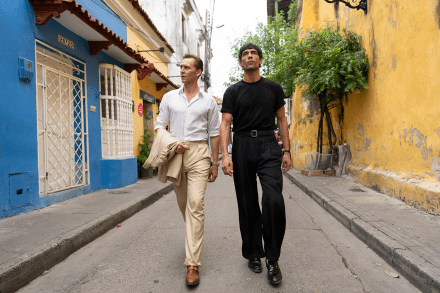
Worth watching for Momoa’s gibbous-moon buttocks alone

Television

If you enjoyed Apocalypto – that long but exciting Mel Gibson movie about natives being chased through the jungle with (supposedly) ancient Mayan dialogue – then you’ll probably like Chief of War, which is much the same, only in Hawaiian. Like Apocalypto, it even has sailing ships appearing mysteriously from Europe with crews that serve the role of dei ex machina, rescuing endangered native protagonists at key moments. This time our based-on-a-true-story hero is Ka’iana, the 18th-century Maui chieftain who succeeded in uniting the four warring island kingdoms (Oahu, Maui, Molokai and Lanai) and turned them into the kingdom of Hawaii.

Three cheers for the Three Choirs Festival

Classical

The Welsh composer William Mathias died in 1992, aged 57. I was a teenager at the time, and the loss felt personal as well as premature. Not that I knew him; and nor was he regarded – in the era of Birtwistle and Tippett – as one of the A-list British composers (John Drummond, the Proms controller of the day, was particularly snobbish about Welsh music). But Mathias was a composer whose music I had played; whose music, indeed, me and my peers actually could play. His Serenade was a youth orchestra staple. It felt good to know that its creator was alive and well and working in Bangor, and when he wrote his Third Symphony I listened to the première in my bedroom, live on Radio Three. Like I say, it felt personal.

Why I don’t get the blues

Pop

The Louisiana bluesman Buddy Guy is releasing a new album this week. It is called Ain’t Done With The Blues – a statement which one might argue seems redundant considering Guy, who is 89, has been releasing albums with the word ‘blues’ in the title since 1967’s Left My Blues In San Francisco. Since then, we’ve had A Man And The Blues (1968), The Blues Giant (1979), DJ Play My Blues (1982), Damn Right, I’ve Got The Blues (1991), Rhythm & Blues (2013), The Blues Is Alive And Well (2018) and The Blues Don’t Lie (2022). This is a man who isn’t ever going to give David Bowie a run for his money in the shapeshifter stakes; Guy’s listeners can have their music any colour they want, as long as it’s blue, blue, electric blue. This is how it has to be.