Culture

Culture

The good, the bad and the ugly in books, exhibitions, cinema, TV, dance, music, podcasts and theatre.

Bleak humour, resourcefulness and wit: Budapest Festival Orchestra’s Quarantine Soirées reviewed

Classical

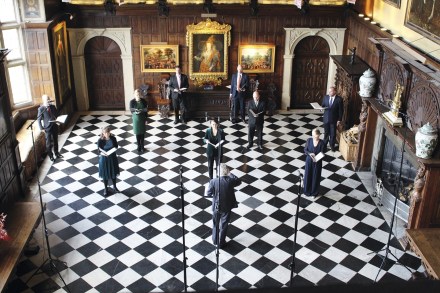
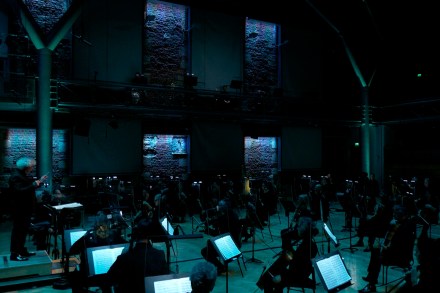
There’s a certain merit in bluntness. ‘Quarantine Soirées’ was what the Budapest Festival Orchestra called its response to the crisis, and if the name conveyed a certain bleak Magyar humour, the resourcefulness couldn’t be faulted. Elsewhere, orchestras were still talking optimistically about broadcasting concerts from empty halls, and (even more optimistically) about persuading online viewers to pay for them. Realising that any activity that brings 90 musicians into close proximity was probably running out of road, the BFO’s music director Ivan Fischer announced that ‘this is not the time for orchestral music’ and launched a programme of chamber recitals by the orchestra’s players, livestreamed from their rehearsal hall.

Bigamists, lunatics and adventurers: the raucous world of 19th century British music

Classical

For a patriotic German in the decades before Bismarck, Britain’s power was an object of envy. But there was one thing, at least, that you could always hold over the Anglo-Saxons on their foggy little island. On 1 January 1837, Robert Schumann sat down in Leipzig to hear a new piano concerto by the 20-year-old William Sterndale Bennett. ‘An English composer; no composer,’ commented his neighbour, smugly, before the music started. Few 19th-century German music-lovers failed to point out that the land of Shakespeare had somehow failed to produce a single really significant composer since the late 17th century. We know how that story ended; and if you want to explore the flowering of the British musical renaissance, it’s never been easier.

The magic of Bryan Ferry

Pop

The accepted line about Bryan Ferry is that his is one of the greatest reinventions in English pop culture: Peter York said, in 1976, that his life was ‘the best possible example of the ultimate art-directed existence’. But watching him at the Albert Hall, I couldn’t help thinking of my father. That’s not to diminish the show — which was a lush and all-enveloping pleasure, like getting into bed in a very good hotel — but I couldn’t help wondering if there was actually something very specific about Ferry that tends to get ignored: his generation. He’s 74 now, though from a distance you might put him in his mid-fifties, especially in his beautifully cut suit.

The musical vaccination we all needed: ETO’s Cosi fan tutte reviewed

Opera

Anyone familiar with Joe Hill-Gibbins’s work will brace instinctively when the curtain goes up on his new Figaro. He’s the young British director who smeared the Young Vic with jelly and custard (The Changeling) and transformed it into a giant mud pit (A Midsummer Night’s Dream), covered the Almeida in blood and more mud (The Tragedy of King Richard the Second) and bathed his cast in a stomach-turning blend of salad cream, ketchup and baked beans at the Edinburgh Festival (Greek).So when the curtain rises on a white-walled corridor whose sterile purity is broken up only by four equally white doors you do mentally reach for a mop. But Hill-Gibbins’s plans for Figaro are surprisingly clean and surprisingly, well, dry.

A lost opera from the most powerful musician you’ve never heard of: La ville morte reviewed

Opera

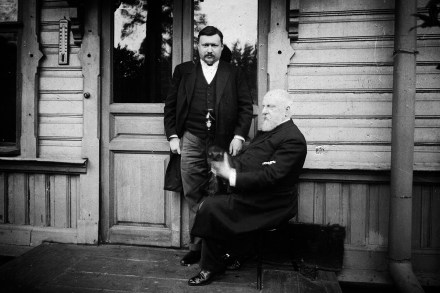
Who was the most influential figure in 20th-century classical music? Stravinsky? Pierre Boulez? What about Bernstein or Britten? John Cage or Karlheinz Stockhausen? Powerful public figures all. But there’s a case to be made for a very different kind of character — less king than kingmaker, a musical éminence grise.With a Who’s Who of pupils that included Leonard Bernstein and Aaron Copland, Elliott Carter and Astor Piazzolla, Philip Glass, John Eliot Gardiner and Daniel Barenboim, Nadia Boulanger is the most powerful musician you’ve never heard of, ‘the most important teacher since Socrates’, as one composer only partly joked. Photographs show us a stern, spectacled, almost invariably elderly figure.

Grimly compelling: The Whitney Houston Hologram Tour reviewed

Pop

‘No matter what they take from me,’ sang Whitney Houston towards the end of a peculiar evening in Hammersmith, ‘they can’t take away my dignity.’ You want a bet on that? Eight years after she died, here was Houston — in holographic form — treading the boards once more. In death, as in life, she continues to be an object for others to make money from.The Houston on stage was not, of course, the addict who crumpled towards the end of her life; nor the one who couldn’t hit the high notes of ‘I Will Always Love You’ on her final tours. It was the beautiful young woman with the staggering voice.

If your instinct is to undermine Beethoven, you’re directing the wrong opera: Fidelio reviewed

Music

‘People may say I can’t sing,’ said the soprano Florence Foster Jenkins, ‘but no one can ever say I didn’t sing.’ There were groans of dismay as an official walked out before the start of the Royal Opera’s new Fidelio: Jonas Kaufmann was not feeling on top form, but he was going to perform the role of Florestan regardless, and begged our indulgence. The mind plays tricks and after an announcement like that it’s hard to be entirely sure whether you’re hearing a skilfully proportioned interpretation or a singer dialling it down. But let the record show that Kaufmann did sing, and if you’ve booked for this production on the strength of that magic name alone, you can breathe easy.

The last great purveyors of a vanishing art form: Green Day’s Fathers of All… reviewed

The Listener

Grade: B+ It is an eternal mystery to me why Britain has never had much time for power pop, seeing as we gave this often charming genre to the world through the Beatles and, to a lesser extent, Badfinger. But we never really swung for it, post-Abbey Road. When power pop had its mild renaissance in late ’78, we looked away, bored, tugged by disco on the one hand and po-faced boring angular post-punk on the other. The Knack’s ‘My Sharona’ — the epitome of power pop — got in the charts, sure. But there was no groundswell. In the USA it was different. Almost everything labelled punk that wasn’t art rock (i.e. Television and Talking Heads) was actually power pop, none more so than the Ramones. We remained aloof.

Eurotrash Verdi: ENO’s Luisa Miller reviewed

Opera

Verdi’s Luisa Miller is set in the Tyrol in the early 17th century, and for some opera directors that’s a problem. After all, they’re busy people. They probably never had time to read Wolf Hall, or to speak to any of the 100 million people worldwide who watched Game of Thrones. It’s self-evident to them that modern audiences will be unable to empathise with anything involving swords, castles or feudal hierarchies. Which is why they work hard to imagine new contexts that can make these hopelessly dated dramas address contemporary life as we live it, right here, right now. Counts, village maidens and men in ruffs? Baffling. But a clown strapped to a gyrating crucifix being stabbed with arrows by a group of dancers in flesh-coloured swimming caps and black fetish wear?

Grimes has talent – but not at writing songs: Miss Athropocene reviewed

Music

Grade: B The old axiom no longer applies. In modern popular music, it is possible not only to gild a turd, but to gild it so copiously that consumers scarcely catch a whiff of the ordure underneath. The studio is everything: you no longer need to be able to sing, write a tune or play an instrument — with enough electronic manipulation your turd can still become an epic and convince the perpetually gullible rock and pop press that something Important is taking place. In a sense, then, the other old axiom is also redundant: in pop music today, you can fool all of the people all of the time. The Canadian musician Grimes is not quite at turd level: there is some talent there, although I’m not sure quite what it is.

Weill’s Broadway opera is made for telly: Opera North’s Street Scene reviewed

Music

It’s a sweltering night in Manhattan, circa 1947, and on the doorstep of a brownstone tenement three women are waiting for their menfolk to return. There’s plenty to gossip about. The Hildebrands upstairs are being evicted tomorrow, and the Buchanans are expecting a baby. And what’s the deal with Mrs Maurrant and Steve the milkman? Old Mr Kaplan reads the newspaper and denounces the bourgeoisie. A kid cadges a dime and big, kind Lippo Fiorentino arrives home from work with ice creams for everyone. At which point it becomes fairly safe to conclude that the America of Kurt Weill’s Street Scene is not the America of his Mahagonny. Forget the acid harmonies and hard-left caricatures of his Berlin collaborations with Bertolt Brecht.

The rancid meanderings of a long-spent wankpuffin: Justin Bieber’s Changes reviewed

Music

Grade: D– For my first review of popular music releases in 2020 I thought I’d deposit this large vat of crap over your heads. This is the fifth album from Canada’s androgynous, tattooed bratlette — purveyor of corporate trap dross to the world’s pre-pubescent thots, skanks and wannabe hos. Trouble is, even for the dumbest of the world’s unter-mädchens, Bieber’s schtick has long since worn a little thin. So his new album is called Changes, which is the only echo of David Bowie you will find within. But as Justin puts it on the title track: ‘Tho I’m goin thru changes, don’t mean that I’ll change.’ No indeed, well put.

Are we going to have to start taking Calixto Bieito seriously? ENO’s Carmen reviewed

Opera

Calixto Bieito’s Carmen: three words to make an opera critic’s heart leap. Until quite recently, Bieito was the operatic provocateur of the century — the director who opened Verdi’s Un ballo in maschera with a row of men defecating on stage, and who presented Mozart with a side order of torture porn. Veterans of his Carmen told of fellatio and gratuitous nudity; it all sounded very promising. Add the malicious pleasure of seeing what unrevivable horrorshow ENO had lumbered itself with now — what steaming paella of body fluids it was about to dish up to an audience who’d paid for an evening of good tunes and sultry senoritas — and the review practically writes itself.

Inspired programming and a proper celebration: Barbican’s Beethoven Weekender reviewed

Classical

Beethoven wears a feather boa and pink shades. He wrangles an electric guitar. A red lightning flash streaks across that familiar, scowling face. ‘Genius before Elton. Radical before Prince. Iconic before Bowie’ proclaimed the posters for the Barbican’s Beethoven Weekender, and apparently there’ve been complaints about them, which probably means that they’ve got the tone about right. Two hundred and fifty years after his birth, Beethoven still has a way of driving all the right people round the bend. US campus musicologists have called for his music to be suppressed (you’d think that champions of inclusion would support a year-long celebration of a disabled composer, but it seems not. Wrong chromosomes).

Dazzling and nonsensical in equal measure: Madonna at the London Palladium reviewed

Pop

You might have thought Madonna was not a singer but a professional footballer judging by the talk before she took to the stage at the Palladium last Wednesday night. She’d missed ten out of 93 appearances, and she’d been picking up the kind of niggling injuries — would her knees stand up to the strains of a long, hard season? How’s her hip? — associated with hard-running midfielders. Just as in the Premier League, there were gripes about ticket prices — go on Ticketmaster and they range from £69 to £511.50 (yes, there are tickets available throughout the run; you’ve got until 16 February to see her).

You have to be a terrific snob not to see the appeal of Slipknot

Pop

Every development in heavy music is derided by mainstream critics. When Black Sabbath and Led Zeppelin emerged in the late 1960s, they were sneered at for their lumpen, troglodyte stupidity. A decade on, AC/DC were reviled for precisely the same reasons. When Metallica and Slayer helped lead the thrash metal movement in the mid-1980s, it was at first only enthusiasts for extreme noise who cheered them on. The disdain never lasts. People who grew up listening to those bands became critics or editors or broadcasters or musicians, and each of them was absorbed seamlessly into the rock canon. That’s precisely what’s happened to the Iowa band Slipknot, too.

The audience were in tears: Christian Gerhaher/Gerold Huber at the Wigmore Hall reviewed

Classical

‘Popular’ classical music is a relative term. Show me someone who thinks Beethoven is surefire box office, and I’ll show you someone who’s never tried to sell tickets for the Op. 9 string trios. Even Mahler, the blockbuster concert phenomenon of the past four decades, has his limits. Audiences love him, sure. But in 2011, when several orchestras performed complete Mahler cycles, the limits of that love became embarrassingly clear. The Second and Eighth symphonies — roof-raising choral spectaculars — promptly sold out. The gentle Fourth and the knotty, reconstructed Tenth: not so much. As for his songs, forget it. Well, that’s lieder for you.

Best gig of the week: the fuzzy, slacker melodies of teenage quintet Disq

Music

Come January, when the proper pop stars are all in the gym working off the pounds before they emerge, blinking and svelte, into the watery winter sun, the small venues of London attempt to pack in the curious by filling their schedules with seasons of up-and-coming artists. In east London this past week, the excellent promoter Eat Your Own Ears ran three free nights of new acts. In Islington, the Lexington offered first the Winter Sprinter — five nights of sweet-toothed indie pop, where you might have caught the Portland Brothers, the occasional duo featuring Steven Adams, once of the Broken Family Band, and the best songwriter almost no one in the country has heard of — and then the Five Day Forecast, in conjunction with the new music website the Line of Best Fit.

Warmth, energy and gripping momentum: Stephen Hough’s Wigmore Hall residency reviewed

Classical

In the summer of 1878 Johannes Brahms finally succeeded in growing a beard. It was his third attempt. ‘Prepare your wife for the grisly spectacle, for something so long suppressed cannot be beautiful,’ he wrote to a friend, and by all accounts he wasn’t wrong. Clara Schumann pleaded with him to shave it off. She’d have remembered Brahms as the golden-haired 20-year-old who had arrived on her doorstep in September 1853, glowing with genius; in the words of her husband Robert, ‘a young blood at whose cradle graces and heroes stood guard’. For modern listeners, though, the beard has long since conquered — as if, like one of Philip Pullman’s daemons, it somehow embodies Brahms in his gruff and hairy definitive form.

Beer, sweat and jockstraps: the real history of the CBSO

Music

In childhood, the theme tune to The Box of Delights was the sound of Christmas. The melody was ‘The First Nowell’ but that wasn’t what cast the spell. It was the way the harp glinted and pealed, and the eerie wisp of the ‘Coventry Carol’ that drifted through on muted violins: a masterclass in orchestration for a BBC teatime audience. After inquiries at Circle Records in Liverpool (this was pre-Amazon), my father established its identity: the Carol Symphony, by a composer with the pleasingly Edwardian name of Victor Hely-Hutchinson. And that was that, for me anyway, until three decades later, rifling through the archive of the City of Birmingham Symphony Orchestra, I noticed the initials ‘VHH’ on files from the 1940s.

A son-et-lumière spectacular: The Chemical Brothers at the O2 Arena reviewed

Music

How does one account for the phenomenon that is the Chemical Brothers, a quarter of a century on from their first records, just getting bigger and bigger? Only now are they touring the arenas of the UK for the first time. They’re nominated for a Grammy. Their current album, No Geography, is a top-five hit. Wasn’t the 1990s dance-music explosion meant to have ended with, well, the 1990s? They’re not alone either: Underworld, too, are now playing arenas, and not just to people who want to shout the refrain to ‘Born Slippy’: ‘Lager! Lager! Lager! Lager!’ Perhaps there’s something in the fact that neither group was completely contained by dance music.

One hell of a concert: Opera North’s Bluebeard’s Castle reviewed

Music

Freud knew something about fear. Not the sudden shock of terror, but the creeping, sickening, slow-burn horror of the uncanny. A haunted house might make us jump, but how much more pervasive is that fear when the house is our own home, the monsters our own family, our own self even? It’s when the familiar becomes the unfamiliar, when the telephone call is coming from inside our own psyche, that the chills really build. Bartok knew this too. ‘Where is the stage — outside or within?’ asks the spoken Prologue to his one-act opera Bluebeard’s Castle — the young composer’s take on the classic fairytale of a curious wife, her mysterious new husband and his many locked doors.

Sadistic and repellent and thrilling: Mascagni’s Iris reviewed

Music

If you’ve ever felt that poor Madama Butterfly had a bit of a raw deal, then you really, really don’t want to know what happens in Mascagni’s Iris. Take that as a spoiler alert: our Japanese heroine is so young that as the opera opens, she’s playing with a doll. She’s abducted, installed in a brothel and offered up for the delectation of a noble client, whose advances she is too innocent to comprehend. Disowned by her blind father, by the beginning of Act Three she’s literally lying in a sewer listening to disembodied voices telling her that nothing could have prevented this outcome. Obviously, it sounds exquisite. You don’t have to be a social justice warrior to find Iris a bit much.

‘My wife sends me sleep bubbles’: The extraordinary world of Pete Townshend

Features

When most rock stars have trouble sleeping, they fall back on Valium, temazepam, heroin or Jack Daniel’s. But Pete Townshend, guitarist and songwriter for The Who and — we’re pleased to discover — Spectator subscriber, isn’t much like most rock stars. Sober now for three decades, he calls instead on his wife Rachel’s psychic powers. ‘Sometimes,’ he says, ‘when I’m having difficulty sleeping, Rachel — who has some… certainly, some kind of healing powers — will say to me, “Do you want me to send you a sleep bubble?” Now, I often go’ — he mimes squirming like a reluctant child — ‘“No, of course I don’t need you to send me a bloody sleep bubble!

Rap that feels like a sociology lecture: Loyle Carner at Alexandra Palace reviewed

Music

A few years ago, I asked the young American soul singer Leon Bridges — a latter-day Sam Cooke, with the old-fashioned song arrangements to match — if he ever pondered the incongruity of being a black man, backed by a white band, playing music in the African-American tradition to audiences that (in the UK at least) were almost entirely white. ‘I have a song called “Brown Skin Girl”,’ he replied, ‘and I ask “Where my brown-skinned girls at?” And there’s maybe one or two in the crowd. It’s a little awkward sometimes.’ His words came to mind watching Adia Victoria.

Handsome and revivable but I wasn’t moved: Royal Opera’s Death in Venice reviewed

Music

Premièred within two years of each other, Luchino Visconti’s film and Benjamin Britten’s opera Death in Venice both take Thomas Mann’s novella as their starting point. But from shared beginnings the two works diverge dramatically. The cloying visual beauty of the film, its pink-and-grey vision of Venice swaddled in Mahler strings, couldn’t be further from the stern, self-loathing austerity of Britten’s last opera, whose beauty is much harder won. The sea that pounds and dashes the Suffolk coast in Peter Grimes is lulled in Death in Venice into the queasy, syncopated swell of the lagoon, a miasma of heat and sickness rising from its waters.

Range and power – and amazingly she sang all her songs: Christina Aguilera at Wembley reviewed

Music

In every respect bar its austere pews, the Union Chapel is one of the best venues in London: beautiful and atmospheric, it encourages concert-goers to listen rather than chat. There’s no bringing in booze from the bar, so you’re not disturbed by people going hither and thither (though the couple next to me had smuggled in a thermos of tea and a pack of Choco Leibniz). It suited the Delines, from Oregon, down to the ground. Though they released their first album only five years ago, the Delines are hardly a young band. They’re middle-aged and their songs are middle-aged: sad and weary laments for lives that have slipped out of focus.

Ravishing and poignant: ENO’s Orphée reviewed

Music

Billy Wilder, asked for his opinion of Andrew Lloyd Webber’s musical version of his movie Sunset Boulevard, famously replied: ‘Those boys hit on a great idea. They didn’t change a thing.’ I don’t think you could say exactly that about Netia Jones’s new staging of Philip Glass’s Orphée, a piece that takes the script of Jean Cocteau’s 1950 film and turns it into — well, into an opera by Philip Glass. Cocteau’s shimmering cinematic imagery (think Man Ray come to life) defies physical realisation, so Jones and her designers Lizzie Clachan (sets) and Lucy Carter (lighting) have found poetic, often blindingly beautiful theatrical equivalents.

The cult of Trifonov is doing the pianist no favours

More from Arts

Grade: B– Deutsche Grammophon have decided that Daniil Trifonov’s new Rachmaninov piano concertos with the Philadephia Orchestra and Yannick Nézet-Séguin are a railway journey. The video trailer offers no explanation — but, boy, they certainly threw some cash at their conceit. The pianist is dressed like a Russian anarchist, wandering wild-eyed through a railway carriage. Is he fleeing a ticket inspector? Apparently not, because later he’s playing on the train, presumably in the compartment reserved for grand pianos. Those were the days! Last year we had the second and fourth concertos, entitled Destination Rachmaninov: Departure. Now it’s Arrival — the first and third.