Culture

Culture

The good, the bad and the ugly in books, exhibitions, cinema, TV, dance, music, podcasts and theatre.

Dismantle the maestro myth and classical music will suffer

The news that conductor John Eliot Gardiner is thin-skinned, ill-mannered and thuggish should not be news to anyone. Or not to any Spectator readers anyway. ‘What, one wonders, will John Eliot Gardiner be chiefly remembered for?’ wrote Stephen Walsh in October 2013. ‘Perhaps, by many who have worked with him, for his notorious rudeness to performers and colleagues.’ Peter Phillips wrote about Gardiner ‘losing his temper’ with a member of the London Symphony Orchestra in April 2014 (Private Eye had alleged the conductor had clocked a trumpeter). ‘Is there anything [Gardiner] can’t do?’ asked Damian Thompson in a Heckler column from 2015. ‘The answer is yes. One art eludes him: good manners.

It was midnight in a field in Wales and I was lying face down in six inches of mud: Green Man Festival reviewed

Pop

I love Green Man. The smallish festival is the second most beautiful site I’ve ever visited (after G Fest, which is situated on a beach in a fjord in the Faroe Islands). Nestled in a valley between the mountains of the Brecon Beacons, it has great bills, it’s impeccably organised and I feel nourished by it. But, in the interests of being honest about festivals for those who have never been, I should also confess that this year it supplied the single most miserable experience of my music-watching life. It was midnight, in a field in Wales, and I was lying face down in six inches of mud Friday was the kind of day Noah might have felt a little discombobulated by. It began raining before dawn and it never let up. Come nightfall, the wind picked up too.

A brilliantly cruel Cosi and punkish Petrushka but the Brits disappoint: Festival d’Aix-en-Provence reviewed

Classical

Aix is an odd place. It should be charming, with its dishevelled squares, Busby Berkeley-esque fountains, pretty ochres and pinks. Yet none of it feels quite real. It’s as if an AI bot had been asked to design a Provençale city. Everything is suspiciously perfect. And then you notice all the Irish pubs and American student clones. It’s the prettiness of a Wes Anderson set – with the charm of an airport. In this uncanny valley, however, lies what continues to be one of the world’s classiest opera festivals. The major new commissions this year were two British chamber operas. George Benjamin and Martin Crimp were returning with Picture A Day Like This, their third collaboration for Aix.

Imagine a school concert hosted by Bela Lugosi: Budapest Festival Orchestra and Ivan Fischer, at the Proms, reviewed

Classical

‘Audience Choice’ was the promise at the Budapest Festival Orchestra’s Sunday matinee Prom, and come on – who could resist the chance to treat one of the world’s great orchestras like a colossal jukebox? Actually, this wasn’t the latest wheeze of some clueless BBC head of music: it’s a favourite party trick of the BFO and its conductor Ivan Fischer. The audience has a ‘menu’ of some 275 individual works and symphonic movements; they vote for six of them and the BFO plays their selection, unrehearsed, on the spot. Orchestral musicians never do anything unrehearsed. They hate it. But the BFO does it anyway, because they’re the best, and they know they are.

Uneasy listening: Kathryn Joseph, at Summerhall, reviewed

Pop

I have always been fascinated by artists who bounce between tonal extremes when performing, particularly the ones who serve their songs sad and their stagecraft salty. Adele, for example, fills the space between each plushily upholstered soul-baring ballad by transforming into a saucy end-of-pier variety act, coo-cooing at the crowd and cursing like a squaddie. John Lennon gurned and clowned his way through the Beatles’ concerts, subverting the naked suicidal plea of ‘Help!’ in the process. John Martyn would belch and joust in mock-Cockney at the conclusion of a particularly sensitive piece. Jackie Leven punctuated songs of immense pain and sadness with eye-watering stories of defecating in alleyways and getting blootered with the Dalai Lama’s bodyguard.

A vanity exercise: Carlos at 50, at the Royal Opera House, reviewed

Dance

In 2015 Carlos Acosta announced his retirement from the Royal Ballet and the classical repertory. It seemed like the right moment; he was 42 and, truth to tell, some of us could detect a slight waning of his prowess and physique. Time to move on: since then, he has done great work in his native Cuba and is currently a venturesome artistic director of Birmingham Royal Ballet. He is a rather wonderful person. Eight years after his withdrawal from Covent Garden, however, he has made a brief return – addressing an itch, he says, that had to be scratched. The house sold out for five nights running and the reception was rapturous, but I am left with mixed feelings.

Is it all an elaborate practical joke? Mac DeMarco, at Hackney Empire, reviewed

Pop

It’s not just who our pop heroes are that marks the passing of the generations; it’s how those heroes present themselves. Kevin Rowland, who turns 70 next week, appeared on stage for his London album launch in a jaunty sailor’s hat and striped top, looking as though he’d just come from a fashion shoot. Mac DeMarco, aged 33, ambled on in baseball cap, shlubby T-shirt and jeans. Rowland was upstanding, commanding and just a little forbidding. DeMarco sat on a stool and told a long story claiming that he and his keyboard player had been Oregon miners: a story which extended to include coprophagia, hair fetishism and maple syrup. Rowland is total commitment; DeMarco is total detachment. Both were adored above and beyond the usual level of dedication.

The problem with pop-literary collaborations

Pop

‘We all secretly want to be rock stars,’ the 2022 Booker Prize-winning author Shehan Karunatilaka said recently. By ‘we’ he meant novelists, and he was more or less right. Most authors want to be rock stars, just as many rock stars aspire to bookish credibility. The former crave a whiff of glamour and instant gratification; writing offers precious little of either. Musicians seek gravitas and some wider recognition that they possess the tools to extend their literary genius beyond three verses and a killer chorus. Both parties tend to discover that they do what they do as a day job for a good reason.

An absolute romp framed by dutiful tut-tutting: Semele at Glyndebourne reviewed

Opera

If directors will insist on staging Handel oratorios as if they’re operas, it makes sense to pick Semele, which is practically an opera already. Under George II, opera was banned in London theatres during Lent (too exotick, too irrational), so Handel slipped his best material past the authorities by presenting it in concert format, set to biblical stories. Possibly by 1744 he was getting a bit careless, because there’s nothing remotely biblical about lovely, pouting Semele’s 24/7 shagathons (‘endless pleasure’, apparently) with King of the Gods and all-round studmuffin Jove. Handel’s sometime collaborator Charles Jennens denounced Semele as ‘no oratorio but a bawdy opera’: all the tunes, double the outrage.

The joys of provincial repertory theatre    

Arts feature

Provincial repertory theatre, in which a semi-permanent company of actors performed a varied diet of plays for their community, week-in, week-out, has all but died out in Britain. Local theatres have become venues for visiting productions, one-off events and numerous outreach schemes, but the old continuity – a kind of magic – has gone. I caught the last of it as a child. I was nine years old when in 1979 the brand-new playhouse in my area – the Wolsey Theatre, Ipswich – opened its doors to the public, and for the next four years it would be the centre of my world. If I wasn’t watching shows there (and I saw some half a dozen times), I was dreaming about it, reading scripts or writing to a local photographer for black-and-white photos of the company’s players.

The future of opera – I hope: WNO’s Candide reviewed

Opera

Bernstein’s Candide is the operetta that ought to work, but never quite does. Voltaire’s featherlight cakewalk through human misery, set to tunes from the West Side Story guy: what’s not to like? And what can be so wrong with its twinkle-toed score that the combined rewriting efforts (and this is not remotely the full list) of Lillian Hellman, Dorothy Parker and Stephen Sondheim have all failed to make it work as theatre? For my money it’s the ending. Voltaire coolly pricks his own bubble and tells us to get on with tending our gardens. Bernstein, the all-American idealist, just can’t, and he kills the whole thing dead with ‘Make Our Garden Grow’, a Hallmark moral drenched in gooey musical uplift. Unless you can solve that, Candide simply can’t be fixed.

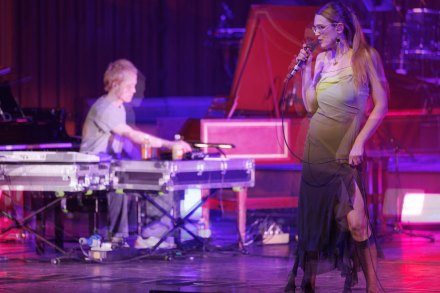
A giddy delight: Regina Spektor, at the Royal Festival Hall reviewed

Pop

We’ll get on to the brilliance of Regina Spektor in a moment. But first a question: why are pop music fans treated so abysmally? The afternoon of Spektor’s second sold-out show at the Royal Festival Hall, the venue tweeted that she would be on stage at 7.30 p.m. She actually took to the stage a few minutes past 8 o’clock. Spektor was absolutely magnificent once she did come on. She filled the room with charisma, charm and wit If that were a one-off, so be it. But anyone who goes to a lot of shows is familiar with how malleable the concept of stage-time is in pop music. Lana Del Rey had her Glastonbury set cut short because she was so late coming on – apparently she was having her hair done. It’s maddening. Why can they not meet their call times?

The West has much to learn from Hungarian culture

Arts feature

In central Budapest a crew from Hungary’s state TV is filming the unveiling of a new street sign. In honour of his centenary year composer Gyorgy Ligeti now has a road named after him. Contemporary classical music is deemed newsworthy in Hungary. Even more astonishingly – and anyone working in British classical music might want to sit down at this point – the ‘Ligeti 100’ concert at the Budapest Music Centre, dedicated to a clutch of bracing new works, was being filmed for transmission prime time on the Hungarian equivalent of BBC1. Here, we’d be lucky if it got a midnight slot on Radio 3.

Why is this genius playing to a half-empty Royal Albert Hall? Benjamin Grosvenor Prom reviewed

Classical

There were times during last Friday’s First Night of the Proms when it felt as if we’d been transported back to Ohio during the Eisenhower administration. We could have been in Severance Hall, Cleveland, listening to its orchestra under George Szell – and there’s no higher compliment I can pay the BBC Symphony Orchestra, because the irascible maestro drilled his musicians to parade-ground perfection. You could tell the BBC orchestra was at the top of its game from the first snarls of the brass in Sibelius’s Finlandia – a more interesting piece of programming than it sounds. This was the choral version, in which the choir sings of Finland’s refusal to bend under Russian oppression.

An album of not terribly happy ballads: Blur’s The Ballad of Darren reviewed

Pop

Bands that have hung around, or gone away and come back again, occupy an increasingly sizeable percentage of pop’s bandwidth. When it comes to making new music, many are happy not to rock the boat, scraping by on the goodwill accumulated from past endeavours. Others strive to present a moving target, enjoying a more evolved, even argumentative, relationship with the sounds of their glory days. Two new albums tackle this dilemma, with varying degrees of success. Together for the first time since 2015, Blur do a fine job of straddling past and present.

Can ballet survive the culture wars?

Arts feature

Through several phases of the culture wars, ballet has served as a canary in the coal mine, its intense and exposed physicality highlighting all the issues surrounding sexuality, gender and power that have currently become our unhealthily narcissistic preoccupation. Perhaps the warnings started with the phenomenon of Vaslav Nijinsky. Against the defined masculinity and femininity of the Edwardian era, he stood out as seductively androgynous and effeminate as well as staggeringly charismatic – a godlike hero unashamed to represent le spectre de la rose. Bloomsbury ogled, and rumours about his pederastic relationship with his patron Serge Diaghilev circulated scandalously.

Intoxicating: Bruce Springsteen, at BST Hyde Park, reviewed

Pop

Seven years ago, I asked Bruce Springsteen what he meant when he talked of the covenant between himself and his audience. It was a long, thoughtful and thorough answer, and when I transcribed it, I realised he would have won Just a Minute, so clear was his reply. Part of what he said was this: ‘I have built up the skills to be able to provide, under the right conditions, a certain transcendent evening, hopefully an evening you’ll remember when you go home. Not that you’ll just remember it was a good concert, but you’ll remember the possibilities the evening laid out in front of you, as far as where you could take your life, or how you’re thinking about your friends, or your wife, or your girlfriend, or your best pal, or your job, your work, what you want to do with your life.

Was Vera Brittain really this insufferable? Buxton Festival’s The Land of Might-Have-Been reviewed

Opera

‘Ring out your bells for me, ivory keys! Weave out your spell for me, orchestra please!’ It’s lush stuff, the music of Ivor Novello, and when the Buxton International Festival announced a new musical ‘built around’ his songs, the heart took flight. Novello is one of those fringe passions that are, one suspects, a lot less marginal than fashion might suggest. If his great hit operettas of the 1930s and 1940s – The Dancing Years, King’s Rhapsody and the rest – really are unrevivable (and the jury is still out on that), a sympathetic, newly constructed showcase for his finest material in the manner of the Gershwin reboot Crazy For You might be the next best thing.

A naked pamphleteering exercise: Idiots Assemble: Spitting Image The Musical, at Phoenix Theatre, reviewed

Theatre

Nothing demonstrates the inanity of profanity like an undercooked comedy. The famous Spitting Image puppets have returned in a political musical that’s more cuddly than cutting. Writers Matt Forde and Al Murray add a lot of swearing to their punchlines without understanding why. The temptation to use the F-bomb is a warning sign from the writer’s internal editor: ‘Delete and try again.’ To enliven bad writing with curse words is to mistake the symptom for the cure. And the show chooses feeble or irrelevant targets. Rishi Sunak appears as a soppy head prefect who plots with Boris to depose King Charles and take over the monarchy.

Still one of the great vocalists: Peter Gabriel, at OVO Hydro Glasgow, reviewed

Pop

Most artists begin an arena show with a bang: emerging from the floor, the gods, on a hoist, everything short of being sprung headfirst from a cannon. Touring for the first time in seven years, Peter Gabriel shrugged off such rote conventions. At 8 p.m. on the dot, he shuffled on alone in a flat cap, for all the world a man with nothing more on his mind than inspecting his spuds down at the allotment. He offered a few words, some avuncular jokes, a self-deprecating jibe at his appearance. I found myself bracing for a PowerPoint presentation, but the message was simple enough not to need one: there are no stars here.

A comedy double act from John Cleese and Justin Welby: the Archbishop Interviews reviewed

Radio

I’m listening to John Cleese talking to Justin Welby in the new series of The Archbishop Interviews when the thought occurs to me that he might unwittingly be comparing himself to Christ. The comedian has just been discussing the failure of the literal-minded to comprehend sarcasm and irony, and the inanity of tabloid headlines, when he circles back to the topic of religion. Though not a believer himself, he is troubled by literal-mindedness in the reading of scripture. ‘Christ taught in parables,’ he notes, ‘and parables are not supposed to be taken literally.’ One can almost feel another headline coming on. Cleese has been waging a war against the wokerati for years.

Featherweight fun: La Cenerentola, at Nevill Holt Opera, reviewed

Opera

‘Goodness Triumphant’ is the subtitle of Rossini’s La Cenerentola, and you’d better believe he delivers. It’s the sweetest thing imaginable; true, the stepsisters are awful, but their spite bubbles over in streams of such sunny major-key effervescence that it’s hard to hold it against them. As for their father Don Magnifico, you can’t seriously hiss a villain whose principal ambition is unhindered access to the palace wine cellar. It’s testimony to just how deftly Rossini handles his material that the final scene – in which the now-royal Cinderella asks only that her stepfather address her, for the first time, as ‘daughter’ – can still make you go as gooey as a chocolate fondant.

Why aren’t Spoon filling stadiums?

Pop

Here’s a mystery for you. Why were Spoon, one of the most dynamic, sharpest rock bands in the world, playing a single night in a north London town hall (capacity 890) while Arctic Monkeys were playing three nights at Arsenal’s ground (capacity 59,000) as part of a UK tour that encompassed eight other stadiums in the UK, plus one arena, one park and Glastonbury? It’s not that Arctic Monkeys aren’t good – no one gets that kind of critical unanimity without being good. It’s just that Spoon are better, and better than almost everyone else. Onstage in London, aided by a genius sound engineer, Spoon were perfection So why aren’t Spoon filling stadiums? First, they rarely come to the UK.

Electrifying: the Grange Festival’s Queen of Spades reviewed

Opera

In opera, as in so much high-budget entertainment, expectation management is half the battle. With its massive Greek Revival mansion, approached through miles of rolling parkland, The Grange Festival has the grandest setting of any of the summer festivals; and that might have something to do with why the opera served up there has so often felt less than overwhelming. Possibly I’ve been unlucky in my choices at the Grange since it relaunched under the current management in 2017. But many different elements need to fall precisely into place at precisely the right time if an opera is really to catch light, and quite often, under those wide Hampshire skies, that necessary spark has been absent. Not this time.

Time to take your meds, Kanye

Television

No one does agonising quite like Mobeen Azhar. In several BBC documentaries now, he’s set his face to pensive, gone off on an earnest quest to investigate a touchy subject and reached his conclusions only after the most extravagant of brow-furrowing. There is, however, a perhaps unexpected twist: the resulting programmes are rather good, creating the impression – or even reflecting the reality – of a man determined to get to the often dark heart of the matter. For a while, it did look as if the programme’s main appeal might be as a comedy of liberal discomfiture In the past, Azhar has applied his methods to such issues as the long-standing effect of the Satanic Verses controversy and why British Muslims joined Isis.

Is Richard Thompson Britain’s Bob Dylan?

Pop

There are artists you go to see expecting to be challenged, surprised, even let down. And there are artists you can rely on to deliver more or less the same experience every time. Each approach has its merits. Richard Thompson is a ‘death and taxes’ kind of guy. The fact that his excellence feels inevitable can make it seem less excellent somehow, which doesn’t entirely seem fair. Richard Thompson’s greatest songs drink deeply of the dark stuff A founding member of folk-rock pioneers Fairport Convention, Thompson has been described as the British Bob Dylan. This makes sense in some ways.

Same old, same old: Wayne McGregor’s Untitled, 2023, at the Royal Opera House, reviewed

Dance

My witty friend whispered that Wayne McGregor’s new ballet Untitled, 2023 put her in mind of Google HQ – it’s certainly a mint-cool, squeaky-clean, future-perfect affair. The set by Carmen Herrera, subtly lit by Lucy Carter, suggests infinite space and distant horizons. The costumes by Burberry are streamlined and sexless. Anna Thorvaldsdottir’s vaporous score hovers over it all in a meditative trance. Ordinary human emotions struggle to express themselves in this brave new world: we have left planet Earth.

Like attending a joyous religious service: We Will Rock You, at the Coliseum, reviewed

Theatre

One of the earliest jukebox musicals has returned to the West End. When the show opened in 2002 the author, Ben Elton, plugged his production on TV chat shows with a wisecracking slogan: ‘We Will Rock You isn’t just a title… it’s a promise.’ The easy-listening storyline draws inspiration from the Old Testament and from Mad Max. We’re in a dystopian future world ruled by faceless corporations that sell mass-produced garbage to zombified youngsters addicted to their mobile phones. A tribe of exiles, the Bohemians, roam the underworld in search of the relics of a vanished culture known as ‘rock’n’roll’. The Bohemians meet a visionary outcast, Galileo, who recites song lyrics that the Bohemians recognise as vestiges of the ‘sacred texts’ that they worship.

To die for: Grange Park Opera’s Tristan & Isolde reviewed

Opera

There are a lot of corpses on stage at the end of Charles Edwards’s production of Tristan & Isolde for Grange Park Opera. At this stage in the drama, directors tend to fade out the bloodbath, the better to focus on Isolde’s final dissolution into bliss. But as Michael Tanner argues, Tristan, like the Ring, offers no bearable solution to its central problem, however much the music – that great deceiver – might try to persuade us otherwise. You want art to tell you the truth? Wagner knew that you can’t handle the truth. He declared that in Tristan ‘from the first to the last, love shall for once find utter fulfilment’. So it does, and the result is carnage. So yes, here’s to the corpses, and to many other aspects of this attractive staging.