Culture

Culture

The good, the bad and the ugly in books, exhibitions, cinema, TV, dance, music, podcasts and theatre.

Distressingly vulgar: Royal Ballet’s Cinderella reviewed

Dance

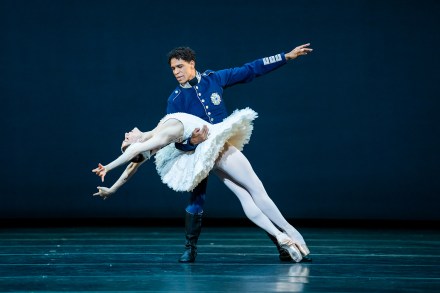
Despite its widespread rating as one of his masterpieces, Frederick Ashton’s Cinderella is chock full of knots, gaps and stumbling blocks – all of which the Royal Ballet’s new production throws into relief. Ashton isn’t altogether to blame: Prokofiev’s graphic score dictates an excessive amount of time given over to knockabout for the Ugly Sisters (mostly a matter of them bumping into each other) and a tiresome court jester. There’s nothing to be done with an inert third act, which in Ashton’s treatment merely recapitulates previous choreography and ends with a static tableau. The Prince has no personality whatsoever: he’s little more than a handsome porter. Yet genius shines through.

Why supergroups nearly always suck

Pop

Recently in these pages, ruminating on the ghastly Rock and Roll Hall of Fame, I wrote that music does not conform to any equation. I should have added: except, of course, for the occasions when it does. One tried-and-true formulation is that ‘super-groups’, those bespoke vehicles bringing together artists best known either for working alone or within other bands, tend to add up to considerably less than the sum of their parts. Supergroups are in thrall to the idea of their own existence; the music trails sluggishly behind We could blame Eric Clapton. Indeed, it seems remiss not to. Blind Faith – a fatally untidy union of Clapton (ex-Cream), Steve Winwood (ex-Traffic) and Ginger Baker (exhausting) – started the whole thing off in 1968, and not in a good way.

The opera’s a masterpiece but the production doesn’t quite come off: ENO’s The Dead City reviewed

Opera

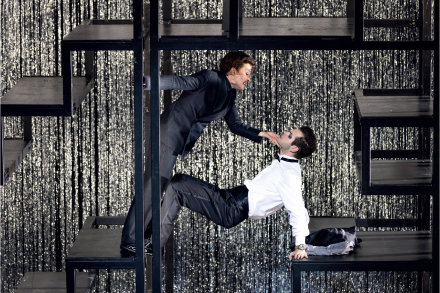
English National Opera has arrived at the Dead City, and who, before Christmas, would have given odds that this new production of Korngold’s Die tote Stadt would ever make it this far? This is late-Romantic music-drama on an exuberant scale; it simply doesn’t lend itself to pubs and car parks (even the reduced version staged – superbly – at Longborough last summer used an orchestra of some 60 players). Korngold deals with strong emotions (grief, delusion and obsessive love) with a melodic generosity that has historically provoked the prissiest instincts of the British operatic establishment. The Royal Opera held its nose and staged a brief run in 2009, before sweeping it hastily under the carpet. But not ENO.

Pretty, charming and largely unremarkable: Devonte Hynes & the LSO reviewed

Pop

Think of pop music as being like the parable of the sower. These days the seed falling on stony ground comes from the young rock bands, while the stuff that’s finding fertile earth is on the edges of R&B where it shades into other styles, especially psychedelia. It works from both ends: the Australian group Tame Impala went from being a workaday psychedelic rock band to being festival headliners by bringing dance music into their sound. Meanwhile within black music, Janelle Monae – perhaps better known as an actor – and Solange Knowles are regarded by critics as something not far short of deities for their Afrofuturist, trippy takes on R&B. In the UK, Devonte Hynes has become our leading representative of the unlimited possibilities of combining genres.

If you’re anywhere near Edinburgh, get a ticket: Scottish Opera’s Il trittico reviewed

Classical

It does no harm, once in a while, to assume that the creators of an opera actually know what they’re doing. Puccini was clear that he wanted the three one-act operas of Il trittico to be performed together and in a particular order. Promoters and directors have had other ideas, and between the wars it was apparently common to perform the triptych’s comic final opera, Gianni Schicchi, in a double bill with Strauss’s Salome, which must have been an interesting night out. Come for the necrophilia, stay for the lulz. But Scottish Opera’s new production presents Il trittico in the form the composer intended, and what d’you know? It works.

Why does everyone hate Max Reger?

Classical

The German composer Max Reger, born 150 years ago next week, is mostly remembered today for countless elephantine fugues and one piece of lavatory humour. When he was savaged by the Munich critic Rudolf Louis, he wrote back to him: ‘Sir, I am sitting in the smallest room of my house. I have your review before me. In a moment it will be behind me.’ The quip was probably borrowed from Voltaire, but since no one can find it in his writings the credit has gone to Reger. Max Reger was probably the most technically accomplished writer of large-scale fugues since Bach But let’s not dwell on the image of the morbidly obese composer taking his revenge. What’s interesting is that Reger was hated by so many critics.

A ripping production with plenty of laughs: Guys and Dolls, at the Bridge Theatre, reviewed

Theatre

Further than the Furthest Thing is an allegorical play set on a remote island populated by English-speakers from all over the world. Dialect experts will have a ball unscrambling the set-up. First we meet Auntie Mill, a white Scotswoman whose husband, Uncle Bill, is a black fisherman with a West Country accent. Their nephew, Francis, is a mixed-race teenager whose verbal mannerisms seem to originate from North Yorkshire. And he has a pregnant girlfriend, Rebecca, who looks east Asian but talks like a Dubliner. This crazy muddle may be a deliberate assault on the entire cult of colour-blind casting. Or it could be a thoughtless embrace of chaos. Either way, it’s baffling to watch. Theatre is all about resemblances and the closer the resemblance, the more successful the play.

The most exciting live band in Britain right now: Young Fathers, at the O2 Academy, reviewed

Pop

There are several reasons why Young Fathers currently feel like the most exciting live band in Britain, but for now let’s concentrate on effect rather than cause. The Edinburgh trio have somehow managed to dispense with all the froth and blather of concert-making – gratuitous chat; choreographed audience interaction; the fat and gristle – to deliver a show that is all attack. Every minute is a prime lean cut, direct and thrilling. They don’t mess about during the first of two sold-out Glasgow shows, but then brevity appears to be a kind of manifesto. The new album, Heavy Heavy, their fourth and not quite their best, lasts barely 30 minutes. Tonight, they perform 17 songs in an hour. The set is similarly minimalist.

Generous, boundless, turbo-charged: Turn It Out with Tiler Peck and Friends, at Sadler’s Wells, reviewed

Dance

The death last week at the age of 83 of the sublime Lynn Seymour – muse to Ashton and MacMillan, the creator of roles in Romeo and Juliet and A Month in the Country among many others – set me thinking gloomily about the current dearth of ballerinas with her questioning intelligence and free spirit. So much technical proficiency around, so many elegant gymnasts, Dutch dolls and Sugar Plum Fairies, but so little distinctive personality or temperament. Where is the mystique, the grandeur, the ability to ambush our emotions? Her clarity of articulation is bobby-dazzling, her energy apparently inexhaustible Tiler Peck is among the best of the new breed. Star of New York City Ballet, she is all bubble and brilliance, a cheerleader, a can-do sort of dancer with boundless verve.

Electrifying: London Handel Festival’s In the Realms of Sorrow, at Stone Nest, reviewed

Opera

Hector Berlioz dismissed Handel as ‘that tub of pork and beer’ but it wasn’t always like that. Picture a younger, sexier Handel, rocking into Rome aged 22 and challenging Scarlatti to a keyboard duel. The Italian elite couldn’t get enough of Il caro Sassone, ‘the darling Saxon’, and he repaid them with 80-odd short Italian cantatas: little controlled explosions of character, colour and flamboyant melody in which his whole future career as a musical dramatist can be heard in concentrated form. This was an encounter with a genuinely evil work of art For the London Handel Festival, the director Adele Thomas staged four of these pocket-operas. The setting was Stone Nest, a domed former church, and the performance took place in the round.

Full of love: Butler, Blake and Grant, at the Union Chapel, reviewed

Pop

Years ago, I asked Robert Plant what he felt about the world’s love of ‘Stairway to Heaven’. He said he no longer really knew what the song was about, and it didn’t mean an awful lot to him. But, he added, that didn’t really matter because the people who loved the song had given it their own meaning. Songs don’t have to be as ubiquitous as ‘Stairway to Heaven’, however, to work their way into your soul. It’s perhaps even easier to develop a personal connection with a song that one doesn’t have to share with the entire world. Lots of people just wanted to feel 21 all over again Last weekend I went to two shows that were very specifically about the past.

Dated and wasteful: Rusalka, at the Royal Opera House, reviewed

Classical

Careful what you wish for. There can be no definitive way to stage an opera, and it’s the critic’s duty to keep an open mind. Still, we’ve all occasionally gazed at a white cube that represents an Alpine meadow, or watched a chivalric hero slouch across the stage in tracksuit bottoms, and felt our hearts slump. Then you pitch up at the Royal Opera House’s new production of Dvorak’s Rusalka and it’s as if some mischievous sprite has magicked you straight back to 1960. The directors are also credited as ‘creators’ (back in your box, composer and librettist!) At first, you don’t suspect much. It’s actually rather enchanting: deep forest darkness and an aerial dancer in rippling, shimmering robes, drifting into the light in an exquisitely realised swimming effect.

His nasal American-Yorkshire voice struggles to convince: Yungblud, at OVO Hydro, reviewed

Pop

Even before albums became bloated, thanks to the largesse offered by CDs and streaming, most contained filler: those so-so songs merely passing needle time, weak aural bridges between the big hits and superior deep cuts. Bubblegum-punk and Auto-Tuned pop, sung in a distinctly nasal American-Yorkshire hybrid Increasingly, live concerts have filler, too. With the collapse of record sales, young pop performers feel compelled to jump into huge arenas more quickly than might be wise. It’s not always as easy as it looks. A massive social media profile doesn’t always translate into having sufficient willing bodies to fill these vast spaces, and while you can ship in pyrotechnic back-up, fancy sets and snazzy screens, one thing you can’t subcontract out are the songs.

How has it escaped being cancelled? The Lehman Trilogy, at the Gillian Lynne Theatre, reviewed

Theatre

Standing at the Sky’s Edge is an ode to a monstrous carbuncle. The atrocity in question is a concrete gulag, Park Hill, built by Sheffield council in the 1960s as a punishment for hard-up locals who couldn’t afford to buy a house. The show is a propaganda effort on behalf of bossy, big-state, high-tax Labour authorities so the smiling residents of the brutalist eyesore keep telling us how much they love their multistorey dungeon. ‘You can see the whole city from up here,’ say the characters, as if no Sheffield resident had ever mounted any of the bluffs or heights that surround the area. The script is honest enough to admit that Park Hill’s secondary purpose is to reduce the city’s population by encouraging depressives to jump from its upper levels.

Crapcore: ENO’s The Rhinegold reviewed

Opera

Tubas and timpani thunder in The Rhinegold as the giants Fasolt and Fafner, having built Valhalla, arrive to claim their fee: Freia, goddess of beauty and youth. It doesn’t go well. Suddenly Fasolt drops his defences and declares his yearning (the translation is John Deathridge’s) for ‘a woman who’d lovingly and softly live with us lowly mortals’. At those words the music melts, and a solo oboe sings a melody so poignant that Ernest Newman thought it worthy of Mozart. This is the first instance in the whole cosmic drama where Wagner gives us a glimpse, however unformed, of something that an adult human might recognise as love.

The unknown German composer championed by Mahler

Classical

I was sceptical when the lady on the bus to Reading town centre told me that her father knew Liszt. Who wouldn’t be? This was a long time ago, mind: probably 1980, and I was on my way into school. I think our conversation started because I was reading a book about music. She was old and tiny, wearing a luxuriant wig. She introduced herself as Mrs Ball but her accent was unmistakably German. Even so, Liszt had been dead for nearly a century. Could it be true? ‘Oh, my father knew everyone,’ she said. ‘Richard Strauss was a great friend. And dear Bruno Walter. He lived in our house, you know. They were wonderful days – we were surrounded by the finest music.

Down with the Rock and Roll Hall of Fame!

Pop

There is footage on the internet of Robert Smith, lead singer in the Cure, being interviewed on the occasion of his band being inducted into the Rock and Roll Hall of Fame in 2019. At high pitch and tremendous volume, the host yells up a storm about the incredible honour being bestowed upon the group, while Smith claws at his face, grimaces, and rolls his eyes. ‘Are you as excited as I am?’ she shouts. ‘By the sounds of it, no,’ Smith mutters – speaking, surely, for all of us. Of all the many reasons to dislike the RRHOF – some of which we’ll get to shortly; and yes, the acronym is one of them – it is the jarring mix of shrieking self-love and august earnestness which rankles most.

Close to perfection: Opera North’s The Cunning Little Vixen reviewed

Opera

Opera North has begun 2023 with a couple of big revivals, and it’s always rewarding to call in on these things and see how they’re holding up. The long-lived, endlessly revived classic production is one of the quirks of operatic culture. It actually feels disconcerting, as a regular operagoer, to go to the conventional theatre (you know, the vanilla kind where they don’t sing) and discover that they’ve started again from scratch. A completely new Tempest? What was wrong with the 2016 staging? Possibly it’s to do with the financial realities of an art form that needs to keep a full orchestra and chorus on the payroll. A Year Zero policy every other season simply isn’t economically viable.

Pam Tanowitz is the real deal: Secret Things/Everyone Keeps Me, at the Linbury Theatre, reviewed

Dance

Civilisation has never nurtured more than a handful of front-rank choreographers within any one generation, with the undesirable result that the chosen few end up excessively in demand, careering around the globe and overworking, delegating or repeating themselves. Please can someone up there ensure that Pam Tanowitz doesn’t suffer such a fate. This fifty-something American has recently matured as one of the best in field, producing dance of rigorous clarity, austere yet richly nuanced, that makes the work of certain other big names look fuzzily derivative or gimmicky. Just don’t ask too much of her, because she works through fine detail, not a broad brush.

Widescreen pop-rock that deserves to be better known: Metric, at the Roundhouse, reviewed

Pop

Why aren’t Metric stars? In their native Canada, several of their albums have gone platinum, but the rest of the world? Not so much. Twenty-five years after Emily Haines and James Shaw formed the band, here they still are, playing to a not-quite-full Roundhouse to promote their eighth album, Formentera. It was a pretty good turnout – about 3,000 people on a Wednesday night in January – but I doubt anyone ever formed a band thinking: ‘In a quarter of a century, we might be able to not quite fill one of London’s mid-sized venues!’ Writing very good songs isn’t enough to take a band to the top, but Metric do write very good songs All of which is a shame because they were flatly brilliant.

These drag queens haven’t a clue how banal their problems are: Sound of the Underground, at the Royal Court, reviewed

Theatre

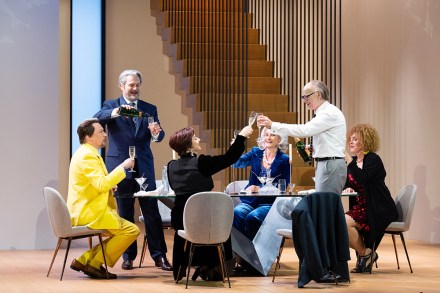
Sound of the Underground is a drag show involving a handful of cross-dressers who spend the opening 15 minutes telling us who they are. Then, rather ominously, they announce: ‘We’ve written a play.’ But they haven’t really. The scene shifts to a kitchen where the drag queens meet to discuss their pay and conditions, and the show turns into an advertisement for their woes. Drag is facing a crisis, we hear, caused by its sudden popularity. Drag queens are in demand from TV bosses and corporate executives but the artistes feel dismayed and traduced by this surfeit of opportunity. They loathe RuPaul, a cross-dresser favoured by the BBC, and they blame him for betraying the true spirit of drag, whatever that may be. One of them calls RuPaul ‘exclusionary’.

Nursery-level music: Sam Smith’s Gloria reviewed

The Listener

Grade: D Yes, it’s porky Sam from Essex, with his body issues and his complex gender pronouns and his endless narcissistic banalities, his depthless self-importance. This is Smith’s fourth studio album in a career that seems to be nosing a little downhill, mercifully – although it will still sell by the million worldwide. He has recently decided he is genderqueer, rather than just gay. He says he feels like a woman. Me too, mate – but what’s a boy to do? The good things? Just one. He has a pleasant and flexible tenor voice which, when unadulterated, is capable of carrying a tune – if there were, y’know, tunes. And that’s it.

Still ugly but worth catching for the chorus and orchestra: Royal Opera’s Tannhäuser reviewed

Classical

A classical concert programme is like a set menu, and for this palate the most tempting orchestral offering in the UK this January came from the Slaithwaite Philharmonic under its conductor Benjamin Ellin. They opened with a suite from Bernard Herrmann’s Vertigo, and the inclusion of Hollywood film music in a ‘straight’ classical programme was interesting in itself. Film music has been around for more than a century now. Many scores are fully as effective in concert as (say) Schubert’s Rosamunde or Beethoven’s Egmont, and yet this almost never happens. Film scores (unless by a big beast of the classical world) are generally hived off into ‘pops’ nights. Snobbery is the most adaptable of vices.

Two of Scotland’s most inventive solo musicians: Fergus McCreadie, Maeve Gilchrist + Mr McFall’s Quartet reviewed

Pop

Folk is the Schiphol of Scottish music. Eventually, every curious traveller passes through. From arena rockers to rappers, traditional music remains an undeniable source. Which is why the second word in ‘Celtic Connections’ is at least as significant as the first. Now in its 30th year, lighting up the otherwise unpromising prospect of a Glasgow January, this year’s instalment of the roots festival features artists from all corners of the globe. Many of them would regard folk only as their second or third musical language, rather than the mother tongue. One of the early highlights makes the point rather beautifully. It’s a homegrown affair, showcasing pianist Fergus McCreadie and harpist Maeve Gilchrist, two of Scotland’s most inventive solo musicians.

A brilliant show : The 1975, at the O2, reviewed

Pop

The great country singer George Jones was famed not just for his voice, but also for his drinking. Once, deprived of the car keys, he drove his lawnmower to the nearest bar. In the very good Paramount+ drama about Jones and Tammy Wynette – entitled George and Tammy, so there’s no excuse for forgetting – Michael Shannon, playing Jones, is asked time and time again why he keeps on making such a mess of his life and his career. ‘That’s what the people want from me,’ he shrugs in reply. That came to mind watching the 1975’s return to British arenas, in a tour grandiosely and amusingly billed as ‘In Show and In Concert – The 1975 At Their Very Best’.

Mel C’s debut as a contemporary dancer is impressive: How did we get here?, at Sadler’s Wells, reviewed

Dance

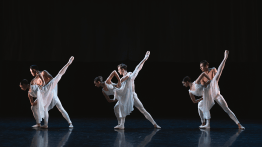
‘We hope you enjoy the performance,’ announced the Tannoy before the lights went down for How did we get here? – the accent being put on ‘hope’, as though enjoyment was unlikely. I took a deep breath in anticipation of modern dance at its most portentous and pretentious, my expectations already depressed after imbibing some hot air from a note in the programme – ‘we feel our power, all the way to the edges of ourselves’ and so forth. How did we get here? Or should that be What am I doing here? But what transpired was a thing of simple beauty: spare, precise, lucid, free of wanton gimmicks or histrionics.

Stirring and sophisticated: RLPO, Chooi, Hindoyan, at the Philharmonic Hall, reviewed

Classical

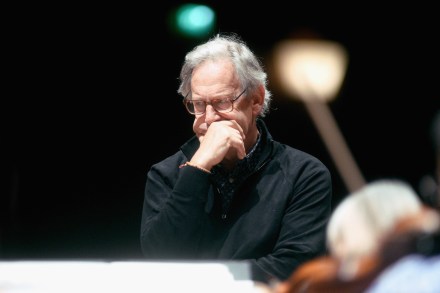
Daniel Barenboim was supposed to perform with the Royal Liverpool Philharmonic Orchestra earlier this month. His recent health concerns made that impossible, but it was a reminder that for the first time since the appointment of the late Libor Pesek in 1987, the RLPO is under the direction of a conductor soaked in the German tradition. Domingo Hindoyan, the orchestra’s chief conductor since autumn 2021, was born in Venezuela and has a soft spot for French music, but Barenboim is his mentor and there’s a gravity – an intellectual centre – to his conducting that made me eager to hear him get to grips with the sacred monsters of German romanticism. It’s something of an RLPO tradition, after all.

Reduced me to a tearful, choked-up mess: Royal Opera’s Magic Flute reviewed

Opera

‘The rays of the sun conquer the night’ sings Sarastro, at the end of Mozart and Schikaneder’s Die Zauberflöte. It was the Royal Opera’s first performance of January 2023 and there’s something profoundly consoling about seeing this of all operas at the midnight of the year. The lights dim; five chords ring out and that first triplet from the violins falls quietly into place as Mozart engages the gears and together we move off on our long, sweet journey towards light. In David McVicar’s staging, robed figures process down the auditorium bearing glowing orbs, while Tamino, in late 18th-century frock-coat and knee-boots, clambers out from the boxes and vanishes through a portal in the front-cloth. There is a world elsewhere. And then we’re off.