Culture

Culture

The good, the bad and the ugly in books, exhibitions, cinema, TV, dance, music, podcasts and theatre.

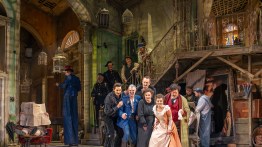
Wagner rewilded: Das Rheingold, at the Royal Opera House, reviewed

Opera

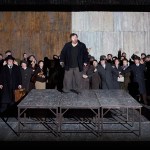
In Northern Ireland Opera’s new Tosca, the curtain rises on a big concrete dish from which a pair of eyes gaze down, impassive. Walls of scaffolding tower on three sides of the stage, creaking as they expand under the heat of the stage lights. Point taken: Cameron Menzies’s production (the sets are by Niall McKeever) is a semi-abstract updating. It’s a fairly standard contemporary approach to Puccini’s Napoleonic thriller, though whether you get the full impact that comes with a more period-specific setting – that sense of individuals being crushed beneath the wheels of history – is another question.

The dazzling classic The Red Shoes has several unfashionable lessons for us today

Arts feature

The Red Shoes, Michael Powell and Emeric Pressburger’s 1948 film about a ballet and its company, is 75 this month, and its birthday is being marked with great fanfare. From October to December, the BFI is putting on a major retrospective of the films of Powell and Pressburger, with an accompanying exhibition and nationwide screenings of The Red Shoes itself. A companion book to The Red Shoes by Pamela Hutchinson – stuffed with insight and background – is being published, as well as a lavish volume, The Cinema of Powell and Pressburger, complete with pictures and essays (almost love letters) about the late filmmakers from artists such as Tilda Swinton and director Joanna Hogg.

Rejoice that Hyperion’s impeccable back catalogue is finally available to stream 

Classical

At the beginning of the 1980s a former ice-cream salesman called Ted Perry drove a London minicab to raise money for his dream project: the world’s most smartly curated classical record label. For the first time these magnificent recordings are arriving on Spotify, Apple Music and other platforms He called it Hyperion, after the Greek sun god, and by the time he died in 2003 it had acquired its own mythology.

Watch three irascible women screaming at each other: Anthropology, at Hampstead Theatre, reviewed

Theatre

Anthropology is a drama about artificial intelligence that starts as an ultra-gloomy soap opera. A suicidal lesbian, Merril, speaks on the phone to her kid sister, Angie, and they discuss Merril’s beautiful ex-girlfriend. After ten minutes, we learn that Angie’s voice belongs to a robot, Digital Angie, created by Merril to replicate the real Angie who vanished a year earlier in unexplained circumstances. Then another surprise. Digital Angie becomes self-aware and turns into a detective who offers to help Merril investigate Angie’s disappearance and to find out if she’s still alive. Angie then turns into a third character who tries to interfere with Merril’s social life.

A haunting masterpiece: Northern Ballet’s Adagio Hammerklavier reviewed

Dance

One could soundly advise any choreographer to avoid music so transcendentally great in itself that dance can add nothing except banal images. Only a handful of exceptions sneak past the rule: MacMillan’s setting of Song of the Earth, perhaps, and also Hans van Manen’s Adagio Hammerklavier, his audacious attempt to visualise the infinitely slow movement of Beethoven’s epic piano sonata Op. 106. No individuals stand out; this is an ensemble with a collective identity that rejects the concept of stardom Northern Ballet has honourably revived this haunting masterpiece as part of its autumnal triple bill, and its impact overshadows the two novelties that frame it. What is its secret?

Mildly pleasant 1980s hard rock: ‘Angry’, by the Rolling Stones, reviewed

Pop

The new Rolling Stones single, supposedly their best in many a decade, is called ‘Angry’. And while on the surface it seems to be about the millionth anguished plea from Mick Jagger to some unseen woman to give him a shag, it reportedly stems from Mick’s mystification as to why everybody is angry these days. I suppose he is forgetting that youth has always been in a more or less perpetual state of pre-rational, pettish fury – a fury which, back in the day Mick was canny enough to take advantage of. You may remember his incandescence at being unable to attain any satisfaction, for example, or at the unwanted ingression of an unidentified person on to the cloud he was occupying.

The best new album I’ve heard this year: Being Dead’s When Horses Would Run reviewed

The Listener

Grade: A– The point of a sudden, abrupt change in the time signature and instrumentation of a song is to surprise the listener and undermine his or her expectations. If, however, you do it in every song, then the point is lost, and the listener finds himself actually waiting for the weirdnessto begin. So it is with Being Dead – and it’s about the only thing I have to carp about, because overall When Horses Would Run is a lovely album, full of often complex but always catchy melodies and imbued with an agreeably surreal sense of humour. The band is comprised of Falcon Bitch, Gumball and Ricky Moto and they come from Austin, Texas. Their shtick is punky surf guitar on top of which those clever tunes are sung as if by a cathedral choir in falsetto.

Every crumb of Kurtag’s music is a feast: Endgame, at the Proms, reviewed

Classical

The fun starts early in Beckett’s Endgame. Within minutes of opening his mouth, blind bully Hamm decides to starve his servant. ‘I’ll give you just enough to keep you from dying,’ he tells Clov. One biscuit and a half. Which feels positively lavish compared with what composer Gyorgy Kurtag feeds us musically in the first 20 minutes of his operatic adaptation (receiving its British première at the Proms). Crumbs, we get. One single lonely tone, from one instrument, every few seconds, all so spaced out that it almost sounded like the orchestra was on tiptoe, glutes clenched, attempting a heist perhaps, trying to half-inch some notes from somewhere. Every crumb of Kurtag’s music is a feast.

A euphoric meat-and-two-veg programme: Tonhalle-Orchester Zürich/Paavo Jarvi, at the Proms, reviewed

Classical

We used to call it a ‘meat and two veg’ programme, back in my concert planning days: the reliable set menu of an overture, a concerto and a symphony. It was an unfortunate term. No artistic planner likes to feel that they’re playing it safe, still less (and sources report that this goes double at the BBC) that they’re giving the public what they want. Traditional formats, familiar warhorses, dead white males: yawn! Then Paavo Jarvi and the Tonhalle-Orchester Zürich rock up at the Proms with a Beethoven overture, a Tchaikovsky concerto and Dvorak’s New World symphony and what do you know? The Royal Albert Hall was packed.

‘People thought I was insane’: Graham Nash on the birth of Crosby, Stills and Nash

Arts feature

Graham Nash always seemed like the reasonable, peace-making one among his famously fractious compadres, David Crosby, Stephen Stills and Neil Young. But he didn’t get to where he is today by being plagued with doubt or false modesty. Even talking remotely over a Zoom connection, he still radiates a kind of unshakeable certainty. ‘I just trust that the universe loves me enough to support what I’m doing,’ he declares. ‘I don’t seek my life, my life happens to me and I’m perfectly content to let it. Look what I’ve done in my life… Pretty nice!’ ‘Joni was the only witness to that sound and it was created in less than a minute’ At 81, Nash is, incredibly, a pre-baby boomer, but mentally he seems about three decades younger.

Doesn’t get better than this: The Threepenny Opera, at Edinburgh International Festival, reviewed

Classical

It’s the Edinburgh International Festival, and Barrie’s back in town. Once, Edinburgh was pretty much the only place that you could see Barrie Kosky directing in the UK; there was a satisfyingly transgressive thrill about an opera director whose priorities were so self-evidently about the whole art form that he’d happily stage Monteverdi as a tango-powered revue. In recent years, Baz the Knife has supplied increasingly rare moments of discovery amid the EIF’s all-you-can-eat buffet of touring orchestras and reheated prestige productions. But he’s not the rare bird he was. In fact, with a Carmen in rep at Covent Garden and a new London Rheingold coming soon after his Dialogues des Carmélites at Glyndebourne and the Proms, he’s starting to look like a fixture.

A 50-quid, hour-and-a-bit troll: Aphex Twin, at Field Day, reviewed

Pop

Forty per cent of London is green space. And what we do with all that grass – all that potential – is pave it with music festivals. This year, Hyde Park hosted Billy Joel and Bruce Springsteen. Gunnersbury Park had Boygenius. Finsbury Park welcomed Pulp and Travis Scott. Field Day is a staple of the season. Always falling on a Saturday in late August, the day is wholly reserved for electronic music. Reams of twentysomethings make the pilgrimage: set off from wherever, change at Bank, District Line to Mile End, 15-minute walk, enter, set aside £7.50 for a can of warm Red Stripe. Everything is very clean: the organisers don’t want Woodstock. The first thing you see upon entry is a stand to buy Alpine’s MusicSafe Pro High Fidelity Earplugs.

Invention and irreverence: Lankum, at The Queen’s Hall, reviewed

Pop

In a few days, Lankum will most likely win the 2023 Mercury Music Prize for their fourth album False Lankum – but don’t let that put you off. Increasingly, the Irish quartet feel like they belong to the lineage of artists who have wreaked radical and lasting change upon British and Irish folk traditions, from Davey Graham, Fairport Convention and Pentangle to Steeleye Span, the Pogues and Lau. The kind of artists who burrow deep into the forest of tradition in order to plant dynamite within the heartwood. At times, we might have been below deck on a ship heading for Ellis Island Appearing at the Edinburgh International Festival (EIF), Lankum played a set spilling over with invention, irreverence and attrition.

Fast cars, minimalist design and en suite bathrooms: the real Rachmaninoff

Arts feature

The train from Zurich to Lucerne tips you out right by the lakeside, practically on the steamboat piers. A white paddle-steamer takes you out of the city, past leafy slopes and expensive-looking mansions. Tribschen, where Wagner wrote the ‘Siegfried Idyll’, slides away to the right as you head out across the main arm of the lake. At the foot of Mount Rigi, shortly before the steamer makes its whistle-stop at the lakeside village of Hertenstein, is a promontory where – if the sun is coming from the west – a yellow-coloured cube shines among the trees. This is the house that Sergei Rachmaninoff built between 1931 and 1934: Villa Senar, his last attempt to make a home outside Russia in Europe.

Dismantle the maestro myth and classical music will suffer

The news that conductor John Eliot Gardiner is thin-skinned, ill-mannered and thuggish should not be news to anyone. Or not to any Spectator readers anyway. ‘What, one wonders, will John Eliot Gardiner be chiefly remembered for?’ wrote Stephen Walsh in October 2013. ‘Perhaps, by many who have worked with him, for his notorious rudeness to performers and colleagues.’ Peter Phillips wrote about Gardiner ‘losing his temper’ with a member of the London Symphony Orchestra in April 2014 (Private Eye had alleged the conductor had clocked a trumpeter). ‘Is there anything [Gardiner] can’t do?’ asked Damian Thompson in a Heckler column from 2015. ‘The answer is yes. One art eludes him: good manners.

It was midnight in a field in Wales and I was lying face down in six inches of mud: Green Man Festival reviewed

Pop

I love Green Man. The smallish festival is the second most beautiful site I’ve ever visited (after G Fest, which is situated on a beach in a fjord in the Faroe Islands). Nestled in a valley between the mountains of the Brecon Beacons, it has great bills, it’s impeccably organised and I feel nourished by it. But, in the interests of being honest about festivals for those who have never been, I should also confess that this year it supplied the single most miserable experience of my music-watching life. It was midnight, in a field in Wales, and I was lying face down in six inches of mud Friday was the kind of day Noah might have felt a little discombobulated by. It began raining before dawn and it never let up. Come nightfall, the wind picked up too.

A brilliantly cruel Cosi and punkish Petrushka but the Brits disappoint: Festival d’Aix-en-Provence reviewed

Classical

Aix is an odd place. It should be charming, with its dishevelled squares, Busby Berkeley-esque fountains, pretty ochres and pinks. Yet none of it feels quite real. It’s as if an AI bot had been asked to design a Provençale city. Everything is suspiciously perfect. And then you notice all the Irish pubs and American student clones. It’s the prettiness of a Wes Anderson set – with the charm of an airport. In this uncanny valley, however, lies what continues to be one of the world’s classiest opera festivals. The major new commissions this year were two British chamber operas. George Benjamin and Martin Crimp were returning with Picture A Day Like This, their third collaboration for Aix.

Imagine a school concert hosted by Bela Lugosi: Budapest Festival Orchestra and Ivan Fischer, at the Proms, reviewed

Classical

‘Audience Choice’ was the promise at the Budapest Festival Orchestra’s Sunday matinee Prom, and come on – who could resist the chance to treat one of the world’s great orchestras like a colossal jukebox? Actually, this wasn’t the latest wheeze of some clueless BBC head of music: it’s a favourite party trick of the BFO and its conductor Ivan Fischer. The audience has a ‘menu’ of some 275 individual works and symphonic movements; they vote for six of them and the BFO plays their selection, unrehearsed, on the spot. Orchestral musicians never do anything unrehearsed. They hate it. But the BFO does it anyway, because they’re the best, and they know they are.

Uneasy listening: Kathryn Joseph, at Summerhall, reviewed

Pop

I have always been fascinated by artists who bounce between tonal extremes when performing, particularly the ones who serve their songs sad and their stagecraft salty. Adele, for example, fills the space between each plushily upholstered soul-baring ballad by transforming into a saucy end-of-pier variety act, coo-cooing at the crowd and cursing like a squaddie. John Lennon gurned and clowned his way through the Beatles’ concerts, subverting the naked suicidal plea of ‘Help!’ in the process. John Martyn would belch and joust in mock-Cockney at the conclusion of a particularly sensitive piece. Jackie Leven punctuated songs of immense pain and sadness with eye-watering stories of defecating in alleyways and getting blootered with the Dalai Lama’s bodyguard.

A vanity exercise: Carlos at 50, at the Royal Opera House, reviewed

Dance

In 2015 Carlos Acosta announced his retirement from the Royal Ballet and the classical repertory. It seemed like the right moment; he was 42 and, truth to tell, some of us could detect a slight waning of his prowess and physique. Time to move on: since then, he has done great work in his native Cuba and is currently a venturesome artistic director of Birmingham Royal Ballet. He is a rather wonderful person. Eight years after his withdrawal from Covent Garden, however, he has made a brief return – addressing an itch, he says, that had to be scratched. The house sold out for five nights running and the reception was rapturous, but I am left with mixed feelings.

Is it all an elaborate practical joke? Mac DeMarco, at Hackney Empire, reviewed

Pop

It’s not just who our pop heroes are that marks the passing of the generations; it’s how those heroes present themselves. Kevin Rowland, who turns 70 next week, appeared on stage for his London album launch in a jaunty sailor’s hat and striped top, looking as though he’d just come from a fashion shoot. Mac DeMarco, aged 33, ambled on in baseball cap, shlubby T-shirt and jeans. Rowland was upstanding, commanding and just a little forbidding. DeMarco sat on a stool and told a long story claiming that he and his keyboard player had been Oregon miners: a story which extended to include coprophagia, hair fetishism and maple syrup. Rowland is total commitment; DeMarco is total detachment. Both were adored above and beyond the usual level of dedication.

The problem with pop-literary collaborations

Pop

‘We all secretly want to be rock stars,’ the 2022 Booker Prize-winning author Shehan Karunatilaka said recently. By ‘we’ he meant novelists, and he was more or less right. Most authors want to be rock stars, just as many rock stars aspire to bookish credibility. The former crave a whiff of glamour and instant gratification; writing offers precious little of either. Musicians seek gravitas and some wider recognition that they possess the tools to extend their literary genius beyond three verses and a killer chorus. Both parties tend to discover that they do what they do as a day job for a good reason.

An absolute romp framed by dutiful tut-tutting: Semele at Glyndebourne reviewed

Opera

If directors will insist on staging Handel oratorios as if they’re operas, it makes sense to pick Semele, which is practically an opera already. Under George II, opera was banned in London theatres during Lent (too exotick, too irrational), so Handel slipped his best material past the authorities by presenting it in concert format, set to biblical stories. Possibly by 1744 he was getting a bit careless, because there’s nothing remotely biblical about lovely, pouting Semele’s 24/7 shagathons (‘endless pleasure’, apparently) with King of the Gods and all-round studmuffin Jove. Handel’s sometime collaborator Charles Jennens denounced Semele as ‘no oratorio but a bawdy opera’: all the tunes, double the outrage.

The joys of provincial repertory theatre    

Arts feature

Provincial repertory theatre, in which a semi-permanent company of actors performed a varied diet of plays for their community, week-in, week-out, has all but died out in Britain. Local theatres have become venues for visiting productions, one-off events and numerous outreach schemes, but the old continuity – a kind of magic – has gone. I caught the last of it as a child. I was nine years old when in 1979 the brand-new playhouse in my area – the Wolsey Theatre, Ipswich – opened its doors to the public, and for the next four years it would be the centre of my world. If I wasn’t watching shows there (and I saw some half a dozen times), I was dreaming about it, reading scripts or writing to a local photographer for black-and-white photos of the company’s players.

The future of opera – I hope: WNO’s Candide reviewed

Opera

Bernstein’s Candide is the operetta that ought to work, but never quite does. Voltaire’s featherlight cakewalk through human misery, set to tunes from the West Side Story guy: what’s not to like? And what can be so wrong with its twinkle-toed score that the combined rewriting efforts (and this is not remotely the full list) of Lillian Hellman, Dorothy Parker and Stephen Sondheim have all failed to make it work as theatre? For my money it’s the ending. Voltaire coolly pricks his own bubble and tells us to get on with tending our gardens. Bernstein, the all-American idealist, just can’t, and he kills the whole thing dead with ‘Make Our Garden Grow’, a Hallmark moral drenched in gooey musical uplift. Unless you can solve that, Candide simply can’t be fixed.

A giddy delight: Regina Spektor, at the Royal Festival Hall reviewed

Pop

We’ll get on to the brilliance of Regina Spektor in a moment. But first a question: why are pop music fans treated so abysmally? The afternoon of Spektor’s second sold-out show at the Royal Festival Hall, the venue tweeted that she would be on stage at 7.30 p.m. She actually took to the stage a few minutes past 8 o’clock. Spektor was absolutely magnificent once she did come on. She filled the room with charisma, charm and wit If that were a one-off, so be it. But anyone who goes to a lot of shows is familiar with how malleable the concept of stage-time is in pop music. Lana Del Rey had her Glastonbury set cut short because she was so late coming on – apparently she was having her hair done. It’s maddening. Why can they not meet their call times?

The West has much to learn from Hungarian culture

Arts feature

In central Budapest a crew from Hungary’s state TV is filming the unveiling of a new street sign. In honour of his centenary year composer Gyorgy Ligeti now has a road named after him. Contemporary classical music is deemed newsworthy in Hungary. Even more astonishingly – and anyone working in British classical music might want to sit down at this point – the ‘Ligeti 100’ concert at the Budapest Music Centre, dedicated to a clutch of bracing new works, was being filmed for transmission prime time on the Hungarian equivalent of BBC1. Here, we’d be lucky if it got a midnight slot on Radio 3.

Why is this genius playing to a half-empty Royal Albert Hall? Benjamin Grosvenor Prom reviewed

Classical

There were times during last Friday’s First Night of the Proms when it felt as if we’d been transported back to Ohio during the Eisenhower administration. We could have been in Severance Hall, Cleveland, listening to its orchestra under George Szell – and there’s no higher compliment I can pay the BBC Symphony Orchestra, because the irascible maestro drilled his musicians to parade-ground perfection. You could tell the BBC orchestra was at the top of its game from the first snarls of the brass in Sibelius’s Finlandia – a more interesting piece of programming than it sounds. This was the choral version, in which the choir sings of Finland’s refusal to bend under Russian oppression.