Culture

Culture

The good, the bad and the ugly in books, exhibitions, cinema, TV, dance, music, podcasts and theatre.

After Impressionism – Inventing Modern Art, at the National Gallery, reviewed

Exhibitions

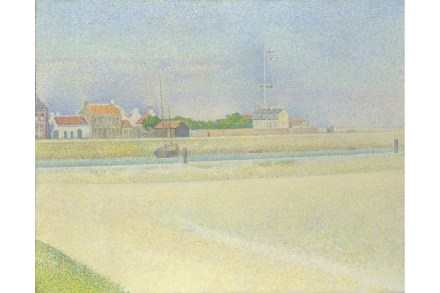
Getting the words ‘impressionism’ and ‘modern art’ into one exhibition title is a stroke of marketing genius on the part of the National Gallery, but is it too much for a single blockbuster? Symbolism, cloisonnisme, pointillism, expressionism, cubism, abstraction: if impressionism was a watershed in modern art, the streams that flowed from it were many and various. By setting a time frame of 1886 to 1914 – from the last impressionist exhibition to the first world war – After Impressionism: Inventing Modern Art narrows its options only to widen them by expanding its focus beyond Paris to Brussels, Barcelona, Vienna and Berlin.

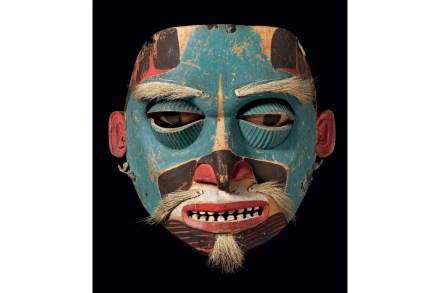
Don’t miss the exquisite Native-American carvings at the Sainsbury Centre

Exhibitions

It’s payback time: women, artists from ethnic minorities and non-western traditions are taking over the exhibition schedules. On the heels of the seven women expressionists in Making Modernism at the Royal Academy comes Souls Grown Deep like the Rivers: Black Artists from the American South. ‘We are aware that art history has excluded a lot of artists and it is incumbent on us to broaden our perspective,’ said Academy secretary Axel Rüger at the press view – and for anyone who failed to grasp the magnitude of the moment one of the artists, Lonnie Holley, added: ‘This is the Royal Academy of Arts. This is not just some come-by-lately museum, hear what I’m saying?

The exquisite pottery of Lucie Rie

Exhibitions

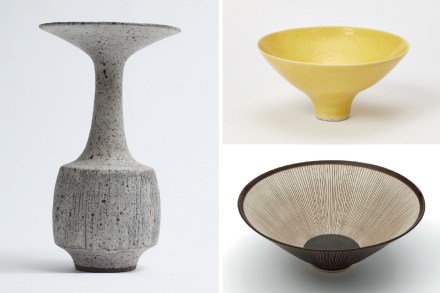
Lucie Rie had no time for high-flown talk about the art of ceramics. ‘I like to make pots – but I do not like to talk about them,’ she’d say. ‘I am not a thinker, I am not an art historian, I just do.’ It was her profession, she would maintain. Rie’s work is astonishingly self-sufficient. She belonged to no school and left none Her distaste for people preening about her craft went a bit further too. ‘I don’t like pots, I just like a few pots,’ she stated. When I interviewed her for the Sunday Telegraph back in 1988, she even said: ‘It’s extraordinary but I hardly like any potters – Hans Coper and then finish.’ She was absolute about her inferiority to Coper, whom, unlike herself, she considered an artist. ‘I have colours and I have easier shapes.

How two Dutchmen introduced marine art to Britain

Exhibitions

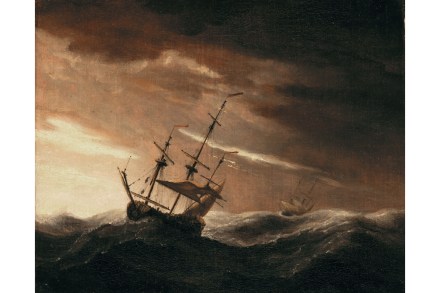
In March 1675 the Keeper of His Majesty’s Lodgings at Greenwich received an order for ‘Three pairs of shutters for the three windows in a lower room, at the Queen’s building next to the park (where the Dutch painters work’). Willem van de Velde and his son, also called Willem, would have preferred a studio with north light, but they weren’t complaining. They had been put on a retainer of £100 a year by Charles II – with an additional £50 from James, Duke of York – for the father to draw ‘Draughts of Sea Battles’ and the son to turn ‘said Draughts into Colours’.

Thoroughly unsettling, never simplistic: Mike Nelson – Extinction Beckons, at the Hayward Gallery, reviewed

Exhibitions

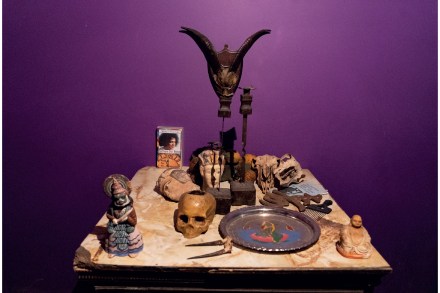
You enter through the gift shop. Mike Nelson has turned the Hayward Gallery upside down and back to front for his survey exhibition, Extinction Beckons. ‘It’s been a very intensive four weeks,’ says an assistant putting the finishing touches to the multi-room installation ‘The Deliverance and The Patience’ (2001) when I visit two days before the opening. Lit by one of Nelson’s signature red lights, even the green sign reading ‘FIRE EXIT’ makes me nervous Having the place to myself feels like having sole occupancy of the haunted house at the fair. This is less of a house, though, more a warren of passages and poky rooms bearing unsettling signs of previous habitation. Can the Hayward’s functional spaces really feel this spooky?

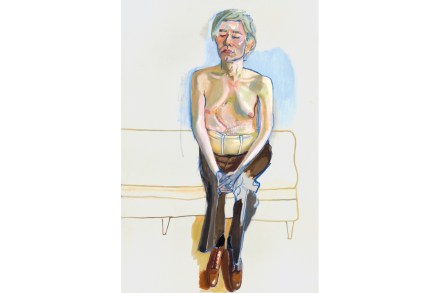
Humanity, clarity and warmth: Alice Neel, at the Barbican Art Gallery, reviewed

Exhibitions

If you want to be taken seriously as a contemporary painter, paint big. ‘Blotter’, the picture that won the 34-year-old Peter Doig the John Moores Painting Prize in 1993, was over 8ft x 7ft. The pictures in his current show at the Courtauld are so big that only 12 of them fit in the gallery space. Lovers of paint owe Doig a debt of gratitude for rescuing the medium from the conceptual doldrums ‘Blotter’ was a dreamlike image based on a photo of the artist’s brother standing on a frozen lake in Canada, where Doig spent most of his childhood. Its title referred partly to his technique of letting the paint soak into unprimed canvas, partly to the way a single figure is absorbed into a landscape.

The musical émigrés from Nazi-Europe who shaped postwar Britain

Exhibitions

Halfway up the stairs to the Royal College of Music’s exhibition Music, Migration & Mobility is a map of NW3, covered in red dots. It’s centred on the Finchley Road north of Swiss Cottage, and every dot (there are nearly 50) represents a business or an institution associated, in the middle years of the last century, with a refugee from the Nazis. Herr Zwillenberg offers upholstery repairs; a grocer stocks sauerkraut ‘and all Continental Delicacies’. There are adverts for fundraising concerts and political lectures; a Blue Danube Club and a Café Vienna. It’s urban Mitteleuropa in miniature, uprooted, transplanted, and clinging together for comfort and mutual support. They called it ‘Finchleystrasse’.

Unmissable: Donatello – Sculpting the Renaissance, at the V&A, reviewed

Exhibitions

‘Donatello is the real hero of Florentine sculpture’, so Antony Gormley has proclaimed (hugely though he admires Michelangelo). It’s hard to disagree. But the full range of his work is hard to see, spread out as it is on altars and tombs through Florence and elsewhere in Italy. This makes Donatello: Sculpting the Renaissance at the V&A an unmissable treat. Donatello was versatile, prolific, inventive, influential and long-lived Throughout much of the Quattrocento, Donato di Niccolo di Betto Bardi (c.1386-1466) – or ‘Donatello’ – turned out new notions about what art could look like and how it might be made. In origin he was, as the V&A show emphasises, a goldsmith.

The county that inspired a whole way of painting: Sussex Landscape, at Pallant House, reviewed

Exhibitions

In a national vote on which county’s landscape best embodies Englishness, every county would presumably vote for itself. But when the War Office commissioned Frank Newbould in 1942 to design a poster with the patriotic slogan ‘Your BRITAIN – fight for it now’, it featured Sussex, with a shepherd herding sheep in the foreground and Belle Tout lighthouse on the distant horizon. In the ‘green and pleasant’ stakes, Sussex holds the advantage that the seeds of our alternative national anthem ‘Jerusalem’ were sown during William Blake’s stay from 1800 to 1803 in the coastal village of Felpham near Bognor Regis. But while it has prompted the occasional poem, Sussex has inspired more than its share of art.

A crash course in all things Hispanic: RA’s Spain and the Hispanic World reviewed

Exhibitions

‘Spain must be much more interesting than Liverpool,’ decided the 12-year-old Archer M. Huntington after buying a book on Spanish gypsies in the port city. The family of American railroad magnate Collis P. Huntington had just docked at the start of an 1882 European tour that would introduce Archer to the National Gallery and the Louvre. ‘I knew nothing about pictures,’ he later admitted, ‘but I knew instinctively that I was in a new world.’ It was the Hispanic world to which he was most attracted, and he hatched a plan to create a museum devoted to its study. His preparations were thorough; he learned Arabic as well as Spanish before setting off in 1892 on the first of three explorations of the Iberian Peninsula.

The grisliest images are the earliest: Bearing Witness? Violence and Trauma on Paper, at the Fitzwilliam Museum, reviewed

Exhibitions

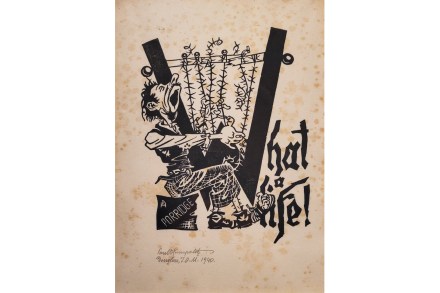
‘Graphic’ scenes of violence are now associated with film, but the word betrays an older ancestry. The first mass media images to shock the public were engravings documenting contemporary social ills pioneered by the Victorian magazine The Graphic, though the association goes a long way further back, to Jacques Callot’s etching series ‘Miseries of War’ (1633) recording atrocities perpetrated by both sides during the French invasion of his native Lorraine in the Thirty Years’ War. The grisliest of those images, ‘The Hangman’s Tree’, is the earliest work in Bearing Witness? Violence and Trauma on Paper, at the Fitzwilliam Museum in Cambridge.

Other artists’ still lifes may be showier, but none are as companionable as Giorgio Morandi’s

Exhibitions

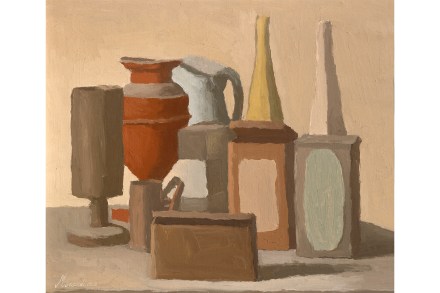
There are various staples of still life painting, some symbolic, some not. Skulls and musical instruments suggest the transience of human pleasure; crocks and bottles are usually just vehicles for displays of technical virtuosity. Crocks and bottles are what Giorgio Morandi painted, not because he wanted to show off but because he liked their lack of symbolism. So it’s odd to find a still life of musical instruments in the Estorick’s new Morandi exhibition. The habitual axis of Morandi’s still lifes is vertical, but the dingy brown trumpet, mandolin and guitar in this composition lie in a heap as if too bored to exert themselves. The picture strikes a bum note. The subject, it turns out, was imposed on him, a commission from a new patron he was eager to please.

Did this Lithuanian invent abstraction? M.K. Ciurlionis, at Dulwich Picture Gallery, reviewed

Exhibitions

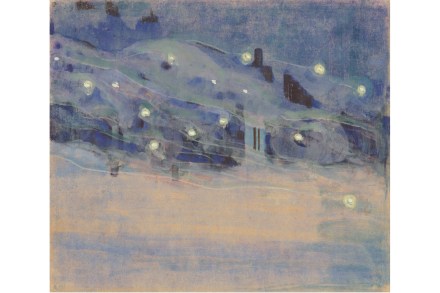
Trivia question: name a famous Lithuanian. Google came up with four I’d never heard of and one I had: Hannibal Lecter. It seems that Lithuanians are famous only in Lithuania unless they’re the monstrous inventions of non-Lithuanians – an injustice Dulwich Picture Gallery is helping to correct with its M.K. Ciurlionis exhibition. Mikalojus Konstantinas Ciurlionis is not just Lithuania’s most famous artist; he is also the country’s most famous composer. On his death in 1911 he left more than 400 musical compositions and more than 300 artistic ones, the latter squeezed into six short years before pneumonia carried him off aged 35. The son of a church organist, he was a musical prodigy, mastering the piano aged five and the organ aged six.

Brueghel’s peasant paintings were the D.C. Thomson comics of the 17th century

Exhibitions

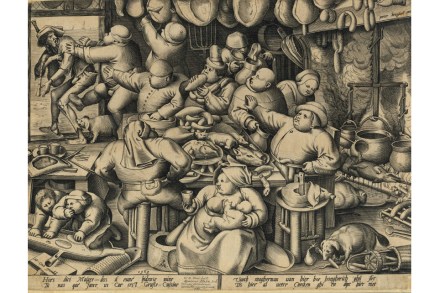
‘Psst! Someone’s coming!’ the skinny man with the ragged breeches and the bandaged jaw warns his fat companion out of the corner of his mouth. The two men, busy bundling sticks in a wood, look around apprehensively while a third man up a ladder attacks a tree with a billhook. The three of them are clearly up to no good, and we’ve caught them at it. The focus of an intriguing little exhibition at the Barber Institute, ‘Two Peasants Binding Firewood’, c.1604-16, (see p31) was once thought to be by Pieter Bruegel the Elder, but as it’s one of several copies from the same workshop it has since been reattributed to his son. Pieter Bruegel the Elder didn’t churn them out; with a waiting list of collectors queuing to acquire his paintings, he didn’t need to.

Mesmerising and eye-opening: Courtauld Gallery’s Fuseli and the Modern Woman reviewed

Exhibitions

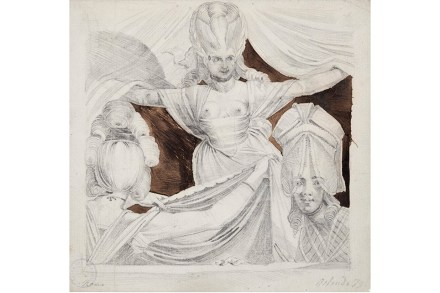
It’s not until you see this exhibition of drawings by Henry Fuseli that you realise that most artists have really not done anything like justice to women’s hair. Fuseli was obsessed with it, particularly that of his wife Sophia, a former artists’ model 20-plus years his junior. Hers was wildly extravagant even by the standards of the time – late 18th, early 19th century. For most art buffs, Fuseli, one of the most idiosyncratic artists of his age, is best known for ‘The Nightmare’, his lurid Gothic painting of a curvaceous sleeping woman with a demon squatting on her belly, shown in the Royal Academy exhibition of 1782; the drawings in this Courtauld exhibition show another side.

Does gender matter? Making Modernism, at the Royal Academy, reviewed

Exhibitions

 The catalogue to Making Modernism opens with an acknowledgment from the Royal Academy’s first female president, Rebecca Salter, that in the past it has overlooked women artists. To compensate, it has bundled seven – four headliners and three of their lesser-known contemporaries – into this one show. Excluded from official art schools and reliant on private tuition and ‘ladies’ academies’, these seven women escaped the feminine curse of the three ‘Ks’ – Kinder, Küche, Kirche (children, kitchen and church) – to forge independent careers in Germany before the first world war. They didn’t constitute an art movement, though Gabriele Münter and Marianne Werefkin – both comfortably off – facilitated one.

The careers of artists like Carolee Schneemann and Stephen Cripps are unthinkable today

Exhibitions

During the 1964 debut of Carolee Schneemann’s ‘Meat Joy’ in Paris, a man in the audience tried to throttle the artist before being hauled off by three female spectators. Schneemann’s performance, an ‘exuberant sensory celebration of flesh’, involved semi-naked dancers tangling and grappling while bits of chicken, raw fish and hot dogs rained from above and buckets of paint sloshed underfoot.

Thrilling: Hieroglyphs – unlocking ancient Egypt, at the British Museum, reviewed

Exhibitions

‘Poor old Mornington Crescent, I feel sorry for it with this highly made-up neighbour blocking the view it had enjoyed,’ commiserated Professor C.H. Reilly in the Architects’ Journal in 1928. He was talking about the new reinforced-concrete Carreras cigarette factory designed by architects Marcus Evelyn and Owen Hyman Collins that had just gone up across from the station. It wasn’t the concrete that bothered him so much as the make-up: the gaudily painted façade with papyrus-form columns copied from the ancient Egyptian tomb of Panehsy and the two huge black cats representing the goddess Bast – while advertising Black Cat cigarettes – flanking the entrance. How did this time-travelling lump of Egyptiana come to land in north London?

The genius of Cezanne

Exhibitions

Pity the poor curators of major exhibitions struggling to find fresh takes on famous masters. The curators of Tate Modern’s new Cezanne blockbuster have begun by dropping the acute accent from his surname, apparently a Parisian affectation not in use on the artist’s home turf. Anticipating grumbles about another major exhibition devoted to a dead white male artist, they have emphasised Cezanne’s outsider status by painting him as a provincial from Provence. It was a role the artist liked to play in Paris, once famously excusing himself from shaking Manet’s hand on the grounds that he hadn’t washed in a week. Cezanne’s peers put their money where their mouths were, creating an artists’ market for his work With or without his accent, Cezanne remains French.

Do we need another Lucian Freud exhibition?

Exhibitions

Do we need another Lucian Freud exhibition? After years of exposure to his paintings of naked bodies posed like casualties of a car crash in a nudist camp, we might have reached the ‘move along, nothing to see here’ point. But it seems we can’t get enough of the monstre sacré. To mark the centenary of his birth in 1922, London is being treated to a Freud fest of no fewer than seven exhibitions, the most prestigious of which is at the National Gallery.

Brilliant and distinctive but also relentless: William Kentridge, at the RA, reviewed

Exhibitions

William Kentridge’s work has a way of sticking in the mind. I can remember all my brief encounters with it, from my first delighted sight of one of his charcoal-drawn animations, ‘Monument’ (1990), in the Whitechapel’s 2004 exhibition Faces in the Crowd to my awestruck confrontation with his eight-channel video installation I am not me, the horse is not mine (2008) in Tate Modern’s Tanks in 2012. That marked a high point for the Tanks, since when they’ve tanked.

Biomorphic forms that tempt the viewer to cop a feel: Maria Bartuszova, at Tate Modern, reviewed

Exhibitions

Art is a fundamentally childish activity: painters dream up images and sculptors play with stuff. It was while playing with an inflatable ball with her young daughter in the early 1960s that Maria Bartuszova had the idea of filling balloons with liquid plaster instead of air. The inspiration fed her muse for 30 years, seeding the mixed crop of biomorphic forms currently filling five rooms at Tate Modern. Trained in ceramics at Prague Academy of Arts under communism, Bartuszova turned to plaster after moving with her sculptor husband Juraj Bartusz to the industrial city of Kosice, now in Slovakia, in 1963. Plaster was cheap and plentiful: a 1987 photo in this exhibition, the first to bring her work to a British audience, shows her with stacks of sacks of it in the studio.

Fresh and dreamy: Edward Lear, at Ikon Gallery, reviewed

Exhibitions

‘It seems to me that I have to choose between 2 extremes of affection for nature… English, or Southern… The latter – olive – vine – flowers… warmth & light, better health – greater novelty – & less expense in life. On the other side are, in England, cold, damp & dullness, – constant hurry & hustle – cessation from all varied topographical interest, extreme expenses…’ That choice was effectively made for Edward Lear in 1837 when he gave up the natural history studies by which he had made his name in his teens and headed south to Rome on doctors’ advice, aged 24. Prone to asthma and epileptic seizures, the myopic artist was now also suffering from eyestrain.

When Lee Miller met Picasso

Exhibitions

During the liberation of Paris in August 1944, the photographer Lee Miller made her way to Picasso’s studio on rue des Grands-Augustins, where she was greeted with a wide-eyed grin. ‘This is wonderful – the first Allied soldier I’ve seen, and it’s you!’ the artist exclaimed, reaching up to place his hand affectionately around her neck. Miller had just escaped house arrest for breaching the terms of her press accreditation by entering a combat zone. The PR office of the US Army had dispatched her – one of just four American female photographers they granted an official commission – to Saint-Malo in the mistaken belief that the fighting there was over.

Promethean grandeur: Maurice Broomfield – Industrial Sublime, at the V&A, reviewed

Exhibitions

When Maurice Broomfield left school at the age of 15, he took a job at the Rolls-Royce factory, bending copper pipes on a turret lathe. That was what you did in Derby in 1931: Rolls-Royce was the town’s biggest employer, and entire generations expected to pass the best part of their lives behind the walls of its 13-acre plant. But Broomfield didn’t stay. Not long into his new job, he saw a photo of an ageing employee being packed off into retirement with a handshake and a gold watch. This was a person who’d never had any real control over his own life; who’d worked when he was told to, and stopped when they told him it was time. Broomfield wanted something else. When he returned to the factories after the war, it was as a photographer.

Guston is treated with contempt: Philip Guston Now reviewed

Exhibitions

Philip Guston is hard to dislike. The most damning critique levied against the canonical mid-century American painter is that he is too uncontroversial, his appeal too broad, his approach altogether too winsome. None of that stopped the team behind Philip Guston Now – a travelling mega-survey of his work, which will reach Tate Modern in 2023 – from announcing otherwise. In 2020, the year the show was due to open, the curators announced that in light of the ‘racial justice movement’, the artist’s works might now legitimately be read as racist, and the show could not go forward as planned. This was and is quite obviously nonsense. The works in question are marshmallow-like renderings of Klansmen in absurd, mundane scenes.

A victory of the imaginatively crafted over the conceptual: In the Black Fantastic reviewed

Exhibitions

‘These artists are offering other ways of seeing,’ says Ekow Eshun, curator of In the Black Fantastic, and from the moment you push open the Hayward’s heavy swing doors you see what he means. Outside, a world of grey utilitarian concrete; inside, a vibrant crew of invaders from planet Zog glittering like Technicolor Pearly Kings in bright carapaces of beads, sequins and buttons. The kind of thing a nimble-fingered alien might come up with if his spaceship crash-landed in a haberdashery department, Nick Cave’s ‘Soundsuits’ make Ziggy Stardust look Earthbound (see below). Brought up with seven brothers by a single mother in Missouri, Cave learned early how to pimp hand-me-downs and his suits are exquisitely tailored.

As cool and refreshing as a selection of sorbets: RA’s Milton Avery show reviewed

Exhibitions

‘I like the way he puts on paint,’ Milton Avery said about Matisse in 1953, but that was as much as he was prepared to say. Contemporary critics tried to ‘pin Matisse’ on him as if art criticism were a branch of police work. He resisted, and remains a slippery customer. Post-impressionist or abstract expressionist? Colour field painter with added figures? To those who view art history as the march of progress towards modernism, he looks like a backslider. Clement Greenberg thought as much, dismissing him in 1943 as ‘a “light” modern who can produce offspring of Marie Laurencin and Matisse that are empty and sweet with nice flat areas of colour…’ Ouch.

A showstopper is at the heart of this winning show: Dulwich Gallery’s Reframed – The Woman in the Window reviewed

Exhibitions

Themed exhibitions pegged to particular pictures in museum collections tend to be more interesting to the museum’s curators than to the general public. But with Reframed: The Woman in the Window Dulwich Picture Gallery is on to a winner, as not only is the particular picture a showstopper, but the theme opens up a whole can of feminist worms. Whether it’s her pensive pose, her idle fiddling with her necklace or the shy look in her shadowed eyes, Rembrandt’s ‘Girl at a Window’ (1645) is impossible to walk past. Scholars continue to bicker about her status. Serving wench? Kitchen maid? Prostitute? Rembrandt’s lover?