Culture

Culture

The good, the bad and the ugly in books, exhibitions, cinema, TV, dance, music, podcasts and theatre.

GCSE English is failing its pupils

English Literature GCSE isn’t a compulsory qualification, and the number of pupils taking the qualification has been dropping since 2008. With the current state of the course, you can see why. It’s not that the exam boards set awful texts, or that the subject is dull. It’s that the means of testing are inadequate. The course is examined in two ways; the controlled assessment accounts for 25%, and the external exams, which account for the remaining 75%. Everyone knows that GCSEs aren’t ‘what they used to be’ and yes, we all know how terribly lucky we are to get a copy of the text in our exam; but, at the moment, the major problems are controlled assessments. In 2009, all GCSE coursework was replaced by controlled assessments.

Nina Bawden dies age 87

Author of classic children’s novel Carrie’s War and the Booker shortlisted Circles of Deceit, Nina Bawden has died today aged 87. Apart from writing over forty novels for adults and children, she campaigned for justice in one of her last books after the 2002 Potter’s Bar railway crash took the life of her second husband Austen Kark. Interspersed with love letters, Dear Austen tells of ‘the lamentable failure of all governments since 1945 to take proper responsibility for the country’s rail infrastructure’ and it was her attempt to do what she could ‘to put that negligence right’. Read an extract here. Bawden also read The Spectator on occasion. In January 1986 she wrote into the letters page.

From the archives: The Late Dorothy Parker

In celebration of the birthday of Dorothy Parker (1893 - 1967) today, here's a review from the archives of her biography The Late Dorothy Parker by Leslie Frewin.   Where be your gibes now?, Victoria Glendinning, 12 Sep 1987 Dorothy Parker was 'America's wittiest woman'. Here is an example of her wit. Rising from her chair at the Algonquin, she said: 'Excuse me, I have to go to the bathroom . . . I really have to telephone but I'm too embarrassed to say so.' I think that's funny. Do you think it's funny? Generally, she was funny at other people's expense, and it hurt. Born in 1893, she was a Rothschild not the banking family, but clothiers in New York's garment district.

Shelf Life: Freddie Fox

Not only will you be able to catch Freddie Fox this month in the BBC's mega drama Parade's End (also starring Rebecca Hall and Benedict Cumberbatch) but you can also see him live at the Hampstead Theatre when he appears in David Hare's  The Judas Kiss with Rupert Everett as Oscar Wilde. His current reading shows he's been doing his research diligently. 1). What are you reading at the moment? My Friendship With Oscar Wilde by Alfred Douglas. 2). As a child, what did you read under the covers? I read very little as a child owing to severe dyslexia. I was scared to read.

South Africa: Mired in corruption?

On the 5th of August Mary Robinson delivered the annual Nelson Mandela lecture in Cape Town. It should have been an occasion when the former Irish President and UN Human Rights Commissioner looked back on South Africa’s achievements since the end of apartheid. Yet her speech will probably be remembered for just one sentence: ‘…the ANC’s moral authority has been eroded, tainted by allegations of corruption; a temporary betrayal of its history.’ From an old friend of the ruling party this was damning indeed, but is she right to refer to corruption as a ‘temporary betrayal?’ The ANC’s history is more complex and more difficult than supporters like Mrs Robinson are prepared to acknowledge.

Across the literary pages: Jeanette Winterson

The fanfaronade for Ian McEwan's latest book Sweet Tooth, a seventies spy novel tantalisingly based on his own life and featuring a cameo from Martin Amis, has begun ahead of its publication date tomorrow. Two puff interviews (one in the Guardian and a slightly sexier one in the Daily Mail) with McEwan managed to include everything we already know about him. The first review in the Financial Times promises a 'rich and enjoyable' read. Wonderful. Given we'll be hearing quite enough about the book (which wasn't–gasp–nominated for the Booker Prize) we'll look at another big beast captured in the literary pages this week: Jeanette Winterson. The Daylight Gate is the second novel in the Hammer literary imprint series after Helen Dunmore's The Greatcoat.

A Rough Guide to Tyranny

There is an over genteel style in English argument which acts like a sedative. Just when you think that a proper debate is getting going, one of the participants will say, 'I am not sure that we’re really disagreeing.' I am afraid I must use this tired line, if only for a moment. Matthew Teller criticises me for writing about the indulgence of dictatorships by his fellow writers in the guidebook game, by saying : 'Guidebooks exist to help people find a room, have a meal and get a drink, with the added bonus of directions to a quiet beach or a pretty village. A paragraph or two of political background can be diverting, but you’d hardly base a world-view on what you read in your guidebook, would you? Nick Cohen, angry journalist, is savaging a paper tiger.

A Decade at the Donmar, 2002-2012, by Michael Grandage

More from Books

Here’s a picture book that triumphantly exceeds the narrow bounds of the coffee-table genre. At £50 it’s hardly an impulse buy, but the photographs, covering Michael Grandage’s ten years in charge of the Donmar Warehouse, are sumptuously reproduced. And Grandage’s text is a revelation. It offers a fascinating glimpse into the mentality of a man who has established himself as London’s leading creator of Mercedes-class theatre. And it’s crammed with juicy gossip too.  Every Grandage production is rooted in two disciplines: performance and design. He aims to create a ‘forensic, beat-by-beat examination of a play’.

Being Sam Frears, by Mary Mount

More from Books

Sam Frears is 40. He has an extremely rare condition called familial dysautonomia, or Riley-Day syndrome; the life expectancy for most babies born with this is five years. Mary Mount has made her account of what it is like to be Sam a short impressionistic chronicle, interspersed with comments from his mother, Mary-Kay Wilmers. The result is both illuminating and empathetic, with a picture emerging of someone who has refused to be defeated by his condition. Sam has limited vision now and is physically hampered, but he acts, he enjoys the climbing wall at a leisure centre and he is the charismatic centre of a circle of friends. I did not see the Storyville documentary, My Friend Sam, made by Toby Reisz and shown on BBC 4 earlier this year.

My Dear Governess, edited by Irene Goldman Price

More from Books

‘I have finished Julius Caesar since I last wrote & I cannot say that it left a very glowing impression on me. It was too much like my own earliest attempts at tragedy to move me in the least.’ So wrote the 16-year-old Edith Wharton in 1878 to Anna Bahlmann, her governess and literary confidante. Wharton’s letters to Bahlmann only came to light in 2009. Edited and carefully annotated by Irene Goldman-Price, they chart Wharton’s progress from precocious adolescent, to brilliant New York socialite, to sophisticated queen of European literary society, to tireless charity worker, divorced, estranged from her family, struggling to ease the plight of refugees in a Paris torn apart by the first world war.

The Daylight Gate, by Jeanette Winterson Claudia FitzHerbert

More from Books

The story of the Pendle witch trials in 1612 is well known, thanks to the publication of The Wonderfull Disoverie of Witches in Lancashire by Thomas Potts, clerk to the Lancashire Assizes in which ten of the 12 accused were condemned to death by hanging. But it is also unknown because Potts’s certainties are not ours. We know who was accused of what but not why, although several of the cases collapsed into each other, with one defendant being released after a witness was ‘proved’ to have been in the pay of a Catholic priest. Witchery and popery were equally reprehensible, target culture making it imperative for Potts and his cronies to nail someone for something.

Occupation Diaries, by Raja Shehadeh

More from Books

A group of friends, Palestinian and foreign, go to picnic at a wadi between Jerusalem and Jericho. They are wearing bright, casual summer clothes. On a nearby rock sits another party of picnickers, only they are dressed in veils, long skirts and black coats. For a while no one says anything. Then, suddenly, over a gesture of defiance, a row erupts between these secular liberals and the devout Islamicists. Once upon a time, writes Raja Shehadeh in Occupation Diaries, the two groups would have exchanged friendly greetings. Today there is only suspicion and antagonism; the people of Palestine, who not so long ago lived peacefully together, are now driven apart by deep rifts.

The First Crusade, by Peter Frankopan

More from Books

Perhaps more than any other single historical event, the First Crusade (1096-99) lends itself to the narrative technique. This was the quest — and a successful one — on the part of Roman Catholic Europe to regain the Holy Lands taken during the Muslim conquests of the Levant four centuries earlier. Its rich cast of characters — among them Bohemond of Taranto, Raymond of Toulouse and Godfrey of Bouillon — caught between conflicting motives of faith, avarice, loyalty and ambition, have inspired magnificent epic poetry. Their ultimate goal was the recovery of Jerusalem — and as Sir Ronald Storrs, British Governor during the Mandate once said, ‘There can be no promotion after Jerusalem.’ Where that quest began, however, is  more vexing.

Bookends: The Saint Zita Society, by Ruth Rendell

More from Books

Sometimes it seems as if Ruth Rendell’s heart just isn’t in all that killing any more. Certainly, her latest book, The Saint Zita Society (Hutchinson, £12.99), works best as a portrait of modern London, sharing many of the characteristics of novels like John Lanchester’s Capital and Sebastian Faulks’s A Week in December. The murders, when they finally happen, not only go unsolved, but even largely uninvestigated. They also feel rather sketchily plotted and weirdly peripheral to the action. The setting is an upmarket street in Pimlico whose inhabitants include a paediatrician, a classic gentlewoman of the old school and, naturally, a horrible City financier and his lazy wife.

Umbrella, by Will Self

More from Books

James Joyce once described Ulysses — in dog Italian — as a ‘maledettisimo romanzaccione’, or monstrously big novel. It has come to stand as a modernist masterpiece, and also the acme of difficult, inaccessible, unwieldy fiction. It is to be read (if at all) effortfully, in sweaty admiration, and mercifully short chunks. One cannot help recalling Joyce when grappling with Will Self’s big new monster of a novel. And just occasionally, Self allows his formidable phrasemaking to drift towards bad Joycean pastiche: breastfeeding seen in terms of ‘hawsers and pipelines coiled away into milky fartysteam’, the ‘jewfoody stench’ of an old apartment, and the like. But no matter.

Bertie: A Life of Edward VII, by Jane Ridley

More from Books

This book deserves to be named in the same breath as those two great classics of royal biography, Roger Fulford’s Royal Dukes and James Pope-Hennessy’s Queen Mary. It shares with those two masterpieces the double advantage of being profoundly learned and a cracking good read. There is scarcely a paragraph of Bertie which does not contain new material, most of it culled from the Royal Archives, but also from a wide variety of other sources, including the diaries — which Jane Ridley discovered in the Royal College of Physicians — of Bertie’s German medic, Dr Sieveking. Its most affecting passages — and there are many — derive their power from the accumulation of carefully gathered detail.

Blast from the past: The Teleportation Accident reviewed

He'd probably agree with Edward Gibbon's assessment of history as 'little more than the register of the crimes, follies, and misfortunes of mankind' but Ned Beauman's instinct as to why we do what we do is a lot more basic. We're motivated by sex: whether we're having it or - as is more often the case in Beauman's world - not having it. And he might have a point. Take for example Ernst Hanfstaengl who described his former buddy, a certain Adolf Hitler, as "a man who was neither fish, flesh nor fowl, neither fully homosexual nor fully heterosexual... I had formed the firm conviction that he was impotent, the repressed, masturbating type." A committed Freudian might call that motive enough.

Happy birthday V.S. Naipaul

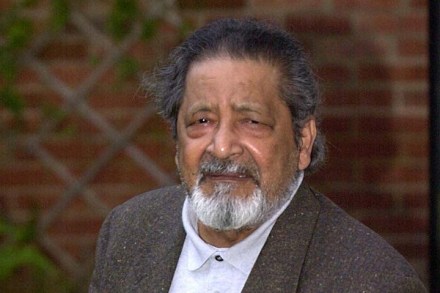
Given it's V.S. Naipaul's birthday today, we've dug out from the archives a 1979 Spectator review by Richard West of A Bend In The River. Don't forget that the Shiva Naipaul Memorial Prize, named after his younger brother, is currently open for entries. One of the dark places The protagonist and narrator of this book is a young man named Salim from the east coast of Africa; a Muslim Indian by origin but not from one of the families of the men who came to build the railways. Like the Arabs of old Zanzibar and what is now Tanzania, Salim's ancestors had once traded in ivory and slaves from the interior of the continent: 'I remember hearing from my grandfather that he had once shipped a boatful of slaves as a cargo of rubber.

Why a rough guide is better than none

Like the most desperate of priests, and the most marginal of activists, Nick Cohen wants us all to be like him. He’s an angry journalist who can’t imagine why everyone doesn’t think like an angry journalist. In What lonely planet are they on? Cohen attempts a take-down of travel guide publisher Lonely Planet, implying that they’re all liberal lefties, happy to whitewash the crimes of dictators in order to sell more books. To do so he cites the work of Thomas Kohnstamm, a Lonely Planet author who admits making stuff up (though, here and elsewhere, Kohnstamm maintains that the job he was commissioned for was a desk-edit, rather than a research trip).

A good book on the Stephen Lawrence case

If you get a chance, try to pick up the latest Civitas book: Mind Forg’d Manacles. By Jon Gower Davies, it’s an analysis of the effect of the Macpherson report into the death of the black teenager Stephen Lawrence and the aftermath. Davies is rightly tough on Macpherson and swats away the charge of “institutional racism” levelled against the police. The consequence has been a police force shackled by political correctness, sent hither and thither in the pursuit of nonsensical hate crimes and “paralysed the investigations of some crimes that involve ethnic minority suspects.” There is also an intelligent discussion of the subsequent “double jeopardy” prosecution of two of the white men originally charged with killing Stephen Lawrence.

Bad times in Buenos Aires – Shiva Naipaul Prize, 1996

Miranda France won the Spectator/ Shiva Naipaul Memorial Prize in 1996. Her winning essay (below) formed the heart of her first, eponymous book. Two years later she wrote her second book, 'Don Quixote's Delusions', which the Sunday Times described as ‘stimulating to the point of intoxication.’ To learn more about the Shiva Naipaul prize for travel writing, and how you can enter, click here.   Bad times in Buenos Aires  ARGENTINES have a word for the way they feel: bronca. An Italo-Spanish fusion, like most Argentines themselves, the word implies a fury so dangerously contained as to end in ulcers. People feel bronca when they wait for an hour to be served at a bank, and then the service is bad because the cashiers have bronca too.

George Washington: Gentleman warrior

It is easy to forget that the dignified eighteenth-century gentleman whose image appears on the one-dollar bill, the first President and father of his nation, owed his position entirely to his prowess as a soldier. Stephen Brumwell’s book charts the two phases of his military career, firstly fighting for King George II, then fighting against King George III. George Washington was born into a landowning family in Virginia and was expected to become a gentleman planter like his forebears. But the appeal of adventure on the frontier drew him to enlist – with no formal military training ‒ as a militia officer. Five years of tough campaigning followed, defending the western fringes of Britain’s colonies against encroachment by the French and their Indian allies.

The most important taxi ride I’ve taken

The Shiva Naipaul Memorial Prize, which The Spectator has just relaunched, is awarded for travel writing that gives 'the most acute and profound observation of a culture alien to the writer'. Here, its 1997 winner John Gimlette, whose most recent book has been shortlisted for the Dolman Prize, tells us what winning the award meant to him.  To find out how you can enter the Shiva Naipaul competition, whose other previous winners include Hilary Mantel and Miranda France, click here. To read John's winning entry from 1997, click here.    The most important taxi I've taken John Gimlette I’m utterly delighted that the Shiva Naipaul Prize is back up and running.  It’s completely changed my life, and I hope it will do the same for others.

What lonely planet are they on?

A few years ago, I wrote a piece about the Lonely Planet guide to Burma. I looked at how the supposedly right-on publishers sweetened the rule of the military so that western tourists could travel with a clean conscience. The crimes of the junta — which had the appropriately sinister name of the Slorc — could be discounted, the guidebook said. Tourists should not worry about the conscripted workers who built their hotels because forced labour is 'on the wane'. Maybe Lonely Planet had an ideological reason to whitewash dictatorships, I speculated. Or perhaps it was a cheapskate enterprise that did not much care what it published, as long as it could secure maximum profits for minimum outlay.

Last Morning in Al Hamra – Shiva Naipaul Prize, 1987

The Spectator/ Shiva Naipaul Memorial Prize for travel writing was first awarded in 1987, and its first-ever winner was Hilary Mantel, who has since won the 2009 Booker Prize for Wolf Hall. Below is Hilary's prize-winning piece on Saudi Arabia; the judges 'particularly admired her ability to convey not only the discovery of a culture new to her but also the distaste which the discovery aroused', said then-editor of The Spectator Charles Moore. To learn more about the Shiva Naipaul Memorial Prize, and how you can enter, click here. To read Hilary Mantel's recent blog on what winning the prize meant to her, click here.

The marriage plot: The Newlyweds by Nell Freudenberger reviewed

Few could accuse literary fiction of not doing its best to perk up the US export sector recently. It has been a truly remarkable year. A quick glance at my shelves reveals some wonderful new finds: The Art of Fielding by Chad Harbach, We the Animals by Justin Torres, Seating Arrangements by Maggie Shipstead and recently Leaving the Atocha Station by Ben Lerner. Joining them this summer – although a second novel rather than a debut like the above – is Nell Freudenberger’s The Newlyweds. Exactly like the others, however, The Newlyweds comes already wreathed with praise from across the pond. And well deserved too.

Across the literary pages: Will Self special

The inclusion of Will Self on the Booker long list was like a flashing neon sign pointing towards 'Serious Literature' and away from last year's much criticised populism. In a recent interview in the Observer, the columnist, cultural pundit, professor of contemporary thought at Brunel University and novelist asserted 'I don't write for readers.