George Chamier

The Great Irish Famine revisited

From our UK edition

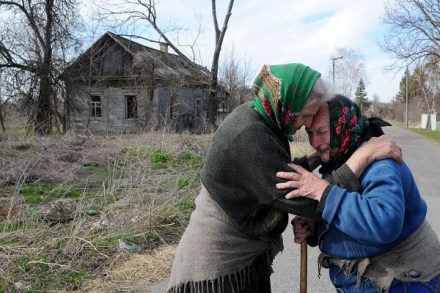
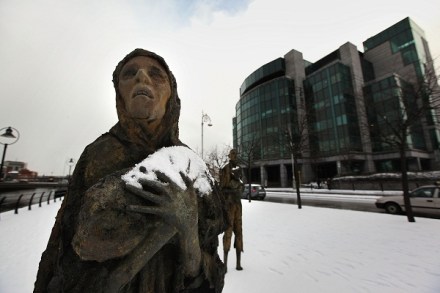
The bare statistics of the Great Irish Famine are chilling enough: in 1845-55 more than a million people died of starvation and disease and a further two million emigrated. Ireland’s population fell by more than a third. John Kelly does an excellent job of sketching the background in The Graves are Walking: massive population growth (the Irish population doubled in the second half of the eighteenth century and almost doubled again in the first four decades of the nineteenth), division of land into ever smaller plots and consequent dependence on the potato, exploitative landlords, resentment at rule by London. When blight struck the potato crop in 1845, it was not as if the British government was unaware of the danger ‒ ‘If the potato fails . . .
Killing as entertainment

From our UK edition

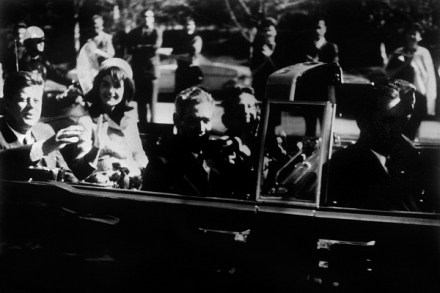
‘The history of our love affair with violence’ is how Michael Newton describes his new book, Age of Assassins. In fact, its scope is much narrower: assassination in Europe and the US from the murder of Lincoln in 1865 to the attempt on Reagan’s life in 1981. So, no Gandhi, no Allende, none of the killings carried out in the name of militant Islam. Even some of the assassinations within the author’s time frame are not considered – Olof Palme’s, for example, or the murders in Italy’s anni piombi in the 1970s and ‘80s. Newton’s central argument is that in the period covered assassination became less about political causes and more about the deed itself; and the framework of the book is essentially chronological.

Last rites | 28 August 2012

From our UK edition

‘Village’, to most middle-Englanders, conjures up a cosy, living community. Perhaps the post office is threatened with closure or the bus timetable is to be cut, but the hanging baskets continue to be tended, the village green still hosts games of cricket, there are moneyed retirees or commuters eager to buy the houses. It is not like that, of course, in much of Britain’s Celtic fringe, and even less so in Europe’s more remote peasant communities. Political, social and economic change has drained many villages of their people, and only the old remain. Tom Pow visits one in Spain where the youngest inhabitant is seventy, and the sad conclusion of his book In Another World is that many villages ‘have only ten years of life left in them’.

George Washington: Gentleman warrior

From our UK edition

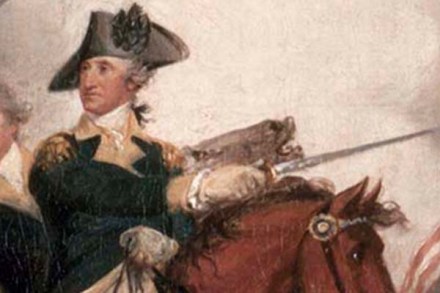
It is easy to forget that the dignified eighteenth-century gentleman whose image appears on the one-dollar bill, the first President and father of his nation, owed his position entirely to his prowess as a soldier. Stephen Brumwell’s book charts the two phases of his military career, firstly fighting for King George II, then fighting against King George III. George Washington was born into a landowning family in Virginia and was expected to become a gentleman planter like his forebears. But the appeal of adventure on the frontier drew him to enlist – with no formal military training ‒ as a militia officer. Five years of tough campaigning followed, defending the western fringes of Britain’s colonies against encroachment by the French and their Indian allies.

Great British Prime Ministers

From our UK edition

Everyone enjoys making and perusing lists of ‘greatest’ — nineteenth-century novels, Beatles LPs, generals, opening batsmen, and so on. The choices inevitably reflect the compiler’s tastes and prejudices, and are always fun to dispute. I have spent the last few months considering the claims of Britain’s Prime Ministers, a process from which four semi-finalists ultimately emerged. How to choose? I realized straight away that I had to put personal politics aside. After all, no committed Socialist would include Margaret Thatcher, and no red-blooded Tory would consider Clement Attlee. Yet both would make most objective observers’ lists. Sadly, I also had to disregard some favourite characters.