Culture

Culture

The good, the bad and the ugly in books, exhibitions, cinema, TV, dance, music, podcasts and theatre.

Couldn’t the BBC have filled at least some of the seats? First night of the Proms reviewed

Music

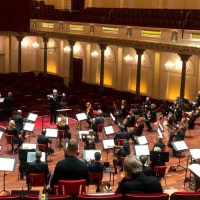
The Royal Albert Hall, as Douglas Adams never wrote, is big. Really big. You just won’t believe how vastly, hugely, mind-bogglingly big it is. Which is great if you want a colossal audience; less great as a venue for classical music. True, sound engineers have brought us a long way from the 19th century, when one critic (it might have been Bernard Shaw) described a Weber overture wafting around that cavernous acoustic like a feather caught in a draught. If you tune in to Radio 3 — which is how most listeners have always heard the Proms — it sounds fine. But it wouldn’t be anyone’s first choice of venue for a series of classical concerts unless, as mentioned, you’re expecting a vastly, hugely, mind-bogglingly big audience.

A sadistic delight: World’s Toughest Race – Eco-Challenge Fiji reviewed

Television

Few things better capture the crazed cognitive dissonance of our age than this: that while we cower behind masks for fear of a virus so harmless in most cases that you don’t even know you’ve got it, we watch shows like World’s Toughest Race: Eco-Challenge Fiji and think: ‘That looks fun. Wouldn’t mind having a go at that one day, if I had the money…’ This year’s Eco-Challenge — don’t be put off by the name: like the James Delingpole Eco TV column, as it’s now officially called, it’s just a marketing device to gull idiots (not you obviously) — comprises a 416-mile, 11-day race by 66 teams around Fiji, across shark-infested seas, down white-water rivers, up flooding canyons, abseiling down waterfalls and so on.

The art of street furniture

Arts feature

It was possible to stand in the middle of the road during the lockdown without being run over. In Willow Place, near Victoria Station, I crouched over a narrow grating of stout grey iron, and caught a glimpse of light reflected from moving water deep below, as though at the bottom of a well. This was the River Tyburn, on its way from Hampstead via Buckingham Palace to the Thames. During the endlessly sunny lockdown days, I wandered the streets near my office in Victoria. The bright unpeopled silence (like a landscape by de Chirico) brought to my attention details unnoticed before. With all the galleries closed, this was street art.

A James Bond film with added physics no one understands: Tenet reviewed

Cinema

Tenet is the latest high-concept, time-bending blockbuster from Christopher Nolan and it’s the film that (unofficially) reopens cinemas in the UK. It has everything that fans of Inception or Interstellar might want. There are spectacular set pieces. There’s time going forwards and then reversing, so it’s bullets flying back into the gun as crashed cars right themselves. There is a relentlessly pounding soundtrack. There is Sir Michael Caine playing Sir Michael Caine — his character is called Sir Michael Crosby but I wasn’t fooled — and as for the plot? Incoherent. Which fans seem to like. (‘I can’t explain any of it but it’s genius,’ I heard one say on the radio the other day. ‘A masterpiece.

Enter the parallel universe that is the Lucerne Festival

Music

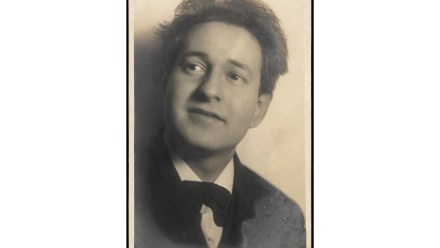
There wasn’t going to be a Lucerne Festival this year. The annual month-long squillion-dollar international beano got cancelled, along with the rest of Europe’s musical life, round about the time that we were all starting to get bored of banana bread. Then suddenly, in late July, it was on again. The Swiss government authorised distanced and masked audiences of up to a thousand, and a series of nine concerts was rapidly improvised with locally available talent — which, when you have the determination, contacts and (crucially) bank balance of the Lucerne Festival, means people such as Cecilia Bartoli, Igor Levit and, for these opening concerts, Martha Argerich and Herbert Blomstedt, plus a scaled-down Lucerne Festival Orchestra.

A podcast about the literary canon that actually deepens your knowledge (sort of)

Radio

While most of life’s pleasures can be shared, reading is lonely. It’s more than possible for six friends to enjoy an exquisite meal, a bottle of wine and then settle down for a four- or five-hour orgy. Food, drink, sex: these things are better shared. But if, as dawn approached, someone cracked open Chaucer’s ‘Parliament of Fowls’ and intimated that it was time to really get down to brass tacks, it could only spoil the mood. Reading is lonely because so much of the reading that matters is hard. The books that change the world and shake the culture are rarely pure pleasure. The heaven sections of Paradise Lost. The war bits of War and Peace. The history bits embedded within the war bits of War and Peace.

Edinburgh Festival is in ruins – but there’s one gem amid the rubble

Theatre

The virus has broken Edinburgh. The shattered remnants of the festival are visible on the internet. Here’s what happened. The international festival has been reduced to one filmed theatre commission and a handful of videoed musical offerings. The Fringe has survived but in a horribly mutilated form. Two of its most prestigious brands, the Pleasance and the Assembly Rooms (which host hundreds of shows between them every year), have pulled out entirely. They’re so well established that they’ll have no difficulty restarting in 12 months’ time. Another big name, the Gilded Balloon, is offering a few online shows and some recorded highlights from previous years.

A convincing and hair-raising depiction of showbiz at its most luridly weird: I Hate Suzie reviewed

Television

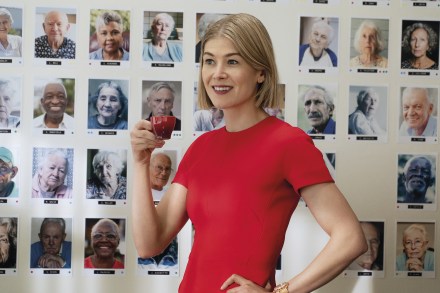
Fifteen minutes into the first episode of I Hate Suzie, main character Suzie Pickles was doing a photoshoot in her country cottage for Esquire magazine. ‘We don’t know what we’re looking for right now,’ the photographer told her. ‘We’re just going to cycle through some feelings and see where we are.’ What he didn’t know, but we did, was quite how many feelings Suzie (Billie Piper) had already had to cycle through by then. The programme began with her thrilled to hear that she’d bagged a Disney film role and cracking open the champagne.

The original Edinburgh Festival

Arts feature

Edinburgh, 3 November 1815. The university courtyard is buzzing. A band is playing. Surrounding streets are filled with thousands of excited spectators, many waiting since 10 a.m. From the Castle, from windows and rooftops, from Calton Hill, Holyrood Park and Salisbury Crags, all strain to get a glimpse. Then finally at 3 p.m., above the university, a large balloon suddenly emerges, climbing wondrously into the crisp November sky. Orchestrating this aeronautical display was pioneer English balloonist James Sadler. His balloon rose majestically as the westerly wind took it towards the sea. Sadler continued waving his flags as long as he could be seen, and the crowds applauded and gasped.

Unique and disturbing: Donmar Warehouse’s Blindness reviewed

Theatre

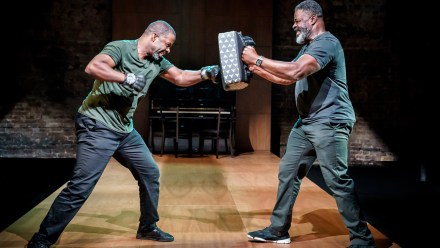
Okay, I admit it. I have a girl crush on Juliet Stevenson. Ever since I first saw her in the 1990 film Truly, Madly, Deeply with Alan Rickman, I have loved her sexy, round and intelligent tones. Imagine how excited I was to discover, therefore, that you can have Juliet in your ear for a whole hour and 15 minutes while you sit through a so-called ‘sound installation’ — or rather an audio staging — of Blindness, the current offering at the Donmar Warehouse and the first opening since lockdown. Sitting in a darkened theatre studio, with strobe lighting and headphones, you are seated in your own space, and socially distanced from 40 other people.

It’s time to leave Chopin in peace

More from Books

There’s a scene early on in A Song to Remember — Charles Vidor’s clunky Technicolor film of 1945 — in which the young Frédéric Chopin (Cornel Wilde) provides background music for a banquet hosted by Count Wyszynska in his Warsaw palace, plates of rubbery pig and candy-coloured vegetables in heady supply. Chopin plays his own Fantaisie-Impromptu, five years or so before composing it, and then, having insulted the Russian governor of Poland (‘I do not play for tsarist butchers!’), he avoids arrest by hastily rowing to Paris, so it seems, dressed like a military cadet.

The joy of going to a real concert: OHP’s Heart of Delight reviewed

Classical

I went to a concert! Not a livestream or download: a real concert, with real musicians, a real conductor, a real audience, and the real sound of Waitrose cava bottles popping open in the late afternoon. In some ways, this open-air gala from Opera Holland Park made it feel as if the summer season were back on. There were floral-print dresses and canary-coloured chinos; I swear I even saw a tartan picnic rug. And here in a corner were the critics, released back into society for the first time since March. When the correspondent of the Mail on Sunday ostentatiously upgraded himself to a better seat mid-show, it was like we’d never been away. In truth, it only resembled normality if you ignored the total absence of Opera Holland Park’s huge tented theatre.

Wholesome, intimate and suspiciously vague: The Michelle Obama Podcast reviewed

Radio

Back in March, I made a long-odds bet that Michelle Obama would be the Democratic party’s vice-presidential nominee. I knew that in her memoir, Becoming, she had said that she wasn’t interested in high office. But political candidates always claim they aren’t running — until suddenly they are. Joe Biden, the presumptive Democratic nominee, had already said he’d take Michelle as his VP ‘in a heartbeat’, which struck me as funny since, if Biden’s heart stopped beating, his VP would become commander-in-chief. Since Biden had been Michelle husband’s running mate, the idea of a 2020 Biden-Obama ticket had a fairytale symmetry that would thrill the public.

Ludicrous – and the makers know it: Sky One’s Prodigal Son reviewed

Television

‘By the way, my name is Max. I take care of them, which ain’t easy, because their hobby is murder.’ Back in the early 1980s, when everything was lovelier, we were all so innocent that our idea of a brilliant and original new detective formula went like this: they’re sleuths — but they’re also rich and married! (Or, in the case of Magnum: he’s a sleuth — but he has a moustache and he lives on Hawaii! Or, with Bergerac: he’s a sleuth —but he lives on Jersey and is named after a region of France. Etc.) These days, we are a lot more jaded and knowing and series creators have to work harder when devising their high-concept set-ups.

Looking at Barnett Freedman makes me weep at the government’s dismal graphics

Exhibitions

Among the spoils of a lockdown clear-out was a box of my grandmother’s books: Woolf, Austen, Mitford and The Complete Nonsense of Edward Lear with a jacket by Barnett Freedman. You only need to see a corner of the cover — a stippled trompe-l’oeil scroll — to recognise the artist. Freedman, a Stepney Cockney born to Jewish-Russian parents in 1901, delighted in paper games. Maps unfurl, book leaves fly, cut-outs and cartouches abound. His designs are a miscellany of silhouettes, decoupage, concertinas, peek-a-boos, lift-the-flaps and grubby thumbprints. Edges are ragged, endpapers torn.

Hats (and knickers) off to the hosts: The Naked Podcast reviewed

Radio

I spent half an hour this week listening to a woman make a plaster cast of her vulva. Kat Harbourne, co-host of The Naked Podcast on BBC Sounds, opened a recent episode by buzzing her bikini trimmer over the microphone before squatting over a British Airways peanut dish. Jenny Eells, her partner in crime, stood close by offering to hold up her dress. ‘I feel a bit like a voyeur, almost,’ she said, as if surprised at herself. ‘Thanks for letting me be a part of it.’ Then the mould-maker, Phoebe, put a porridgy alginate in Kat’s dish, and Jenny thought it looked ‘tasty’. Jenny and Kat are used to seeing each other naked. Most weeks, they invite on a female guest, and encourage her to strip off with them so that they can have a chat in the nude.

Why have they made Pinocchio look like Freddy Krueger?

Cinema

Matteo Garrone’s live-action version of Pinocchio is visually sumptuous and there are some enchanting characters (my favourite: Snail). And unlike Disney’s version (1940) this is, apparently, far more faithful to the darker, original 1883 tale by Carlo Collodi, even if the Disney version was quite dark enough for some of us. (I screamed so much when Pinocchio turned into a donkey I had to be taken from the cinema, says my mother.) But while this may be more authentic it’s not narratively powerful for some reason. It should be. It’s a terrific (if twisted) story, after all. But it’s so episodic, and this Pinocchio is so unendearing, that the film itself never properly comes to life.

Takes us deep into an unknown world: Channel 4’s Inside Missguided reviewed

Television

If it’s a test of a good documentary series that it takes us deep into an unknown, even unimaginable world, then Inside Missguided: Made in Manchester passes with flying colours — especially for the more middle-aged viewer. Missguided, it turns out, is a fast-fashion company, which means that it spots what celebrities are wearing online and then designs, makes and sells much cheaper versions within days — all while indignantly denying the outrageous charge that ‘we just rip off other people’s designs’. The target market apparently consists of young women obsessed with Instagram and Love Island. And so, on the whole, does the staff, who have names like Treasure, Zee and Karolina, and are keen for us to understand how excited they are at all times.

There’s scarcely a dull track: Deep Purple’s Whoosh! reviewed

Pop

Grade: B+ Less deep purple than a pleasant mauve. Ageing headbangers will note a lack of the freneticism that distinguished Fireball and ‘Highway Star’. But by the same token they may be relieved that there are no six-minute drum solos, songs about the devil, or Jon Lord demonstrating that he can hammer the organ fairly quickly for an unimaginably long time. Instead you have extremely well played 1980s arena rawk — think Guns N’ Roses with a touch of prog thrown in. And decent tunes that do not outstay their welcome — Ian Gillan always was a catchy mofo, however ludicrously vaudevillian his vocals may be.

The New Normal Festival shows how theatre could return

Theatre

So the madness continues. Planes full of passengers are going everywhere. Theatres full of ghosts are going bust. My first press night since March took place at a monumental Victorian building in Wandsworth where concerts are staged in an open-air courtyard. The entry process was less fussy than I’d expected. I didn’t need my phone and there was no ‘track and trace’ nonsense. A masked official aimed a ray gun at my face and showed me a reading — 36.4ºC. I’d passed the temperature test. He then pointed me towards a hand sanitiser. ‘Is it compulsory?’ I said politely. A look of fear crossed his eyes, as if violence were about to erupt, and he meekly repeated his request that I soap down my mits.

Figurative painting is back – but how good is any of it?

Exhibitions

An oxymoron is a clever gambit in an exhibition title. The Whitechapel Gallery’s Radical Figures: Painting in the New Millennium is designed to trigger the reaction: ‘Radical? Figures?’ before revealing quite how radical the figure can be. But like all good marketing, it is deceptive. Figurative art may have been consigned to history by Clement Greenberg 80 years ago, but history since — neo-romanticism, school of London, neo-expressionism — has repeatedly proved him wrong. The ten painters in this exhibition aren’t a school: the only thing their work has in common is its statement-making scale.

‘Cocaine addiction is time-consuming’: the rise and fall of Kevin Rowland and Dexys

Pop

When Dexys Midnight Runners reached No. 1 in the singles charts in spring 1980 with the song ‘Geno’, the band had to travel to London for their coronation appearance on Top of the Pops. For the first time they could afford the train fare. But Kevin Rowland — their singer, leader, creative director, boss, whatever you want to call him — insisted they continue to jump the barriers at Birmingham New Street. ‘I said, “Come on lads, we’re still going to bunk the trains.” And they went, “What?” “Come on, the inspector’s coming. We’ve got to get in the toilets.” And the drummer said, “Kev. We’re No. 1 in the charts and we’re bunking the trains…”. “GET IN!

From riveting Hitchockian melodrama to bigoted drivel: BBC’s Unprecedented reviewed

Theatre

Back to the West End at last. After a four- month lay-off, I grabbed the first available chance to catch a show in central London. I joined 20 enthusiasts at the ‘West End Musical — Silent Disco Walking Tour’, which convened outside a Fitzrovia pub. We were given a pink bracelet and a set of headphones that pumped musical hits into our ears. Our cheerleader, Sean, introduced us to his helpers, Tiny Tom and Sticky Vicky, who taught us a quick dance move. It transpired that we were the performers as well as the audience. We set off across the West End like a military convoy of unemployed choristers. At Old Compton Street we belted out ‘A Spoonful of Sugar’ from Mary Poppins.

The only things left worth watching on the BBC are foreign buy-ins like The Last Wave

Television

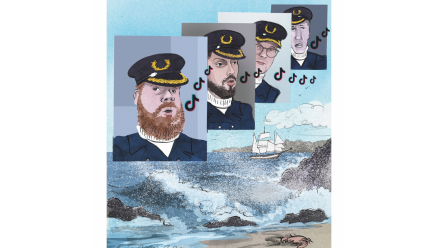
Soon, very soon now — even sooner than I imagined, if A Suitable Boy turns out to be as lacklustre as some critics are saying — the only things left worth watching on the BBC will be old repeats and foreign buy-ins like The Last Wave. A bit like The Returned (Les Revenants), The Last Wave concerns the effect of a supernatural event on a small community, not in the Alps this time but in a seaside resort on the Atlantic coast famed for its surf. During a competition, ten surfers are enveloped by a mysterious sausage-shaped cloud and disappear in the sea for five hours. They re-emerge, apparently unharmed yet subtly changed. One little boy’s eyes have turned electric blue; he also no longer requires glasses and can see through solid objects.

Vigour and verve from a unique new Rite of Spring: Dancing at Dusk reviewed

Dance

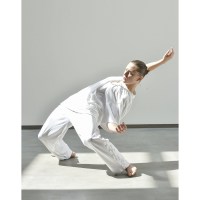
Dancing at Dusk captures the final rehearsal of a new version of Pina Bausch’s The Rite of Spring. It’s only the third time a company other than Bausch’s own has been handed the reins to this piece, and it’s a treat to see its raw, convulsive rhythms reinterpreted by a new generation of performers. Filmed on a beach in Toubab Dialaw, Senegal, it features a cast of 38 dancers from 14 African countries, assembled to bring a fresh lens to Bausch’s 1975 cult classic, itself a modern reckoning of a decades-old ballet. (Bausch’s original famously underscores the misogyny of the sacrificial virgin, doomed to dance herself to death.