Culture

Culture

The good, the bad and the ugly in books, exhibitions, cinema, TV, dance, music, podcasts and theatre.

Sensational: Herbie Hancock, at the Edinburgh Festival, reviewed

Festivals

‘Human beings are in trouble these days,’ says Herbie Hancock, chatting to us between songs. ‘And do you know who can fix it?’ ‘Herbie!’ comes the instant reply, shouted from somewhere in the stalls. Hancock might be a jazz legend, but he’s not quite the Saviour. Kicking off this year’s excellent contemporary music programme at the Edinburgh International Festival, he’s a hit from the moment he strolls into view. In his long black frockcoat, Hancock has come tonight as the High Priest of Cool. When he straps on a keytar, he’s a funky gunslinger. When one of his outstanding trio takes a particularly inventive solo, he cracks up with undisguised glee at the sheer showdown-slaying audacity of their playing.

An electrifying, immersive thrill: Scottish Opera’s Candide reviewed

Opera

The first part of the adventure was getting there. Out of the subway, past the tower blocks and under the motorway flyover. A quick glance at Google Maps and into a patch of litter-blown scrub. Someone bustles up alongside me: ‘Are you looking for the opera?’ I am, yes: and my guess is that the cluster of clipboard-y types in high-vis tabards next to that warehouse probably marks the entrance. We’re waved in: ‘Big Cock’ proclaims a graffiti-covered wall.

Why culture is in the grip of a medieval revival

At the conclusion of Alex Garland’s new film, Men, Jessie Buckley is confronted by the naked stalker who has been following her throughout the film, and who is now deep in the process of transforming into the mythic figure of the Green Man. He is played, like all the men in this film bar one, by Rory Kinnear. He howls in fear and pain, buckles over, sprouts sylvan vegetation from his face, grows a vagina and gives birth to a succession of the other Rory Kinnears we have been introduced to throughout the film, in his various roles as lairy village youth, creepy local priest, landed gentry and jobsworth policeman.

The Dane gets an interpretive dance makeover: Ian McKellan’s Hamlet reviewed

Theatre

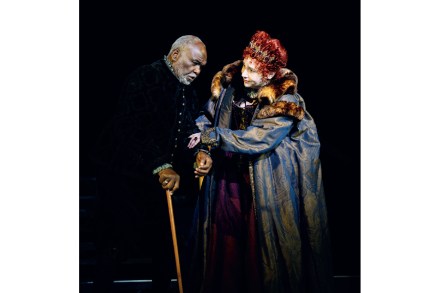
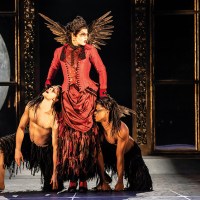
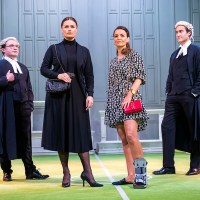
Ian McKellen’s Hamlet is the highlight of Edinburgh’s opening week. In this experimental ballet, Sir Ian speaks roughly 5 per cent of the lines, accompanied by a hunky blond dancer, Johan Christensen, who offers a physical interpretation of the Dane’s melancholy. The other roles are played by a ballet troupe in olde worlde costumes. The performing area is a black thrust stage, gleaming like patent leather, surrounded by low spotlights and swirling dry ice. It looks like Elsinore recreated by a cruise-ship designer. Newcomers will find the story mystifying. Hamlet smoulders longingly at Horatio and they dance like a hot couple at a gay night spot.

Rivals Wagatha Christie for its lowbrow twists: FT’s Hot Money – Who Rules Porn? reviewed

Radio

It was recently reported that almost 8 per cent of global internet traffic is to pornographic websites. The rise of working from home may make this statistic less startling than it might have been three years ago, but still, that’s an awful lot of procrastination and, well, not much WFH. Given the dominance of the porn industry, it’s a wonder there hasn’t been an exposé of the kind produced by the Financial Times before now. The newspaper’s investigation into who lurks behind the webcams and controls this business took more than six months to complete and has now been turned into a riveting eight-part podcast series. Hot Money: Who Rules Porn? rivals Wagatha Christie for lowbrow twists.

Fascinating but flat: Amazon Prime’s Thirteen Lives reviewed

Television

About ten minutes in to Thirteen Lives, Boy came in and asked me whether it was any good. I said: ‘Well, it’s quite interesting, actually. I think they’ve got the actual cave divers playing themselves, so the acting is really dull and uncharismatic and a bit unconvincing but at the same time it gives the drama a sort of echt documentary feel…’ Boy, peering at screen: ‘But that’s Viggo Mortensen. You know, Aragorn from Lord of the Rings. And Colin Farrell, who you liked in In Bruges.’ Me: ‘Oh.’ Does your main duty lie with the drama or with the truth? Director Ron Howard has opted for the latter What I still can’t work out is whether my gut response reflects well or badly on the finished product.

A classic in the making: Glyndebourne’s Poulenc double bill reviewed

Classical

One morning in the 20th century, Thérèse wakes up next to her husband and announces that she’s a feminist. Hubby, who’s been in either of two world wars, just wants his bacon for breakfast. Too bad: declaring herself male, Thérèse has already detached her breasts and hurled them spinning into the middle-distance. But they keep hanging around, great pink wobbly orbs floating just above her head. She takes out a gun and blasts them to shreds. Renaming herself Tirésias, and with her husband trussed into a moob-enhancing corset, she sets out to run the world, leaving the men to work out how to make babies alone. Babies (we’ve been told by an evening-suited Prologue) being an urgent national requirement. More fizz, anyone?

A victory of the imaginatively crafted over the conceptual: In the Black Fantastic reviewed

Exhibitions

‘These artists are offering other ways of seeing,’ says Ekow Eshun, curator of In the Black Fantastic, and from the moment you push open the Hayward’s heavy swing doors you see what he means. Outside, a world of grey utilitarian concrete; inside, a vibrant crew of invaders from planet Zog glittering like Technicolor Pearly Kings in bright carapaces of beads, sequins and buttons. The kind of thing a nimble-fingered alien might come up with if his spaceship crash-landed in a haberdashery department, Nick Cave’s ‘Soundsuits’ make Ziggy Stardust look Earthbound (see below). Brought up with seven brothers by a single mother in Missouri, Cave learned early how to pimp hand-me-downs and his suits are exquisitely tailored.

A magnificent farewell: Stornoway, at Womad Festival, reviewed

Pop

The greatest pleasure of writing about pop music – even more than the free tickets and records, nice as they are – is seeing some tiny, as yet unnoticed act and being dazzled by them, then taking every chance you can to wang on about them until other people start to feel the same. Music writers tend not to have many opportunities to do something good – alas, Nick Kent did not expose the thalidomide scandal; it wasn’t Greil Marcus and Lester Bangs who got to the bottom of Watergate – but it’s truly gratifying when a band you have championed rises from the toilet circuit, even if they never make it to the stadiums. I first saw Stornoway, a folk-pop group from Oxford, bottom of the bill in a pub basement in 2009.

The magic of Les Ballets Trockadero de Monte Carlo

Arts feature

Drag isn’t what it was. Pantomime dames, character actors and any number of sketch-show comedians had fun dressing up as harridans or movie stars (check out Benny Hill’s unforgettable Elizabeth Taylor) but those old-school travesti turns have been out-camped by a more unsettling performance style that women are finding increasingly hard to take. Directors and commissioning editors tread very carefully when it comes to ethnicity, sexual orientation and disability but women, it seems, are still fair game.

The making of The Godfather was almost as dramatic as the film: Paramount+’s The Offer reviewed

Television

It’s hard to imagine in the wake of GoodFellas, The Sopranos and Gomorrah but there was a time, not so long ago, when the very existence of the Mafia was widely dismissed as an urban myth. What changed was Mario Puzo’s 1969 bestselling novel The Godfather, which sold nine million copies in two years. You might assume, not unreasonably, that the 1972 movie version – now acknowledged as one of the greatest films of all time – was one of the most obvious commissions in Hollywood history. But it was dogged by so much controversy and plagued by so many disasters that it was very nearly stillborn.

I can’t recommend this Cole Porter musical highly enough: Anything Goes, at the Barbican, reviewed

Theatre

The Barbican’s big summer show is billed on the website as ‘the sold-out musical sensation, Anything Goes’. The term ‘sold-out’ is a strange way to describe a production that’s keen to get your business. You’d be forgiven for clicking away and hunting for a show with seats available. What the Barbican means is that this is a revival of an earlier production that did great business. And that may explain why tickets aplenty are available even on a busy Friday night. This version stars Kerry Ellis as the showgirl, Reno, who falls in love on a transatlantic cruise ship. Virtually every number is a classic. If you read any couplet from the title song you’ll be humming the melody all day. https://www.youtube.com/watch?

Why is post-colonial guilt only applied to Western classical traditions? Radio 3’s World of Classical reviewed

Radio

The blurb accompanying the Radio 3 series World of Classical, inviting us to ‘join the dots between classical music traditions of the world’, suggests an introduction to the field of comparative musicology. Such a noble venture – searching for commonalities in melodies, ornamentation, rhythms, use of instruments, vocal styles and techniques and so on – would once have been a vital part of Radio 3’s continued adherence to the Reithian ideals of informing and educating as well as entertaining. Jon Silpayamanant’s series however resembles more a series of episodes of Late Junction, married to a moralising and historically unbalanced commentary.

I feel sorry for those stupid enough to believe that ballet is racist or transphobic

Dance

Sick though one may be of the way that the poison dart of ‘woke’ is lazily flung at what is a real and complex set of problems, I fear that it’s deservedly winging its way towards Leeds’s Northern School of Contemporary Dance. Last month it announced that it would no longer require a competence in ballet for its auditions on the grounds that it is ‘an essentially elitist form’ built around ‘white European ideas and body shapes that are often alienating’. Stifle your groans for a moment, and let me unwrap this and offer some context. First of all, it is not uncommon for schools specialising in contemporary dance to make ballet class optional.

Why Merseyside is the natural home for a Shakespearean theatre

Arts feature

Prescot is a neglected little town in Merseyside noted for having Britain’s second narrowest street and for its Brazilian waxing salon. It’s now also home to Shakespeare North, a game-changing new theatre. This handsome, modern brick building overlooking a Jacobean church has a light, airy, unfussy interior – a stairway to heaven. You leave the modern world and enter an octagonal cocoon, modelled on a 1630 playhouse, built of slowly splitting green oak, the limbs all pegged together, not a nail in sight. The seats (two tiers) accommodate between 320 and 470 people, depending on the configuration of the stage. Its acoustic is spot-on and it feels cosy but not claustrophobic. The sound and lighting technology is modern but it can be candlelit if need be.

Stupendously good: Much Ado About Nothing, at the Lyttelton Theatre, reviewed

Theatre

Simon Godwin’s Much Ado About Nothing is set in a steamy Italian holiday resort, the Hotel Messina, in the 1920s. A smart move, design-wise. The jazz age was one of those rare moments in history when every member of society, from the lowliest chambermaid to the richest aristocrat, dressed with impeccable style and flair. The show is stupendously good to look at it and it kicks off with a thrilling blast of rumba music from a jazz quartet on the hotel balcony. Even sceptics of jazz need not fear these players. The musical score is a triumph for one simple reason: there are no jazz solos. https://www.youtube.com/watch?

In defence of country-pop

Arts feature

I am aware that the music I enjoy is widely considered to be the worst ever produced in human history. Worse than a roomful of children with recorders, cymbals and malice; worse than a poultry abattoir. Every so often, someone will ask me what I listen to, and I’m forced to tell them the truth. ‘These days,’ I’ll say, ‘it’s mostly country.’ Their nose will wrinkle, as if I’ve just let out a stealthy fart in their direction. ‘But old country, right?’ they’ll say, almost pleading. ‘Classic country?’ No, not classic country.

Spare us the preaching: The Railway Children Return reviewed

Cinema

It doesn’t help the cause of The Railway Children Return that the original 1970 Railway Children film is currently on iPlayer. Just to test my capacity to cry, having emerged dry-eyed from the new one, I came home and re-watched the original. Yup. The 2022 sequel has three scenes of the new cohort of Railway Children – three second world war evacuees from Manchester, Lily, Pattie and Ted – waving goodbye to their soldier father as he departs for war, in the fog, never to return. Violins soar. Eyes remain dry. The 1970 film has just one scene of Daddy arriving home, in the fog of a steam train, and it still makes me sob every time. So is a return more moving than a departure? It certainly can be, but you have to live through the desolation first.

As cool and refreshing as a selection of sorbets: RA’s Milton Avery show reviewed

Exhibitions

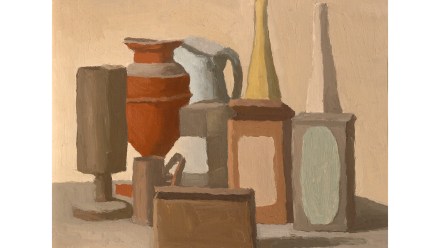
‘I like the way he puts on paint,’ Milton Avery said about Matisse in 1953, but that was as much as he was prepared to say. Contemporary critics tried to ‘pin Matisse’ on him as if art criticism were a branch of police work. He resisted, and remains a slippery customer. Post-impressionist or abstract expressionist? Colour field painter with added figures? To those who view art history as the march of progress towards modernism, he looks like a backslider. Clement Greenberg thought as much, dismissing him in 1943 as ‘a “light” modern who can produce offspring of Marie Laurencin and Matisse that are empty and sweet with nice flat areas of colour…’ Ouch.

As good, and inventive, as modern rock music gets: Black Midi’s Hellfire reviewed

The Listener

Grade: A+ The difficult question with Black Midi was always: are you listening to them in order to admire them, or because you actually enjoy the music they make? By which I mean when you’ve finished listening to them is it a sense of admiration which lingers in the mind, or are you captivated by one or another of their songs? Previously it has tended to be the former – and there is an awful lot to admire. If you add superlative musicianship to a certain witty and anarchic imagination, you end up with this rather deranged, occasionally irritating, millennial mash-up of styles, where jazz fusion meets post-punk, James Brown, Beefheart, clever prog and pretty much anything else which, however briefly, flits through the consciousness of their auteur, Geordie Greep.

Convincing performances and unexpected sounds: Opera Holland Park’s Delius/Puccini double bill reviewed

Opera

Delius and Puccini: how’s that for an operatic odd couple? Delius, that most faded of British masters, now remembered largely as a purveyor of wistful aquarelles. And…well, and Puccini. Early, neglected Puccini, true, but this is Opera Holland Park, where they make it their mission to rescue the waifs and strays of Italian late romanticism, and see how they scrub up. Demonstrable dud by unfashionable Englishman vs youthful ambition from Italian opera’s ultimate marquee name. We all knew, in advance, how that was likely to play out. And we were all wrong. It turns out that both Puccini’s Le Villi (1884) and Delius’s Margot la Rouge (1902) were written for the same long-running competition that gave us Mascagni’s Cavalleria Rusticana.

An entertaining display, clearly destined for Netflix: Patriots, at Almeida Theatre, reviewed

Theatre

Patriots, by Peter Morgan, is a drama documentary about recent Russian history. And though it’s a topical show it’s not entirely up to date. The central character, Boris Berezovsky (1946-2013), was a schoolboy maths wizard who went into academia and published 16 books before entering politics. His Jewish background excluded him from the leadership of Russia so he became king-maker to Boris Yeltsin. An early contact, the deputy mayor of St Petersburg, asked for Berezovsky’s help. The rising youngster seemed to be harmless, malleable, and rather needy so Berezovsky installed him as a tame prime minister. Thus Vladimir Putin’s career began. Berezovsky owned a TV station that criticised the handling of the Kursk submarine disaster in 2000. And Putin was incensed.

With everything working properly, this would have been a lot of fun: Grange Park’s La Gioconda reviewed

Opera

There are composers who are known for a single opera, and there are operas that are known for only a single aria. But to be a 19th-century Italian opera composer and to be remembered solely for your ballet music – well, that’s a bit special. As the orchestra tiptoed into the ‘Dance of the Hours’, in Act Three of Grange Park Opera’s production of Amilcare Ponchielli’s La Gioconda, the audience sighed with recognition. There were a few giggles, too. Ten minutes later, as the ballet slammed to its finish (without a note of actual – y’know – singing), they exploded into the loudest ovation we’d heard all night. It was probably always going to happen.

This lot should be sent to prison too: Where the Crawdads Sing reviewed

Cinema

Where the Crawdads Sing is based on the bestselling book (by Delia Owens) that I picked up from one of those three-for-two tables at Waterstones and always thought I’d read but for some reason never did. I can’t now say the film’s not as good as the book and send everyone involved to prison, which is a pity, as that was most satisfying. (See last week’s review of Persuasion.) Still, it’s always interesting to find out what they’ve done with a book you haven’t read and, based on this, it was a lucky escape. The film is so cliché-ridden there’s a point where an entire courtroom gasps and I laughed. Not proud, but it was beyond my control. Could I send everyone involved to prison anyway? For cocking up a book I haven’t read?

Why we should all be dropping acid

Television

Many years ago a man on the end of my cigarette stole my soul. Mr Migarette (for such was his name) wore a tall hat like the one in the Arnolfini Marriage portrait, he smoked a pipe and no matter how often I tried to flick away the glowing fag ash, his evil grinning features remained intact. I have never taken LSD since. But having watched How to Change Your Mind, I think I may have done the drug a disservice. After four or more decades in the wilderness, lysergic acid is now being rehabilitated as a miracle cure for all manner of conditions from cluster headaches to alcoholism and depression.