Culture

Culture

The good, the bad and the ugly in books, exhibitions, cinema, TV, dance, music, podcasts and theatre.

From Bayeux to Cartier-Bresson: how artists have brought the coronation crowds to life

Arts feature

In 1937, the Parisian communist newspaper Ce soir sent a 28-year-old would-be filmmaker on an unpromising first assignment. Henri Cartier-Bresson was to take photographs of the British coronation, an event of limited appeal either to Ce soir’s readers or to Cartier-Bresson himself. But on the streets of London, he discovered what would become his signature approach. Two Brylcreemed lads in their best suits, hoisting their girlfriends on to their shoulders for a better view He would turn away from the King, the procession, the organised magnificence, and focus solely on the crowds, looking for some fleeting moment in which the meaning of the day was concentrated.

How productive is it to listen to productivity gurus?

Radio

I was making my way slowly through one of my dismally prosaic little to-do lists – ‘pay the water bill’ ‘wash hair’, etc. – when the voice of the journalist Helen Lewis came on Radio 4 talking about productivity. It’s the Holy Grail of modern life, apparently, and we are now constantly looking for ‘charismatic individuals’ to help us maximise it. Her writer friend Julian Simpson is obsessed with the topic, she said, even though he disarmingly admitted what some of us may quickly have suspected, that ‘my interest in productivity manifests itself when I need to be doing something else’.

Purest fantasy but you’ll love it: Tetris reviewed

Television

Tetris is a righteously entertaining movie about the stampede to secure the rights from within the Soviet Union to what would become the world’s bestselling video game. The question you’re going to be asking yourself time and again – especially during the Lada-ZiL chase scene through the streets of Moscow in which our heroes try to elude the hatchet-faced KGB agents – is: ‘How much of this is true?’ And the honest answer is: ‘Not very much, actually.

Americana Coldplay: The National’s First Two Pages of Frankenstein reviewed

Pop

Once upon a time, rock bands wished for nothing more than to look as though they posed a clear and present danger to your children. Though a few true believers still hold to this honourable creed, nowadays most groups are comprised of the kind of people one might expect to be grading your offspring’s dissertation at a respected Russell Group institution. If the National were an author, they might be Anne Tyler The National exemplify rock’s professorial bent: bespectacled academic types, bearded, literate, wry and congenitally suspicious of happiness. Relatability sells, apparently.

Hitching them together does neither any favours: Hilma af Klint & Piet Mondrian, at Tate Modern, reviewed

Exhibitions

In July 1928, an unknown Swedish woman artist mounted a solo show of her revolutionary abstract paintings at the World Conference on Spiritual Science in London. It was a moment the 65-year-old Hilma af Klint had waited a long time for, but her confident prediction 20 years earlier that ‘the experiments I have undertaken will astound humanity’ was not fulfilled. So deafening, in fact, was the critical silence that greeted her work that she left instructions for it to remain under wraps until 20 years after her death. The world wasn’t ready for her ‘future pictures’. Entering the room devoted to Mondrian’s signature grids, you could be in a different exhibition What a difference a century makes.

Powerful and beguiling: Innocence, at the Royal Opera House, reviewed

Opera

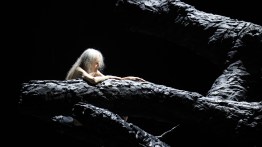
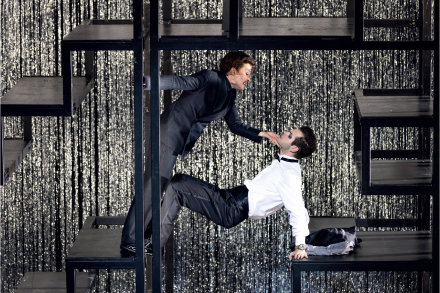
The big London companies gave two UK premières in the space of a week, both dealing with the subject of teenagers being shot dead. Kaija Saariaho and Sofi Oksanen’s new opera Innocence was premièred at the Aix-en-Provence Festival in 2021 and comes to the Royal Opera in exactly the same production by Simon Stone, the Australian director responsible for that lockdown favourite The Dig as well as a shattering staging (in Munich, in 2019) of Korngold’s Die tote Stadt. Innocence is a series of elastoplasts being pulledoff very slowly So Innocence was never likely to pull its punches. Chloe Lamford’s set – a brightly lit modernist structure that revolves as the plot moves between present and (traumatic) past – is simultaneously bold and simple.

A triumph: Nederlands Dans Theater 1, at Sadler’s Wells, reviewed

Dance

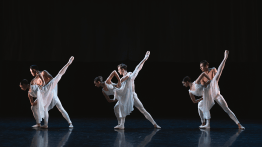
Yes, yes, I know. You’ve had your fill of David Attenborough’s jeremiads, you’ve heard enough already about climate change catastrophe. You’ve got the message, ordered the electric car and solar panels: now can we talk for a moment about something less unthinkably apocalyptic? The point is as much to celebrate the grace and beauty of these phenomena as to mourn their passing But the quiet triumph of Figures in Extinction [1.0] is to make the crisis seem freshly urgent and emotionally engaging.

I cried twice: The Unlikely Pilgrimage of Harold Fry reviewed

Cinema

The Unlikely Pilgrimage of Harold Fry is an excellent adaptation of Rachel Joyce’s bestselling novel (2012) about a retired old fella who traverses England on foot in the belief he can save a friend dying of cancer. It could have been twee or sentimental (that was the fear) but instead it is spare and restrained and while there are occasional jarring moments it is still wonderfully tender and full of feeling. I cried, possibly twice, but I don‘t think it was three times, whatever anyone might say.

John Gielgud and Richard Burton’s fraught, botched, triumphant Hamlet

Arts feature

In 1963 two Hamlets went into production: one directed by Laurence Olivier, the other by John Gielgud. The situation had been engineered by Richard Burton and Peter O’Toole. The story goes that while shooting the film Becket, Burton and O’Toole had decided they should each play the Prince under either Olivier or Gielgud and they tossed a coin over who would get which director. O’Toole got Olivier; Burton got Gielgud. Both productions – booze-drenched affairs – went ahead, but the Hamlet that became a showbiz legend was Burton’s doomed Dane. The production made a fortune; it was probably the most profitable Shakespeare ever staged Burton looked up to Gielgud.

Not an experience you’d want to repeat: Shen Yun, at the Eventim Apollo, reviewed

Dance

If you live in London, you may well have spotted Shen Yun’s enormous candy-coloured posters on the Underground, endorsed by puffs from authorities proclaiming the show to be ‘very, very on top’ and ‘an exemplary display of excellence’. This primitive advertising strategy seems to have worked: on the night I went, the Hammersmith Apollo (capacity around 3,500) was filled to the gills, the crowd made up of the same social mix that you might find at the Cirque du Soleil. What did any of us think we’d be getting?

Why do theatres hate their audiences?

More from Arts

War has broken out in theatreland. Managements are increasingly at odds with the audiences who fund their livelihoods. A recent stand-off involved James Norton’s new show, A Little Life, which contains a couple of scenes in which the actor removes his clothes. A punter at a preview in Richmond secretly photographed the moments of nudity and posted the images online. This sparked a furore in the newspapers and the majority of commentators took the producers’ side against the theatre-goers. Dr Kirsty Sedgman, a media studies lecturer, spoke piously to the Independent about ‘an absolute violation of the unwritten contract between audiences and performers’. The Mirror reported that ‘drastic measures’ might be needed to ensure that similar ‘privacy breaches’ don’t occur.

Boring is as good as this erotic drama gets: Netflix’s Obsession reviewed

Television

It is, of course, traditional for film and TV reviewers to demonstrate their steely high-mindedness by claiming that anything describing itself as ‘erotic’ is in fact deeply boring. Unfortunately, faced with Netflix’s four-part Obsession, the b-word is hard to avoid – the twist in this case being that boring was as good as the series got. The rest of the time it alternated between the inept, the infuriating and the utterly mystifying – and not just because you could never fathom what on earth the characters thought they were up do. How, for instance, did so much money and talent get wasted on a show that the people involved with must surely have realised was terrible?

Rossetti’s muse was a better painter than he was: The Rossettis, at Tate Britain, reviewed

Exhibitions

‘A queer fellow’ is how John Everett Millais described Dante Gabriel Rossetti after his death, ‘so dogmatic and so irritable when opposed.’ What’s queer in England is quite normal in Italy, where heated arguments are described as ‘discussioni’, but history has tended to forget that Rossetti was Italian. His fellow Pre-Raphaelites, however, were very conscious of his foreignness, though Holman Hunt found the ‘maccaroni’ served at the Rossetti family table – where you were as likely to meet Giuseppe Mazzini as Niccolo Paganini – ‘delicious’.

The last unashamedly happy masterpiece: Haydn’s The Creation, at Ulster Hall, reviewed

Classical

Haydn’s The Creation is Paradise Lost without the Lost. True, the words aren’t exactly up there: translated into German by Haydn’s pal Baron van Swieten and subsequently retro-translated into some of the clumsiest, most endearingly rococo English ever set to music. But you get the idea. Near the start some demons get consigned (very efficiently) to the outer darkness, and at the end the angel Uriel gives Adam and Eve the briefest of warnings – despatched in a brisk recitative before the chorus of angels floods the heavens, once more, with sunlight and praise. Basically, though, it’s optimism. It’s freshness. It’s a universe founded on faith, and with it, joy.

Glorious: Elton John’s farewell tour, at the O2 Arena, reviewed

Pop

Elton John has now been retiring for nearly five years. The Farewell Yellow Brick Road tour began in Allentown, Pennsylvania, in September 2018. Why there? Because it’s a hop and a skip from the small town of Lititz in Amish country, where scores of the big arena shows are built – it’s the real rock’n’roll capital of the world. Since then, with breaks for Covid and other health worries, he has played roughly 300 shows, grossing north of $800 million as of January this year – this is the most commercially successful tour ever. Retirement, or the threat of retirement, has always been a canny career move: Frank Sinatra played more than 1,000 concerts and recorded ‘Theme From New York, New York’ after he quit the business in 1971.

So tastelessly disturbing it forgets to say anything: Sick of Myself reviewed

Cinema

Sick of Myself is a satire from Norway that skewers the ‘look at me, look at me’ generation addicted to social media and asks: how far will someone go? Too far, is the short answer. Much, much, much too far, is the longer one. Indeed, although this starts out as a dark comedy, it does eventually escalate into full-on body horror, and while it is compelling and original, if you are as squeamish as I am, you will eventually be watching from behind your hands. Still, I did catch around 67 per cent, so consider this a review of 67 per cent of the film. The other 33 per cent is anyone’s guess.

What the V&A Dundee exhibition doesn’t tell you about tartan

Arts feature

Criss-crosses, everywhere: 300 objects covered in them. The exhausting range and depth of the world’s most famous pattern is on full display at the V&A Dundee’s vast new exhibition. Tartan is a more genuine emblem of Scottish nationhood than the famous deep-fried Mars bar, which no one really eats. But it’s not uniquely Scottish. Plaid has been worn across western Europe for hundreds of years, then was claimed by Scotland as the symbol of the nation, now recognised the world over. It’s even a political weapon. In the recent SNP leadership election, the outsider Ash Regan wore practically nothing but the fabric. Ian Blackford has in the past unnerved many a viewer when he bent down in his kilt to lay a wreath at the Cenotaph.

One of the best things you’ll see on TV this year: Netflix’s War Sailor reviewed

Television

War Sailor (Krigsseileren), a three-part drama on Netflix about the Norwegian merchant navy in the second world war, is one of the best things you’ll see on TV this year. But I doubt many other critics are going to rave about it or even notice it, for some of the very same reasons that I think make it so cherishable: it’s meandering, episodic, understated and made in Norway, with subtitles. Originally released last year as a feature film for the international category of the Oscars (where it was overshadowed by the more in-your-face All Quiet On the Western Front), War Sailor is the most expensive Norwegian movie ever made. But there’s nothing showy or obviously big budget about it.

Time for Akram Khan to move on from climate-change choreography

Dance

It must be 20 years since I first saw Akram Khan dance, and I will never forget the impression he made in a brief impassioned solo; here was a master of the Indian kathak school who had seen how its traditional vocabulary could be related to the less constricted realms of modernism. Since then he has gone on to fulfil his promise and broaden his aesthetic, notably through his extraordinarily powerful Giselle for English National Ballet. At 48, he has virtually retired from performing, but he continues to choreograph and direct his own company, enjoying a considerable international reputation. Most recently he’s homed in on an environmental agenda and I’m ambivalent about the results. Creature was first staged by ENB in 2021, when it drew generally negative reviews.

Reframes Patricia Highsmith as a gay icon – and ignores her anti-Semitism: Loving Highsmith reviewed

Cinema

I first discovered writer Patricia Highsmith (Strangers on a Train, Carol, the five Ripley novels) as a young teenager working my way through Golders Green Library. I guess she came shortly after Georgette Heyer, and I was hooked. I only later became aware of her virulent anti-Semitism, and on this count she was not half-hearted – she called the Holocaust ‘the semicaust’ as it failed to fully deliver – yet I still could not look away. I’m the same with the spiders at the zoo: horrified, but also mesmerised. We must, I suppose, separate the art from the artist as not everyone can be Paul McCartney, but any Highsmith documentary should surely indicate that she was as disquieting and difficult and complex as the people she invented, yet Loving Highsmith refuses to go there, alas.

Crossing Continents is the best of the BBC

Radio

Ask a member of Generation Z where in the world they would most like to live, and chances are they will say South Korea. K-pop and kimchi have made it indisputably fashionable, and if the Instagram account of one of my Korean friends is anything to go by, life there is really quite idyllic, provided you can forget who your neighbours are. It would take the average worker more than a century to save enough money to purchase an apartment  A recent episode of Crossing Continents on Radio 4 presented a very different side of the story. John Murphy, a superbly enquiring producer and presenter, went to visit some of the residents who are suffering as a consequence of the country’s financial success. The Republic of Korea enjoyed an average of 5.

Why can’t I let go of my records?

Pop

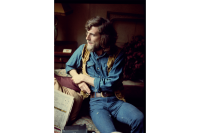
I’m not a natural lender. I’m a reasonably soft touch when it comes to money, but regarding the important things in life – books, music, pens – I loan with a gently thrumming underscore of anxiety. While I’ve weaned myself off my mother’s habit of writing her name in every book she buys, I still tend to keep an internal inventory of where each one has gone, and when I’d like it back. Add in the fact that I’ve never possessed the zealot’s desire to convert others to my enthusiasms, and I’m forced to concede that I make a poor practitioner of the art of lending. Leonard Cohen was the same, apparently. As he confessed in ‘The Land of Plenty’: ‘Don’t really have the temperament to lend…’ In his case, it was a helping hand. In mine, it is mainly records.

An epic bore: A Little Life, at the Harold Pinter Theatre, reviewed

Theatre

A Little Life, based on Hanya Yanagihara’s novel, is set in a New York apartment shared by four mega-successful yuppies: an architect, a fine artist, a film star and a Wall Street attorney, Jude, played by James Norton. A friendly doctor tags along occasionally and an older lawyer, in his sixties, joins the gang after legally adopting Jude. None of the men has a partner or a family, and they never discuss things like sport, cars, investments, movies or girls. Instead they hug a lot and cook pastries for each other in a kitchenette on stage. The play feels like a joke-free episode of Friends with an all-male cast. And the script might have been written by a teenage girl.

An old production that’s aged better than most: Royal Opera’s Turandot reviewed

Classical

Since its première in 1984, Andrei Serban’s production of Puccini’s Turandot has been revived 15 times at Covent Garden, not counting excursions to Wembley Arena. The current revival has been running (by all accounts, to capacity houses) since 10  March. The compelling reason for reviewing such a well-worn revival mid-run is that this performance featured the Royal Opera debut of the Nottingham-born Wagnerian soprano Catherine Foster – which by any reckoning was well overdue. Foster is hugely esteemed in the German-speaking world. In itself, that doesn’t prove anything – I mean, they rate Franz Welser-Möst too.

Why Christopher Wren died thinking his life had been a failure

Arts feature

When Sir Christopher Wren’s servant went to rouse his master from an afternoon nap on 25 February 1723, and found that the old man would never wake again, the reputation of the nation’s greatest architect was already on the wane. He had walked away from St Paul’s in a fit of pique, with the cathedral still unfinished. He had been sacked from the royal post he held for nearly half a century, the surveyor-generalship of the king’s works. And the tide of taste was turning against his brand of restrained baroque in favour of a more rigid Palladianism. In old age he used to grumble that he wished he had stuck to medicine, one of his early interests, instead of dabbling in architecture: then he would have made some real money, he said.

Felt like the product of a night in the pub: BBC1’s Great Expectations reviewed

Television

By now a genuinely radical way to turn a Victorian novel into a TV drama would be to take that novel and turn it into a TV drama. But while we wait for someone to do it, Great Expectations stays true to the current ideals of junking large parts of the source material and infecting what remains with the neuroses of our own age – thereby demonstrating once again the strange modern neediness to believe in our superiority to all those benighted bigots who came before us. (Please tell us we’re the best people who ever lived! Please!) Or rather, it takes those ideals to new heights that are either infuriating or hilarious depending on your mood. https://www.youtube.com/watch?