Culture

Culture

The good, the bad and the ugly in books, exhibitions, cinema, TV, dance, music, podcasts and theatre.

She has finally learnt to write a song: Lana Del Rey’s new album reviewed

The Listener

Grade: A– No, Lana, I didn’t, thank you – all cleared up. The most extravagantly talented of that lachrymose, self-harming genre, miserycore, returns with an album described by critics as ‘heavy’, as if we might have expected Mungo Jerry or the Venga Boys. The difference between Del Rey and the rest of those dispossessed chicks warbling bleakly in their bedrooms about all manner of woe is that Lana has a degree of self-awareness and, Christ be praised, even humour. Otherwise, why would she start a song with the words: ‘I haven’t done a cartwheel since I was nine.’ Really – you haven’t?

From the sublime to the ridiculous: Godland reviewed

Cinema

Godland is a film to see on the big screen: not just for its awesome, immersive cinematography, but because it is so remorselessly bleak that if you’re watching it at home you are likely to give up. To get the most out of it you need to be trapped. Lucas (Elliott Crosset Hove), an upright, serious, bearded young Lutheran priest in late 19th-century Denmark, is being sent to Iceland as a missionary. ‘Lucas, you must adapt,’ his red-faced bishop (Waage Sando) tells him while munching through a lavish lunch of chicken and boiled eggs. ‘At times your task will seem monumental.’ The Icelandic weather is forbidding, the bishop explains; in the perpetual summer sunlight people forget to sleep.

Distressingly vulgar: Royal Ballet’s Cinderella reviewed

Dance

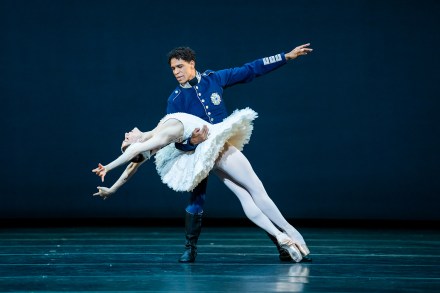
Despite its widespread rating as one of his masterpieces, Frederick Ashton’s Cinderella is chock full of knots, gaps and stumbling blocks – all of which the Royal Ballet’s new production throws into relief. Ashton isn’t altogether to blame: Prokofiev’s graphic score dictates an excessive amount of time given over to knockabout for the Ugly Sisters (mostly a matter of them bumping into each other) and a tiresome court jester. There’s nothing to be done with an inert third act, which in Ashton’s treatment merely recapitulates previous choreography and ends with a static tableau. The Prince has no personality whatsoever: he’s little more than a handsome porter. Yet genius shines through.

Artists’ dogs win the rosettes: Portraits of Dogs – From Gainsborough to Hockney, at the Wallace Collection, reviewed

Exhibitions

Walking on Hampstead Heath the December before Covid, I got caught up in a festive party of bichon frises dressed, like their owners, in Christmas jumpers. It seemed bizarre at the time but wouldn’t surprise me now. During lockdown the local dog population exploded and the smaller breeds now wear jumpers all winter. There are no dogs in jumpers in the Wallace Collection’s new show – though, given the level of anthropomorphism, there might as well be. The ‘Allegorical Dog’ section, devoted to Edwin Landseer, includes ‘Trial by Jury’ (c.1840) with a poodle sitting as judge, and a canine interpretation of the parable of Dives and Lazarus featuring a well-fed St Bernard guarding a bone from a hungry terrier (see below).

A look inside Britain’s only art gallery in jail

Arts feature

The centrepiece of the exhibition at Britain’s only contemporary art gallery in a prison is an installation, consisting of two broken, stained armchairs. They’ve been placed face-to-face, as if for a therapy session. Elsewhere there are silkscreen prints and paintings. This outbuilding-cum-art studio and gallery is where prisoners are also taught dry-point etching – surprising given the needles involved, but I am assured that all potential weapons are accounted for at the end of each session. ‘For two hours a week I come here and learn new skills,’ explains the silkscreen artist and inmate of HMP Grendon. ‘I get completely absorbed in printmaking. I feel freer here than any other time in prison. I’ve recaptured my childhood love for art.

Succession works because the writers don’t care about the boring business storylines

Television

I have a theory that many great artists’ strength is a product of their weakness. The flaw of the relentlessly frivolous creator of Succession Jesse Armstrong, for example, is that he is very easily bored by grown-up subjects such as big business, finance, corporate structure, legal affairs or anything involving depth and seriousness. Which ought, you might think, to pose a major problem for someone constructing an epic drama – loosely based on the Murdoch family – about the struggle for succession in a global media empire. But Armstrong’s saving grace is this: most viewers are not interested in such tedium either.

Why supergroups nearly always suck

Pop

Recently in these pages, ruminating on the ghastly Rock and Roll Hall of Fame, I wrote that music does not conform to any equation. I should have added: except, of course, for the occasions when it does. One tried-and-true formulation is that ‘super-groups’, those bespoke vehicles bringing together artists best known either for working alone or within other bands, tend to add up to considerably less than the sum of their parts. Supergroups are in thrall to the idea of their own existence; the music trails sluggishly behind We could blame Eric Clapton. Indeed, it seems remiss not to. Blind Faith – a fatally untidy union of Clapton (ex-Cream), Steve Winwood (ex-Traffic) and Ginger Baker (exhausting) – started the whole thing off in 1968, and not in a good way.

In praise of From Our Own Correspondent 

Radio

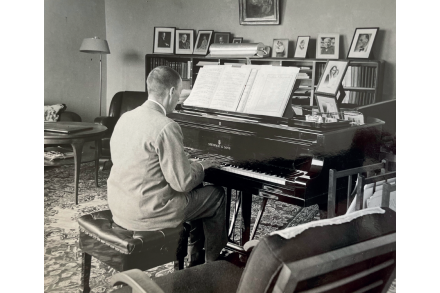
Most of us are familiar with the notion of writer’s block, that paralysis of invention induced by the appalling sight of a blank page. Composer’s block is less widely discussed, although musicians seem equally afflicted by creative drought. Perhaps the best known case is that of the Russian composer Sergei Rachmaninov, the subject of Radio 3’s Sunday Feature, which describes how the great man finally fought his way out of a numbing three-year ‘apathy’ with the help of a hypnotist.  Rachmaninov fought his way out of a numbing three-year ‘apathy’ with the help of a hypnotist The composer had been catapulted into his long despair by the hostile reception to his First Symphony in 1897.

Emily Watson’s performance is extraordinary: God’s Creatures reviewed

Cinema

There are some films that you know will be quality simply by the actors who have agreed to be in them. They’re like a kitemark. Emily Watson is such an actor, as is Paul Mescal, who hasn’t put a foot wrong since Normal People and must have an excellent agent or just a feel for these sorts of things, even if he’s bound to turn up in the Marvel franchise one of these days. Both Watson and Mescal star in God’s Creatures, so it’s double kitemarked, you could say. It’s a tough watch, and a tense watch, but it’s powerfully affecting and plainly quality through and through. It asks: mothers will always instinctively protect their sons, but is that sometimes misguided? https://www.youtube.com/watch?

The opera’s a masterpiece but the production doesn’t quite come off: ENO’s The Dead City reviewed

Opera

English National Opera has arrived at the Dead City, and who, before Christmas, would have given odds that this new production of Korngold’s Die tote Stadt would ever make it this far? This is late-Romantic music-drama on an exuberant scale; it simply doesn’t lend itself to pubs and car parks (even the reduced version staged – superbly – at Longborough last summer used an orchestra of some 60 players). Korngold deals with strong emotions (grief, delusion and obsessive love) with a melodic generosity that has historically provoked the prissiest instincts of the British operatic establishment. The Royal Opera held its nose and staged a brief run in 2009, before sweeping it hastily under the carpet. But not ENO.

After Impressionism – Inventing Modern Art, at the National Gallery, reviewed

Exhibitions

Getting the words ‘impressionism’ and ‘modern art’ into one exhibition title is a stroke of marketing genius on the part of the National Gallery, but is it too much for a single blockbuster? Symbolism, cloisonnisme, pointillism, expressionism, cubism, abstraction: if impressionism was a watershed in modern art, the streams that flowed from it were many and various. By setting a time frame of 1886 to 1914 – from the last impressionist exhibition to the first world war – After Impressionism: Inventing Modern Art narrows its options only to widen them by expanding its focus beyond Paris to Brussels, Barcelona, Vienna and Berlin.

How fog gripped the Victorian imagination 

Arts feature

Conjure up before your mind a vision of ‘Dickensian’ London, and as likely as not you will see in your imagination a street filled with yellow fog, dimly illuminated by a gas-lit street lamp. The classic ‘pea-souper’ was caused by a natural winter fog in the Thames basin, turned yellow by the coal fires and industrial chimneys of the Victorian city and held in place for days by the phenomenon of ‘temperature inversion’, when a layer of warmer air traps the cold, damp and increasingly impenetrable atmospheric mix in the streets below.

The genius of Lana Del Rey

Over the past few years, Lana Del Rey has been engulfed in acclaim: Variety’s Artist Of The Decade, the first recipient of Billboard’s Visionary Award and Rolling Stone UK’s endorsement as ‘the greatest American songwriter of the 21st century’. Bruce Springsteen has named her ‘one of the best’ and Courtney Love called her a ‘true musical genius’. And now, with her long-awaited ninth studio album Did You Know That There’s a Tunnel Under Ocean Blvd released last weekend, the critics have not held back. From the Guardian to the Financial Times, Del Rey’s new album has collected a string of 4- and 5-star ratings. But to call Del Rey’s journey a bumpy one would be an understatement.

New British B-movie that strikes gold: Hitmen reviewed

Like a lot of modern day B-movie directors, the Enfield-based filmmaker Savvas D. Michael takes an almost tradesman-like pride in his output: the aim is to do as much as possible (artistically speaking at least) without splashing the cash. And if you’re partial to the output of Guy Ritchie – the former Mr Madonna whose style has shaped an entire generation of testosterone-laden British filmmaking – you’ll be hooked to his latest, Hitmen. For all Michael's claims about the ancient classics (his previous film – about the underworld characters who frequent a North London social club – was sold as a modern day take on The Iliad), it's clear he knows what side his bread is buttered.

Do we need the BBC World Service?

Radio

In 1957 the BBC removed the head of the Russian Service. Anatol Goldberg was by all accounts a remarkable broadcaster, tasked with coordinating, producing and narrating the BBC’s radio output to the USSR at one of the most volatile periods of the Cold War. Internal reports praised his navigation of the ‘complications’ of Russian programming. So why was he demoted? The answer lies in the long history of British government interference in the World Service.  Today harmony reigns between state and Service: the government announced a one-off £20 million payment to the World Service in last week’s updated Integrated Review. Yet last year foreign-language broadcasting was facing a £28 million cut after the licence-fee freeze.

Don’t miss the exquisite Native-American carvings at the Sainsbury Centre

Exhibitions

It’s payback time: women, artists from ethnic minorities and non-western traditions are taking over the exhibition schedules. On the heels of the seven women expressionists in Making Modernism at the Royal Academy comes Souls Grown Deep like the Rivers: Black Artists from the American South. ‘We are aware that art history has excluded a lot of artists and it is incumbent on us to broaden our perspective,’ said Academy secretary Axel Rüger at the press view – and for anyone who failed to grasp the magnitude of the moment one of the artists, Lonnie Holley, added: ‘This is the Royal Academy of Arts. This is not just some come-by-lately museum, hear what I’m saying?

Pretty, charming and largely unremarkable: Devonte Hynes & the LSO reviewed

Pop

Think of pop music as being like the parable of the sower. These days the seed falling on stony ground comes from the young rock bands, while the stuff that’s finding fertile earth is on the edges of R&B where it shades into other styles, especially psychedelia. It works from both ends: the Australian group Tame Impala went from being a workaday psychedelic rock band to being festival headliners by bringing dance music into their sound. Meanwhile within black music, Janelle Monae – perhaps better known as an actor – and Solange Knowles are regarded by critics as something not far short of deities for their Afrofuturist, trippy takes on R&B. In the UK, Devonte Hynes has become our leading representative of the unlimited possibilities of combining genres.

I never knew a game of dominoes could be so menacing: The Beasts reviewed

Cinema

The Beasts is a rural psychological thriller from Spain that has won many awards across Europe and even though we don’t set any store by awards – the multi-Oscar winning Everything Everywhere All At Once is known as Extremely Baffling As Well As Dull in this house – it is a riveting, merciless study of human nature, so cleverly tense throughout that even a game of dominoes becomes menacing. You didn’t know a game of dominoes could be menacing? Trust me, it can. You might never be able to look at a pack of dominoes again without feeling menaced. https://www.youtube.com/watch?v=UU4dVLtZD10 Directed by Rodrigo Sorogoyen and co-written with Isabel Pena, the film is loosely based on a true story from 2014 involving a Dutch couple who moved to a small Spanish village in Galicia.

Drab by comparison to the film: Bonnie & Clyde, at the Garrick Theatre, reviewed

Theatre

The murderous odyssey of Bonnie and Clyde is a tricky subject for a musical because the characters are such loathsome wasters and their grisly ambition is to fleece poor people at gunpoint during the Great Depression. They’re famous for stealing from banks but they changed tack once they realised that grocery stores and funeral parlours were easier to rob. The little guy was their real target. In this revived musical, written in 2009, the principal figures have no redeeming qualities at all. Bonnie is a beautiful brain-dead popsicle who dreams of becoming a poet or a movie star. Nowadays she’d be ranting on TikTok from the front seat of an SUV. Clyde is an amoral thug who shoots dead anyone who comes between him and his greed.

If you’re anywhere near Edinburgh, get a ticket: Scottish Opera’s Il trittico reviewed

Classical

It does no harm, once in a while, to assume that the creators of an opera actually know what they’re doing. Puccini was clear that he wanted the three one-act operas of Il trittico to be performed together and in a particular order. Promoters and directors have had other ideas, and between the wars it was apparently common to perform the triptych’s comic final opera, Gianni Schicchi, in a double bill with Strauss’s Salome, which must have been an interesting night out. Come for the necrophilia, stay for the lulz. But Scottish Opera’s new production presents Il trittico in the form the composer intended, and what d’you know? It works.

The rise of the modern British B-movie

Arts feature

If there’s a phrase that captures the frantic energy of the modern British B-movie, it’s the concept of the ‘heart attack shoot’. And Rhys Frake-Waterfield knows more about it than most. ‘It’s not unusual to spend more than 12 hours on set,’ says the happy-go-lucky thirtysomething director during a short break from promoting his new low-budget slasher. The breakneck pace means that the shooting of an entire feature can be wrapped up in weeks, thus ensuring the project is as cheap as possible. Cutting corners is a necessity. ‘On Winnie the Pooh, we tried to save time by not reshooting any scenes,’ he says. ‘Unless the actors made a really glaring mistake, we would just stick with the first take.

Why does everyone hate Max Reger?

Classical

The German composer Max Reger, born 150 years ago next week, is mostly remembered today for countless elephantine fugues and one piece of lavatory humour. When he was savaged by the Munich critic Rudolf Louis, he wrote back to him: ‘Sir, I am sitting in the smallest room of my house. I have your review before me. In a moment it will be behind me.’ The quip was probably borrowed from Voltaire, but since no one can find it in his writings the credit has gone to Reger. Max Reger was probably the most technically accomplished writer of large-scale fugues since Bach But let’s not dwell on the image of the morbidly obese composer taking his revenge. What’s interesting is that Reger was hated by so many critics.

The most exciting live band in Britain right now: Young Fathers, at the O2 Academy, reviewed

Pop

There are several reasons why Young Fathers currently feel like the most exciting live band in Britain, but for now let’s concentrate on effect rather than cause. The Edinburgh trio have somehow managed to dispense with all the froth and blather of concert-making – gratuitous chat; choreographed audience interaction; the fat and gristle – to deliver a show that is all attack. Every minute is a prime lean cut, direct and thrilling. They don’t mess about during the first of two sold-out Glasgow shows, but then brevity appears to be a kind of manifesto. The new album, Heavy Heavy, their fourth and not quite their best, lasts barely 30 minutes. Tonight, they perform 17 songs in an hour. The set is similarly minimalist.

A short introduction to the philosophy of Moomin

Radio

One of the lesser-known schools of modern philosophy is the Philosophy of Moomin. Like Cynicism or Epicureanism, it is difficult to pin down precisely, but subscribers speak of the importance of the individual, of liberalism and acceptance, and of the life-affirming joy of feeling. In the words of Moominpappa: ‘Just think, never to be glad or disappointed. Never to like anyone and get cross at him and forgive him. Never to sleep or feel cold, never to make a mistake and have a stomach-ache and be cured from it, never to have a birthday party, drink beer, and have a bad conscience… How terrible.

Generous, boundless, turbo-charged: Turn It Out with Tiler Peck and Friends, at Sadler’s Wells, reviewed

Dance

The death last week at the age of 83 of the sublime Lynn Seymour – muse to Ashton and MacMillan, the creator of roles in Romeo and Juliet and A Month in the Country among many others – set me thinking gloomily about the current dearth of ballerinas with her questioning intelligence and free spirit. So much technical proficiency around, so many elegant gymnasts, Dutch dolls and Sugar Plum Fairies, but so little distinctive personality or temperament. Where is the mystique, the grandeur, the ability to ambush our emotions? Her clarity of articulation is bobby-dazzling, her energy apparently inexhaustible Tiler Peck is among the best of the new breed. Star of New York City Ballet, she is all bubble and brilliance, a cheerleader, a can-do sort of dancer with boundless verve.