Culture

Culture

The good, the bad and the ugly in books, exhibitions, cinema, TV, dance, music, podcasts and theatre.

Alert, inventive and thoroughly entertaining: Scottish Opera’s Carmen reviewed

Opera

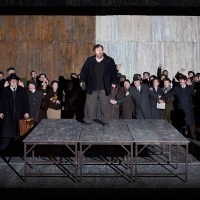
Scottish Opera’s new Carmen begins at the end. ‘Take me away: I have killed her,’ intones a voiceover and as the prelude swaggers out, José is in a police interrogation cell, where an investigator is attempting to piece together his story. In other words, it’s CSI: Seville. In converting Meilhac and Halévy’s libretto into a police procedural, director John Fulljames has created a Carmen that’s ideally gauged to a TV-literate audience: told in flashback, with any confusion swiftly cleared up by spoken dialogue that never feels clunky because interrogation is central to the genre. And unless you want to be surprised by the dénouement, it works a treat. Is that whopping spoiler really such a big deal?

As seductive as Chagall: Sarah Sze’s The Waiting Room reviewed

Exhibitions

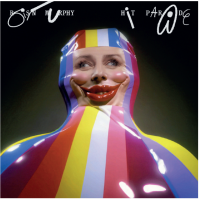
Exiting Peckham Rye station, you’re not aware of it, but standing on the platform you can see a mansard roof with ornamental railings silhouetted against the sky like a French chateau. Designed in the 1860s by Charles Henry Driver, architect of Sao Paolo’s Estacao da Luz, it once covered a vaulted waiting room which, after an intermediate existence as a billiard hall, was closed to the public in 1962. In short, it is just the sort of hidden space to tickle the fancies of impresarios-at-large Artangel, who have made it the site of the first UK installation by American artist Sarah Sze.

In praise of goths – the most enduring of pop subcultures

Arts feature

More than 40 years on, every town still has them, wandering the streets with pale skin, more make-up than you can find in Superdrug, swathed in acres of black fabric. Goths, rather unexpectedly, have turned out to be the great survivors among pop subcultures. Others have risen and faded, but the goths – laughed at, ignored, dismissed – have endured, seeing their style and their musical tastes slowly incorporated by everyone else (there’s even a goth version of hip-hop, known as ‘horrorcore’). Goth was a fitting name for the music: overbearing and foreboding; delivering ecstasy through the building and releasing of tension rather than through major chords and primary colours; drawing on punk, Bowie, the Doors and the Stooges.

Life-affirming Mahler: Budapest Festival Orchestra/Ivan Fisher, at the Royal Festival Hall, reviewed

The Budapest Festival Orchestra and founder Ivan Fischer have a reputation for exciting and joyous performances of Mahler. Even in this most tragic of symphonies, Fischer gave a grateful, if slightly sparse, audience exactly what they wanted. Fischer and his orchestra’s talent was in the delivery, in the work’s ravishing tableaux, and not in its philosophical lessons. While the symphony’s themes: the death of tonality, the death of culture, the death of Mahler himself, constitute the material that binds the work as a whole, Fischer’s BFO demonstrated that a satisfying Mahler interpretation doesn’t need to make the music subservient to ideas about the music. Although delivering both would be the ideal.

Watching Queen Cleopatra felt like witnessing the death of scholarship

Television

The most controversial aspect of Netflix’s new drama-documentary Queen Cleopatra – not least in Egypt – was the casting of a black actress, Adele James, in the title role. After all, one of the few things that seems certain about Cleopatra’s early life is that she was a Macedonian Greek. Luckily, though, the show had a powerful counterargument to this awkward and Eurocentric fact. As the African-American professor Shelley P. Haley put it with a QED-style flourish, back when she was girl, her beloved (if uneducated) grandmother once said to her: ‘I don’t care what they tell you in school, Cleopatra was black.

Warm, charming and tender: Are You There God? It’s Me, Margaret reviewed

Cinema

Are You There God? It’s Me, Margaret is an adaptation of Judy Blume’s seminal young adult novel (1970) about an 11-year-old girl who talks to God about her friends and boys and who she wants to kiss and whether she’ll ever get breasts or menstruate. (This could also be called Are You There, Margaret? It’s Me, Your Period, and I’ll Come When I’m Ready!) Not being the target demographic, I assumed I’d be bored to death but, ever the professional, I drank 12 espressos and 17 cans of Red Bull beforehand. That turned out to be wholly unnecessary. This is a wonderfully charming, warm, tender, pitch-perfect film, much better than anything else I’ve seen recently. So that’s a good outcome, even if I did jangle for days afterwards.

The Georgian fashion revolution

Exhibitions

Normally, when you look at portraits you feel obliged to focus on the sitter. But quite often you’re thinking, ‘Ooh, what a lovely frock.’ Or, ‘Fabulous breeches!’ Here it’s the costumes that take centre stage. The point that this exhibition makes is that costume spoke volumes about society, particularly in the long 18th century, over the course of the reigns (and regency) of the four Georges. Compare the flounces and silk of a portrait of Queen Caroline in 1771 with the simple classical white muslin cotton of Princess Sophia in 1796 and you find nothing less than a revolution. The change resembles what happened in dress after the Great War: bye-bye Edwardian hourglass, hello flapper. Here cotton, a fabric inexorably associated with slavery, tells a larger story.

The quiet genius of Gwen John

Exhibitions

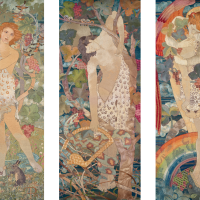
In the rush to right the historical gender balance, galleries have been corralling neglected women artists into group exhibitions: the Whitechapel Gallery rounded up 80 women abstract expressionists for its recent Action, Gesture, Paint show. But imbalances can’t be corrected retrospectively. Rather than elevating women artists who didn’t make it in a male-dominated world – not all of whose work, if we’re honest, helps the female cause – we should be celebrating the grit and talent of the few who did. And Berthe Morisot and Gwen John – currently the subjects of solo shows at Dulwich Picture Gallery and Pallant House – had both in spades.

Sad, blinkered and incoherent: Arcola’s The Misandrist reviewed

Theatre

A new play, The Misandrist, looks at modern dating habits. Rachel is a smart, self-confident woman whose partner is a timid desperado named Nick. Both accept that Rachel must make all the important decisions in their lives and she orders Nick to submit to ‘pegging’. After some perfunctory resistance, Nick obeys. ‘Lube me up,’ he cries and she plunges a pink truncheon deep into his digestive tract. Afterwards he claims that the experience was so uplifting that even his ancestors enjoyed a taste of bliss from beyond the grave. Lisa Carroll’s ironic and frivolous comedy is fun to watch. The characters are enjoyable and the lightweight, throwaway acting meets the script’s requirements.

Florid flummery: ETO’s Il viaggio a Reims reviewed

Classical

Lightning sometimes strikes twice. English Touring Opera hit topical gold last spring when, wholly by coincidence, they found themselves touring with Rimsky-Korsakov’s Russian anti-war satire The Golden Cockerel. Now the company’s general director Robin Norton-Hale insists that their current tour of Rossini’s Il viaggio a Reims – written in 1825 to celebrate the coronation of King Charles X of France – was fixed long before this month’s events at Westminster Abbey were even a glint in the Earl Marshal’s eye. Really? In truth, opera planning cycles generally operate in years rather than months. On the other hand, Il viaggio a Reims is an extravagant heap of dramatic (if not musical) flummery.

Patronising to the people of Peterborough: BRB2’s Carlos Acosta Classical Selections reviewed

Dance

Fulfilling its sacred duty to serve regions that higher culture tends to avoid, Birmingham Royal Ballet made a midweek visit to the troubled city of Peterborough. Its New Theatre holds about 1,200 and is normally focused on tribute bands and stand-ups; I would guess that for Carlos Acosta’s Classical Selection only about 60 per cent of its seats had been sold or distributed, and predominantly to a white and female audience. Their response was moderately enthusiastic. Arts Council England’s embattled chief executive Darren Henley was in attendance; I wonder what lessons he drew from the performance. I didn’t feel it quite hit the spot.

‘I love twigs’: botanical painter Emma Tennant interviewed

More from Arts

Hermitage, where the heel of Roxburghshire kicks into the once-lawless Debatable Lands, seems an unlikely place to find a botanical artist. It’s hard to make anything grow here, let alone an exhibition-load of rare and sometimes exotic plants. Lorded over by Hermitage Castle, a menacing hulk of medieval brutalism described by George MacDonald Fraser as ‘shouting “sod off” in stone’, this is a remote, rarely visited stretch of the border. Once the playground of reivers, and the graveyard of their victims, today it’s a land of sheep farming, forestry plantations and cruel May frosts. But there, hunkered against the wind in the foot of the Hermitage valley, is the studio of Emma Tennant, who has lived, farmed and painted here for more than 50 years.

Riveting and sumptuous: The Motive and the Cue, at the Lyttelton Theatre, reviewed

Theatre

The Motive and the Cue breaches the inviolable sanctity of the rehearsal room. The play, set in New York in 1964, follows John Gielgud’s efforts to direct the world’s biggest film star, Richard Burton, in Shakespeare’s most demanding play, Hamlet. A member of Gielgud’s company, Richard L. Sterne, recorded the process and his notes form the basis of Sam Mendes’s riveting production. The show is a must for anyone who works in the theatre or wants to. Directors, in particular, will relish the glimpse it offers into Gielgud’s approach to a uniquely demanding text and to a wayward superstar who was free to accept or to challenge the notes given during rehearsals.

The coronation music was – mostly – a triumph

Classical

Sir Hubert Parry was upgraded from knight bachelor to baronet by King Edward VII in 1902, and my goodness he earned it. His anthem for Edward’s coronation, I was Glad when they Said Unto Me, begins with a thrilling brass fanfare – or it has done since George V’s coronation in 1911: Parry’s original introit wasn’t sufficiently attention-grabbing, so he beefed it up. But the most spine-tingling moment has been there from the beginning. ‘I was…’ sings the choir on the tonic chord of B flat major – and then the word ‘glad’ bursts out where we aren’t expecting it, in G major.

Prayer for the Day is the best thing to wake up to

Radio

As the owner of a radio alarm clock, I could theoretically start listening to the Today programme before I’m even awake, but I rarely do. I tell myself it’s too much for first thing; that it’s bound to put me in a bad mood with some interview or other; that Today can wait until tomorrow – or at least until I’ve had my breakfast and a blitz of the somewhat jollier Times Radio. The levée, I say in a Bertie Woosterish sort of way, demands something light. When you crave something thought-provoking but also comforting, nothing beats a few minutes of prayer But then I find myself waking up unintentionally early, switching to Radio 4 and discovering that Prayer for the Day is about to begin.

Heartfelt but bland: Ed Sheeran’s – (Subtract) reviewed

Pop

Whether by accident or design, the mathematical theme of Ed Sheeran’s previous album titles (+, ×, ÷ and = respectively) resolves rather neatly with – (Subtract). I interviewed Sheeran around the time of × and found him likeable enough but a bit out of reach. Multiplication did indeed seem to be foremost on his mind. Perched on the edge of a bed in a room above RAK studios in central London, he came across as a man obsessed with sales figures and chart placings, a coolly pragmatic mix of talent and ambition. (You don’t think Sheeran is talented? I watched him entertain 60,000 people in a football stadium for two hours with just a guitar, loop pedals and a lot of chutzpah. He’s got talent, all right.

WNO sinks an unsinkable opera: The Magic Flute, at Birmingham Hippodrome, reviewed

Opera

As stage directions go, the The Magic Flute opens with a zinger. ‘Tamino enters from the right wearing a splendid Japanese hunting costume.’ That’s right, a Japanese hunting costume. What does that even look like? More to the point, what would a Viennese theatrical costume designer in 1791 have thought it looked like? Surviving evidence suggests that the answer was ‘nothing on Earth’, which is handy because it gives subsequent interpreters a huge amount of licence. Schikaneder’s rag-bag libretto has its quirks and non sequiturs, but it’s an astonishingly robust piece of theatre. I’ve seen The Magic Flute done as panto, as manga, as gothic fantasy and as 1970s British sci-fi. As long as a director preserves the essentials, it’s basically indestructible.

From Botticelli to Marvel: why artists love St Francis

Arts feature

‘A small, black, repulsive picture’ is not how most people today would describe Zurbaran’s haunting painting of ‘Saint Francis in Meditation’ (1635-9) in the National Gallery. But that was how one Protestant critic of its acquisition in 1853 described this image of an Italian saint satirised three centuries earlier by the German Lutheran cleric Erasmus Alber in his Koran of the Franciscans. Alber chose his title advisedly, for one of this peacemaking saint’s legendary acts of diplomacy was initiating an interfaith dialogue with the Muslim Sultan of Egypt, al-Malik al-Kamil. In 1219, so the story goes, Francis crossed to Damietta, then under siege by troops of the Fifth Crusade, slipped unarmed into the city and was arrested and brought before the Sultan.

Despite the lack of sex, stick with it: Paramount Plus’s Fatal Attraction reviewed

Television

With the current taste for remakes of erotic-thriller movies of the 1980s and ’90s, these are certainly good times for TV intimacy co-ordinators. Just two weeks ago, we had Netflix’s Obsession. Now Paramount+ has come to the slightly weird party, turning the daddy of them all, Fatal Attraction, into an eight-part series. In the original film, you may remember, high-flying married lawyer Dan Gallagher had an ill-advised weekend fling with Alex Forrest, who didn’t take him ending it terribly well. Instead she posed such an unhinged single-female threat to the nuclear family (and its pet rabbit) that cinema audiences famously cheered when Dan’s wife Beth did the decent thing and shot the mad cow dead.

A phenomenally exciting new band: The Last Dinner Party, at Camden Assembly, reviewed

Pop

A user’s guide to how pop music works in the 21st century. Step one: you see a great new band. Step two: you tweet about them being very good. Step three: you get told by people that they are clearly nepo babies, denying crucial exposure to other bands. Step four: you discover that newspaper articles are using these Twitter conversations as evidence of a backlash about said new band. That’s what happened after I went to see the Last Dinner Party. For reference, the Last Dinner Party have released precisely one song: their debut single ‘Nothing Matters’, which had come out a few days before. On YouTube you can find complete recordings of some of the few shows they have played, filmed by zealous young fans.

‘I have uncancelled myself’: David Starkey interviewed

More from Arts

David Starkey’s commentary on the Queen’s funeral on GB News was generally agreed to be the best of all the TV coverage, and now he is covering the coronation, and has made a three-part documentary about it for GB News called The Crown. Of course he knows the history, going back to King Edgar’s coronation in 973, but will he also be expected to recognise the guests? Will he have to say: ‘Oh look, there’s Elton John?’ No, he laughs, he leaves all that to his co-presenters. His job will be to explain what the coronation is about, and indeed that is what he proceeds to do when I arrive at his house in Highbury. He talks so seamlessly there seems very little chance of my ever asking any questions.

Shiny, smooth heavy metal for white incels: Metallica’s 72 Seasons reviewed

The Listener

Grade: B– Chugga-chugga, grawch, chugga-chugga. Never mind 72 seasons, it’s actually been a little over 500 seasons since Metallica first started bestowing their peculiarly Los Angeles brand of heavy metal – shiny, taut and smooth – on a grateful audience of dispossessed lower-middle-class white incels. And nothing very much has changed. They have got better, if by better we mean that they are now astonishingly tight, anchored by the literal, almost militaristic drumming of Lars Ulrich. You would think that after 42 years they might have come up with a riff that really sticks in the mind, if only perhaps by accident, like that chimp at the typewriter. But nope. This album is a profusion of guitar riffs, each piled on top of the other, and none of them touches the sides, sadly.

The magic is missing in this remake: Disney’s Peter Pan & Wendy reviewed

Film

Peter Pan & Wendy is Disney’s latest live-action remake (the animated version was in 1953) and it’s quite the sombre affair. It takes itself and its story so seriously that I kept waiting for it to be fun and it never was. There is an underlying sadness to J.M. Barrie’s original story, but it is also funny and joyous and exciting. Flying! Fairy dust! Ticking crocodiles! Pirates! That’s all here but somehow the magic is missing. Still, Captain Hook is played by Jude Law, who is at that stage in his career where he’s determined to have a good time and, from the look of it, he is definitely having a good time. At least one of us did (she says, resentfully).

Upstart Crow without the jokes: RSC’s Hamnet, at the Swan Theatre, reviewed

Theatre

The Swan Theatre has reopened after an overhaul and praise god: they’ve replaced the seats. The Swan is a likeable theatre; the only space in the Royal Shakespeare Company’s portfolio that still conveys a real sense of history, though until 2020 that came at the price of acute posterior discomfort. No more: and we can get on with enjoying the inaugural production, an adaptation by Lolita Chakrabarti of Maggie O’Farrell’s Shakespeare novel Hamnet. It’s a nice fit, and after the RSC’s success with Wolf Hall you can see the logic. It’s Shakespearean without too much of that difficult Shakespeare, plus you get the built-in audience that comes with an award-winning novel.

So good it would have made Ibsen envious: Dixon and Daughters, at the Dorfman Theatre, reviewed

Theatre

Deborah Bruce's new play Dixon and Daughters is a family drama that opens on a note of sour mistrust. We’re in a working-class home in Yorkshire where a vituperative old crosspatch, Mary, has just returned from prison. Rather than accepting her daughters’ friendly welcome she treats them all with open hostility. Had Ibsen been in attendance, he would have blushed with envy  Her first malevolent act is to try to evict Julie, even though her boyfriend has subjected her to horrific and repeated violence. And Mary is highly suspicious of the absent Briana who has changed her name and is threatening to return home, by force if necessary. What was Briana’s crime? And why is Mary so hostile to Julie who clearly needs her love and support?