Culture

Culture

The good, the bad and the ugly in books, exhibitions, cinema, TV, dance, music, podcasts and theatre.

Made me laugh for all the wrong reasons: Allelujah reviewed

Cinema

Allelujah, based on the stage play by Alan Bennett, is set in a geriatric ward in a Yorkshire hospital and has a stellar cast: Jennifer Saunders, Derek Jacobi, David Bradley, Julia McKenzie, Lorraine Ashbourne, Dame Judi Dench – but not Dame Maggie Smith, inexplicably. Maybe she missed the call. It’s directed by Richard Eyre and produced by Nicholas Hytner, among others, so it has all the credentials you could wish for and yet, and yet, and yet. It’s weirdly lifeless and perfunctory and introduces a tonal shift at the end that belongs to a different film. That part did make me laugh but for all the wrong reasons, alas. https://www.youtube.com/watch?v=KGektpTIYqo The hospital is the Bethlehem, known as ‘the Beth’, which is old and Victorian.

What a gloriously easy living Chris Rock makes from his comedy

Television

Chris Rock was paid $20 million for his 70-minute Netflix special, so by my reckoning his riff on whether or not the royal family are racist must have made him more than a million quid. Was it worth the money? Well, I enjoyed it but I’m not sure how well it will translate here, in precis, with all the swearing removed. At that altitude, bodies get frozen to three times their normal weight Rock begins by pointing up the absurdity of Meghan Markle (winner of the ‘lightskin lottery’, he says) complaining to Oprah: ‘I didn’t know how racist they were.’ ‘It’s the royal family!’ expostulates Rock. ‘They’re the OGs [Original Gangstas] of racism. They’re the Sugarnill Gang of racism.

The exquisite pottery of Lucie Rie

Exhibitions

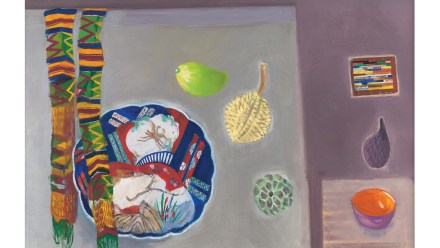
Lucie Rie had no time for high-flown talk about the art of ceramics. ‘I like to make pots – but I do not like to talk about them,’ she’d say. ‘I am not a thinker, I am not an art historian, I just do.’ It was her profession, she would maintain. Rie’s work is astonishingly self-sufficient. She belonged to no school and left none Her distaste for people preening about her craft went a bit further too. ‘I don’t like pots, I just like a few pots,’ she stated. When I interviewed her for the Sunday Telegraph back in 1988, she even said: ‘It’s extraordinary but I hardly like any potters – Hans Coper and then finish.’ She was absolute about her inferiority to Coper, whom, unlike herself, she considered an artist. ‘I have colours and I have easier shapes.

The cult of Morse

Arts feature

I am on the Inspector Morse walking tour in Oxford, which is led by a donnish man called Alastair. We look like the funeral cortege of a man whose death is under investigation. Oxford is a major character in Morse. I think of it as the antagonist. There is something very cold about the city, and unexpressed. Oxford’s novels are few – elves, talking lions, a bit of class. Its subconscious is rarely exposed: crime fiction must do it.  Three series grew out of Colin Dexter’s 13 novels: Inspector Morse (1987-2000); Lewis (2006-2015), in which Morse is a spectral presence, which suits him (he would be a good ghost); and Endeavour, the prequel (2012-23), which ended last week.

Electrifying: London Handel Festival’s In the Realms of Sorrow, at Stone Nest, reviewed

Opera

Hector Berlioz dismissed Handel as ‘that tub of pork and beer’ but it wasn’t always like that. Picture a younger, sexier Handel, rocking into Rome aged 22 and challenging Scarlatti to a keyboard duel. The Italian elite couldn’t get enough of Il caro Sassone, ‘the darling Saxon’, and he repaid them with 80-odd short Italian cantatas: little controlled explosions of character, colour and flamboyant melody in which his whole future career as a musical dramatist can be heard in concentrated form. This was an encounter with a genuinely evil work of art For the London Handel Festival, the director Adele Thomas staged four of these pocket-operas. The setting was Stone Nest, a domed former church, and the performance took place in the round.

Watch some liars claim that youth and beauty don’t go together

Television

Back in 1990, Grandpa from The Simpsons wrote a letter of protest to TV-makers. ‘I am disgusted with the way old people are depicted on television,’ he told them. ‘We are not all vibrant, fun-loving sex maniacs. Many of us are bitter, resentful individuals who remember the good old days.’ Thirty-three years on, it’s a protest that continues to fall on deaf ears, as we saw once again in the first part of Kathy Burke: Growing Up (Wednesday). The starting point was Kathy’s own 58th birthday, which had clearly come as rather a shock to her – and, given her take-no-nonsense (polite version) spikiness, you might have thought that the programme would dispense with the customary platitudes and wishful thinking in favour of something funnier and more candid.

Cumbersome muddle: Women, Beware the Devil, at the Almeida Theatre, reviewed

Theatre

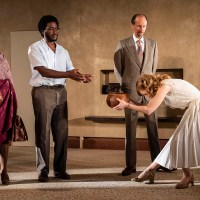
Rupert Goold’s new show, Women, Beware the Devil, has great costumes, sumptuous sets and an intriguing chessboard stage like a Vermeer painting. Impressive to look at but that’s where the good news ends. Dramatist Lulu Raczka should have thought twice before writing a script about witchcraft, which was bound to invite comparisons with The Crucible, one of the greatest plays in the theatrical canon. Raczka is no Arthur Miller. She seems to take a dim view of human beings and her writing feels like a vehicle for her vengeful sense of revulsion. Her female characters are mostly skittish, cackling ninnies and her males are lusty, arrogant, predatory monsters. No figure in this play is remotely likeable and no one has a dramatic goal that makes any sense.

The day I sold my destroyed piano to the Tate

More from Arts

One day in October 1966 I came home from school and found a large man stripped to the waist, attacking the family piano with a woodman’s axe. Seeing the anxious look on my face, my father assured me there was nothing to be afraid of. The axe-wielding man was, he explained, an ‘artist’ who was ‘creating a work of art’. My 11-year-old brain was puzzled: how could this axe-wielding lunatic be an artist? Can you destroy a piano and call it art? These same basic questions came to my mind last week when I went to Tate Britain and found that very piano hanging on a wall after 11 years in the Tate’s storage rooms. The piece – entitled, ‘Duncan Terrace Piano Destruction Concert’ – was by the American destruction artist Raphael Montanez Ortiz.

Ukraine must stop destroying its cultural heritage

Arts feature

Russia is not the only country erasing Ukraine’s cultural heritage. Ukraine itself has been demolishing its own public statues and murals for years. Before the war, in 2015, our parliament passed legislation that criminalised communist propaganda. ‘Decommunisation’ was a deceptively simple idea: it started with the removal of our 1,300 Lenins and a few other revolutionary figures. Since the invasion, even monuments with complex histories have been removed. In Odessa, a statue of the city’s founder Catherine the Great was toppled. In Dnipro, seven monuments were torn down, including those to writer Maxim Gorky, 18th-century scientist Mikhail Lomonosov and poet Pushkin. Two months ago, a Soviet monument to the soldier Alexander Matrosov in Dnipro was also dismantled.

How two Dutchmen introduced marine art to Britain

Exhibitions

In March 1675 the Keeper of His Majesty’s Lodgings at Greenwich received an order for ‘Three pairs of shutters for the three windows in a lower room, at the Queen’s building next to the park (where the Dutch painters work’). Willem van de Velde and his son, also called Willem, would have preferred a studio with north light, but they weren’t complaining. They had been put on a retainer of £100 a year by Charles II – with an additional £50 from James, Duke of York – for the father to draw ‘Draughts of Sea Battles’ and the son to turn ‘said Draughts into Colours’.

Full of love: Butler, Blake and Grant, at the Union Chapel, reviewed

Pop

Years ago, I asked Robert Plant what he felt about the world’s love of ‘Stairway to Heaven’. He said he no longer really knew what the song was about, and it didn’t mean an awful lot to him. But, he added, that didn’t really matter because the people who loved the song had given it their own meaning. Songs don’t have to be as ubiquitous as ‘Stairway to Heaven’, however, to work their way into your soul. It’s perhaps even easier to develop a personal connection with a song that one doesn’t have to share with the entire world. Lots of people just wanted to feel 21 all over again Last weekend I went to two shows that were very specifically about the past.

Dated and wasteful: Rusalka, at the Royal Opera House, reviewed

Classical

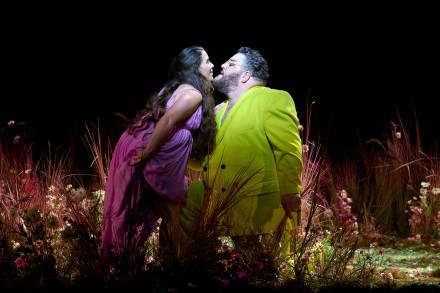
Careful what you wish for. There can be no definitive way to stage an opera, and it’s the critic’s duty to keep an open mind. Still, we’ve all occasionally gazed at a white cube that represents an Alpine meadow, or watched a chivalric hero slouch across the stage in tracksuit bottoms, and felt our hearts slump. Then you pitch up at the Royal Opera House’s new production of Dvorak’s Rusalka and it’s as if some mischievous sprite has magicked you straight back to 1960. The directors are also credited as ‘creators’ (back in your box, composer and librettist!) At first, you don’t suspect much. It’s actually rather enchanting: deep forest darkness and an aerial dancer in rippling, shimmering robes, drifting into the light in an exquisitely realised swimming effect.

Approaches perfection: Medea, @sohoplace, reviewed

Theatre

Winner’s Curse is a hybrid drama by Dan Patterson and Daniel Taub which opens as a lecture by a fictional diplomat, Hugo Leitski (a dinner-jacketed Clive Anderson). Leitski offers to teach us the subtle art of negotiation. An expert diplomat, he explains, must convince each side that they’re the winners in the negotiation and that their opponents have lost. In his youth he helped to broker peace between two Slavic nations, Karvistan and Moldonia, and the action switches from Leitksi’s lecture room to a seedy hotel, the Black Lagoon Lodge, where the peace deal was agreed.

What’s the difference between Shamima Begum and Unity Mitford?

Radio

The debate sparked by Josh Baker’s BBC podcast on Shamima Begum, and her teenage flight to join Isis, has divided opinion sharply into two camps. According to one, she was a naive 15-year-old cynically groomed by hardened operatives in the most feared terror organisation in the world. No, says the other, she was a capable girl who – knowing of Isis atrocities – made a highly determined decision to join them. But can’t both things be true at once, as they are for so many young recruits to extremism?  From another era, class and race, we might remember Unity Mitford, who flaunted her admiration of Hitler Listening, one is immersed in the surreal mix of mundanity and horror which defined Begum’s world after leaving home in London’s Bethnal Green.

His nasal American-Yorkshire voice struggles to convince: Yungblud, at OVO Hydro, reviewed

Pop

Even before albums became bloated, thanks to the largesse offered by CDs and streaming, most contained filler: those so-so songs merely passing needle time, weak aural bridges between the big hits and superior deep cuts. Bubblegum-punk and Auto-Tuned pop, sung in a distinctly nasal American-Yorkshire hybrid Increasingly, live concerts have filler, too. With the collapse of record sales, young pop performers feel compelled to jump into huge arenas more quickly than might be wise. It’s not always as easy as it looks. A massive social media profile doesn’t always translate into having sufficient willing bodies to fill these vast spaces, and while you can ship in pyrotechnic back-up, fancy sets and snazzy screens, one thing you can’t subcontract out are the songs.

In defence of the fabrications of reality TV

Television

My new favourite tennis player, just ahead of Novak Djokovic, is Nick Kyrgios. Up until recently I’d barely heard of him and what little I knew – his massive, sweary, on-court tantrums – did not inspire much enthusiasm. But then I watched Break Point and realised that here was exactly the kind of man I’d like to be myself: someone so talented at what he does that he puts in no preparation and little practice; who prefers chilling with his mates and his family to the grinding tedium of work; who loathes rules and formality and won’t be told what to do; and who, despite all these self-generated handicaps, is still capable of pulling off the occasional stunt that proves his critics spectacularly wrong. https://www.youtube.com/watch?

Thoroughly unsettling, never simplistic: Mike Nelson – Extinction Beckons, at the Hayward Gallery, reviewed

Exhibitions

You enter through the gift shop. Mike Nelson has turned the Hayward Gallery upside down and back to front for his survey exhibition, Extinction Beckons. ‘It’s been a very intensive four weeks,’ says an assistant putting the finishing touches to the multi-room installation ‘The Deliverance and The Patience’ (2001) when I visit two days before the opening. Lit by one of Nelson’s signature red lights, even the green sign reading ‘FIRE EXIT’ makes me nervous Having the place to myself feels like having sole occupancy of the haunted house at the fair. This is less of a house, though, more a warren of passages and poky rooms bearing unsettling signs of previous habitation. Can the Hayward’s functional spaces really feel this spooky?

Blue monkeys, bull-leaping and child sacrifice: why were the Minoans so weird?

Arts feature

Labyrinth: Knossos, Myth & Reality at the Ashmolean Museum in Oxford does not take the idea of a labyrinth too literally. It does not lead you through galleries to dead ends, nor are you left searching, like Theseus, for a ball of thread to find your way out again. The real enigma of the exhibition revolves around the Bronze Age civilisation at its heart. The Minoans, who occupied Crete between about 3,000 and 1,100 BC, remain some of the most mystifying people ever to have been stumbled upon in modern times. It is uncertain where they came from, what they believed, how they were governed and why they chose to paint things the colours they did in their dynamic works of art. They traded widely, including with Egypt, but the direction of cultural influence is not always clear.

The bear overacts the least: Cocaine Bear reviewed

Cinema

With a title like Cocaine Bear you’ll probably be happily anticipating one of those B-movie cultural moments. It’s a bear! On cocaine! Sign me up! You go to a film like this in the spirit of trash-loving glee. It’ll be fun. It’ll be 90 minutes of low camp entertainment rather than a four-hour Oscar-contending head-scratcher – and that can be a relief. But, in fact, and despite the publicity blitzkrieg – it’s a bear! On cocaine! – this is a standard animal-on-the-rampage affair. The cocaine doesn’t even bring much to the party. (Kids: take note.) Quite what I was expecting, I don’t know. Maybe the bear would become euphoric and chatty and stay up until the wee hours before becoming paranoid and crashing? That would have been more interesting, surely.

How has it escaped being cancelled? The Lehman Trilogy, at the Gillian Lynne Theatre, reviewed

Theatre

Standing at the Sky’s Edge is an ode to a monstrous carbuncle. The atrocity in question is a concrete gulag, Park Hill, built by Sheffield council in the 1960s as a punishment for hard-up locals who couldn’t afford to buy a house. The show is a propaganda effort on behalf of bossy, big-state, high-tax Labour authorities so the smiling residents of the brutalist eyesore keep telling us how much they love their multistorey dungeon. ‘You can see the whole city from up here,’ say the characters, as if no Sheffield resident had ever mounted any of the bluffs or heights that surround the area. The script is honest enough to admit that Park Hill’s secondary purpose is to reduce the city’s population by encouraging depressives to jump from its upper levels.

Crapcore: ENO’s The Rhinegold reviewed

Opera

Tubas and timpani thunder in The Rhinegold as the giants Fasolt and Fafner, having built Valhalla, arrive to claim their fee: Freia, goddess of beauty and youth. It doesn’t go well. Suddenly Fasolt drops his defences and declares his yearning (the translation is John Deathridge’s) for ‘a woman who’d lovingly and softly live with us lowly mortals’. At those words the music melts, and a solo oboe sings a melody so poignant that Ernest Newman thought it worthy of Mozart. This is the first instance in the whole cosmic drama where Wagner gives us a glimpse, however unformed, of something that an adult human might recognise as love.

Humanity, clarity and warmth: Alice Neel, at the Barbican Art Gallery, reviewed

Exhibitions

If you want to be taken seriously as a contemporary painter, paint big. ‘Blotter’, the picture that won the 34-year-old Peter Doig the John Moores Painting Prize in 1993, was over 8ft x 7ft. The pictures in his current show at the Courtauld are so big that only 12 of them fit in the gallery space. Lovers of paint owe Doig a debt of gratitude for rescuing the medium from the conceptual doldrums ‘Blotter’ was a dreamlike image based on a photo of the artist’s brother standing on a frozen lake in Canada, where Doig spent most of his childhood. Its title referred partly to his technique of letting the paint soak into unprimed canvas, partly to the way a single figure is absorbed into a landscape.

The mysterious world of British folk costume

Arts feature

In a remarkable photograph by Benjamin Stone, from around 1899, six men in breeches of a criss-cross floral pattern hold up great reindeer antlers. (Carbon dating of these objects produced the year 1066, plus or minus 80.) A man in a bowler hat holds a squeeze box and on the right a serious-faced boy stands with a hobby-horse head emerging from the cloth that swathes him. The photograph features in the exhibition Making Mischief: Folk Costume in Britain. It shows the Abbots Bromley horn dance, performed annually on the Monday after Old St Bartholomew’s Day (4 September). Never mind that the breeches were made in the 1880s by Mrs J. Manley Lowe, wife of the vicar of this Staffordshire parish.

What I love about Netflix’s Kleo is that it’s so damned German

Television

I was almost tempted not to watch Kleo because it sounded like so many things I’d seen before: beautiful ex-Stasi assassin, mysteriously imprisoned for nameless crimes, suddenly out of a job after the fall of the Berlin Wall, takes brutal revenge on all who betrayed her. It’s reminiscent not just of everything from La Femme Nikita, Kick-Ass and Kill Bill to the ghastly, grisly Killing Eve, but of any number of hitmen-out-of-retirement dramas (most recently The Old Man), plus every revenge yarn from the Count of Monte Cristo onwards, all seasoned with a delicate hint of Deutschland 83. But the thing about TV, you realise, is that originality is overrated, not to mention all but impossible. What matters is the detail, the tone, the handling.

The unknown German composer championed by Mahler

Classical

I was sceptical when the lady on the bus to Reading town centre told me that her father knew Liszt. Who wouldn’t be? This was a long time ago, mind: probably 1980, and I was on my way into school. I think our conversation started because I was reading a book about music. She was old and tiny, wearing a luxuriant wig. She introduced herself as Mrs Ball but her accent was unmistakably German. Even so, Liszt had been dead for nearly a century. Could it be true? ‘Oh, my father knew everyone,’ she said. ‘Richard Strauss was a great friend. And dear Bruno Walter. He lived in our house, you know. They were wonderful days – we were surrounded by the finest music.