Culture

Culture

The good, the bad and the ugly in books, exhibitions, cinema, TV, dance, music, podcasts and theatre.

In A Forest, Dark and Deep

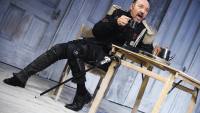
Neil LaBute is hard to like but easy to admire. So goes conventional wisdom on the subject of one of America’s most verbally violent playwrights. It’s a shame, therefore, that in this new tale of Hansel and Gretel grown up and gone wrong, there’s still plenty to discomfort but little to impress. Fortunately, Hollywood stars Matthew Fox (Lost) and Olivia Williams (Rushmore, The Sixth Sense) lend real wit and power to LaBute’s depiction of sibling warfare. In their capable hands, LaBute’s rehash of clichés about the opposition of educated woman to working class man becomes highly entertaining, if never quite enjoyable. LaBute seems to delight in the role of macho moralist.

Lines of beauty | 2 April 2011

Exhibitions

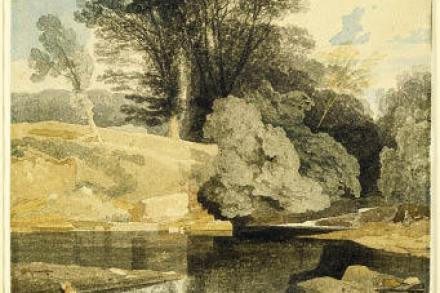
So far, 2011 has been a good year for drawing. The great Pre-Raphaelite drawings show at Birmingham is still fresh in my mind as I write this review of a superb Watteau exhibition at the Royal Academy (supported by Region Holdings) and a select survey of Victorian drawings and watercolours at the Courtauld. Watercolours are often described as a form of drawing, though they are in fact made with paint. So they occupy a hybrid category, allowing rather too great a laxity of definition, as can be seen in the Tate’s current watercolour compendium. But there is no uncertainty about the Academy’s show: this is all drawings, and of a very high quality indeed. So far, 2011 has been a good year for drawing.

The power of words | 2 April 2011

Arts feature

Tom Conti tells Mary Wakefield how to get inside a woman’s mind I watched Shirley Valentine again last night. It’s different when you’re older. At 14 it’s impossible to imagine that any sane woman would talk to a wall — or put up with that dour, demanding husband for so many years. When you’re 35, well, it doesn’t seem so far-fetched, does it? Tom Conti (as Costas, the love interest) looks better, too, this time round — more attractive. When you’re a teen, you’ve no idea how rare it is to find a middle-aged man who looks good in jeans. As the credits scrolled up over sundown in Mykonos, I was full of an unsettled longing for retsina, self-actualisation and holiday romance.

The art of giving | 2 April 2011

The Spectator's Notes

The investor Jonathan Ruffer reveals why he is spending £15 million to buy 12 great paintings from the C of E – and give them back ‘It’s the pearl of great price,’ says Jonathan Ruffer. Like the merchant in the Gospel, he is selling all that he hath. With the proceeds, he is buying the 12 Zurbaran paintings of Jacob and his Brothers at Auckland Castle, the palace of the Bishop of Durham. And when he has bought them from the Church of England, he will give them back, keeping them in the castle, thus bestowing them upon the people of the north-east in perpetuity. The price is £15 million. He believes in the Big Society and is taking a big punt on it. Ruffer, who is 59, is a very successful private client fund manager.

This charming man

Music

Charlie Siem, the half-British, half-Norwegian violinist, only came to the virtuosic style late in his development (‘probably because I was lazy’, he explains, not convincing me for a moment); but when he did he was hooked. His new, self-titled album (Warner Classics) is, ostensibly, a homage to the virtuosic tradition established in the early-19th century by Paganini, who once proclaimed, ‘I am not handsome, but when women hear me play, they come crawling to my feet.’ Siem, who is currently the global face of Dunhill, does not have that problem.

Shop talk

Music

Last Friday I popped into Gramex, the world’s best second-hand classical CD and record shop, just behind Waterloo Station. Last Friday I popped into Gramex, the world’s best second-hand classical CD and record shop, just behind Waterloo Station. The owner took one look at me and declared, ‘This gentleman is tired. He needs a cup of tea and a Belgian bun.’ Before I had time to reply he dashed into the bakery opposite. Two minutes later I sat there, sticky bun in hand, while he put the kettle on. They wouldn’t do that in HMV. Actually, I suspect they won’t be doing anything in HMV by this time next year.

A pair of shockers

Theatre

Michael Attenborough, the spirited maverick who runs the Almeida, has lavished a first-rate production on David Eldridge’s new play. Michael Attenborough, the spirited maverick who runs the Almeida, has lavished a first-rate production on David Eldridge’s new play. All that’s missing from this slick, visually pleasing show is any thought or utterance worthy of adult scrutiny. The script introduces us to a TV presenter, Lucy, recently dismissed for smoking heroin in her dressing-room. Skint, hooked on drugs and profoundly depressed, she follows a predictable downward spiral into theft, prostitution and homelessness and from there to counselling and the delusional ‘contentment’ of abstinence.

Lost children

Cinema

I didn’t much like Oranges and Sunshine and I’ll tell you for why: it takes one of the most obscene scandals in 20th-century British politics — the mass forced deportation of British children to Australia, which began in the 1920s and continued right up until 1970 — and all but kills it off with its self-righteous stance, plodding script, mournful violins and clunky construction.

Turning point

More from Arts

One of the intriguing components of The Most Incredible Thing, Javier De Frutos’s latest creation, is its structure. One of the intriguing components of The Most Incredible Thing, Javier De Frutos’s latest creation, is its structure. Intentionally steering away from the aesthetic developments that informed theatre dance for more than a century, De Frutos has opted instead to revive and revisit the compositional formulae of the late 19th-century three-act ballet. Bold and risky as that sounds, such a decision fits perfectly with the kaleidoscopic score which the Pet Shop Boys’ Neil Tennant and Chris Lowe have been working on since 2008 and the storyline, derived from the tale by Hans Christian Andersen.

History through sound

Radio

Diaries and letters tell us a lot about how people lived from day to day yet there’s often something missing. video platform video management video solutions video player Diaries and letters tell us a lot about how people lived from day to day yet there’s often something missing. How did they experience the world through sound? What did they themselves sound like, their voices, their accents? The aural experience of the past is lost to us. Now, though, we have the technology to record just about anything we want.

Personal grooming

Television

I found myself among a group of young people the other day, and they were talking with much hilarity about The Only Way Is Essex (ITV2, Sunday and Wednesday). This is cult television, adored by the generation that watches it. The show is a strange hybrid: real people play themselves under their real names, but with much of the script and many of the plots written for them. So it’s a reality show that has more or less ditched reality. The cast are young Essex people with money. They spend their time in expensive cars, in the gym, or making themselves beautiful in salons and nail bars. Nail bars! No female would expose her real fingernails in this series any more than she would wear pants that showed off her cellulite. If it hadn’t already been liposuctioned away.

A(nother) Magic Flute

A new opera has breezed through London’s Barbican Centre. It’s a tale of arduous quests, initiation and male friendship, lyrical in its romantic sweetness, and vaguely reminiscent of the later Mozart. But Mozart’s The Magic Flute it most certainly is not. It is always courageous to take on the opera purists, but it is not quite clear how bold the usually fearless Peter Brook has been in titling his adaptation A Magic Flute. It is scarcely a step away from the original title: just enough of a retreat to avoid comparisons to conventional productions, but not exactly a leap into the unknown.

East Anglian friends

Exhibitions

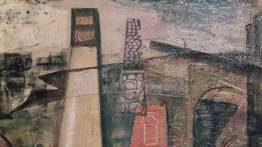
Three exhibitions in East Anglia serve to remind us that museums and galleries outside London continue to programme stimulating events. At Norwich Castle is an excellent survey of British art from the beginning of the first world war to the end of the second — a time of great richness and considerable innovation. There’s so much of interest and value here that it’s difficult to decide what to mention and what to leave out. Three exhibitions in East Anglia serve to remind us that museums and galleries outside London continue to programme stimulating events. At Norwich Castle is an excellent survey of British art from the beginning of the first world war to the end of the second — a time of great richness and considerable innovation.

Maastricht treats

Exhibitions

The European Fine Art Fair (TEFAF) takes place in Maastricht, Netherlands, every year. It showcases the finest examples that the most prestigious commercial galleries of the international art world have to offer — from ancient to contemporary art and design. The European Fine Art Fair (TEFAF) takes place in Maastricht, Netherlands, every year. It showcases the finest examples that the most prestigious commercial galleries of the international art world have to offer — from ancient to contemporary art and design. Exhibits are heavily vetted and scrutinised for their provenance before the wealthiest dealers, collectors and heads of museums are allowed in to make their purchases. It is a true celebration of the global art market.

The greatest living pianist

Features

Why, despite his devoted fans, Grigory Sokolov won’t play live in Britain Grigory Sokolov is a pianist in his fifties; he is overweight, Russian, sleeps only three or four hours a night, is a strict vegan and is obsessed with the occult. He can calculate with one glance the number of seats in an empty concert hall and remembers instantly, to within an inch, where a piano used to be on a stage he hasn’t played on for years. Sokolov is also the reason we must overhaul, right now, the ridiculous visa system that prevents so many foreign artists from performing in the UK. Lord Clancarty started a debate on the matter in the Lords this week, and cited Sokolov as a reason. Clancarty was right.

Following in the family footsteps

Theatre

Lloyd Evans meets Niamh Cusack, who ‘absolutely wasn’t going to be an actress’ She doesn’t usually do it this way. When Niamh Cusack heard that the Old Vic was planning to stage Terence Rattigan’s final play, Cause Célèbre, she read a synopsis, found a part that excited her, and asked her agent to get her an audition. ‘I’ve never approached a production like that,’ she tells me. ‘But it’s a cracking play, really, well written — a rollicking courtroom drama with great characters and fascinating relationships.’ We meet in a dressing-room at the Old Vic and make ourselves comfortable amid the higgledy-piggledy apparatus of a Feydeau farce whose run is drawing to a close.

Spellbound

Opera

English Touring Opera continues to be the most heroic of companies. This spring season it is performing at 17 locations, from Exeter to Perth, Belfast to Norwich. And in the many years that I have been going to its productions, there has been no compromise in standards and absolutely no contraction of repertoire to the familiar and the safe, if anything the reverse. Last autumn it premièred Goehr’s tough Promised End, an immense artistic achievement. And now they are putting on Tobias Picker’s Fantastic Mr Fox, an operatic adaptation of Roald Dahl, with young children from each of the relevant towns playing the fox cubs — and having their names printed in the lavish accompanying booklet, with CD attached.

Sibling opposition

Theatre

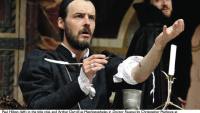
Hard to like, impossible to discount. Neil LaBute delivers another of his exquisitely sordid insights into the damaged terrain of the privileged bourgeoisie with his new melodrama, In a Forest Dark and Deep. The setting is a small house near an American university. College lecturer Betty is being helped by her trailer-trash brother Bobby to clear out the detritus left by a departing tenant. LaBute’s storyline adheres very strictly to the timetable laid down by screenplay seminars: every 20 minutes a new revelation flips the plot entirely on its head. This tick-tock regularity gives the play an unwelcome air of artifice. First we learn that Betty is more a sugar mummy than a landlady to her absent tenant.

Three’s a crowd

More from Arts

According to some sources, the legendary impresario Sergei Diaghilev invented the mixed-bill formula for ballet. Whether or not this is true, there are times when one wishes he hadn’t. One century later, they increasingly come across as hurriedly and/or inharmoniously put together. Take, for instance, the most recent Royal Ballet triple bill. Frederick Ashton’s 1980 Rhapsody was created for the Queen Mother’s 80th birthday and as a vehicle for the megastar Mikhail Baryshnikov. Although the work has many subtle layers, it retains much of its original ‘party piece’ essence, which calls for grandeur and sparkle. Alas, the redesigned sets and costumes do not provide either, nor did the corps de ballet’s dancing on the opening night.

More 4

More from Arts

Big changes are happening to the airwaves, part of the frenetic technological revolution that’s been unleashed by the development of a digital language. Big changes are happening to the airwaves, part of the frenetic technological revolution that’s been unleashed by the development of a digital language. Radio, against expectations, is proving itself a vital force in these fast-moving times, because it’s flexible, adaptable and still compelling. The human voice, the imagination of sound, will endure when perhaps TV will fade out, evolving into another kind of internet exchange.

Our island story | 26 March 2011

Television

I vividly remember the moment when I saw my first black person. It was December in either ’68 or ’69, so I would have been three or four at the time, and my father’s works had arranged some kind of coach outing to meet Father Christmas. Seated near me was a black child a bit older than me, and I recall gazing fascinated at the blackness of his skin and noticing that it had white blotches on it like a mirror image of the dark freckles and moles on my skin. ‘Daddy, what are those white things?’ I asked, pointing at the boy’s skin. ‘Pigment,’ my father explained. I vividly remember the moment when I saw my first black person.

To pastures new

More from Arts

If you like to pass an idle half-hour, as I do, reading random entries in Who’s Who, you will be struck by how many distinguished people include gardening among their recreations. If you like to pass an idle half-hour, as I do, reading random entries in Who’s Who, you will be struck by how many distinguished people include gardening among their recreations. Indeed, it is the second most popular pastime — after golf, bizarrely — in the book. To pick just a few: the Duchess of Buccleuch and Queensberry, Lord Justice Goldring, Susan Hampshire, Mark Damazer, Maeve Binchy, Lord (Chris) Patten and Crispin Blunt MP all own up to spending their spare time gardening.

Out of place

Exhibitions

Since pluralism in the arts became the order of the day, categories have been bursting at the seams, and the old definitions have lost validity. No longer does visual art denote painting, sculpture, printmaking and drawing, but all manner of extraneous and tangentially linked activities as well. Film, installation and performance are crammed in under the same umbrella as Michelangelo, Dürer and Monet, when it’s painfully clear they have almost nothing in common with such illustrious forerunners. In fact, it’s extremely doubtful whether much of the stuff that currently parades under the banner of art has any justification for being there.

The great redeemer

Arts feature

Assailed on all sides by cultural vacuity, we are more than ever in need of the life lessons of Beethoven, argues Michael Henderson We do not, as a rule, meet all our loves at once. Those things which mean so much to us in our emotional maturity did not always strike us as special presences. Indeed, we may have been suspicious of, or felt hostility towards, some of the supreme works of art, and the minds that created them: many an indentured Wagnerian had first to leap through the magic fire of his initially forbidding music dramas. Last week, therefore, as I sat in the drawing-room of a house in central London, and watched Gábor Takács-Nagy, founder of the Takács Quartet, supervise another superb ensemble, the Belcea, as they played through Beethoven’s Op.

Barometer | 19 March 2011

Barometer

Midsomer and Soham The producer of ITV’s murder-mystery series Midsomer Murders was suspended after saying he didn’t want black characters on the show because it was ‘the last bastion of Englishness’. While many English villages still reflect Midsomer in their colour, it is over 200 years since a black man first settled in the English countryside. — Olaudah Equiano, a Nigerian-born slave who managed to buy his freedom, married in 1792 in the village of Soham, Cambridgeshire — now best known nationally for the murder of two school girls by Ian Huntley in 2002. — Equiano wrote an autobiography and died in 1797.