Culture

Culture

The good, the bad and the ugly in books, exhibitions, cinema, TV, dance, music, podcasts and theatre.

Bewitched

Music

The Biophilia live show at Harpa, Reykjavik is another cog in the complex wheel that makes up Björk’s eighth album, which is not simply a collection of nice songs, but a concept record about nature, a series of educational apps and a showcase for its specially created instruments. The performance is, however, where it all comes to fruition, with the extensive thinking behind it distilled into the joy of putting on a show. Björk is the star attraction of the Iceland Airwaves annual music festival, and there’s a particular magic at seeing her not only perform in her home town, but her 20-strong girls’ choir, too, who add a dance element as well as backing vocals, stomping and singing in their glittering costumes with chaotic synchronicity.

Et tu, Hugh?

Television

Hugh Fearnley-Whittingstall thinks it’s time we all went veggie (River Cottage Veg; Channel 4, Sunday). Coming from a man whose favourite dish is human placenta marinaded in fruit-bat extract, who slaughters his own pigs with a pocket knife and dances naked in their gore as he turns them into 2,058 varieties of artisanal black pudding, and who recently confessed he wouldn’t mind eating the odd puppy if push came to shove, I suppose this is something we should take quite seriously. Personally, I feel betrayed. As betrayed as I felt all those years ago when my most heavy-duty smoking friend Ewen gave up fags, which was so unfair because I’d been relying on him to die of lung cancer, not me. ‘Et tu, Hugh?’ it made me think. Because I like my meat, an awful lot.

The Sea, the Sea

Sea-storms seem to be buffeting London theatre at the moment, and I’m not just talking about Trevor Nunn’s sugar-saturated Tempest. Down at the Southwark Playhouse, Edinburgh Fringe hit Bound blows into London after a worldwide tour, while at St Giles Cripplegate, in the Barbican complex, you’ll find a darker, sacral The Tempest just back from its premiere in a West Bank refugee camp. The winner of multiple awards at Edinburgh 2010, including a Fringe First and National Student Drama Awards, Bound reaches into the heart of what men will do in times of economic desperation. It’s also a peek into the life of a traditional fishing community, a frequently overlooked bulwark of our island history.

The art of collecting

Arts feature

Passion was in the air in the rooms of the Wallace Collection last week — or at least the word was at the inaugural Apollo seminar sponsored by specialist art broker Stackhouse Poland with AXA Art Insurance. ‘How do you collect art and antiques in today’s market?’ was the question and the panel, chaired by Apollo’s editor Oscar Humphries, was unanimous that passion played an essential part when starting a collection. James Stourton, chairman of Sotheby’s, believed that to start a collection one had to be energetic, assiduous, knowledgeable and to be at the right place at the right time because supply was always short. And he advised always to buy the best one can afford. Ah, money.

Blots on the cityscape

Exhibitions

As the 414 bus swings left from the Edgware Road at Marble Arch you avert your eyes, hoping you won’t have to look at the thing looming up in front of you for a single second longer than you have to. Even so, you know it’s there — a blot on the sky, a gulp of polluted air. I’m talking about a 33-ft-high bronze sculpture in the form of a decapitated horse, muzzle pointed downwards, in the middle of Marble Arch. The epitome of ghastly good taste, it looks like an expensive knick-knack from Harrods blown up to a size that would have appealed to Saddam Hussein. When the thing arrived, the Evening Standard assured us that it would be on view for only one month.

Cause for alarm

Opera

Whereas Don Giovanni seems, for assorted reasons, to be unfloatable at present, The Marriage of Figaro is virtually unsinkable, with Così somewhere between. In general it seems that comedies go in and out of favour and fashion more than tragedies or ‘straight’ works, though Figaro may be a glorious exception, like Die Meistersinger. It is horrible to contemplate the possibility of a world which was indifferent to their charms and profundities. Even so, the new production of Figaro at ENO gives some cause for alarm. Fiona Shaw, who has not previously produced a classic opera, sees the work as a maze, a harmless enough notion unless you take it that in the middle of a maze there must be a Minotaur, the only candidate for that in Figaro being the Count.

Personal touch

More from Arts

In 2004 Jérôme Bel, one of the most provocative performance makers of our time, created Véronique Doisneau, a solo for a Paris Opera Ballet artist who was about to retire. On the immense empty stage of Palais Garnier in Paris, Doisneau, in practice clothes, shared with the public reflections on her career, her favourite ballet moments and her thwarted dreams. The performance ended with a stroke of theatrical genius, when Doisneau highlighted the drabness of the corps de ballet’s lot by engaging, alone, in what the 32 swans do while framing the two principals in Swan Lake’s first duet. The solo, available on video and on YouTube, provided the blueprint for similar works, such as the more recent Cédric Andrieux (2009).

Zilch to care about

Cinema

So, The Three Musketeers, and one for all, and all for one, but I wish it were every man for himself, and they’d all decided to call it a day and go their separate ways. This is a film of no charm whatsoever and I’d advise you to steer clear, walk the other way, keep your money in your pocket, and do something else. Do your VAT return or change all the duvet covers or scour the grill pan that’s been ‘soaking’ for days and I promise you, not only will you have more fun, but one hour and 50 minutes will pass much more quickly, too.

False expectations

Theatre

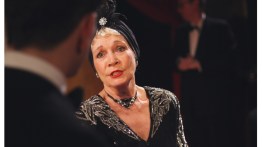
Here’s an idea from the heyday of radio comedy. A soap star about to get the chop improvises an unscripted deathbed recovery during a live broadcast in order to save his career. I think it was Tony Hancock who starred in that sketch. To expand it into a full-length play would be quite a challenge. And in the 1960s Frank Marcus, a showbiz journalist, took on the job. And he struck gold. The Killing of Sister George triumphed in London and on Broadway. Now it’s back with a cast of starry comediennes. Sister George, a district nurse, is the leading character in a popular Radio 4 soap opera. One day, on a whim, the BBC execs decide to bump off the character.

Care in the community

Television

‘We all need to rendezvous every week. It keeps us all as a community,’ said Jane Copsey on the In Touch anniversary programme (produced by Cheryl Gabriel). The Radio 4 magazine for the blind and partially sighted has been around for 50 years dispensing advice and encouragement, hope and cheer. Nowadays it’s been cut to just 20 minutes, but at least it’s still in its Tuesday-evening slot, where it’s been scheduled for decades. Copsey was arguing for the survival of the programme, even though there’s now an online equivalent, called Ouch!

Critics’ choice

Television

I caught an intriguing session at the Cheltenham literary festival, titled ‘Secrets of the TV Critics’. As it happened, the main secret seemed to be that some of them liked a drink while they watched the box. In the distant days before advance DVDs and internet previews, one critic of the Daily Express used to sit in front of an entire evening’s television with a bottle of whisky. At 10.45 he would phone the copytakers and dictate what he thought. At least he was duplicating the experience of most viewers, which is more than we critics do now.

Get that girl

Theatre

L.A. The Eighties. Hard rock is alive and well. Two smalltown hopefuls, Drew and Sherrie, arrive on Sunset Strip, as a German property developer is threatening to flatten it. Both find work in the same bar, and Drew has just plucked up the courage to tell Sherrie, ‘I think you’re really rad,’ when jaded rock star Stacee Jax (Shayne Ward) comes between them — just because he can. Waitresses in bodice and suspenders pelvic-thrust to rock classics, oblivious. Rock of Ages (Shaftesbury Theatre) has more layers than your average musical. There are some witty Family Guy-style cutaways, and parts of Simon Lipkin’s versatile narration seem on the point of founding a new genre: the mockumusical.

Exclusive: Michael Boyd to quit the RSC

The theatre world is abuzz with rumours that Michael Boyd, director of the Royal Shakespeare Company, has quit this afternoon. He was appointed in July 2002 and was expected to complete at least a decade in charge. His colleague Vikki Heywood is also expected to resign. Boyd will probably be best remembered for overseeing the enormous refit of the main theatre in Stratford. The renovated space, with its thrust stage, opened its doors in November 2010 and has been judged a huge success. Boyd has also shown himself adept at the do-gooding jargon of top public officials. He talks of the Bard’s new home in Stratford as if it were a drop-in centre for junkies. He describes it as ‘a chance to build a contingent, optimistic community.

Ground zero, part 2

This is the second half of Kate Maltby’s essay on the representation of September 11th in art. You can read the first here. Decade succeeds in humanizing moral failings: fear, shame, doubt. In the simplest and most intimate scene, we hear a blokish, British New Yorker talk through the guilt of swapping his day off for 9/11, his creeping frustrations with the official investigation, his confusion at finding his public criticisms picked up by conspiracy theorists. It’s a devastating performance by Tobias Menzies, pared down, humble. And Menzies isn’t the only talented performer here: Kevin Harvey is fierce and firm as the Marine ordered to shoot Bin Laden, as well as pulling off a neat Barack Obama impression.

Here’s how the Beeb might save some cash

Good point made by Charlie Brooker in today’s Guardian. If the BBC wishes to save a bit of money without affecting quality of output —indeed, by improving it — the corporation should stop making vastly expensive trailers for its forthcoming programmes. Brooker says it “turns him silver with rage” when he sees these specially shot montages: “It’s like watching the BBC shit money into a big glittery bin.” Quite right. If I were a better journalist I’d have added up the number of minutes per hour which the BBC gives over to advertising itself and compare it with the figure from 10, 20 and 30 years ago. I am absolutely certain it has increased dramatically.

Ground zero, Part 1

Kate Maltby’s essay on artists’ responses to the terrorist attacks of September 11th will appear here in two halves. This is the first. There’s a moment in Rupert Goold’s latest production, Decade, in which a gaunt widow (Charlotte Randle) stares up and into the empty space just left of where the North Tower used to stand at Ground Zero, New York. Each day, she tells her listeners, she is staring not at the space where the tower used to be, but trying to find the patch of air through which her husband might have tumbled, voluntary but unwilling, to his death. She doesn’t have to describe exactly what she sees in her mind’s eye, because we’ve all seen it ourselves. It’s a simple, iconic image.

Pictorial intelligence

Exhibitions

Edgar Degas (1834–1917) was born into a banking family, always knew he wanted to be a painter and was fortunate enough to be encouraged in his enthusiasm by his parents. After a classical training he began to paint portraits and history subjects, before seeing the relevance of real life and developing ways in which to depict it. Influenced by Manet and allied to the Impressionists, he was nevertheless not a committed member of the group and was impatient at its definition of painting. He remained classical in his approach to picture-making but fused this with a keen interest in colour and texture, and an awareness of how photography and Japanese prints had influenced ideas of space and vision.

Northern lights | 8 October 2011

Arts feature

Those BBC refuseniks will rue the day they passed up the chance to relocate to Salford, England’s new cultural capital, says William Cook Standing on the roof of Daniel Libeskind’s Imperial War Museum North, staring at the shiny new buildings down below, you could be forgiven for thinking you were in Hamburg or Berlin. There’s the same futuristic skyline, the same glint of glass and metal. There’s even a sleek modern tram, snaking between the shops and cafés along the quay. But this isn’t a continental conurbation — this is Salford. The improbable renaissance of this unloved city sums up England’s biggest schism, not between black and white or rich and poor, but between north and south.

Barometer | 8 October 2011

Barometer

Late winners The Nobel Prize is not usually given posthumously; but an exception was made this week for Ralph Steinman, a cancer scientist who, unknown to the Nobel committee, had died three days before being awarded the Nobel Prize for Medicine. He is in good company in being honoured posthumously. Peter Finch, George Gershwin and Heath Ledger all won Academy Awards after their deaths. Alexander McQueen last year won an ‘outstanding achievement award’ following his suicide. Unlike in Britain, where elections are suspended if a candidate dies, US politicians are occasionally elected after their deaths. In 2000 Mel Carnahan of Missouri won election to the US Senate after dying in a plane crash.

Beguiled by Weill

Opera

  Street Scene may well be Kurt Weill’s most successful work from his American period, but seeing it in as good a production as the Opera Group’s at the Young Vic was cause for both enjoyment and reservations. In the next couple of weeks it will be touring to Basingstoke, Edinburgh, Newcastle and Hull, so plenty of people will have and should take the chance of seeing it. I’d go again if I were nearer one of those places, for Weill is always at least interesting, though not always quite in the way that he wanted to be — he intended, like Brecht, that we should be filled with indignation about many of the scenes he presents, but we’re much more likely to be beguiled by catchy melodies.

Dare to care

Cinema

Tyrannosaur is very much in the British working-class miserablist tradition in the sense that it is full of masculine fury and the women who take the brunt of it, and if this does not sound an attractive proposition, it’s because it isn’t, and never is, but, as far as these unattractive propositions go, this is powerfully affecting. I would also add that if, in the upcoming months, the actress Olivia Colman does not win every award going for her performance as a nice Christian lady with something to hide, I will be surprised, stunned, amazed, astonished and incredulous. I will also be dumbfounded, and flabbergasted, and will eat my hat, but not my thesaurus which, over the years, has proved handy, convenient and opportune.

House rules | 8 October 2011

More from Arts

Britain needs more houses, and the government’s highly unpopular draft National Planning Policy Framework (NPPF) at least asks how to get them — the right question even if it gives the wrong answer. Anyone who deals with the planning system knows how overblown it has become, and that the cost and effort can exhaust a developer, to the extent that the good intentions of a scheme drain away at the crucial moment of building. The existing planning system may be imperfect but, if it is to be simplified, it needs to be better at eliminating bad designs, not the reverse. Prodigious amounts of brain power and energy have been devoted to making the well-intentioned suet pudding that is the planning system of today.

Smart operator

Radio

Back in the Fifties, it was possible for a single TV sitcom to capture 92 per cent of the small-screen audience; 92 per cent? It sounds astonishing to us now. The idea of so many people watching the very same comic gags at the very same time. Those fabled water-cooler, coffee-machine chats about what was ‘on’ last night no longer happen. Offices have lost their communal buzz, and are often as dead quiet now as a funeral parlour. No more telephone calls, as everyone is texting. No need to talk to anyone, you just email. Nothing to talk about, because we’re all listening, watching, playing something different. No wonder we have a coalition government. There’s just no chance for any single party to be heard, or seen, by sufficient numbers to have any impact.

Nice Mr Fry

Television

Whenever I find myself dreaming about how awful things would be under a red/green dictatorship — increasingly often, these days — the one person who gives me a glimmer of hope that I might get out of the hell alive is Stephen Fry. He’s a leftie, of course — but, like Frank Field and Kate Hoey, he’s the right kind of leftie. Even when appointed Minister for Culture in the new regime, as he inevitably would be, you just know that he wouldn’t indulge in either the gloating triumphalism or bullying sadism of his fellow Nomenklatura. It would be more a case of: ‘Yes, my dear, dear chap. How perfectly awful for you to be caught on the wrong side of history.

All that jazz | 8 October 2011

Music

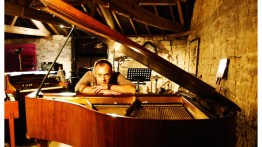
The human voice has always been celebrated as one of the most direct forms of musical and personal expression. This is especially true in jazz, where improvisation is such a key element. We so often listen to singers ‘baring their soul’, revealing something ‘deep within’. The human voice has always been celebrated as one of the most direct forms of musical and personal expression. This is especially true in jazz, where improvisation is such a key element. We so often listen to singers ‘baring their soul’, revealing something ‘deep within’. And Georgia Mancio (above), jazz singer and curator of the ReVoice!

Unfit for purpose

Exhibitions

In recent months, two new museums have opened to much acclaim: The Hepworth in Wakefield and Turner Contemporary in Margate. Now Colchester is receiving the dubious benison of a new building. What is this assertive new generation of museums in England supposed to be about? Leisure, business or art? There’s precious little of the last in the much delayed Firstsite gallery in Colchester, a long pavilion by Rafael Viñoly Architects clad in gold-coloured metal which looks wonderfully out of place in the Roman city of Camulodunum (the name also chosen for its inaugural exhibition). Don’t get me wrong: I live in East Anglia and would welcome a great new museum in Colchester, as a centre for excellence and a potentially worldwide audience.

Down to earth

Arts feature

Lloyd Evans talks to the warm, vibrant, vegetable-growing actor, teacher and director Caroline Quentin Terminal fear. Rising nausea. And possibly vomiting. That’s what Caroline Quentin expects to go through on the opening night of her new play, Terrible Advice, at the Menier Chocolate Factory. ‘I’m really pretending it’s not happening at the moment,’ she tells me when we meet in the theatre bar. With two weeks to go before the first performance, she confesses, ‘I get dry-mouth at the very bloody thought of it. Mind you, I’m always like this halfway through rehearsals, I think, agh! I can’t bear it, perhaps I can run away. Or feign injury. Or I start booking flights mentally and all that.