Culture

Culture

The good, the bad and the ugly in books, exhibitions, cinema, TV, dance, music, podcasts and theatre.

Serious and gripping – though Trump disagrees: The Apprentice reviewed

Cinema

The Apprentice is a dramatised biopic of Donald Trump, covering his early business years. He has called the film ‘FAKE and CLASSLESS’ and ‘garbage’ – but he wishes it well. I’m pulling your leg. ‘It will hopefully “bomb”,’ he has said. He hasn’t seen it, as far as anyone knows – I wish I could review films without seeing them; so time-saving – but even so, the writer, Gabriel Sherman, is ‘a lowlife and talentless hack’. If Trump had not trashed the film, you could say it had failed in what it was trying to reveal, which is: why does he behave this way? Where does his attacking mindset come from? It’s an origin story, if you like, and I was gripped throughout. It’s brilliantly acted and conceived, and it takes its subject seriously.

An uncompromising master: David Gilmour, at the Royal Albert Hall, reviewed

Pop

It doesn’t matter which dictionary you consult, they all agree on what a song is: words, set to music, that are sung. Yet it’s also an entirely inadequate description, since there are so many types of song. Take David Gilmour and Neil Finn, both men of passing years who like to switch between electric and acoustic guitars, both backed by plenty of singers and kindred instrumentation (though Finn didn’t have a pair of harps on stage with Crowded House), both playing music largely rooted in the late 1960s, both offering lightly mind-bending songs. Yet this misses something crucial.

I’m done with Hofesh Shechter

Dance

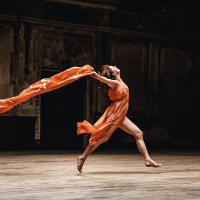
I think I’m through with Hofesh Shechter, and that’s a pity, because earlier work of his such as Political Mother thrilled me with its unedited passion and energy. But after several duds and misfires, I feel that with Theatre of Dreams he’s run out of ideas and hit a dead end. The title suggests what’s gone wrong: labelling something Theatre of Dreams gives you licence to go crazy and do what the hell you like, without any purpose or structure, rhyme or reason. And that’s what has happened here. Over 90 uninterrupted minutes, curtains close and open to reveal a hundred or so snapshot tableaux of 13 dancers doing nothing of any discernible significance in a void. It’s all great if you suffer from attention deficit disorder.

The triumph of surrealism

Arts feature

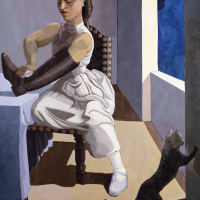
When Max Ernst was asked by an American artist to define surrealism at a New York gathering of exiles in the early 1940s, he pointed across the room at André Breton and said: ‘That is surrealism.’ Even today it can seem as if no other answer is available, so tenacious was his grip. A former student of neurology and psychiatry, with no qualifications other than an instinct for the coming thing (‘an astute detector of the unwonted in all its forms’, as he later described his fellow conspirator Louis Aragon), Breton encountered the early writings of Freud as a medical orderly on a trauma ward, during the first world war, and immediately recognised the significance of his work.

How is Arnold Wesker’s Roots, which resembles an Archers episode, considered a classic?

Theatre

The Almeida wants to examine the ‘Angry Young Man’ phenomenon of the 1950s but the term ‘man’ seems to create difficulties so the phrase ‘Angry and Young’ is being used instead. It’s strange to encounter a theatre that’s scared of words. The opening play, Roots, by Arnold Wesker, looks at the conflict between town and country in 1950s Norfolk. Beatie, in her early twenties, returns from London and announces to her warm-hearted but unsophisticated family that her boyfriend, Comrade Ronnie, wants to meet them. He’s a pastry chef who supports a Marxist revolution and Beatie is eager to fight for everything he believes in.

This UFO testimony had me hooked

Radio

In October 1964, a young man was driving to a dance in Hamburg, Pennsylvania, when his radio began to pick up a strange frequency. At first he thought it was just tuning in to a local channel, but then voices came through discussing some kind of nuclear war – and issuing bomb reports. Recalling the incident decades later, the driver described the simultaneous appearance of a star overhead followed by the sudden realisation that he could see through the floor of his car. ‘I hadn’t done any dope, I wasn’t doing any beer,’ he adds so casually that you feel inclined to believe him. And yet his body felt like jelly.

Fog, tea and full English breakfasts: Monet and London, at the Courtauld, reviewed

Exhibitions

For the maids on the top floors of the Savoy, everything was in turmoil. The 6th had been commandeered by wounded Boer War officers, and since February 1900 a suite of rooms on the 5th had been taken over by a French painter, who was using one as a studio. The officers were nice enough, but the Frenchman spoke almost no English and you could smell the turps down the corridor. Whatever was the management thinking? ‘Without the fog, London wouldn’t be a beautiful city.

A fashion series made by people who hate fashion: Apple TV+’s La Maison reviewed

Television

I’m a bit disappointed – déçu, as we Francophiles like to say – with La Maison. When French TV drama is good it can be very, very good, as we saw with Spiral, Les Revenants, and, maybe the best series ever made about spies, Le Bureau. But La Maison is not in their league. This is a shame because its milieu is not one that has been explored that often in TV serials – and it’s something that a French production really ought to have handled brilliantly: haute couture. Judging by the fancy Parisian settings and general patina of Succession-style luxe, it hasn’t been short of a reasonable budget. What lets it down is that it appears to have no real love for or understanding of its subject matter. This is a fashion series made by people who hate fashion.

The BBC Singers Centenary Concert was toe-curling

Classical

When does a new opera enter the repertoire? Judith Weir’s Blond Eckbert has only had a couple of UK productions since its première at English National Opera in 1994, but it’s been doing reasonably good business on the continent, where its source material – a story by German writer Ludwig Tieck – presumably has more cultural currency. In any case, it’s back now, as part of English Touring Opera’s autumn roster, and both the staging (by ETO’s general director Robin Norton-Hale) and the performances deserve to make Weir’s haunted, oddly unsettling opera a lot better known. If my toes had curled any harder I think I’d have dropped a shoe size As it should be: this is a small opera that makes a bigger and darker impression each time you see it.

I agree with pop’s war on iPhones – but King Canute might want a word

Pop

Before each show on the recent The The tour – reviewed in these pages last week – the pre-recorded voice of singer Matt Johnson politely asked the audience to refrain from using mobile phones when the band was performing. In Edinburgh, while Johnson was speaking, the chap next to me was preoccupied filming an empty stage. A sea of screens can be priceless in a genuine emergency but that’s about it As it happens, most of the crowd complied most of the time, but proscribing phone use at concerts is increasingly challenging. A few artists are up for the fight.

At Las Vegas’s Sphere I saw the future of live arts

Arts feature

Does Elon Musk have a good eye for the aesthetic? Earlier this month, the Tesla magnate took a break from his incessant political posting to praise something he described as a ‘work of art’ – the Las Vegas Sphere. He then treated his 200 million Twitter followers to a video of an awed crowd, desperately angling their phones to capture the supposed majesty of the Sphere. Admittedly, it was hardly the first time that the Sphere has gone viral on social media. Since its grand opening last autumn, this very modern monument has had a knack for conquering the internet, with videos of its optical illusions prompting both awe and disgust. Its occasional surreal turns (like when it turned into a giant cartoon emoji, side-eyeing the Las Vegas skyline) have made headlines in their own right.

A stone-cold banger: Black Myth – Wukong reviewed

More from Arts

Grade: A Remember the mad 1970s TV series Monkey? Here, excitingly, is the closest you’ll get to it in videogame form. In a pre-credit sequence, you are the Monkey King, Sun Wukong, and you not only fly about on a little cloud but suffer from that headache-inducing circlet on your bonce. The main game is set much later. Sun Wukong is locked in a stone egg and you take command of a monkey warrior – the Destined One – in search of the magic objects which will revive him.   Black Myth: Wukong is the first AAA blockbuster game to come out of China, and it’s what I believe the young people call a stone-cold banger.

Melodramatic body-horror – but I don’t regret seeing it: A Different Man reviewed

Cinema

Aaron Schimberg’s A Different Man is ‘a darkly comic psychological thriller’ that plays like an inverted Beauty and the Beast. What happens when the handsome prince turns out to be not all that? The three central performances are magnificent, and there’s a wry absurdist humour at work but unless you’re a fan of body horror it’s not an easy watch. I often had to look away. I can’t, therefore, say I particularly enjoyed seeing it, but now I have seen it I don’t regret it. Is that, dear readers, fudged enough for you? Sebastian Stan stars as Edward, an aspiring actor who lives in New York and has neurofibromatosis, the genetic condition where tumours grow under the skin. (This is not what the Elephant Man had; he is thought to have had Proteus syndrome.

Faultless visuals – shame about the play: the National’s Coriolanus reviewed

Theatre

Weird play, Coriolanus. It’s like a playground fight that spills out into the street and has to be resolved by someone’s mum. The hero is a Roman general whose enemies conspire to banish him so he takes revenge by joining forces with a foreign power and laying siege to Rome. Coriolanus’s mother shows up on the battlefield and begs him to drop his vendetta and come back home. Later he dies but without delivering a big speech. The Roman soldiers have plastic swords that go ‘clack’ rather than metal ones that go ‘ching’ The key difficulty is that Coriolanus’s tragic flaw, a lack of ambition, is really a virtue. He’s far too noble for his own good and his disdain for power makes him annoying rather than admirable.

Heartfelt and thought-provoking: Eugene Onegin, at the Royal Opera, reviewed

Classical

The curtain is already up at the start of Ted Huffman’s new production of Eugene Onegin. The auditorium is lit but the stage is in darkness and almost bare. Gradually, as Tchaikovsky’s prelude sighs and unfurls, the stage brightens and the theatre grows dim. But not before Onegin (Gordon Bintner) – tousle-headed and in a designer suit – has walked out, bowed to the house and retired to a chair at the back of the stage, to wait for the story to call him to life. Any competent maestro can whip up a big noise, but it’s a lot harder to make meaning out of silence Russophiles have grumbled for years about the way Tchaikovsky trimmed and tidied Pushkin’s raffish first-person narrative into seven self-contained ‘lyrical scenes’.

What has become of the Wellcome Collection?

Exhibitions

In 2022 the Wellcome Collection caused a stir by closing its Medicine Man exhibition on the grounds that it was ‘based on racist, sexist and ableist theories and language’. Director Melanie Keen had previously talked of reinterpreting the collection but had now evidently decided it was beyond redemption. ‘We can’t change our past,’ she said in a statement at the time. ‘But we can work towards a future where we give voice to the narratives and lived experiences of those who have been silenced, erased and ignored.

The world is on fire – yet navel-gazing still reigns in pop

Pop

There is no better cultural weather vane than pop. It’s not that pop singers possess incredible analytical skills – they don’t. It’s more that it’s in their interests to reflect some prevailing mood. And what people call a vibe shift can often be gleaned by comparing two artists. Take those featured this week: one very much au courant, the other regarded as a searing commentator on 1980s Britain. It’s a very good album, one for sitting down and listening to rather than standing in a vast shed to hear Over the past couple of years, Raye – a 26-year-old Londoner – has become rather a star. You may remember that she had a bunch of hit singles early on, but her label showed no interest in releasing an album.

‘Some pianists make me shake with anger’: Vikingur Olafsson interviewed

Arts feature

At the BBC Proms this year, an Icelandic pianist dressed like a Wall Street broker played a slow movement from a Bach organ sonata that had the audience first gasping and then stamping their feet. This was an encore to a performance of the Schumann Piano Concerto that neither milked the poetry nor romped thrillingly through the finale – and that, too, nearly had the Prommers throwing their underwear at the shy soloist. How do you explain the phenomenon of Vikingur Olafsson? At first glance, he fits the mould of the bespectacled scholar-pianist who recoils from vulgarity – a young Alfred Brendel or Richard Goode, say, whose Beethoven or Schubert cycles have the cognoscenti underlining felicities in the score. ‘The Goldbergs are the hardest piece.

How some of the most derided bands of all time are making a comeback

Arts feature

The fate of the pop musician – at least the pop musician below the top tier of stardom – has historically been to fall from fashion. At some point in their rise they will be of the moment, the spirit of the age, and then they won’t be. At best, they’ll have a slow but perfectly lucrative fade, as their fanbase dwindles to the zealots. At worst they’ll become a punch line, a raised eyebrow: ‘What were we thinking?’ Every hit, every sold-out show, is just another step closer to irrelevance. ‘There’d be 800 teenagers in a club in Minneapolis, which felt absurd: we’re old enough to be their parents’ It may be that the single greatest artistic effect of the Covid pandemic has been to change that.

The fascinating mechanics of striking a deal

Radio

If you wish to know how to become a master negotiator, a formidable body of books will now offer to train you in that art, but I’m not entirely sure it can be taught. The greatest natural asset, I suppose, is the ability to enjoy the game: the performative mulling, tough-talking, buttering-up, pitching of curve balls and – when absolutely necessary – flamboyant execution of a real or bluff exit. Yet even for those of us who are clumsy and reluctant hagglers, the mechanics of striking a deal can be fascinating. This is the stuff of the Dealcraft podcast, hosted by Jim Sebenius, a professor of the Harvard Business School, and himself a high-flying negotiator.

The art inspired by the 1924 Paris Olympics was a very mixed bag

Exhibitions

George Orwell took a dim view of competitive sport; he found the idea that ‘running, jumping and kicking a ball are tests of national virtue’ absurd. ‘Serious sport has nothing to do with fair play,’ he wrote in Tribune after scuffles broke out during the Russian Dynamo football team’s 1945 tour. ‘It is bound up with hatred, jealousy, boastfulness, disregard of all rules and sadistic pleasure in witnessing violence: in other words it is war without the shooting.’ Suzanne Lenglen’s loose-fitting knee-length tennis dresses inspired the new ‘style sportif’ of Coco Chanel Baron Pierre de Coubertin, visionary founder of the modern Olympics, took the opposite view: to him the three words ‘Faster, Higher, Stronger’ represented ‘a programme of moral beauty’.

The ethics of posthumous pop albums

Pop

‘At the record company meeting/ On their hands – at last! – a dead star!’ Back when Morrissey was more concerned with writing a decent lyric than sour internet tirades, ‘Paint a Vulgar Picture’ by the Smiths summed it all up rather neatly: a living pop star is all well and good, but a dead one is far less troublesome – and considerably more profitable. Some artists only really get going once they’re dead. Commercially speaking, Eva Cassidy’s entire career has been posthumous; the Van Gogh of the lustreless Radio 2 ballad. The motive feels pure: a family’s wish to keep their sibling alive through her art Death has been a boon to the pop industry since the year dot.

Baffling and plainly nuts – but worth it: Megalopolis reviewed

Cinema

Megalopolis, which draws parallels between the fall of the Roman empire and modern-day America, is a film by Francis Ford Coppola – and it couldn’t, in fact, be more by Francis Ford Coppola if it tried. He wrote, produced, directed and self-financed it ($120 million; ouch) and even found the time to be its greatest fan. On the film review sharing platform Letterboxd he has awarded it five stars. Way to go, Francis. We’re behind you even though, to be honest, you lost us quite early on. The movie is often baffling, and plainly nuts, but I’d prefer to see something baffling and plainly nuts by Francis Ford Coppola than, say, sit through Dune again.

The show belongs to Jonathan Slinger and Ben Whishaw: Waiting for Godot reviewed

Theatre

Waiting for Godot is a church service for suicidal unbelievers. Those who attend the rite on a regular basis find themselves wondering how boring it will be this time. A bit boring, of course, but there are laughs to be had in James Macdonald’s production. The set resembles a Gazan bombsite with a tree-stump stranded in a pit of ashen rubble. Didi is played as a goofy English toff by Ben Whishaw who supplied the voice of Paddington in the movies. The bear is back.

A box set for those on the spectrum: Markus Poschner’s Bruckner Symphonies reviewed

The Listener

Grade: B+ Anton Bruckner wrote 11 symphonies – Numbers One to Nine plus a student exercise and the formidable rejected symphony endearingly known as ‘Number 0’, actually finished between the First and Second. So why does this 200th anniversary cycle conducted by Markus Poschner, divided between the Bruckner Orchester Linz and the Vienna Radio Symphony Orchestra, run to 18 CDs? The answer is that it gives us two versions of Numbers One, Two and Eight, and three of Numbers Three and Four. The composer, generally agreed to have been ‘on the spectrum’, was hypersensitive to criticism and compulsively rewrote his symphonies in an attempt to tighten them up and silence his mean critics.

Committed performances – but who was the granny? Northern Ireland Opera’s Eugene Onegin reviewed

Opera

It’s a critic’s job to pick holes in the dafter aspects of opera productions, but in truth audiences are usually capable of detecting nonsense when they see it. ‘She must be at least 150,’ commented the gentleman sitting behind me, referring to the wheelchair-bound old lady who was trundled on stage at the start of Northern Ireland Opera’s new production of Eugene Onegin, and then parked there, pretty much for the duration. It really buzzed along, even if the set resembled a public lavatory (urinal chic seems to be an emerging trend) He had a point. Was she meant to be an elderly Tatyana? Then why was she dressed in modern clothes when the rest of the action played out in the era of Pushkin?