Culture

Culture

The good, the bad and the ugly in books, exhibitions, cinema, TV, dance, music, podcasts and theatre.

The importance of copying

Exhibitions

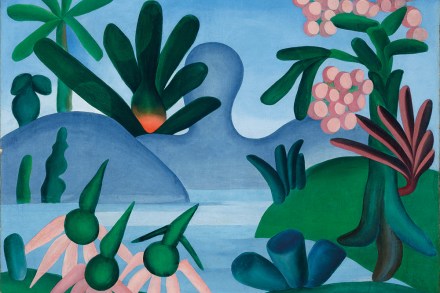
The lunatics were once in charge of the asylum. The first six directors of the National Gallery were all artists: before art history became an academic discipline, artists were the leading authorities on art. Founded more as a teaching resource than a visitor attraction, until the mid-1940s the gallery was reserved for artists two days a week, when other visitors had to pay for entry. This stopped them getting in the way of artists copying from the masters, an essential part of an art education in the days before cheap colour reproduction. There’s something of the altarpiece in this image of an artist’s progenitors flanking a touchstone for his art It’s rare to see artists copying in the galleries now that they are so jam-packed with tourists.

In praise of one of cinema’s greatest trolls

Cinema

The most important thing to know about the filmmaker and writer Marguerite Duras is that she was a total drunk. ‘I became an alcoholic as soon as I started to drink,’ she wrote, proudly. ‘And left everyone else behind.’ It’s not something any of the academics who’d been drafted in to introduce each film in the ICA’s exhaustive Duras season thought to mention, even in passing. Instead they spent their time trying to convince us that her films were political: they were about Palestine, feminism, decolonisation. They aren’t. They’re about being bladdered. They’re about the fact that Duras would wake up by vomiting her first two glasses of booze, before embarking on as many as eight litres of Bordeaux a day. To ruin we all go: cinema and actors, ears, eyes and brain.

The Ava Gardner of the ketamine age: Lana Del Rey, at Leeds Festival, reviewed

Pop

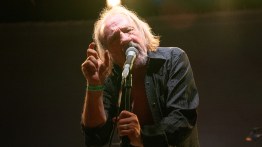
As the American superstar starts singing another slow, sad, rather beautiful song, my mind begins to drift. I’m thinking that our appreciation of music is so much about the who, the when and perhaps most crucially the where; the significance of place is an under-examined element in our relationship with what we’re hearing at any given moment. I’m also thinking that a massive over-reliance on concert revenue to sustain artists’ livelihoods means that nowadays bigger is almost always seen as better – even when ‘bigger’ comes at the obvious detriment of the music. And I’m thinking that an act’s popularity – and indeed their excellence – isn’t necessarily proportionate to their ability to successfully perform at the top end of the bill at a major music festival.

Artistically embarrassing but a hit: Shifters, at Duke of York’s Theatre, reviewed

Theatre

Shifters has transferred to the West End from the Bush Theatre. It opens at a granny’s funeral attended by the grief-stricken Dre, aged 32. Dre was raised by his ‘Nana’ as he calls her – rhyming it with ‘spanner’ – and he weeps when he realises that his mother has failed to show up. A beautiful young woman arrives unexpectedly. This is Dre’s teenage sweetheart and they exchange gossip over a glass of whisky while rummaging through Nana’s belongings. The press night crowd adored these flawless yuppies. An artistic embarrassment but a sure-fire hit The lovebirds met at school where they studied philosophy and outshone all their rivals in the class.

How did we ever come to accept the inhumane excesses of capitalism?

Arts feature

What was neoliberalism? In its most recent iteration, we think of the market seeping into every minute corner of human existence. We think of privatisation, off-shoring and the parcelling out of services to the highest bidder. Neoliberalism takes the proud liberal individual – in pursuit of his or her happiness, rather keen on freedom – and shreds them through a mean-spirited calculator to come up with some sort of shrunken market midget, an efficient risk-evaluating robot. Neoliberalism takes the proud individual and shreds him or her through a mean-spirited calculator Yet even though the market is supposed to be the arbiter of everything, repeated state intervention appears to be necessary to sustain this otherwise perfect economic vision.

Why are these dead-eyed K-pop groups represented as some kind of ideal?

Television

On Saturday, Made in Korea: The K-pop Experience began by hailing K-pop as ‘the multi-billion-pound music that’s taken the world by storm’. Unusually, this wasn’t TV hype. Last year, nine of the world’s ten bestselling albums were by Korean acts (the sole westerner being Taylor Swift). Even odder for people over 40, according to such reliable sources as Richard Osman on The Rest is Entertainment podcast and my children, South Korea has replaced America as the cultural centre of the Earth for many British teenagers. Korean youngsters are trained for pop stardom on an industrial scale But this global domination hasn’t come about by chance. Korean youngsters are trained for pop stardom on an industrial scale.

Britain’s youngest summer opera festival is seriously impressive

Opera

Waterperry is one of the UK’s youngest summer opera festivals: it started up in 2018, at the northern limit of the species’ natural habitat. You leave the motorway at Oxford services and double back through the fields to the hamlet of Waterperry. Drive past the ‘Cats Crossing’ sign and the life-sized effigy of Rowan Atkinson (honestly) and you’re there. There’s a big house (slightly run to seed), a farm shop, a garden centre and a nursery containing the national saxifrage collection, which is not something you see every day. The opera festival squeezes in between them. Let’s do the show right here! Well, why not? The Barber was literally staged on the lawn. And if it rains? ‘We hope it won’t. Would you like a poncho?

The best film you won’t go and see this week: Widow Clicquot reviewed

Cinema

August is known as ‘dump month’. It’s when the most forgettable films are released on the grounds that people don’t go to the cinema much in the summer. But maybe they don’t go because the films are so forgettable? Either way, the best film you probably won’t go and see this week is Widow Clicquot. You may wish to make a note of that. Shall I go on? With this film you probably won’t see? Better had. This space won’t fill itself. Some weeks I wish it would. But we all have our crosses to bear – plus it’s hardly coal-mining.

A familiar OE-led balls-up: Rory Stewart’s The Long History of Ignorance reviewed

Radio

In my next life I intend to have my brain removed in order to become a telly executive. You know: ‘where ignorance is bliss/ ’Tis folly to be wise’ (Thomas Gray, OE). Such ignorance is a state which, happily enough, Rory Stewart, OE and a fully tooled-up Mob from rent-a-thinker (what one of those executives, without a hint of irony or faint praise, once called ‘television intellectuals’) are just now kicking around in the hope that they may rehabilitate it and release it from its sty of obloquy. Rory is a very keen type – what used to be called an all-rounder – and, despite his protestations otherwise, he is untouched by the piggiest ignorance, and addresses his audience and contributors with the zeal of a scoutmaster.

The cast mistake screaming for comedy: Cockfosters, at Turbine Theatre, reviewed

Theatre

The Turbine Theatre is a newish venue beneath the railway arches of Grosvenor Bridge in Battersea. The comfy auditorium is furnished with 94 cinema seats and the only snag is the scent of mildew clinging to the plasterwork. Overhead, the rumbling commuter trains create the perfect soundscape for Cockfosters, a zany rom-com set on the Tube. Two travellers meet by accident on a Piccadilly line service departing from Heathrow Terminal 3. James is a nerdy public-school reject who spots a fellow traveller, Victoria, struggling to shift three monster suitcases onto the train. Obeying Tube etiquette, he makes no attempt to help her and they sit in adjoining seats without acknowledging each other. Beside them are two passengers engrossed in royal biographies.

Too bombastic to be country music: Post Malone’s F-1 Trillion reviewed

The Listener

Grade: B Country music has become the acceptable route through which American pop stars resuscitate their floundering careers: sales are down, kid – shove a fiddle in the next one. And a pedal steel. And git some of those country dudes to collaborate. Especially Dolly. But also Hank Williams Jnr, if you can. Makes them look hip, makes you look real down home. So it is with the agreeably slobbering rapper Post Malone, born in NYC, raised in LA but here sounding like he jes swung in from some roadhouse barstool outta Shreveport, with bourbon and country blood trickling down over his stupid tattoos. His career has hit a hiatus of late and so this is an attempted revival.

Porcelain-painting during the French revolution

Exhibitions

People don’t accumulate stuff any more. When the late Victorian houses on our street change hands their interiors are stripped of all decorative features and the walls painted white, unrelieved by pictures: if their Victorian owners returned as ghosts, they would go snow-blind. The Victorians’ passion for accumulating stuff was close to an addiction, and no one accumulated it like the Rothschilds. But the Rothschilds didn’t stop at objects; they also collected exotic animals, especially birds. All the Rothschild chateaux and mansions boasted aviaries – and Baron Ferdinand de Rothschild’s Waddesdon Manor was no exception.

Fun, frenetic and only a little gauche: Declan McKenna, at the Edinburgh Playhouse, reviewed

Pop

Towards the end of Declan McKenna’s snappy, enjoyable 90-minute set at the Edinburgh International Festival, something quite powerful occurs. The English singer-songwriter returns alone to the stage for the encore and proceeds to play a version of ABBA’s ‘Slipping Through My Fingers’ with only his electric guitar as accompaniment. It becomes a strange, emotionally layered moment. A young musician singing from the perspective of a parent ruefully reflecting on their child growing up, away and beyond reach; a predominantly teenage crowd singing those words back to him; and the older members of the audience, many attending with their own kids, staring blurrily into the middle distance.

In defence of Gilbert & Sullivan’s The Grand Duke

Opera

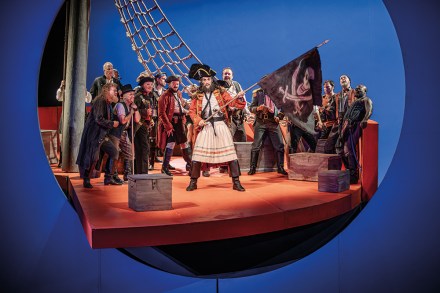
Artistic partnerships are elusive things. The best – where two creative personalities somehow inspire or goad each other to do better than their individual best – can seem so natural that they’re almost easier to identify by their absence. No one’s queuing up to revive Richard Rodgers’s Rex (lyrics by Sheldon Harnick). Pretending to rate Band on the Run above Revolver is a fun way to wind up boomers, but c’mon – honestly? With Gilbert and Sullivan, meanwhile, recordings have given us the chance to rediscover Grundy and Sullivan’s Haddon Hall and Gilbert and Cellier’s The Mountebanks: turkeys both.

This Edinburgh Fringe comedian is headed for stardom

Theatre

Dr Phil Hammond is a hilarious and wildly successful comedian whose career is built on the ruins of the NHS. His act has spawned a host of imitators on the stand up-circuit and they share Dr Phil’s confused adoration for the NHS. All of them love the idea of universal healthcare but they dislike the messy practical details. And they’re convinced that extra cash will save the system. The evidence suggests otherwise; handing more money to the NHS is like giving a gambling addict the keys to a bullion van. The gallows humour is delightful if you’re not stuck in an NHS queue Dr Phil claims that he would gladly pay higher taxes because the NHS has to scrape by on ‘third-world funding’. This is part of the difficulty.

A fiery examination of the damage wrought by internet culture

Radio

Historically, when a woman was giving birth, she was attended by the women she trusted most, including her child’s prospective godmother. The word ‘gossip’ derives from the Old English ‘god-sibb’, meaning godparent, but came to refer to what went on around the childbed. As Erica Jong later put it: ‘Gossip is the opiate of the oppressed.’ Gossip has since moved online – see Mumsnet and the network of Facebook pages called ‘Are we dating the same guy?’. Women use the latter to post warnings to alert others to serial cheaters – and worse. Perhaps inevitably, it has become the focus of several lawsuits brought by men who have been publicly maligned. Is it possible to keep the old ‘whisper network’ alive without being sued in the process?

About as edgy as Banksy: Joe Rogan’s Netflix special reviewed

Television

My resolution this summer was to see how far into the Olympics I could get without watching an event. It’s harder than you think. Especially when you’ve got kids calling constantly from the sitting room: ‘Dad, Dad, it’s Romania vs Burkina Faso in the finals of the women’s beach volleyball and there’s been a tremendous upset…’ Rogan is marketed as an edgy alternative to the mainstream media. He is about as edgy as Banksy I jest. I actually do know what happened in the finals of the women’s beach volleyball. It was the first thing I watched because that was what was on when I walked into the room and broke my duck. Italy beat the long-standing champions the United States, which delighted me enormously.

Immersive and spectacular: Piet Oudolf’s new borders at RHS Wisley reviewed

Arts feature

Piet Oudolf’s long borders at Wisley were worn out. The famous designer had in fact become a bit embarrassed by them: they’d done well for 20 years but in that time his own style had evolved – and so had people’s tastes. Oudolf is now such a household name that his pointillist landscaping is considered fine art on paper, let alone when actually planted up. (There are weighty coffee-table books exploring his art.) But the long borders had become, well, just borders, on either side of a long grassy walk up the hill from the Wisley glasshouses. Many of the people who visit Wisley for a walk – rather than to peer at plants – were perfectly capable of ignoring the whole lot.

A demented must-watch: Caligula – The Ultimate Cut reviewed

Cinema

Caligula: The Ultimate Cut is a new version of the 1979 Caligula that is still banned in some countries (Belarus). The most expensive independent production of its time, it was intended to prove an adult film could be a Hollywood hit – but not everyone received it in that spirit. ‘Sickening, utterly worthless, shameful trash,’ wrote the late, great critic Roger Ebert, who walked out before it finished. Although this version is still violent and sexually explicit, it’s been reworked to show that, handled right, it had all the makings of a masterpiece. There are whippings and sex swings and I think I saw someone doing it with a swan In your dreams, pal. There’s no masterpiece, here.

Welcome back to London City Ballet – but can they please change their name?

Dance

There’s sound thinking behind this summer’s resuscitation of London City Ballet – a medium-scale touring company popular in the 1980s that went bust in 1996. Given that larger institutions operating outside London such as Northern Ballet and Birmingham Royal Ballet are hamstrung by ever-tightening budgets that leave them increasingly risk-averse, there’s a crying need for something lighter on its feet and more adventurous in its repertory. This is what the new-form LCB under the direction of Christopher Marney sets out to provide, presenting new work alongside forays into the back catalogue.

Children have the Proms. Grown-ups head to Salzburg. Snob summer

More from Arts

Salzburg Festival doesn’t mess about. The offerings this year include an adaptation of Thomas Mann’s Magic Mountain in Lithuanian, a Soviet-era operatic treatment of Dostoevsky’s The Idiot, and Igor Levit tackling one of the Himalayan peaks of the piano rep. Kiddies, meanwhile, could enjoy the children’s opera Die Kluge (brilliantly done), a Nazi-era allegory on the rise of Hitler by Carl Orff, a composer they love here but whose politics are shall we say, um, complicated. (Pleasingly, I’m not sure the festival understands the concept of cancellation.) People always think Salzburg is pretty and fun. It’s not. It’s dark and primal, with a festival that is far more uncompromising and exhilarating than a global-elite bun-fight in provincial Austria has any right to be.

Can video games be funny?

More from Arts

Grade: B+ Games can be exciting, puzzling, scary, competitive and – occasionally – moving. Can they be funny? Not often. But this lovingly crafted indie cartoon adventure has a creditable bash at it. The protagonist is an oval-headed yellow homunculus in a shirt and tie, as if Family Guy’s Stewie Griffin, Dilbert and a minor Simpsons character had been squished in a particle collider. He is dispatched to the fictional Yorkshire town of Barnsworth by his boss to do... something. But the mayor won’t meet him so he finds himself wandering around the town. ‘Thank goodness you’re here!’ say various townspeople in ee-bah-gum accents, before inviting you to help them out of some absurd pickle. It’s not clear why they’re so pleased to see you.

This British surrealist is a revelation

Exhibitions

When the 15-year-old Maggi Hambling arrived at Benton End in Hadleigh, Suffolk – home of the East Anglian School of Painting and Drawing – with two paintings to show the school’s founders, Cedric Morris and Arthur Lett-Haines, she was ushered into the dining room where Morris was having dinner. He made some criticisms but was very encouraging, then Lett-Haines came in and made the opposite criticisms but was encouraging too. As teachers, both believed in bringing out a student’s native talent – but as artists and characters, says Hambling: ‘They were polar opposites.

Ambitious, bold and confusing: BBC4’s Corridors of Power – Should America Police the World? reviewed

Television

Narrated by Meryl Streep, Corridors of Power: Should America Police the World? announced the scale of its ambition straight away. Before the opening titles, we’d already heard from Hillary Clinton, Colin Powell, Madeleine Albright and the late Henry Kissinger. We’d also seen the lines drawn up as to how its bold subtitle might be answered. It is an authentically confusing programme, where any firm moral position doesn’t stay firm for long As Clinton put it, in 1945 a question emerged whose implications would dominate post-war US foreign policy: ‘Why didn’t we do more to try to prevent the transport of the Jews?’ The immediate response was the heartfelt yet potentially glib declaration: ‘Never again.’ But what would that actually mean in practice?

Edinburgh has turned into a therapy session

Arts feature

Therapy seems to be the defining theme of this year’s Edinburgh festival. Many performers are saddled with personal demons or anxieties which they want to alleviate by yelling about them in front of a paying audience. Professor Tanya Byron puts it like this in the Pleasance brochure: ‘Therapy is where art and story-telling combine.’ This show crashes and burns like the stock market on a bad day. A cheerier ending might help. At the Pleasance, Joe Sellman-Leava is seeking catharsis through his show It’s The Economy, Stupid! (Jack Dome, until 26 August). He begins by delivering a friendly lecture about credit, interest rates, retail banks, Adam Smith and so on. After 40 minutes, he loses his cool and starts to rant and swear at the crowd about his personal lack of funds.