Culture

Culture

The good, the bad and the ugly in books, exhibitions, cinema, TV, dance, music, podcasts and theatre.

Kneecap are basic but thrilling

Pop

It was Irish week in London, with one group from the north and one from the south. Guinness was sold in unusual amounts; green football shirts were plentiful; and so, at both shows, was a genuinesense of joyful triumph – these were the biggest London venues either group had headlined. The Irishness was much more visible onstage at Kneecap, not least because, as a proudly Republican group, they can’t really not make a big deal of being from west Belfast. Their statements have prompted the inevitable fury from some quarters: Kemi Badenoch (as business secretary) refused them a £15,000 grant to help them tour, on the grounds that the British state should not be aiding those who despise it.

Wonderful comedy of manners: Kiln Theatre’s The Purists reviewed

Theatre

A slice of the ghetto arrives at the Kiln Theatre in Kilburn. The Purists is set on the stoop of a crumbling block in Queens, New York, and the show declares its urban credentials as a boombox slams out a hip-hop rhythm and Mr Bugz, a DJ, enters, mike in hand. He urges the audience to commit arson and murder using a chant inspired by the theatre’s location. ‘Kill! Burn!’ he screams. ‘Kill! Burn!’ He invites the crowd to join in his riotous incantation. ‘Kill! Burn!’ they shout back with blood-curdling obedience. After this homicidal overture, the play settles down and turns into a surprisingly genteel comedy of manners. Mr Bugz makes friends with an Anglophile neighbour, Gerry Brinsler, who adores musical theatre and has a soft spot for her late Majesty.

We’re wrong to mock Do They Know It’s Christmas?

Television

‘I hope we passed the audition,’ said an alarmingly youthful Bob Geldof at one point in The Making of Do They Know It’s Christmas? He was, of course, quoting John Lennon from the 1969 Beatles rooftop concert: an appropriate reference in the circumstances – because this documentary was a kind of Get Back for the Smash Hits generation. Like a far shorter version of Peter Jackson’s film of the Beatles at work, it mixed footage we’d seen before with stuff locked away in the vaults for decades. It was also equally unafraid of longueurs, equally determined to accentuate the positive and equally likely to warm the flintiest of hearts.

Deeply impressive and beautiful: Akram Khan’s Gigenis reviewed

Dance

After taking a wrong turn culminating in the misbegotten Frankenstein, Akram Khan has wisely returned to his original inspiration in kathak, the ancient dance culture of northern India synthesising both Hindu and Muslim mysticism and mythology. The result is something deeply impressive and beautiful that held me enraptured for an hour. This is the work of a serious artist, without gimmicks or frills, and there isn’t much of that around at the moment. Starting with massive thunderclaps in primal darkness, Gigenis takes us through the cycle of creation, tracing the same epic path as the Mahabharata through fire and air, the birth of a hero, a courtship and marriage, a family feud, a war, a victory, defeat and death.

Radio 3 Unwind is music for the morgue

Radio

Soon after the launch of Classic FM in 1992, the then controller of Radio 3, Nicholas Kenyon, asserted that his high-minded station was not in any competition with its commercial rival and certainly not lurching into ‘some ghastly descent into populism’, even as he hired Classic FM’s presenters and fiddled with the programming to create ‘access points’ for novice listeners. Classical music once had a higher calling than to be this subdued That argument is now over, the pretence dropped. The current controller of Radio 3, Sam Jackson – appointed last year – was previously the actual boss of Classic FM, as well as Smooth and Gold.

A keeper: ENO’s new The Elixir of Love reviewed

Opera

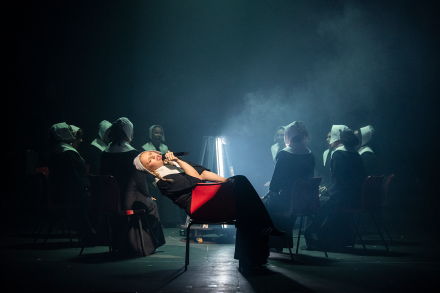
There was some light booing on the first night of English National Opera’s The Elixir of Love, but it was the good kind – the friendly kind, aimed not at the baritone Dan D’Souza but his character, the caddish charmer Belcore. In other words, it was what opera snobs call ‘pantomime booing’, and which, as a peculiarly British phenomenon, they affect to deplore. If it happened in Munich or Milan they’d brandish it as evidence of an advanced opera-going culture – proof that an audience has been so completely transported by a performance that they’re reluctant to step out of its world. But any singer who’s remotely familiar with British theatrical traditions knows that it’s a compliment, and D’Souza beamed. It had been a thoroughly good-natured evening all round.

‘When a work lands the excitement is physical’: William Kentridge interviewed

Arts feature

Watching William Kentridge’s film Self-Portrait as a Coffee-Pot is like being submerged inside his mind, inside the coffee pot maybe. There’s so much going on both visually and intellectually that there’s no room at all for a viewer’s own feeble thoughts. ‘When a work lands the excitement is physical, like biting into chocolate. You feel it in your salivary glands’ Superficially, the film is a look inside the South African artist’s studio and an invitation to watch him work. Over four-and-a-half hours and nine themed episodes you see him making his familiar expressive drawings in charcoal and ink, but this studio is also a stage; there’s dance, puppetry, dips into history, astronomy, philosophy.

Stimulating little exhibition: Scent and the Art of the pre-Raphaelites reviewed

Exhibitions

Scent and the Art of the pre-Raphaelites… there’s an obvious problem here: how do you represent one sense by another? Synesthesia is a neurological condition whereby some people do just that: they experience colour when they hear music, or taste words – think of the Revd Sydney Smith describing heaven as eating foie gras to the sound of trumpets. There may come a time when we get all-enveloping sensory effects when we look at paintings – an exhibition on medieval women at the British Library uses the stink of sulphur to suggest Julian of Norwich’s vision of hell and strawberry and honey for Margery Kempe’s scent of angels – but still the most obvious way of representing scent visually is by painting things that smell.

A spectacular failure: Royal Ballet’s MaddAddam reviewed

Dance

Adapting ballets out of plot-heavy novels set in fantasy locations and populated with multiple characters is a rubbish idea. The profound truth of such a proposal is forcefully borne out by the wretched muddle of Wayne McGregor’s MaddAddam, an over-inflated farrago drawn from a triptych of visionary fictions by Margaret Atwood. McGregor – hugely talented and energetic as he is – needs to calm down and slow down and think small Where to start? Apocalyptic themes – political, environmental and ‘societal’ – are evoked in images and spoken narration without McGregor having any means in his hyperactive choreographic vocabulary to translate them meaningfully into dance.

What a remarkably bad electric guitar player Bob Dylan is

Pop

Finally, a taste of the authentic Bob Dylan live experience. On the two previous occasions that I’ve seen Dylan, in the early 2000s and again two years ago, he was disappointingly well-behaved for a man with a reputation for operating a scorched-earth policy towards his catalogue. Once upon a time, seeing Dylan live was a high-wire activity. Those days are long gone, but on the second night of two shows in Edinburgh, some little wildness crept back in. During the opening pair of songs, which were gradually revealed to be on nodding terms with ‘All Along the Watchtower’ and ‘It Ain’t Me, Babe’, it was like watching an old bar band warming up after a long break from the trenches. There were missed notes, dropped beats, rogue chords, halting rhythms.

Dazzling: Marc-André Hamelin’s Hammerklavier

The Listener

Grade: A When Beethoven’s Hammerklavier Sonata was published in 1818, pianists were confronted with a mixture of ‘demonic energy and a torrent of dissonances’, as Charles Rosen put it. Only the most freakishly gifted virtuosos could tackle it. The first recording was by Artur Schnabel, whose heroic assault on the finale sent wrong notes scattering in all directions. Today, technique has improved so dramatically that most students can steer Beethoven’s juggernaut without obvious mishaps. Even so, some great masters wait decades before taking the plunge. In this sonata above all, getting the notes in the right order is no guarantee that you have anything to say. Marc-André Hamelin is now in his early 60s, which might seem to be pushing his luck. Not a bit of it.

How did Wolf Hall escape the attentions of the BBC’s diversity commissars?

Television

Wolf Hall is one of the few remaining jewels in the BBC’s tarnished crown. Presumably that’s why it was allowed to get off relatively lightly from the attentions of the Beeb’s resident diversity commissars. Yes, I recognise that I may be a terrible reactionary, completely out of tune with the times. But I think I speak for quite a few of us when I say that I was grateful in the first episode to notice only two discreet gestures towards anachronistic casting: one lady in waiting and one member of the king’s council. It seemed to strike an acceptable balance between verifiable historical incident and dramatic licence As I keep saying, whatever you think about ‘representation’, what matters far more in period drama is authenticity.

Heart-warming but safe biographical drama: Going for Gold, at Park90, reviewed

Theatre

Going for Gold is a biographical drama about a forgotten star of the 1970s. Frankie Lucas was a middleweight boxing champion, born on the Caribbean island of St Vincent, who won a gold medal at the Commonwealth Games in 1972. Although he lived in London he wasn’t picked for the England team and instead he wore the colours of his native land. He did them proud. Frankie Lucas seems to have spent 42 years sitting in a council flat, smoking weed and sulking The script, by Lisa Lintott, emphasises Lucas’s virtues and downplays his rackety personal life and his habit of smoking bales of cannabis on a regular basis.

Yes, Anora is as good as everyone says it is

Cinema

Sean Baker’s Anora won the Palme d’Or at Cannes and is hotly tipped to win big at the Oscars and I know you won’t believe it’s as good as everyone is saying it is until you hear it from me so here you are: yes, it’s as good as everyone is saying it is. All the cast are stellar but Madison is mesmerising and carries the whole thing It stars Mikey Madison – who is a total knockout – as a sex worker who marries the son of a Russian oligarch. But this is not Pretty Woman. This film takes Pretty Woman and smashes that fantasy over its knee, but with heart and soul and in a way that is as compelling as it is surprising. It came out a while ago but is still in cinemas so do yourselves a favour and get on it. It beats Gladiator II handsus downus.

Why is Fauré not more celebrated?

Arts feature

It is 100 years since the death of Gabriel Fauré, a composer whose spellbinding romantic tunes emerge from harmonies and rhythms that nudge us towards the future. No other composer deploys such subversive mastery of the conventions of French music: again and again, if we look underneath the arches of his melodies, we find ambiguous chromatic shifts or disorientating spiralling arpeggios. For some critics, the musical argument of Fauré’s late chamber work is so understated it evaporates And – see above – no other French composer is so hard to describe without falling into a purple puddle.

We’ve got Francis Bacon all wrong

Exhibitions

You have to hand it to the curators of this excellent survey of Francis Bacon’s portraits. Not only have they alighted at an obvious but under-explored vantage point from which to reconsider this most mythologised of postwar painters, securing some serious loans to make their point, they have also dared to open their show with what might be the single worst picture it contains. ‘Self Portrait’ (1987) speaks of everything that Bacon got wrong in his final decades: it’s recognisably the 78-year-old artist, dressing up as a younger version of himself.

I listened to a solid week of Woman’s Hour…

Radio

I was a weird kid, and though I harboured the usual innocent girlish ambitions of being a drug fiend and having sex with pop stars, I also nursed a desire to appear on Woman’s Hour. As a shy, provincial virgin, the programme opened up a world of women’s troubles from anorexia to zuigerphobia – and I was keen to have A Complicated Life. Here was the wet hand of today’s lily-livered sensibilities I had anticipated From my twenties to my fifties I appeared on it several times; my last outing was in 2016, as – like most other institutions – it was captured by the trans cult, leading to the show’s best presenter, Jenni Murray, leaving in 2020. Since then, the programme might more accurately be named What Is A Woman’s Hour.

A flop: The Curious Case of Benjamin Button, at Ambassadors Theatre, reviewed

Theatre

The Curious Case of Benjamin Button carries a strap-line, ‘an unordinary musical’. Perhaps the word ‘extraordinary’ is simply too banal to capture the outstanding qualities of this unique show. The year is 1918 and a miraculous birth occurs in a remote Cornish fishing village. The newborn is not a baby but an adult pensioner, Benjamin, who emerges from the  womb wearing a three-piece suit, a pair of spectacles and a bowler hat. His shame-faced mother hastens away from the family home and takes a walk along the cliffs, which results in her death. Suicide, perhaps. And Benjamin’s angry father locks him in the attic and refuses to let him out. Benjamin escapes and visits the local pub where he enjoys a single pint of ale every Friday night for the next four years.

Fails to ignite: Royal Opera’s Tales of Hoffmann reviewed

Opera

I couldn’t love anyone who didn’t love Offenbach’s The Tales of Hoffmann. Everything – everything – is stacked against this opera. Offenbach left the score unfinished when he died, tormented with gout and pilloried by bores, at the age of 61. Some of its best-loved numbers were upcycled from his earlier hits, and at least one isn’t by him at all. Yet somehow, it lives. More than that, it soars: a tale of disillusion that glows with wonder and hope; a hymn to the sweetness of life and the miracle of art, held together against all logic by the sheer charisma of a composer who shot for the moon and fell among the stars. ‘Opéra fantastique’ was Offenbach’s own description, and he’s not wrong. I’m not saying that Michieletto doesn’t care about this opera.

Is it meant to be a comedy? Gladiator II reviewed

Cinema

It’s nearly 25 years since Ridley Scott’s Gladiator came out and you’ve probably been wondering what happened to the little boy in that film. I know I have. I can’t say it’s kept me up at night, but at the back of my mind it’s always been: where is Lucius, son of Maximus, nowus? Well, Lucius, son of Maximus, is nowus a strapping lad with thighs of steel who has been forced to become a gladiator and fight for his life just like his pop. This film borrows heavily from the first instalment. True, it does have some new elements. It has Paul Mescal, Denzel Washington, monstrous man-eating baboons, sharks, a camp little monkey in a frock and all the historical inaccuracies we’ve come to expect from Scott.

Perfectly imperfect: Evan Dando, at Islington Assembly Hall, reviewed

Pop

‘Can I have a photo with you, please?’ It’s the most embarrassing question you can ask of someone you’re interviewing. But I had to. Not only because Evan Dando is one of my favourite songwriters. But also – vainly – because years of on-off drug addiction (mostly on) mean Dando is no longer quite the beautiful young man he was when he became famous in the early 1990s. Back then, I’d have looked like a troll standing next to him. Now, not so much. It was a night of beautiful imperfection – the kind that feels truer than a thousand arena shows He still, however, looks better than he has any right to, and in the evening he proved that he sounded better than I had dared to hope. Better still, he was fully present – not just physically, but mentally and emotionally.

Goodbye to MC5, the holiest of rock’s holy cows

The Listener

Grade: D+ Ah, the original Linkin Park, except even more spavined. MC5 came outta Detroit in the mid 1960s and their shrieking blues metal ur-punk was afforded unnecessary respect because of their agitprop politics. Sucking up to the Black Panthers and running a bit foul of the law can do wonders for a slightly below-average blues band whose songs had energy and attitude – but nothing else. Here they are, back with their first studio album in 53 years: thanks for the merciful interregnum, if nothing else. When I say ‘they’, I mean the half-decent guitarist Wayne Kramer and, on one or two tracks, their original drummer, Dennis Thompson.

William Morris’s debt to Islam

Arts feature

When William Morris was born in Walthamstow, in 1834, it was little more than a clump of marshland at the edge of the Epping Forest. This was the terrain of his free, frolicsome childhood, and it would forever form his image of humble, Edenic England, uncorrupted by the industrialist’s yoke. About the only thing that remains of this prelapsarian Walthamstow, amid its railway lines and brownfield sites, is the family home where Morris grew up, in some splendour – now a gallery dedicated to his artistic legacy. ‘To us pattern designers, Persia has become a holy land, for there our art was perfected’ The landscape has been supplanted, and much of the population transplanted.

An audacious and daredevil band: the Surfrajettes reviewed

For most people – once Brian Wilson had turned his back on the sea and started off down the lonely road to genius – surf music means either (or both) of two things: the Surfaris' 'Wipeout' or Dick Dale’s 'Misirlou'. Punchy, propulsive tunes, in other words, that make you feel like you’re on your way to the toughest party in town, or at least very much on your way to something – always driving forward, fast. The Surfrajettes are like that; their version of the Spice Girls' 'Spice Up Your Life' is a revelation, turning an inoffensive (if admittedly banging) global dancefloor-filler into something that could plausibly soundtrack a rumble in a pool hall.

Spy-drama porn: Sky’s The Day of the Jackal reviewed

Television

All the previewers have been drooling lasciviously over The Day of the Jackal reboot and, having seen the first three episodes, I quite understand why. This is coffee-table spy-drama porn perfectly calculated to satisfy all manner of lurid and exotic tastes. There’s sniper-rifle-assembly porn; foreign-property porn (the Jackal’s gorgeous mountain retreat near Cadiz with a to-die-for infinity pool); fashion-nostalgia porn (especially the brown suede jacket worn with a red neckerchief in homage to the original, starring Edward Fox); far-right German politician’s head exploding in a pink mist as the heavy calibre sniper round reaches the end of its remarkable, unprecedented two-and-a-half-mile trajectory porn.

One beauty – one turkey: Wexford Festival Opera reviewed

Opera

‘Theatre within Theatre’ was the theme of the 2024 Wexford Festival and with Sir Charles Villiers Stanford’s The Critic, that’s exactly what you get. Conor Hanratty’s production showed the interior of an 18th-century theatre, viewed from the stage. In the second act it flipped around to reveal the audience’s perspective. Were we now the audience? Clearly we were; which was awkward because where does that leave a critic? Obviously, one can’t be the critic because there’s already one on stage (the clue’s in the title), and as it turns out, The Critic isn’t really about critics, at all. Whatever – you get the picture. It’s all very meta; and more than a bit silly.