Culture

Culture

The good, the bad and the ugly in books, exhibitions, cinema, TV, dance, music, podcasts and theatre.

Expressive and eloquent: Northern Ballet’s Three Short Ballets reviewed

Dance

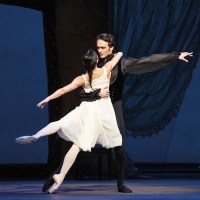
Ballet companies have become dismally timid about exploring their 20th-century heritage: everything nowadays must be either box-fresh new or a fairy-tale classic, which seems to me a recipe for an unbalanced diet. So I’m pleased that under the directorship of Federico Bonelli, Northern Ballet is pluckily dusting off neglected treasures of the recent past. Last year brought Hans van Manen’s exquisite Adagio Hammerklavier (1973) back to life; this year, it’s the turn of Rudi van Dantzig’s setting of Strauss’s Four Last Songs (1977), danced to the recording made by Gundula Janowitz and Herbert von Karajan.

Who should win the Stirling Prize?

Arts feature

The Stirling Prize is the Baftas for architects, a moment for auto-erotic self-congratulation. Awarded by the Royal Institute of British Architects, its premise is straightforward: it’s for Britain’s best building of the year. But this year, it seems the prize committee has struggled even with this. Among the six projects shortlisted for this ostensibly nationwide prize, four are in London and a couple could barely even be considered buildings at all. The most tenuous nominee for a ‘best building’ – yet one with the best bookies’ odds – is the Elizabeth Line by Grimshaw Architects. One of the most expensive infrastructure projects in Europe with a much-delayed opening, it remains frustratingly unreliable.

My night with the worst kind of nostalgia 

Pop

American Football are a band whose legend was formed by the internet: some Illinois college kids who made an album for a little label in 1999, went their separate ways, and in their absence found that a huge number of people had responded to their music. They duly reunited in 2014. They are often identified as emo, the most confounding of all genre names, given it means everything and nothing, but American Football are not of the eyeliner and dyed-hair variety exemplified by My Chemical Romance, nor the angsty pop-punk variant of Weezer or Jimmy Eat World, nor the shouty hardcore punk evolution of the genre’s founders in the 1980s.

Not for the squeamish: The Substance reviewed

Cinema

Both horribly familiar and wonderfully shocking, this body-horror film written and directed by Coralie Fargeat does a very traditional thing – turning the scramble for youth and beauty into a monster of immeasurable disgust and immorality – in a huge way. There is nothing minimal or restrained or overly clever here; nothing of the nuance in language or wit that makes its forerunner, The Picture of Dorian Gray, so haunting. This is a presentation of the horror of ageing for the bombastic mash-up age, melding vampire, sci-fi, feminist tragicomedy and dystopian genres. It’s like a reverse Barbie but with lashings of Poor Things, Blonde, the uncomfortably up-close Marilyn Monroe biopic, and plenty more.

More Airplane! than Speed: Nightsleeper reviewed

Television

Earlier this year, ITV brought us Red Eye, a six-part drama set mainly on an overnight plane from London to Beijing. Displaying a heroic indifference to plausibility, the show was an increasingly deranged mash-up of every thriller convention known to man – while still posing (when it remembered to) as a thoughtful exploration of realpolitik. By the end, it was all so daft that the biggest influence no longer seemed to be Speed, but Airplane! Funnily enough, this week’s Nightsleeper was much the same thing – only this time on an overnight train from Glasgow to London. The first sign that the passengers wouldn’t get a restful sleep before Euston came when a mysterious beeping device with lots of wires was discovered in the guardroom floor.

Manacorda’s thrills and spills at Prom 72

Classical

At a Hollywood party in the 1940s, the garrulous socialite Elsa Maxwell spotted Arnold Schoenberg, then teaching music at UCLA, looking miserable. So she pushed him towards the piano with the words: ‘Come on, Professor, give us a tune!’ I couldn’t help thinking of those words on Friday night, when we heard the first Proms performance of a symphony written in 1847 by a professor at the Paris Conservatoire. The Third Symphony of Louise Farrenc is full of well-crafted melodic lines, neatly configured to fit maddeningly predictable textbook chord progressions. It’s delicately orchestrated, but even the feathery flutes of the Orchestra of the Age of Enlightenment couldn’t disguise the professor’s failure to give us a single memorable tune. This is not a popular opinion.

A massive, joyous, sensational hit: Why Am I So Single? reviewed

Theatre

Why Am I So Single? opens with two actors on stage impersonating the play’s writers Toby Marlow and Lucy Moss. You may not recognise the names but you’ve probably heard of their smash-hit, Six, which re-imagined the tragic wives of Henry VIII as glamorous pop divas. This follow-up show is a spoof of vintage musicals and it’s deliberately knowing and self-referential. That’s why the authors are played by members of the cast, and they start with a few disparaging quips about Mamma Mia! and other West End fare. They even call the audience at the Garrick ‘riff-raff’, which seems a little charmless.

Ten times better than Taylor Swift: Romance, by Fontaines D.C., reviewed

The Listener

Grade: B+ Almost all modern popular music is afflicted by a desperate yearning for importance, and thus – as it translates these days – electronic bombast, which is of course available now at the flick of a switch in the studio. The song is not enough, nowhere near enough. What you need, to elevate your infantile and asinine observations of the world and your sad lack of a good choon, is confected importance. This has been increasingly true since about 1965, but never more so than now. The song is not enough? That’s because it’s not a very good song, kiddo. Write a good song and, you’ll find, marvellously, it really is enough. Dublin’s Fontaines D.C. are a good case in point.

How Michael Craig-Martin changed a glass of water into a full-grown oak tree 

Arts feature

‘Of all the things I’ve drawn,’ Michael Craig-Martin reflects, ‘to me chairs are one of the most interesting.’ We are sitting in his light-filled apartment above London, the towers of the City rising around us, and we are discussing a profound question, namely, what makes an object a certain type of thing? Or to put it another way, what makes a chair a chair? Craig-Martin’s career has been characterised by what he calls ‘my object obsession’. There will be chairs on view in the grand retrospective of his work which is about to open at the Royal Academy, but by no means only chairs. The galleries will be filled by a cavalcade of mundane bits and pieces, among them safety pins, filing cabinets, forks, smartphones, pliers, light bulbs and buckets.

How Berlin nearly broke Bowie

Radio

This week’s Archive on 4 is a treat for David Bowie fans. Francis Whately, the producer behind several of the BBC’s Bowie films, including The Last Five Years, has patched together old recordings and new interviews with Bowie’s lovers and friends to examine his life in West Berlin between 1976 and 1978. It was a fraught, make-or-break time. Out of pocket, addicted and depressed, Bowie had grown ‘very, very worried’ for his life. It isn’t entirely clear why he chose Berlin as a place for recovery, other than that it was unstarry, cheap and a good distance from LA, where his troubles had spiralled. Unfortunately, it was also ‘the smack capital of Europe’, and Bowie was about to move in with Iggy Pop.

The rise of soapy, dead-safe drama: The Band Back Together reviewed

Theatre

The Band Back Together is a newish play, written and directed by Barney Norris, which succeeds wildly on its own terms. It delivers a low-energy slice of feelgood nostalgia involving three musicians who reunite in their hometown of Salisbury. The action consists of talk and songs, more talk, more songs, some cider-drinking and a surprise ending to convince the audience that it was worth the wait. The play was commissioned by Farnham Maltings, an arts centre in Surrey, whose aim is to ‘bring artists, makers and communities together’ and it feels a bit am-dram. The script has no conflict, suspense or uncertainty. No harrowing emotions or life-changing experiences. It’s just a pipe-and-slippers get-together involving three has-beens who once shared a stage as musicians.

The problem with Klaus Makela

Classical

Klaus Makela is kind of a big deal. He’s a pupil of the Finnish conducting guru Jorma Panula – the so-called ‘Yoda of conducting’ – and he’s chief conductor of the Oslo Philharmonic as well as the Orchestre de Paris. Within the next three years he’s scheduled to take the baton at both the Chicago Symphony and the Royal Concertgebouw Orchestra in Amsterdam: blue-chip international positions, with fees to match. So we’re going to be hearing a lot more from maestro Makela, though possibly not in the UK where he has almost certainly (barring the LSO and Covent Garden) been priced out of the market. He is only 28, though apparently his agents would prefer it if you didn’t talk about that.

Elvis Costello remains the most fascinating songwriter Britain has produced in the past 50 years

Pop

Song for song, line by line, blow for blow, Elvis Costello remains the most consistently fascinating songwriter Britain has produced in the past 50 years – an opinion which seems these days to be mostly confined to a smallish section of an ageing demographic. Certainly, Costello’s music has, as far as I can tell, proved largely resistant to TikTokification, even if Olivia Rodrigo did ‘pay homage’ (nicked, with the author’s approval) to the riff to ‘Pump It Up’ for her song ‘Brutal’.

When is anyone going to properly appreciate what critics have to go through?

Cinema

The Critic is a period drama starring Ian McKellen as a newspaper theatre critic famed for his savagery and it did sound as if it had all the makings of an entertaining and nicely savage little film. But through a surfeit of plot, it rather loses the plot, and the result is a surprisingly bland melodrama with the small-screen feel of one of those Agatha Christies the BBC forces upon us every Christmas. When is anyone going to properly appreciate what we critics go through? It’s a pity, as critics don’t often make it on to the cinema screen, unlike war reporters. War reporters, war reporters, why is it always war reporters when I have to sit through a film each week that may be boring? When is anyone going to properly appreciate what we go through?

A lively showcase for a great central European orchestra at the Proms

Classical

As the Proms season enters the home straight, it’s moved up a gear, with a string of high profile European guest orchestras. First up was the Czech Philharmonic playing Suk’s Asrael Symphony under Jakub Hrusa before moving on to Janacek’s Glagolitic Mass the following night. These grand, glittering monuments of Czech music were garnished with a couple of relative rarities – Dvorak’s Piano Concerto, played by Mao Fujita, and the Military Sinfonietta, composed in 1937 by (the then 22-year-old) Vitezslava Kapralova, who died at the age of 25. It’s unmistakably the work of a young composer. Xylophone?

Dazzling: Stoppard’s The Real Thing, at the Old Vic, reviewed

Theatre

The Real Thing at the Old Vic is a puzzling beast. And well worth seeing. Director Max Webster sets the action in a vast sitting room painted electric blue with a white sofa in the centre. A lovely use of empty space. But the preview trailer on the theatre’s website shows the actors seated in a scruffy bomb site where they discuss similarities between Tom Stoppard’s 1982 play and the lyrics of Taylor Swift. Perhaps the Old Vic hopes to attract a younger audience, but this show will appeal most to Stoppard’s lifelong fans. The play marks a major shift in his development. The exuberant and frothy cleverness of his earlier work has acquired emotional weight and a tougher outer shell. There’s a lot of jealousy and anger smouldering beneath the surface.

Delightful: Phoenix, at All Points East, reviewed

Pop

A few years ago, my nephew informed me that he and his friend were planning to come up to London for the weekend for the Wireless Festival. Did they need somewhere to stay? He looked at me like I was a mad old man. No, of course not. They were going to camp. In Finsbury Park. Because when you go to festivals, you camp. Thankfully, he didn’t turn up on the Victoria Line with his tent and then wonder why no one else was similarly equipped. Phoenix have the air of being as much a lifestyle choice as a pop group Inner-city festivals such as Wireless and All Points East are almost always a series of single-day events. APE is a ruthlessly programmed festival. Rather than try to be all things to all people, each day is targeted at some section of the festival-going population.

Why has Leonora Carrington still not had a big exhibition?

Exhibitions

‘It had nothing to endow it with the title of studio at all,’ was Edward James’s first impression of Leonora Carrington’s Mexico City workspace in 1946. ‘The place was combined kitchen, nursery, bedroom, kennel and junk store. The disorder was apocalyptic: the appurtenances of the poorest. My hopes and expectations began to swell.’ Carrington blended Egpytian, Mayan, Mesopotamian and Celtic legends learned at her nanny’s knee Over six decades in the creative chaos of this house on Calle Chihuahua, Carrington would paint some of her best-known works and write her quirky serio-comic novella The Hearing Trumpet, which is narrated by a 92-year-old woman.

Charming and silly: Sam & Max – The Devil’s Playhouse reviewed

More from Arts

Grade: B Readers of a certain age (mine, roughly) may have fond memories of 1993’s Sam & Max Hit the Road – a joyously silly and absorbing two-dimensional point-and-click adventure starring the ‘Freelance Police’: a tubby cartoon Irish wolfhound called Sam and his partner Max, a ‘hyperkinetic rabbity thing’ with a propensity for random violence. It was Itchy & Scratchy meets Raymond Chandler, with puzzles to solve and wisecracks to enjoy. Point-and-click has gone the way of the abacus, but much of the feel of the original franchise is to be found in this remastered version of the final game in the series. As it opens, our heroes are locked in the brig of a spaceship commanded by General Skun-ka’pe, a megalomaniac space-gorilla in quest of the Toys of Power.

Sick, cynical and irresistible: Netflix’s Kaos reviewed

Television

Kaos is a new Netflix gods-and-monsters black-comedy blockbuster that will scorch your screen and fry your brain like a thunderbolt from Zeus. It’s sick, cynical, brutal and very, very dark but it’s so well acted, ingeniously plotted, moving, inventive, funny and addictive that I fear resistance may be futile. Playboy Poseidon hangs out on his superyacht servicing his mistress – and sister, and brother’s wife Written by Charlie Covell, it’s like Succession relocated to a parallel modern world in which the ancient Greek gods still rule over us, ruthlessly pursuing their peculiar ends with a characteristically Olympian disregard for the pain and misery their shenanigans inflict on us worthless mortals. These gods are excruciatingly spoilt, selfish and capricious.

How claims of cultural appropriation scuppered an acclaimed new ballet

Arts feature

On 14 March 2020 I was at Leeds Grand Theatre for the première of Northern Ballet’s Geisha. The curtains swung open on fishermen flinging out their nets, geisha, samurai, 19th-century Japanese village folk, followed by the sudden appearance of American sailors. It was in essence a Japanese Giselle: the tale of a geisha, spurned by her American lover, who dies of grief, and whose restless spirit returns from the grave. Far from being offended, the Japanese Embassy offered their official imprimatur It was a unique production. Many of the dancers at Northern Ballet are Japanese, Chinese or Korean and this was an east Asian story.

The unstoppable rise of stage amplification

Arts feature

Recent acquisition of some insanely expensive hearing aids aimed at helping me out in cacophonous restaurants has set me thinking about the extent that modern life allows us to filter our intake of noise. This is big business. As sirens wail and Marvel blockbusters and rock concerts crash through legal decibel levels, controlling sound levels has become an increasingly sophisticated operation, abetted by everything from silicone pastilles and the volume-control knob to the wireless earbud.

The Stockhausen work that is worth braving

The Listener

Grade: A- One of the best one-liners attributed to Sir Thomas Beecham refers to the stridently avant-garde Karlheinz Stockhausen: ‘I’ve never conducted his music, but I once trod in some.’ It’s almost certainly apocryphal, but the implied verdict is widely shared. Stockhausen played up to the caricature of the self-obsessed ‘squeaky gate’ composer, though his capacity to create painful noises went way beyond squeaks: only he could have written a string quartet in which each player is recorded in a separate helicopter. So I’m sticking my neck out when I suggest that some of Stockhausen’s works are masterpieces that can be enjoyed even – or especially – if you steer clear of the thicket of mathematics, physics and astrology that surrounds them.

Aggressively jaded: Edinburgh’s Marriage of Figaro reviewed 

Opera

‘Boo!’ came a voice from the stalls. ‘Boo. Outrage!’ It was hard not to feel a pang of admiration. British opera audiences don’t tend to boo; we’re either too polite or too unengaged. But there we were in Act Three of Kirill Serebrennikov’s production of The Marriage of Figaro – just after the scene where Susanna, the Count and the Countess enjoy a three-in-a-bed romp while singing the trio ‘Soave sia il vento’ – and at least one person felt passionate enough to raise his voice. It was hard not to feel a pang of admiration. British opera audiences don’t tend to boo Obviously, there’s no such trio in The Marriage of Figaro.

Must-watch TV: Apple TV+’s Pachinko reviewed

Television

Pachinko is like an extended version of the Monty Python ‘Four Yorkshiremen’ sketch (‘I used to have to get out of shoebox at midnight, lick road clean, eat a couple of bits of coal gravel’) relocated to mostly 20th-century Japan and Korea. There’s so much misery it makes Angela’s Ashes look like Pollyanna. And there’s so little by way of laughter or a redemptive pay off you might be tempted to end it all like one of the numerous doomed characters do – off camera, fortunately – in the almost relentlessly catastrophe-laden season one.