Culture

Culture

The good, the bad and the ugly in books, exhibitions, cinema, TV, dance, music, podcasts and theatre.

It’s not easy being green

Cinema

The Muppet Show was my favourite TV programme when I was growing up, but this film, the first in over a decade? Not so much, even though it is fun in parts. I liked it terrifically at the beginning, and loved seeing Kermit again, and Miss Piggy, with her ‘pork chop’ (‘Hi-yah!’) and Gonzo and Fozzie Bear and Animal, because they are all such distinct personalities, and have such presence, and when I heard the theme tune for the first time in years — ‘It’s time to play the music, it’s time to light the lights, it’s time to meet the Muppets on The Muppet Show tonight...’ — I felt I might actually burst with happiness, although luckily I didn’t.

Great expectations | 11 February 2012

Opera

Bellini’s Norma is an opera that I not only adore: it obsesses me, too. Whenever I listen to it, I have to hear it again very soon, and parts of it lodge in my mind, playing over and over again, to an extent that very few other pieces do. It was the work through which I first came to realise Callas’s lonely greatness, and it was through her that I came to see how great Italian opera could be, too, having childishly dismissed it tout court as superficial compared with the great German traditions. I still think that Norma operates on a level different from any other work by Bellini or his contemporaries, or even, I am inclined to think, Verdi. The only Italian composer who rivals it for purity and passion is Monteverdi, to whom Bellini owes nothing and has no resemblance.

Star turn

More from Arts

At first sight, the new Royal Ballet double bill might come across as an odd coupling: Ashton’s sparkling The Dream on one side, MacMillan’s metaphorically sombre Song of the Earth on the other. Yet the two works are complementary in that they show two distinctive and historically significant facets of 20th-century British dance-making. On the opening night, an impressive roster of stars appeared in MacMillan’s reading of Mahler’s Das Lied von der Erde. The refined artistry of Tamara Rojo, Sarah Lamb, Lauren Cuthbertson, Carlos Acosta and Rupert Pennefather turned the performance into one of the best I have seen. Stars populated The Dream, too.

Leave well alone | 11 February 2012

Radio

Maybe he was asking for it. Maybe his article in the New Statesman was a subconscious attempt to undermine his brother’s authority. But what was the point of grilling David Miliband about his relationship with his brother Ed on the Today programme (Radio 4) on Monday morning? What we wanted to know was whether Miliband senior had any fresh ideas about how to tackle the grievous problems of our economy, and especially how to remedy our inability to ensure that there are enough jobs for our young people to find gainful employment. Who cares whether he’s still simmering with rage about his brother’s seizure of power? Why, then, did John Humphrys try to reignite a Westminster bonfire that actually went out 17 months ago when Ed won and David lost?

Welsh, single and sex mad

Television

There’s lots of comedy about, but it’s not what Americans call ‘water-cooler’ comedy, shows that get people talking at work the next day. No Hancock or Monty Python or Fast Show or The Office. In the old days, pre-video recorders, pre-repeats on freeview, we had to find excuses to stay at home when we were invited out and didn’t want to miss a show. ‘Oh, gosh, I’m so sorry, I see my uncle is to be hanged that night.’ Nowadays we can’t pretend. On the other hand, there is less to enjoy, less to talk about. Do you know anyone at work who is watching Stella (Sky One, Friday)? Ruth Jones, the ferocious Nessa in Gavin and Stacey, plays a single mother in the Welsh valleys, which sounds depressing but isn’t.

A bite of the Apple

Music

For the first time in its 170-year history, the New York Philharmonic Orchestra has a native New Yorker at the helm. Music director Alan Gilbert (above) brings the band to the Barbican this month for a brief residency that crams four concerts into a little over 48 hours, starting with a performance of Mahler’s Ninth on 16 February. Later concerts include the UK première of Polaris, a ‘Voyage for Orchestra’ by Thomas Adès, and Lang Lang tackling Bartók’s famously arduous Piano Concerto No. 2. The residency will also see small groups of musicians venturing beyond the concert hall to perform for residents of East London housing estates as part of the Barbican’s Front Room Concerts series.

A treat for Cornish audiences

A wholesome gem from the London Fringe transfers to Cornwall this week, in the form of father and son double act Frankland and Sons. Both Tom Frankland and father John are born performers, and the show is a colourful dance through their family history that feels like a jovial children’s birthday party, with hints of balloon magic, vaudeville and fancy dress.   But what’s refreshing about Frankland and Sons is just how essentially English this snapshot of 20th Century history is. This is Middle England through three generations of wartime stoicism, domestic silences and staunch stiff upper lips.

Casting shadows

Exhibitions

Zarina Bhimji is a photographer of ghosts. Her images of deserted buildings (‘Bapa Closed His Heart, It Was Over’, above) and desolate landscapes are empty, but haunted by humanity; her work is, as she puts it, evidence not of ‘actual facts but the echo they create’. The Whitechapel Gallery is currently home to a retrospective of the work of this Turner Prize-nominated artist (until 9 March), and includes a selection of her photographs, installations and short films. Bhimji and her family were forced to leave Uganda when Idi Amin expelled Asians from the country in 1972 and much of her work bears the imprint of this background. Her images of East Africa and India explore the vast issues created by displacement and forced exile.

Beautiful game

Exhibitions

Remarkably, this is the first solo show in the UK of the work of Albert Burri (1915–95) for more than 50 years. Compare the popularity of other Italian postwar artists — Lucio Fontana, for instance, who only had one idea, the slashed or pierced canvas, to recommend him. Burri remains very much an unknown quantity, with a single work in this country’s public collections. A dozen Burris were shown at the Tate in 2005 in a mixed show of modern Italian art, but otherwise nothing. All praise then to the Estorick for mounting this enjoyable and succinct survey of Burri’s career: it introduces the general public to an artist well worth the attention. Born in Città di Castello, the young Burri was a talented footballer with a taste for pirate novels.

Quick flip to success

Exhibitions

Having studiously avoided the media for years, Charles Saatchi was stirred enough to write an article for the Guardian last December that opened: ‘Being an art buyer these days is comprehensively and indisputably vulgar. It is sport of the Eurotrashy, hedge-fundy, Hamptonites; of trendy oligarchs and oiligarchs.’ He has a point. A new type of collector is taking a close interest in contemporary art and elbowing old hands such as Saatchi out of the way. These new collectors are not interested in watching artists build a career through museum shows over a period of years. They’re not out to spot new movements as Saatchi tried to do with young British art.

Beyond the elite

Music

There are few art forms with more colossal barriers to entry than classical music. Picture yourself finally plucking up the courage to go to your first classical concert. You arrive late, because at that gig last Saturday you had to sit through two ill-judged warm-up acts, an act of charity you’re not inclined to repeat; but here, even the slightest tardiness has you waiting outside until that gruelling pause, presumably marked in the programme, when the orchestra falls silent, the conductor slowly and disapprovingly turns to look at the doors, and you and a couple of other heathen shuffle in, mumbling about taxis and Bob Crow. What’s more, you go and clap after the andante, to the sneering delight of your more sonata form-savvy neighbours.

All the world’s a bed

Theatre

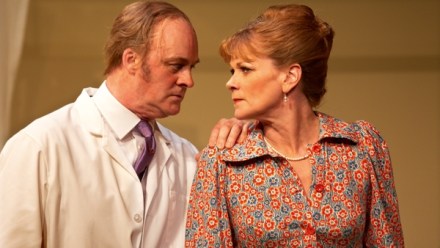
While it appears good sense to ask a woman director to grapple with the seemingly misogynistic Taming of the Shrew, there’s a serious snag. For as Gale Edwards remarked apropos her 1995 RSC production, any woman director ‘might as well get a loaded shotgun and put it against her temple’ because half the critics will find your effort insufficiently radical and feminist, while the other half will ‘shoot you down in flames’ because any feminist slant would be untrue to a play that is ‘meant to be about the surrender of love’. This at least lays out the challenge. The good news from Stratford is that the RSC’s latest director, Lucy Bailey, meets it so brilliantly as to be in no danger from any shotgun.

Devoid of ideas

Opera

When you see two of the undisputed masterpieces of the repertoire in one week in one of the world’s leading opera houses, competently performed, and remain largely unmoved, you’re bound to ask yourself the question: have I been to these things, and heard them on record, too many times? It is, after all, possible to get tired even of the greatest works if you have experienced them regularly in the same productions, and without any special ‘magic’ ingredients, such as can bring back to life, or sustain, a standard work. It was a question I found myself asking with special poignancy this week, after seeing two of Mozart’s greatest works in the space of four days at the Royal Opera House: Don Giovanni on Tuesday and Così fan tutte on Friday.

The parent trap | 4 February 2012

Cinema

Carnage is Roman Polanski’s adaptation of Yasmina Reza’s hit stage play The God of Carnage, in which two sets of parents get together to discuss an altercation between their 11-year-old sons in the hope that they can figure it out sensibly, and all hell breaks loose. I have my reservations. I’m not convinced the play was exactly begging to be filmed, particularly as Polanski doesn’t open it up and keeps it, more or less, to one suffocating room and hallway, and I’m not convinced it’s particularly deep or insightful, but there is some enjoyment to be had from watching four actors at the top of their game get to where they do get to, even though it’s not much of any place.

Audio gongs

Radio

No red carpet was rolled out on Sunday night when the first ever Audio Drama Awards were presented to best actor (David Tennant), best actress (Rosie Cavaliero), best drama (The Year My Mother Went Missing)...in a Hollywood-Lite ceremony at Broadcasting House. No tears were shed as the winners sought desperately to find the right words — not too smug, neither too self-immolating. There were no cheesy jokes from a rancid comedian as compère (David Tennant took on the role formerly reserved for Ricky Gervais). But at last, after 89 years of plays on the BBC, the extraordinary fact that at least once a day it’s possible to have a front-row seat in the most intimate of theatres-in-the-round and be taken out of your life and dumped in another is being grandly celebrated.

Cooked-up tension

Television

Masterchef (BBC1) is a total waste of life — and I should know, because I’m addicted to it. It came to me suddenly and I’m still not sure how it happened. All I know is that one year I was like: ‘Masterchef. Ah, yes, it’s that foodie programme Loyd Grossman presents, which critics always call things like “Moaasterchoif” and “Mxxrgrghstrchrrxff” to show how amusing they can be about the presenter’s pronunciation.’ And the next I was: ‘Noo! Noo! No way was cloudberry coulis on calf’s brain carpaccio an ejection offence! That boy’s got talent. You should have got rid of the woman with her crappy tarte au citron...

Loudspeaker art

Exhibitions

Several people I spoke to when this exhibition was first mentioned thought it would be a Hockney retrospective, considering that he was commandeering all the first-floor galleries at the RA. But actually the retrospective element is very slight, consisting of half a dozen early landscapes and a couple of photo-collages, before we encounter the first of the mainly large-scale landscapes he has been painting since the late 1990s. In fact, the greater part of the exhibition (sponsored by BNP Paribas) consists of work done in Yorkshire since 2004, and Hockney has packed the galleries with hundreds of images (a single work might consist of 36 watercolours, or perhaps 51 iPad drawings with an oil painting on 32 canvases).

Wrestling with paint and demons

Arts feature

In his centenary year, the status of Jackson Pollock (1912–56) looks assured: a self-created American hero who is now accorded all the reverence due an Old Master. The most famous of the Abstract Expressionists, nicknamed Jack the Dripper because of his trademark style, his emphasis was on paint and process: the surface of the canvas was an arena in which the artist could externalise his feelings through action. Some have called Pollock the father of Performance Art, but his primary involvement was with pure painting — creating a complex abstract imagery that was intended to engage with Jungian archetypes and thus have access to deep meaning.

Home boys

Features

Meet the Dalis: men who are dependent – and loving it It sounds like a cushy life for a man. On weekdays he potters about at home, running a duster over the surfaces, tinkering with a short story he’s struggling to compose, painting, daydreaming, listening to a bit of Jeremy Vine; his wife, meanwhile, gets up in the dark, takes the 5.47 to Liverpool Street and toils away in a glass tower all day to bring home the bacon. He is dependent, and loving it: we could call him a Dali. There are a plenty of Dalis around these days. You probably know one or two. And the statistics show it clearly. More and more couples, especially if they have children, are choosing to swap the traditional roles.

Model employer

Features

Miles Bullough of Wallace and Gromit creators Aardman Animations on the pressure to move jobs abroad Shaun the Sheep is at the meeting too. I walk into the office of Miles Bullough, head of broadcast at Aardman Animations, and find him sitting opposite a four-foot model of the ovine superstar. I’m offered a seat, and an assistant comes in with refreshments. Tea for me, coffee for Bullough. Nothing for Shaun, whose sombre and kindly face is poised inquisitively over my tape-recorder. ‘Shaun was the star of A Close Shave,’ Bullough tells me, ‘which was Nick Park’s third film. [It was also the third film to feature perhaps Aardman’s most famous characters, Wallace and Gromit.] That was a breakthrough moment for Aardman as a studio.

Mixed messages

Opera

The Enchanted Island is a baroque concoction at the New York Met which has been widely touted and last Saturday was relayed worldwide to cinemas, a transmission that went less smoothly than any I have seen before, with some sharp variations of volume and a temporary complete breakdown. On the whole, the sound level is very high, as if everyone is singing at the top of their voice; while it’s nice to have ample volume, it is clearly and disconcertingly a misrepresentation. Danielle de Niese, for instance, has a small voice which just about fills Glyndebourne’s house. Here she sounded like a Wagnerian on the make, with coloratura sounding like ‘Hojotoho!’.

Borat with a beard

Theatre

Last November I suggested that Nicholas Hytner had gone mad. Now he confirms the diagnosis with a new satire by Nicholas Wright, Travelling Light, which is the most embarrassing and mindless blunder I’ve ever seen on a subsidised stage. Hytner’s November crime was to mount a retro sitcom about Stalin’s terror. Now he baits the Russians again with a sketch-show set among the Tsarist peasantry. Wright’s play, which Hytner directs, asks what might have happened if a crew of Jewish bumpkins had made a movie in 1900 using an early hand-cranked camera. We meet Motl Mendl, a jabbering numbskull armed with some film gear. He shoots five minutes of dreary footage in his shtetl and exhibits the results to his neighbours.

Only connect | 28 January 2012

Radio

It was uncanny, discomfiting, even a little bit alarming. He seemed to be reading my mind, as if my thoughts were being hurled back at me through the ether. Why are we so tired? Why does it feel as though time itself is speeding up, making midlife so much more nerve-wracking an experience than it might otherwise be? Why do you never hear a middle-aged person talking about being bored? Toby Longworth was reading from Marcus Berkmann’s new book, A Shed of One’s Own: Midlife Without the Crisis, for Book of the Week on Radio 4 on Monday morning. A man, according to Berkmann, who usually writes about music and for this magazine, must have a shed.

Alien world

Television

My grandfather served in the trenches, but he declined to talk about it. I suppose the horrors had been insupportable. If he had lived day and night with those memories, it might have destroyed the life he built up at home, as a headmaster in a mill town near Manchester. Recently one of his pupils, now very old herself, wrote to me and recalled that he was fair, but very firm. ‘He caned me a few times!’ she wrote, yet seems to have regarded him highly. It opened a window into an alien world, in which a thoroughly decent, respected man might cane a young girl, both regarding it as his duty. That is one of the problems that is always going to hover over Birdsong (BBC1, Sunday), Sebastian Faulks’s endlessly popular novel.

Room with a view

More from Arts

Living Architecture is a new social enterprise that adds a touch of glamour to the traditional British holiday. Instead of a cute cottage, cramped caravan or crumbling castle, Living Architecture provides bespoke, mod-con accommodation designed by the most distinguished architects and artists for as little as £20 per person, per night. Though current locations are limited to the south of England, they have been selected for their remote beauty, and include The Balancing Barn in Suffolk and the intriguing Secular Retreat in Devon, which is designed by Peter Zumthor and scheduled for completion by the end of 2012. A Room For London (above) was designed by David Kohn Architects and artist Fiona Banner.

Breaking records

Arts feature

As the 70th anniversary of Desert Island Discs approaches, Kate Chisholm charts its enduring success Ed Miliband should be worried. He’s not as yet been invited to choose eight ‘favourite’ pieces of music for that staple of the Radio 4 diet, Desert Island Discs (or DID to those in the know). Nick Clegg, David Cameron and even Alex Salmond have all been cast away, but not Miliband. Perhaps he’s not being taken seriously enough as the leader of the Labour party? Perhaps he’s not yet ready to reveal his Top Eight records?