Culture

Culture

The good, the bad and the ugly in books, exhibitions, cinema, TV, dance, music, podcasts and theatre.

Miserable but compelling: Mike Leigh’s Hard Truths reviewed 

Cinema

Pansy is meant to be a sympathetic figure, but I felt sorrier for those who had to put up with her The central character in Mike Leigh’s Hard Truths is Pansy (Marianne Jean-Baptiste), an angry, bitter, late middle-aged woman who rages against everyone and everything. Against her husband, her son, chuggers, dogs in coats, shop assistants, babywear with pockets: ‘What’s it going to keep in its pocket?’ Everyone, Leigh has said, ‘knows a Pansy’. Or is one, he might have added. Or is in touch with their inner Pansy. Why does babywear have pockets? This is not a cheerful film and, as with Leigh generally, there is no neat redemptive arc. The first thing I said to my companion when it finished was: ‘Well, that was horrible.

The rediscovery of the art of Simone de Beauvoir’s sister

Exhibitions

An exhibition of the art of Hélène de Beauvoir (1910-2001), sister of the great Simone, opened in a private gallery near Goodge Street last week. It was the first time Hélène’s work had been shown or received any attention in London, and young people in alternative clothing gathered to sip orange wine and listen, rapt, to the 75-year-old biographer and friend of the de Beauvoir sisters, Claudine Monteil, as her recollections helped elucidate Hélène’s abstract paintings. The reclamation of a new ‘lost’ artist was under way. De Beauvoir’s cubist self-portrait is quite good – but ‘Simone in red jacket’ must never be seen It is possible, these days, for gallerists to do good work – self-defining as allies and activists – while making a good fortune.

An excellent sixth-form drama project: Santi & Naz, at Soho Theatre, reviewed 

Theatre

Santi & Naz is a drama set in the Punjab in 1947 that uses an ancient and thrilling storyline about domestic violence. The main characters are a pair of young lesbians who plot to kill Naz’s bridegroom, Nadim, on the eve of the wedding. They discuss stabbing or poisoning him and eventually they decide to drown him in the village lake. This is a strange play. It wants to teach us about Indian society in the 1940s while assuming we’re experts There are many motives for this murder. Santi and Naz hate men. They detest the custom of marriage which forces women to endure painful sexual couplings. And Santi fears that Naz will be unsafe in her marital home because ‘Muslim husbands beat their wives’.

Not a complete waste of time: Netflix’s La Palma reviewed 

Television

Netflix is the television equivalent of pasta and ready-made pesto: a slightly desperate but acceptable enough stand-by when you’ve got home late, you haven’t time to prepare anything more nutritious and at least it fills the gap without too much pain or fuss. It is an adamantine rule of television that foreign-language dramas are always superior La Palma is classic Netflix. You wouldn’t necessarily rave about it to your friends. But if, as I do, you have one of those wives who gets really pissed off if there’s not a programme ready and waiting to be viewed while supper’s still hot and, in a panic, you click on La Palma, you won’t feel at the end of the final episode like your time has been totally wasted. This is due, in part, to the location.

Was Brazil the real birthplace of modernism?

Arts feature

A paradox of art history: to understand the artists of the past, it helps to study how, and where, they conceived of the future. If today we foresee the future in the East, previous generations looked westward. In the last century, Europeans, having inherited a seemingly aged and decrepit civilisation, determined that the future of art was to be found in the New World. That much is well known. But this did not always mean America. Indeed, the true cognoscenti had a different country in mind: Brazil.

Visual ingenuity and wit: Monument Valley 3 reviewed

More from Arts

Grade: A The original Monument Valley was a handheld puzzle game of beautiful design and high originality. Why it was called that I have no idea: the title suggests a desert landscape of red dust and sand-scoured buttes, but the playspace was a series of architectural arabesques hanging in space, around which the player navigated a mournful little stick princess. It made wonderfully clever use of isometric perspective: knobs and handles allowed you to rotate the playspace and slide structures together or apart. As you fiddled with the architecture, Escher-like perspectival tricks would open fresh paths or surfaces for Ida to walk on. The atmosphere was absorbing and the puzzles were great.

Like lying down in front of a bulldozer: the Jesus Lizard, at the Electric Ballroom, reviewed

Pop

Many indie types from the 1980s and 1990s were secretly metal fans. But it’s not something they ever really wanted to admit to in public. They’d talk a good game about the Stooges and the Velvet Underground but back home – as was the case with Leeds’s goth overlord Andrew Eldritch, of the Sisters of Mercy – their living rooms were full of AC/DC videotapes. In fact, I’d go further and say the most influential track in the history of alternative music might very well be ‘Kashmir’ by Led Zeppelin rather than one of the hipster-anointed underground classics. It sometimes feels as though every indie band with one foot in rock has to have their attempt at ‘Kashmir’, all jarring rhythms and slabs of guitar, faintly eastern, very grand.

It’s no Citizen Kane: The Brutalist reviewed

Cinema

The Brutalist, which is a fictional account of a Jewish-Hungarian architect in postwar America, has attracted a great deal of Oscar buzz and has been described as ‘monumental’ and ‘a masterpiece’ and ‘an inversion of the American dream’ and ‘up there with Citizen Kane’. It’s three and a half hours (including a 15-minute intermission) and while the running time isn’t an issue, as it is engrossing enough, it did frequently feel familiar. What film about the American dream isn’t an inversion of the American dream? I couldn’t fathom if it had anything new to say. It felt more like classy potboiler – love! Sex! Money! Power! Raw concrete! What film about the American dream isn’t an inversion of the American dream?

Certainly intriguing: Apple TV+’s Prime Target reviewed

Television

Needless to say, there have been any number of thrillers that rely on what Alfred Hitchcock called a MacGuffin: something, however random, that the goodies have to find before the baddies do. Less common are those where the MacGuffin is the mathematical formula for prime numbers – which is where Apple TV+’s latest show comes in. His first thought on seeing a 204 bus was that 2042 is the sum of three consecutive cubes Prime Target began in ‘Baghdad, Iraq’ – and therefore in a bustling market. Or at least it bustled until a large gas explosion opened up a hole in the ground leading to a spectacular medieval chamber. For a while, the chamber went unexplained as we cut to ‘Cambridge, England’ – and therefore to eight strapping young men rowing on the river.

It’s moving to think how happy Van Gogh was in Brixton

Radio

When a phrase really takes off in the political sphere, you will recognise it by the frequency with which it crops up on the Today programme. Many years ago, I noticed that politicians had begun using the line ‘it’s not rocket science!’ when attacking the alleged inability of their opponents to get even the basics right. It had a muscular, common-sense ring to it, which they clearly relished, and it spread like norovirus through a cruise ship. How times have changed. Where once we had politicians who never stopped talking about rocket science, the ascent of Elon Musk in the US has brought us a rocket scientist who never stops talking about politics. Painful as it was, I think I liked it better the first way round.

A jewel in the English National Ballet’s crown: Giselle reviewed

Dance

Since its première in Paris in 1841, Giselle has weathered a bumpy ride. For St Petersburg in 1884, Petipa gave Coralli and Perrot’s original choreography the once-over and Fokine grafted on further innovations when Diaghilev brought the ballet to London in 1911. Despite casts led by Pavlova, Karsavina and Nijinsky, it bombed here with critics and audiences, who considered its archetypal Victorian plot of the innocent village maiden betrayed by the local squire prissy and musty. Only a generation later, when the likes of Markova and Ulanova assumed the title role, did the scenario’s mythic simplicity find new life, albeit in versions that departed quite radically from the primary text.

A committed performance of Lerner and Weill’s flop: Opera North’s Love Life reviewed

Opera

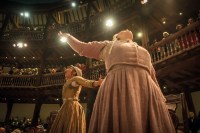
Once upon a time on Broadway, Igor Stravinsky composed a ballet for Billy Rose’s revue Seven Lively Arts. After the first night, Rose felt that Stravinsky’s efforts might benefit from the attention of Robert Russell Bennett – the king of Broadway orchestrators, who’d collaborated with Cole Porter and the Gershwins. ‘YOUR MUSIC GREAT SUCCESS,’ he telegrammed to Stravinsky. ‘COULD BE SENSATIONAL SUCCESS IF YOU WOULD AUTHORISE ROBERT RUSSELL BENNETT RETOUCH ORCHESTRATION.’ Stravinsky wired straight back: ‘SATISFIED WITH GREAT SUCCESS.’ If you’re mad enough to revive Love Life, you have to commit. Opera North did There were moments in this revival of the Lerner and Weill flop Love Life when I wondered whether Weill, too, might have profited from a Bennett makeover.

In praise of immersive exhibitions

'Immersive' exhibitions get a bad rap. And it's not hard to see why. But if, like me, you find yourself hard-pressed to concentrate on Important Art when troubled by the cares and complexities of life, then digitally amplified sensation and spectacle might be a decent alternative if your museal itch needs scratching in stressful times. There are two notable options in London right now. The first is Vogue: Inventing the Runway, at the Lightroom in King’s Cross. Drawing on Vogue's nearly 150 year old archive, it’s a show about the catwalk's flashpoints, narrated by Cate Blanchett.

Is the tide turning on restitution? 

Arts feature

When passions are aroused, all of us are liable to overstate our case. Dan Hicks, a curator at Oxford’s extraordinary Aladdin’s Cave of anthropology, the Pitt-Rivers Museum, is perhaps a case in point. A Swedish academic, Staffan Lunden, has convincingly argued that Hicks is guilty of ‘distortion’ when writing about the British raid on Benin in 1897, which brought several thousand objects, including finely wrought brass statuettes, to museums across the world. Hicks published his uncompromising views in 2020 in a prize-winning book, The Brutish Museums: The Benin Bronzes, Colonial Violence and Cultural Restitution.

The stupidity of the classical piano trio

Classical

It’s a right mess, the classical piano trio; the unintended consequence of one of musical history’s more frustrating twists. When the trio first evolved, in the age of Haydn, the piano (or at any rate, its frail domestic forebear) was the junior partner, and the two string instruments, violin and cello, were added to make the silly thing audible. Then the piano started to evolve, while its partners – give or take the odd tweak – really didn’t, much. The end result, by the second half of the 19th century, completely reversed the original balance of power, leaving the two string instruments thrashing for dear life against the onslaught of that glossy, black, all-devouring monster, the modern concert grand.

As good a Dylan biopic as you’ll ever get: A Complete Unknown reviewed

Cinema

It doesn’t have anything new to say, which is right. If you could figure Dylan out, it would all be over A Complete Unknown is the Bob Dylan biopic from James Mangold, who also made Walk The Line about Johnny Cash. It stars Timothée Chalamet, who is astonishing, and does his own singing. He may even be better at singing Dylan than Dylan is at singing Dylan. (Same sound but fewer of those bum notes that make you go ‘ouch’.) It doesn’t have anything new or insightful to say, which is right and proper. If you could figure Dylan out, it would all be over. Instead, the focus is on the four years leading up to his use of electric instruments at Newport Folk Festival in 1965. This was greeted by fans with such horror and outrage it was as if, live on stage, he was kicking puppies.

Cheerless and fussy: The Tempest, at Theatre Royal Drury Lane, reviewed

Theatre

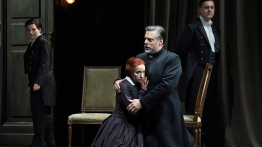
The Tempest is Shakespeare’s farewell, his final masterpiece or, if you’re being cynical, the play that made him jack it all in. Some actors admit that it can be hard to stage and dull to perform. What is it exactly? A children’s fairy tale and a soppy romance with snatches of drunken farce and political intrigue. Quite a muddle. The setting is famously eccentric. Shakespeare whisks the audience away from reality and drops them in a magical kingdom where a sanctimonious wizard rules over a population of goblins and fairies. The overbearing soundtrack keeps coming up with new ways to irritate your eardrums Some directors try to correct the Bard by turning Prospero’s island into an even weirder and less familiar realm.

The brilliance of Cicely Mary Barker

Exhibitions

When Cicely Mary Barker’s Flower Fairies of the Spring was published in 1923, a post-first world war mass wishful belief in fairies was at its height in Britain. Just over two years previously, Sir Arthur Conan Doyle, writing in the 1920 Christmas issue of the Strand Magazine, had stated that the ‘Cottingley Fairies’ (tiny winged figures visible in photographs taken near Bradford by Elsie Wright and Frances Griffiths) were almost certainly genuine and were clear evidence of the existence of psychic phenomena. Barker remained unmarried, and lived a quiet life of flowers and innocence The public – 21 years on from the birth of Peter Pan – were hungrier than ever for fairies: their innocence, their delicate beauty, and their hint of benign mischief.

A new solo album by a former Beatle that – astonishingly – demands repeated plays

Pop

For artists lacking any obvious feel for the style, ‘going country’, similar to mainstream white artists dabbling in reggae in the 1970s following the breakthrough of Bob Marley, tends to elicit the sour whiff of a morning after the last chance saloon. Particularly at a time when a slick multi-hyphenate brand of country music is the pop trend du jour, carpetbagging and bandwagonism abounds. The lyrics on Look Up are elementary to the point of banality, which is as it should be Ringo Starr needn’t worry. Starr is the cowboy Beatle. He has loved this music from a young age, which is a long time. The Beatles wisely facilitated his enthusiasm. Starr sang a Buck Owens cover on Help!

Irritating but watchable: American Primeval reviewed

Television

American Primeval should really be called Two Incredibly Annoying Women In The Wild West. Yes, the first title is more clickbaity, whetting the prurient viewer’s appetite for the savage, primitive violence that splatters over every other scene. But the second is more accurate. Not since Lily Dale in Trollope’s Chronicles of Barsetshire have I rooted so fervently for the protagonist to meet a sticky end as I have with this series’ two feisty heroines. The Wild West depicted in American Primeval is grotesquely, mindlessly violent One, Sara Rowell (Betty Gilpin), is a mother on the run from the law.

The architectural provocations of I.M. Pei

Arts feature

When first considering architects for the new Louvre in 1981, Emile Biasini, the project’s head, liked that I.M. Pei was both ‘Chinese as well as American: Chinese in his respect of the past, and American in the way of radical solutions’. His controversial glass pyramid ignited much debate about which side won out. These entanglements, between traditionalism and modernity, East and West, would come to characterise both Pei’s Louvre and his six-decade career. After a seven-year gestation, the first comprehensive retrospective of the architect, at Hong Kong’s M+ museum, finally offered a longer view. Despite calling America home, Pei felt a duty to help China find its own architectural language Pei’s prolific career had a head start.

Why I’m obsessed with Farming Today

Radio

Farming Today airs at an undignified hour each morning on Radio 4. On the few occasions I’ve caught it live I have felt, first of all, relief that I am not a farmer; second, inadequacy; and finally, a surge of evangelism for the farmer’s way of life. I am now reaching the conclusion that getting up early enough to listen to Farming Today is the very least we can all do. Listening to Farming Today helps dispel the romance of living off-grid By no means will everything discussed on the programme hold relevance for your life. One feature last week was dedicated to a project to preserve ten acres of salt marsh downstream from Totnes. Another recent episode explored the Lakeland barns being saved for cultural heritage.

What makes a good title?

More from Arts

Liszt’s compositions tend to have descriptive titles – ‘Wild Chase’; ‘Dreams of Love’ – whereas Chopin avoided titles. Thomas Wentworth Higginson wished titles on Emily Dickinson’s poems, opposed by his fellow editor Mabel Loomis Todd. They didn’t stick. Maybe this is why Dickinson is acclaimed but unread. ‘I heard a Fly buzz’ is easier to remember than 465. We can express this truth by quoting Dickens on the Bible in Little Dorrit: ‘such hiccupping reference as 2 Ep. Thess. C. iii, v. 6 & 7.’ Or by remembering how often we forget our several PINs. For poets, titles can be a resource, a useful press release before the actual poem Titles are important. Titles are useful.

Exquisite: Tom Stoppard’s The Invention of Love, at Hampstead Theatre, reviewed

Theatre

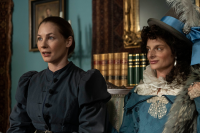
The Invention of Love opens with death. Tom Stoppard’s play about A.E. Housman starts on the banks of the Styx, where the recently deceased poet is waiting for Charon, the boatman, to ferry him across the water. Charon has been told to pick up ‘a scholar and a poet’ and he’s expecting two souls, not one. Houseman explains that he pursued both careers and is therefore a solo passenger. The play’s storyline emerges slowly and with immaculate taste. Stoppard is not one for cheap tricks This takes place in 1936, the year of Housman’s death, and we then flip back to Oxford in the 1870s. The river Styx becomes the Cherwell, where Housman and two chums are paddling upstream while discussing a flamboyant young intellectual, Oscar Wilde.

The Natural History Museum’s new Evolution Garden is inspired

More from Arts

The Natural History Museum is one of the most beautiful buildings in London, but its gardens have long been a bit boring – just a pavement on the way in to Alfred Waterhouse’s ornate ‘cathedral to nature’. Most people noticed them solely when the ice rink appeared at Christmas. There was a wildlife garden in one corner that only real enthusiasts (like me) bothered to visit. Where else in London could you walk three billion years along pavements this good? With this enormous overhaul of the site, that’s all changed. The scale of the Evolution Garden, designed by landscape architects J&L Gibbons and architects Feilden Fowles, is enormous, both in size and the period of time it covers.

Playing Nice is beautifully done – but they miscalculated the opening scene

Television

There must have been a time when slow-burn psychological thrillers didn’t start with a scene of high drama followed by a caption that reads ‘Three months earlier’ – but if so, it’s getting hard to remember it. The latest programme to deploy the tactic was Playing Nice, which began with James Norton running towards the sea screaming ‘Theo!’ as a child’s body bobbed, face-down, in the waves. He was next seen, post-caption, laughing with his pre-school son in various picturesque Cornish locations while using the word ‘buddy’ a lot. Not to be outdone in the great-parent stakes, his wife also piled on the cuddles for little Theo. Before long, Miles had developed the habit of glowering menacingly when nobody was watching This idyll, however, didn’t last long.