Culture

Culture

The good, the bad and the ugly in books, exhibitions, cinema, TV, dance, music, podcasts and theatre.

How to write a piano concerto

Classical

My Piano Concerto, The World of Yesterday, began with an email during one of the darker days of the pandemic: would I like to write a score for a movie about a concert pianist writing a piano concerto. As I looked at my concert diary, blank but for Zoom calls, it seemed like a wonderful way to keep me busy. I’d never wanted to write a piano concerto (how to begin?

Soothing and glorious: Fashion Neurosis reviewed

Radio

Sometimes the mind needs to take a break. And I can’t think of a better stopping-off place than the soothing, gloriously bonkers discussions on the Fashion Neurosis podcast, hosted by the British fashion designer Bella Freud. Its premise is that Freud, daughter of Lucian and great-grand-daughter of Sigmund, encourages guests to recline on her couch and talk over any and every aspect of their relationship to fashion. Her mellifluous, affirming manner is much more soft soap than wire wool, but this is not territory that requires a Robin Day, and the concept proves a surprisingly fruitful route into family history, personal stories and high-grade gossip.

Regents Opera’s Ring is a formidable achievement

Opera

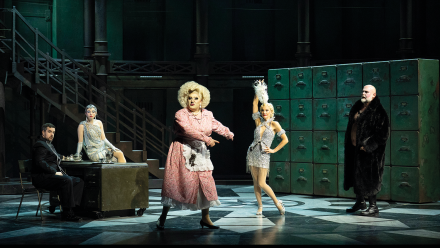
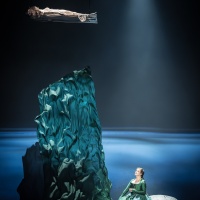
I saw the world end in a Bethnal Green leisure centre. Regents Opera’s Ring cycle, which began in 2022 in Freemasons’ Hall in Covent Garden, has found its culmination and completion at York Hall, a rundown public bath better known for championship boxing. Tower Hamlets security staff scan you for concealed weapons on the way in, which is not exactly typical at the opera. Still, the Ring is not a typical opera – and isn’t art supposed to feel dangerous? But once you’re inside – and as long as you’re not seated within earshot of the bar staff, who clatter and chatter throughout – Caroline Staunton’s scaled down production transfers seamlessly; in fact, the sightlines are better.

The new Civ is gorgeous and richly rewarding

More from Arts

Grade: A- It has been nearly ten years since addicts of the empire-building simulator Civilization – or Civ, as players call it – have had a fresh fix. Was it the original Civ that cost you a first in your finals? It’s back, and this time round it aims to cost you a promotion at work. You’ve both grown up. Prepare to lose very many hours to its attractive blend of diplomacy, resource management, city-building and strategic ultraviolence.  Your path through history comes in three linked chunks: you’ll play through the ancient world, then carry forward some of your progress into the age of exploration, and then do the same again in modernity. What’s more, your leaders no longer have to be historically or geographically appropriate.

Lauren Mayberry is terrific – but it’s not music for middle-aged men

Pop

There are nights when one realises quite how much effort the business end of showbusiness must be. On a bitterly cold Monday night in Philadelphia, Lauren Mayberry – over from Glasgow, and halfway through a month of criss-crossing the USA – took to the stage to survey a crowd of maybe 500 people, in a venue that holds 1,200. A good proportion of those 500 people were just like me: middle-aged men. We have every right to be there, of course, and one suspects Mayberry was glad they bought tickets. But I bet she was disappointed some of the remaining 700 or so tickets had not been bought by young women, for this is who this show is for.

I’ve had it with Pina Bausch

Dance

My patience with the cult of Pina Bausch is wearing paper thin. She was taken from us 16 years ago, and I had hoped that the aura of divinity around her memory might now be fading. But no, it only burgeons and having joined with Terrain Boris Charmatz to honour her creations, the official keepers of her flame Tanztheater Wuppertal are back in town to present one of her later works, Vollmond (‘Full Moon’), to ecstatic standing room-only congregations in her temple at Sadler’s Wells. What a bad, bad influence the Blessed Pina has had on dance, providing inspiration for hundreds of her imitators to pull the wool over our eyes by peddling their own pallid versions of her formulas.

Tarot isn’t very old or esoteric – but it does work

Arts feature

Among my many fake and useless skills, I’m a reasonably decent tarot reader. I can do one for you now if you like. A very simple three-card spread: your cards are the Seven of Wands, the Hierophant and the Six of Pentacles. There are lots of vaguely drippy ways of interpreting a three-card spread: past-present-future, or mind-body-spirit; I usually prefer to think of the cards as representing first, the mess you’re in; second, how you got there; and third, how you might plausibly manage to get your way out. And you, reader, are in a bit of a mess.

Does Sadler’s Wells really need a lavish new building?

Dance

Arts Council England may be successfully clobbering the poor old genre of opera into the ground, but its sister art dance continues to be nurtured ever more generously, and the London scene is as ebulliently youthful and healthily various as it’s ever been. At the top end there’s the Royal Ballet, currently a match for any company in the world, and English National Ballet, performing to an impressive standard too. Sadler’s Wells thrives, with a rich programme embracing Matthew Bourne’s pantos and all sorts from Rambert and Akram Khan to hip hop and flamenco, alongside a succession of foreign visitors who fill the stage with mud or stand on their heads in the nude.

The art of the anti-love song

Pop

Tracey Thorn released an album in 2010 titled Love and Its Opposite. When it comes to songwriting, it’s the ‘opposite’ that tends to throw up the more compelling discourse. The anti-love song has been a staple in popular music since Elvis’s baby left him and he wandered off to ‘Heartbreak Hotel’. Presley is a useful weathervane: if asked to pick between the two, no sentient listener would choose the soppy slobbering of ‘(Let Me Be Your) Teddy Bear’ over the snarl and bite of ‘Hound Dog’. Pop is sunshine on the surface, but at heart it’s closer to Orwell’s Two Minutes Hate. As Tina Turner once pondered, quite loudly: ‘What’s Love Got To Do With It?’ The annual rigmarole of Valentine’s Day brings this truth into particularly sharp focus.

Are these performances of the Bach cantatas the best on record?

Classical

Three projects shedding light on the sacred music of J.S. Bach are nearing completion. The first consists of an epic 25-year project to record all the composer’s vocal works – passions, masses, motets and more than 200-odd cantatas – in electrifying performances supplemented by lectures and workshops. At the helm is a Swiss choral conductor renowned for his improvisatory skills – and surely the only baroque specialist to have played Sidney Bechet on a chamber organ. The second project is a guide to Bach’s church cantatas tailored at ‘cultural Christians’; that is, music lovers intrigued but intimidated by their Lutheran theology, unsure how to approach this treasure trove of, at a conservative estimate, more than 100 masterpieces of western civilisation.

Strangely moving: Bridget Jones – Mad About the Boy reviewed

Cinema

Bridget Jones: Mad About the Boy is the fourth outing for our heroine as played by Renée Zellweger and I was not especially hopeful. Who can still be bothered? Particularly after that silly Thai jail business (second film) and then all that flailing about in the mud at a music festival (third). But this takes you right back to when you did care. The franchise (this time directed by Michael Morris) seems to have finally grown up a bit, and explores loss and grief with surprising depth. That said, it still knows exactly what it is, and what to deliver, and is in touch with its former self via nostalgic nods to blue soup, big pants and those penguin pyjamas first seen 24 years ago. They’re faded but still going strong. (I think we can safely assume they are not from Primark.

If you have two hours to spare, spend it anywhere but here: The Years reviewed

Theatre

The Years is a monologue spoken by a handful of actresses, some young, some old enough to carry bus passes. They stand in black costumes on a white stage explaining to us the significance of memory, history and feelings. Then the story begins. The narrator is a precocious chatterbox born in France during the war who has no aim in life other than sensual gratification. She’s not a human being, just a cluster of nerves, like a taste bud, that registers nice or nasty, sweet or bitter. And that’s it. She has no morality. She doesn’t develop personally because her nature isn’t capable of emotional growth. Yet the audience is expected to admire everything she says about her experiences. Sex is her obsession. As a teen, she brings herself to orgasm on the corner of a table.

Want to understand a conductor? Listen to their Haydn

The Listener

Grade: B When a music-lover is tired of Haydn’s London symphonies, they’re tired of life. It’s not just the sheer creative verve of these 12 symphonies by a composer in his sixties. It’s the generosity of spirit. Beethoven demands a battle of wills; Mozart a near-impossible grace. But a conductor can run straight at a London symphony and Haydn will show us, with a smile, exactly who they are. Beecham is urbane, Bernstein camps it up; Abbado is trim and impeccably turned out. Eugen Jochum (a belated discovery) is just very, very German. Haydn’s still bigger than all of them. Paavo Jarvi has reached the second volume of his London symphonies with the Bremen-based Deutsche Kammerphilharmonie, and he’s surely never been anyone’s idea of a ray of sunshine.

The art of war

Exhibitions

On his deathbed, the Austrian writer Karl Kraus remarked of the Japanese attack on Manchuria: ‘None of this would have happened if people had only been more strict about the use of the comma.’ The implication being that by channelling rage into the ordering of small things, we might stay away from violence on a colossal scale. Unable to restrict ourselves to matters of punctuation, alas, humanity is often at war: with itself, and others, however hallucinatory. Two current exhibitions come at rage from very different starting points. War and the Mind demonstrates the devastating psychological impact of war on those who fight it and those who have no choice but to suffer it.

The thankless art of the librettist

Arts feature

Next week, after the première of Mark-Anthony Turnage’s new opera Festen, the cast and conductor will take their bow. All being well, there’ll be applause; and then a brief lull as the creative team takes the stage. There’s often a ripple of curiosity in the audience at this point, because it’s rare that we get to see just how many people it really takes to make an opera. Standing near the composer will be Lee Hall, the writer of Billy Elliot and The Pitmen Painters, and now part of the most maligned – and indispensable – profession in all of music. He’s the librettist. In short, Hall wrote the words, and in the world of opera there’s no more thankless task. ‘There’s this snobbery about it, an English snobbery, I suppose,’ he says.

A cheaper, shinier, more processed Chris Stapleton: Brothers Osborne reviewed

Pop

If you were a frequent viewer of Top Gear in its Clarkson/Hammond/May era, there is a particular laugh you will be very familiar with: the combined hoot and exclamation that the three of them, and Clarkson especially, would engage in when driving a fast car around a bend. It was a sort of ‘WOOOOwraghhhahahaha’, designed to convey both sheer delight at being alive and a certain manly pride in being able to extract such a feeling from a motor vehicle. It was a performance.

Stately, sly and well-mannered: BBC1’s Miss Austen reviewed

Television

It is a truth universally acknowledged that lazy journalists begin every piece about Jane Austen with the words ‘It is a truth universally acknowledged’, so I’ll fight the temptation. In any case, the Miss Austen at the centre of BBC1’s new Sunday-night drama isn’t Jane, but her beloved sister Cassandra, best known for destroying most of Jane’s letters. Given that this has rendered our knowledge of the woman’s biography tantalisingly sketchy, Cassandra has attracted her fair share of resentment from Janeites. But rather cunningly, Miss Austen both exonerates her and takes full advantage of the sketchiness: high-mindedly questioning our entitlement to snoop into Jane’s private life, while feeling free to speculate on what that private life might have been.

Extraordinary: The Seed of the Sacred Fig reviewed

Cinema

The Seed of the Sacred Fig is by the Iranian filmmaker Mohammad Rasoulof and all you need to know is that it is extraordinary. What you don’t need to know, but may like to know, is that Rasoulof, who has already been imprisoned multiple times by the authorities, filmed it clandestinely while directing remotely from an undisclosed location and then had to flee Iran on foot. The journey was extremely complicated and dangerous and took 28 days. You could never accuse Rasoulof of taking filmmaking lightly. But that’s not the bottom line. The bottom line is: it’s enthralling cinema. The film follows a family in Tehran. Iman (Misagh Zare) is the patriarch who has just been appointed an investigating judge in Iran’s revolutionary court.

FKA Twigs is the most interesting pop musician we have right now

The Listener

Grade: A Hell, there’s a lot not to like, or even to be a little suspicious of, with this young woman. Her politics are, as you might have guessed, banal and stupid. She has been in a relationship with the ghastly Matty Healy of the 1975. But she has huge talent and is probably a more interesting musician than any other we have right now, if we’re just talking pop music. She exists just beyond the Kuiper Belt of digital, alternative rhythm and blues, where pop meets modern classical. The conventional description is ‘art pop’, but as that brings to mind 10cc I think we’d better move on. Her songs, or her approach to songs, recall mid-period Bjork.

Stylish facsimile of Carol Reed’s film: Oliver!, at the Gielgud Theatre, reviewed

Theatre

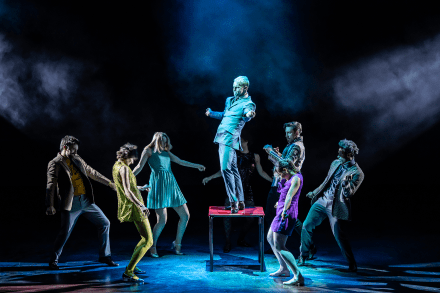
Oliver! directed by Matthew Bourne is billed as a ‘fully reconceived’ version of Lionel Bart’s musical. Very little seems to have been reconceived. This stylish and dynamic show develops like an unblemished copy of Carol Reed’s film. Fair enough. Punters want comfort, not novelty when they go to see a 65-year-old musical. Billy Jenkins, as the Artful Dodger, captures every heart in the auditorium. But of course he does. It’s no slur on Jenkins to point out that the ‘Dodger’ is one of the greatest acting gigs in all musical theatre. Has it ever been done badly? The Oliver I saw, Raphael Korniets (one of three sharing the role), is a slender youngster with a huge singing voice.

Booze now has its own Rest is History-style podcast

Radio

Intoxicating History is the perfect title for drinks expert Henry Jeffreys and food critic Tom Parker Bowles’s new podcast. Its theme is alcohol, but its contents are predominantly historical, which is good news if, like me, you are quick to apply the word ‘bore’ to any man who talks about wine for more than eight minutes. The first episodes came out before Christmas but they have been gathering momentum since Dry January. Today’s drinking culture, which has spawned this bizarre annual group sacrifice, has an interesting pedigree. Europeans have apparently been on their guard against boozing Englishmen for nearly a millennium. The Portuguese were certainly left in no doubt as to our reputation when we aided them in their Reconquista.

The problem of back-story in drama

More from Arts

Olga in Three Sisters, the opening speech: ‘Father died just a year ago, on this very day – the fifth of May, your name-day, Irina.’ Jeeves says somewhere in P.G. Wodehouse that people with monogrammed slippers are afraid of forgetting their names. Irina, the absent-minded sister, probably needed reminding it was her birthday. A useful side-effect is that the audience also knows exactly when and where we are. Tracy Letts’s August: Osage County begins with a frank information offload: Beverly Weston, the patriarch, conveniently explains to the new native-American hire, Johnna, the basic set-up: ‘My wife takes pills and I drink.’ This bald set-up is ‘concealed’ by digressions about Berryman, T.S.

‘Innovation is not enough’: meet visionary English painter Roger Wagner

Arts feature

In the side chapel of the church of St Giles’, at the northern apex of the historic Oxford thoroughfare, hangs a remarkable painting. ‘Menorah’ (1993) depicts the (now demolished) Didcot power station with its six massive cooling towers and central chimney stack as the setting for the crucifixion; Christ and the two thieves are set against the minatory bulk of the huge industrial buildings while other figures, lamenting and covering their faces, occupy the foreground. It is haunting and profound, an appalling vision but also a beautifully realised one – the work of a master of his craft. For Wagner, art should never be ‘one person thick’.

Classical music has much to learn from Liverpool

Classical

They do things their own way in Liverpool; they always have. In 1997 the Royal Liverpool Philharmonic Orchestra launched a contemporary music group called Ensemble 10:10 (the name came from the post-concert time-slot of their early performances). For a decade now, they’ve also administered the Rushworth Prize, an annual competition for young composers based in the north-west. And while classical fads and crises have come and gone, the RLPO has held its friends close and tended its garden. The result? The kind of artistic self-assurance that lets you put your chief conductor in charge of a première by a novice composer, and then call in a Barenboim to guarantee a full house.

What a sad thing Strictly Come Dancing has become

Dance

Those of a violently masochistic disposition would have heartily enjoyed the Saturday matinée of the Strictly Come Dancing: Live Tour at the Utilita Arena, Birmingham. Talent loses out to glitter and hype, as shrieking vulgarity envelops all What deliciously perverse pleasure was to be drawn on this bleakly cold afternoon from the vast, snaking queues, the blared injunctions from the Tannoy, the drear concrete ambience, the over-priced merchandise tat and the chaos of the ultra-processed catering outlets – not to mention the £15 charge for leaving an empty backpack in the cloakroom. And then there was the show.

The maudlin, magical world of Celtic Connections

Pop

Is it possible to find a common thread running through the finest Scottish music? If pushed, one might identify a quality of ecstatic melancholy, a rapturous yet fateful romanticism, in everything from the Incredible String Band to the Cocteau Twins, the Blue Nile to Frightened Rabbit, Simple Minds to Mogwai. The Jesus & Mary Chain have a song called ‘Happy When It Rains’, which seems about right. There were moments during the launch event for Celtic Connections, Glasgow’s annual and much-valued winter celebration of roots music from Scotland and far beyond, when this bittersweet admixture of moods was thrillingly conjured up. At other times, it simply felt a little contained, even now and again flirting with that lethal old enemy, the Scottish Cringe.