Culture

Culture

The good, the bad and the ugly in books, exhibitions, cinema, TV, dance, music, podcasts and theatre.

Gaudy! Bright! Loud! Fun!

Arts feature

In any epoch most of what is built is mediocre, though we may not realise it at the time because our neophilia persuades us of merit where there is none. Equally, we may fail to distinguish the few exceptions — those instances where architects and builders have ascended to a higher standard of mediocrity or have even escaped its dulling clasp. It takes time for public taste to catch up with architects’ taste. Today, 40 years after brutalism dissipated in an assault of bien-pensant hostility and oil crises, few weeks pass without a new book or blog hymning its sublimity, energy and gravity. It is, of course, all a bit late. Much of the finest work has already been destroyed.

Close encounters | 19 May 2016

Exhibitions

A story John Piper liked to tell — and the one most told about him — is of a morning at Windsor presenting his watercolours of the castle to King George VI and the Queen. She admired his storm-tossed battlements; the King did not. ‘You seem to have had very bad luck with your weather, Mr Piper.’ If this was a criticism of the artist’s gloomy and gothic tendency, it was an unfair one. Mr Piper was very unlucky with his weather. In Caernarvonshire in 1945, on a sketching trip with two small children in tow, it never stopped drizzling.

Great hairdos, love the wallpaper – shame about the movie: Almodóvar’s Julieta reviewed

Pedro Almodóvar’s last two films were affronts to his reputation as a director. The Skin I Live In (2011) was a grotesque horror show starring Antonio Banderas as a mad plastic surgeon. I’m So Excited was a wacky romp in an airplane that badly needed fuel. His latest, Julieta, currently in competition at Cannes, was a box office disappointment in Spain, where it opened last month – possibly due to the director being named in the Panama Papers – but it’s better than a lot of what he’s done lately, as well as the closest thing to a mainstream movie that one can imagine from the Spanish eccentric.

To a Turkish president

Poems

There was a young fellow from Ankara Who was a terrific wankera Till he sowed his wild oats With the help of a goat But he didn’t even stop to thankera.   *Extempore limerick in conversation with Nicholas Farrell and Urs Gehriger for the Swiss newspaper Die Weltwoche.

Animal attraction

Television

Let me start this week with an admittedly hard quiz question: in 1954, how did the sudden illness of Jack Lester, head of London Zoo’s reptile house, transform British television? The answer is that his reluctant stand-in as the presenter of BBC’s Zoo Quest was the show’s director, David Attenborough. Offhand, it’s not easy to think of many people whose 90th birthday could overshadow the Queen’s, but this month Attenborough’s is coming pretty close. The latest tribute was David Attenborough’s Zoo Quest in Colour (BBC4, Tuesday), which dedicated an appropriate 90 minutes to his first TV hit. As the title indicates, the big coup here was that the archive clips were no longer in grainy black-and-white.

Bard goes to Bollywood

Theatre

The Globe’s new chatelaine, Emma Rice, has certainly shaken the old place up. It’s almost unrecognisable. Huge white plastic orbs dangle overhead amid plunging green chutes like rainforest vines. The back wall is smothered in a blinding rampart of explosively coloured saffron petals. Up top, partially concealed by pillars, lurks a rock band togged up in a blend of Elizabethan casuals and modern gear. Presiding over everything is an Indian matriarch, seated in cross-legged solemnity, playing an electric sitar whose headstock (the bit with the tuning pegs) resembles a Fender bass. What are we supposed to make of this weird, druggy, space-age Bollywood mash-up? Nothing much. Except that Shakespeare belongs now, and then, and here and there, and everywhere.

Pulling power | 19 May 2016

Radio

Monday’s ‘World on the Move Day’ on Radio 4 was a bold challenge to government policy and proof that radio is much the most flexible, the most accommodating, the most powerful medium when compared with TV. Without much ado, the day’s planned schedule was squeezed, manipulated, overturned to allow the team behind the Today programme to mastermind a live discussion throughout the day about the migration issue, as if to say to the government, here’s what people not just in the UK but from around the world care about. Let’s listen to them and see what solutions they might have to offer.

Losing the plot | 19 May 2016

More from Arts

If a football manager produces a string of losses, the writing is on the wall and out he goes. He’s accountable — to shareholders, to the fans. The director of the Royal Ballet is not a football manager. Nor is it easy to see to whom he would account for his plans and outcomes. The Royal Ballet governors are not like MotD panels unleashing Gary Nevilles and Alan Shearers on the play, or select committees foaming with Tom Watsons and John Whittingdales demanding explanations for the cultural strategy. They are a group of veteran ballet chums, and it appears to be inconceivable that it is their business to turn round and see if the latest Royal Ballet production scored or not. Let alone to sack the manager.

Speech impediment | 19 May 2016

Opera

‘So you’re going to see the gay sex opera?’ exclaimed my friend, open-mouthed. People certainly seem to have had some odd preconceptions about Mark Simpson’s new chamber opera Pleasure. The distinguished critic of the Daily Telegraph let it be known that he awaited ‘with trepidation, something set in the lavatories of a gay nightclub’. And to be fair, the news that Pleasure was to star Lesley Garrett — last seen in Welsh National Opera’s Chorus! ascending to the heavens aboard an enormous pair of lips — didn’t exactly dampen suspicions that we were about to see some sort of camp spectacular: Adès’s Powder Her Face meets RuPaul’s Drag Race.

Poles apart | 19 May 2016

Features

Bono has a new opponent: Liroy, a tattooed Polish rapper whose hits include ‘Jak Tu Sie Nie Wkurwic’ (‘How can I not get pissed off?’). He was outraged when the U2 singer recently claimed that Poland is succumbing to ‘hyper-nationalism’. In an open letter Liroy wrote: ‘Your knowledge on this subject must be based on a rather questionable source and is far from the truth. Both as a musician and a Polish MP I would like to invite you to Warsaw to discuss the subject… and see for yourself the current vibe of Poland.’ It’s obvious where Bono got the idea. Everyone in western Europe seems convinced that Polish democracy is on the verge of extinction at the hands of a right-wing nationalist party that seized power last October.

Happy ending

More from Arts

‘In many ways,’ Georg Baselitz muses, ‘I behaved against the grain of the times I grew up in.’ The era was 1960s Germany; in that context, Baselitz feels he was subversively respectable. ‘For example, I never took any drugs. I have been a very faithful husband, I just wanted to hold on to my wife, I wasn’t interested in straying. I never went on any political demonstrations.’ His major offence, however, was not what he didn’t do but what he actually did: paint figurative pictures. Eventually, fashions reversed, and this perverse behaviour made Baselitz a celebrated figure in the world of art. At 78, he remains vigorously productive.

Verdi

Notes on...

Verdi has a peculiar if not unique place in the pantheon of great composers. If you love classical music at all, and certainly if you love opera, then it is almost mandatory to love him. The great and good of the musical world, the kind of people who sit on the boards of opera houses and other cultural institutions, go out of their way to advertise their adoration of Verdi, usually at the expense of the other considerable operatic composer who was born a few months before him in 1813, Wagner. In fact, Verdi’s status and stature are often established by comparing the two.

Was Opera Rara justified in reviving Bellini’s first opera? Oh yes

Adelson e Salvini Barbican First operas by composers who later became great or anyway expert in writing them tend to be at best of biographical interest, to be revived mainly for people who are interested to hear premonitions of the achievements that lay ahead. Up to a point that is the case with Bellini's Adelson e Salvini, which he wrote in his early twenties, and which at the time was a big local success, being performed every Sunday for a year.

Might ITV make a better fist of finding a Eurovision song?

About 200 million people tuned in to the Eurovision Song Contest last night, and will have seen Britain finish third-last. The country of Adele, Ed Sheeran, the Mumfords and The Beatles was defeated by countries with a twentieth of our population (and musical talent) – so what’s going wrong? The answer is fairly simple: the UK entry is controlled by the BBC. Asking it to choose a Eurovision Song Contest winner is like asking the Parliamentary Culture Committee to choose a Christmas No1. I'm a huge fan of the BBC and its Eurovision coverage is generally first class, as are Paddy O’Connell and Graham Norton. But choosing a winning musical act is a another skill.

Height, weight, hair colour, race, bum size: critics must be allowed to discuss how performers look

'Dancer sees red at critic’s ginger jibes' was the Times headline on Tuesday. You can call the Royal Ballet dancer Ed Watson many things, apparently, including awkward, freakishly flexible, melodramatic, but just don’t call him ginger. Watson, who has brightened Covent Garden for 20 years in psychologically contorted acting roles and double-jointed dancing ones, is a favourite performer for many critics in many aspects (including me, quite often), but not at all to Alastair Macaulay, a distinguished figure who sharpened his teeth on the Financial Times before moving to the New York Times.

Hit-and-miss Handel at the Göttingen Festival

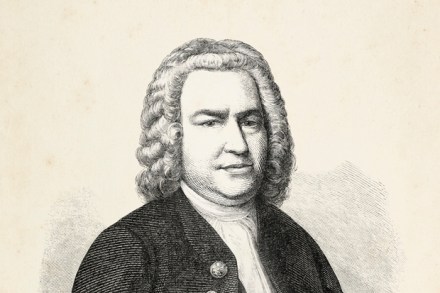
Ask anyone to name the greatest classical composers and certain names are bound to come up – Mozart, Wagner, Beethoven, Bach. But ask them which composer’s music they’d most like to live with for a week, exclusively, and answers will change. Greatness is one thing, but a great festival composer is quite another – someone whose works have not only sufficient quality and variety to stimulate, but also a certain comfort, a clubbable ease about them. Handel is one such, a composer whose music has spawned festivals from London to Halle, Dublin to Tokyo. It’s only appropriate, given the composer’s long association with England, that two of these festivals – London and Göttingen – are now directed by an Englishman.

Is Zayn Malik as delighted as I am by Azealia Banks’ Twitter ban?

There aren't too many things I have in common with Zayn Malik, but as of this week, we do at least now have a shared enemy: Azealia Banks, the American rapper and part-time witch. She took to Twitter on Wednesday to send racist tweets to the former One Direction star, including one in which she called him a ‘curry scented bitch'. The think pieces have not stopped since. This is not a think piece from an outsider though, but from one of Miss Banks’ other victims. I first came into contact with her last month when she threatened on Twitter to kill a friend of mine’s mother using a voodoo curse, after the said friend mocked her ancient African magic ‘powers’.

Death metal

Arts feature

With its loud guitar riffs and even louder fashion, heavy metal has always been ripe for ridicule. In its mid-1980s heyday, it was epitomised by the fictional rock group Spinal Tap prancing on stage next to an 18-inch polystyrene model of Stonehenge while clad in ball-crushingly tight trousers and floor-length capes. In some parts of the world, however, metal is no laughing matter. In the Middle East, for instance, the potential punishment for wearing all black while wielding an electric guitar is death. These days, against a backdrop of authoritarian suppression in countries such as Iran and China, heavy metal’s trademark theatrics and widdly guitar solos have become less an opportunity for gentle mockery than a rallying cry for artistic freedom.

Surreal, strange and scatological

Exhibitions

Why do we put one work of art beside another? For the most part museums and galleries tend to stick them on the wall as if they were butterflies or beetles, putting similar species together: an array of impressionist flowers, baroque altarpieces, pictures by a certain painter. But there are other ways to do it. Carambolages, a refreshing and highly entertaining exhibition at the Grand Palais, Paris, presents a dizzying diversity of stuff according to a quite different principle: namely, billiards. ‘Carambolage’ is a term that originates from the game of carambole, or French billiards, as once observed by Van Gogh and Gauguin in the Café de la Gare, Arles. It translates into English as ‘cannon’: hitting one ball so that it strikes two others.

Arrest

Poems

The sun always grabs us by surprise its yolky wash on a pub wall the clumsy spill round the black legs of café tables. it rains so frequently it’s like the sea trying to climb out of its skin. The beach is a runnelled grey, an old man’s face in cardiac arrest. we have stopped being pretty, all of us too many pills and pill-packs embarrass our pockets; the future served up three times daily after meals.

Something to crow about

Television

There’s no way of saying this without shredding the last vestiges of my critical credibility, but this new Ben Elton comedy series, Upstart Crow (BBC2, Mondays), about William Shakespeare: I’m loving it and think it’s really, really funny. Yes, all right, it’s very like season two of Blackadder — which Elton co-wrote with Richard Curtis.

Shaw thing

Theatre

T.E. Lawrence is like the gap-year student from hell. He visits a country full of exotic barbarians and after a busy few months rescuing them from their spiritual frailties, and helping them emulate their Western superiors, he returns home and never stops boring on about it. ‘How much I learned from them,’ he gushes, when what he means is, ‘How much they learned from me.’ That’s always been the view of Lawrence’s critics, among them fellow British army officers, who saw him as a reckless, attention-seeking fantasist. Howard Brenton’s new play offers a more charitable portrait of Lawrence as a brilliant, sensitive, rootless genius. The action opens with him newly enlisted as a flunkey in the RAF under the surname ‘Ross’.

The male gaze

Cinema

Everybody Wants Some!! is a comedy written and directed by Richard Linklater, which is the good news, but it’s set among baseball jocks at a Texas college in 1980, which may be the less good news. Your enjoyment of the film may depend not on Linklater’s abilities, which are there for all to see — Dazed and Confused, Before Sunrise, Boyhood — but on how much time you wish to spend with these dudes anyhow. They drink and party, party and drink, and drive around town tooting at girls in short shorts who are just short shorts as they aren’t given any actual dialogue except in one trying instance. I was fed up of them all by the end, I have to say — and rather pleased to get rid.

Divine comedy | 12 May 2016

Opera

You have to be quite silly to take Gilbert and Sullivan seriously. But even sillier not to. G&S is still a litmus test for a particularly British type of operatic snobbery: ‘Is there a place for Gilbert and Sullivan in the 21st century?’ asked a Radio 3 presenter last year, about the time that ENO’s new Pirates of Penzance broke all audience records for live cinema relays in the UK. The Royal Opera, of course, won’t touch it. Which, considering how comprehensively it botched Chabrier’s L’Étoile, is probably just as well. Scottish Opera’s new Mikado is very silly indeed. Nanki-Poo (Nicholas Sharratt) simpers and lisps like Gussie Fink-Nottle. A puppet bird flaps its wings to ‘Willow, titwillow’.

Unsung hero | 12 May 2016

Music

One of the greatest choral symphonies of the 20th century, entitled Das Siegeslied (Psalm of Victory), has been heard only three times since it was composed in 1933. The last performance took place in Bratislava in 1997. The text is a German translation of words from Psalm 68: ‘...as wax melteth before the fire, so let the wicked perish at the presence of God’. One critic has described Das Siegeslied as ‘a shattering, armour-plated juggernaut of a symphony’, whose huge orchestra marches in a frenzy across ‘voice parts conceived wholly in terms of the harsh consonants and barking vowels of German’. Yet there is also captivating beauty: the lapping of harps and muted horns; a serene interlude for a capella choir.

There’s a reason why Prince didn’t release his archive – most of it isn’t very good

Prince’s vast archive of unreleased music is legendary. The ‘vault’ in Paisley Park, the late musician’s home-cum-studio complex in suburban Minneapolis, contains thousands of hours of recordings that have never seen the inside of a tape deck. The unpublished music tells a story. Material was shelved when band members left, after the tragic death of his newborn son, and at the end of his first marriage. Some projects were cancelled for more prosaic (commercial and legal) reasons. The Black Album, which was abandoned in mysterious circumstances a week before it was due to be released, became one of the most bootlegged records of all time.