Culture

Culture

The good, the bad and the ugly in books, exhibitions, cinema, TV, dance, music, podcasts and theatre.

Making history | 15 June 2017

Radio

‘History is not the past,’ says the writer Hilary Mantel in the first of her Reith Lectures on Radio 4 (produced by Jim Frank, Tuesday). ‘It’s the method we’ve evolved of organising our ignorance of the past.’ In Resurrection: The Art and Craft, her series of five talks, Mantel shows her mettle as a novelist (most notably of the award-winning Wolf Hall and its sequel) and as a historian, too, arguing the case for historical fiction, once much-maligned as a literary genre precisely because it twists the facts to create a narrative, usually of a highly romanticised flavour. But facts are not truths, Mantel asserts provocatively. ‘The moment we are deceased we become the subject of stories.

Party piece

Theatre

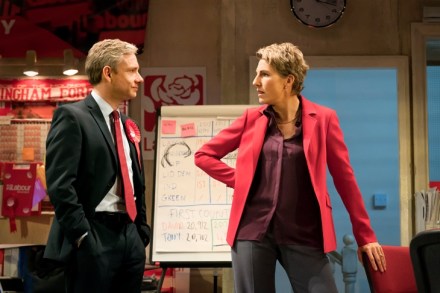
The National Theatre could hardly resist Barber Shop Chronicles. The play shines a light on a disregarded ethnic community, black urban males, who like to hang around in barber salons seeking friendship, laughs and tittle-tattle. Setting the play in a single venue would just be a sitcom, like Desmond’s, so the show establishes a series of shops stretching from London to the capitals of various sub-Saharan nations. This makes it a global epic. In theory, at least. In fact, it’s still a sitcom with some melodramatic bits on the end. The disjoined structure is tiresome at first as the action keeps legging it from Britain to Nigeria and Ghana and back again. Inevitably, the intellectual level is pretty undemanding, somewhere between music-hall and panto.

Building block | 8 June 2017

Arts feature

Liverpool is the New York of Europe. The business district looks like old Wall Street: a miniature Lower Manhattan on the Mersey. It’s a city of scale, drama, melodrama, tragedy and comedy. Not to mention rich and poor. And often all these effects are simultaneous. No other British city has a similarly contrary architectural character: superb, shabby, romantic, melancholy, proud and mean. You cannot be in Liverpool and not be affected by its buildings. I grew up there and long before I knew what ‘design’ meant, Liverpool had taught me to see — as well as to feel the deadly weight of history. It’s an architectural education. But Liverpool has not treated its architects well.

Triple thrill | 8 June 2017

More from Arts

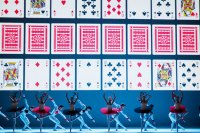
Thrilling debuts, starry guests and a tear-stained farewell at Covent Garden this week as the Royal Ballet closed the season with a triple bill of works by Sir Frederick Ashton. The company’s founder choreographer could often be spotted lurking at the back of the house during Marius Petipa’s Sleeping Beauty enjoying ‘a private lesson’. Today’s would-be narrative dancemakers could gain similar benefits from The Dream, which distils Shakespeare’s five acts into 55 minutes of witty, characterful dance. Steven McRae’s Oberon made short work of Mendelssohn’s Scherzo with icy pirouettes melting into deep penchées and turns chained so tight and fast he should wear asbestos slippers.

Glamming it up

Music

Late on the Friday afternoon of The Great Escape — the annual three-day event for which the London music industry decamps to Brighton to spend three days drinking and trying to get into tiny venues to see new bands — two very young men stood outside a pub, making quite the impression. One, with bleached blond hair, yellow tinted sunglasses and livid red lipstick, wearing a black string vest, clutched a bottle of Mexican lager. The other, made up with huge rouge smears on his cheeks and heavy eyeshadow, wore a beret, a green faux-military tunic, and — naturally — an Elizabethan-styled ruff. You knew they were in a band; you could tell from their armbands, which bore the legend HMLTD.

Myths and morals

Opera

Handel’s Semele, one of the most enjoyable operas (or opera-oratorio, if you insist) in the repertoire, is, in its upshot, an enchanting display of thoughtless hedonism and a warning about what may happen, or even what is bound to happen, if you take hedonism too far. Wormsley, to which Garsington Opera moved several years ago — this was my first visit — seems the ideal place to stage it. The opening of the season was a perfect early-summer evening, the countryside looking gorgeous, refreshments and supper delicious and prompt, the atmosphere friendly, and the performance in many ways excellent.

Snoop Dogg: Neva Left

More from Arts

The problem Calvin Broadus has is persuading the rest of us that he still a baaaad muthafucka. Snoop is now 45 and a rather avuncular figure in the US, with his own reality TV show in which he comes across as, God help us, likeable. Those days of running with the Crips in Los Angeles are long behind him, a testament to the redemptive power of huge amounts of money. Is he still of the streets? Neva Left is the defiant response, his best collection for many years. Snoop has immersed himself in a studio with a collection of artists who broke through at about the same time as he did. So this is kinda trad rap, much as Kenny Ball used to dotrad jazz. But none the worse for it — the album is richly melodic (Snoop always had an ear for a good tune) and the rhythms hugely sophisticated.

Diary stories

Radio

By chance on Saturday morning, I tuned into Radio 4 and heard Professor Clare Brant talking on Saturday Live about Dear Diary, a new exhibition at Somerset House in London that celebrates the art of writing a daily journal. It caught my ear because diaries are such a crucial tool for the biographer yet whenever I’ve attempted to write my own it’s always turned out dreadfully narcissistic and infinitely boring. What, asked Richard Coles, makes diaries so fascinating? It’s all in the detail, said Brant. The way reading a diary can take us into another person’s world, not the outward gloss and grandeur but right inside the way the diarist is thinking and responding to what’s happening around them.

Static electricity

Cinema

My Cousin Rachel is an adaptation of Daphne du Maurier’s mystery-romance and, even though it stars the forever wonderful Rachel Weisz, it’s more sedate than suspenseful, more tasteful than dangerous. This should be a creepy, gripping tale of paranoia, deception, lust, and suspicions that are founded, unfounded, founded, then unfounded again. (There is a great deal of founding and unfounding on the suspicion front.) But the high-end, glossy period trappings — the frocks; the stately mansions; the teal drawing rooms; the horses galloping along scenic cliff paths; that wisteria — don’t play into a dark, gothic atmosphere. It is highly watchable, I have to say, but it won’t have you biting your nails to the quick, as it should.

How the west coast was won

Television

There’s an incredibly addictive old iPhone game called Doodle God where you effectively invent civilisation from scratch by combining basic elements. So, for example, water plus lava creates steam; the steam, in turn, can be combined with another more advanced element, I forget which, later in the game to create steam power; and so on and on until, from the primordial ooze, you have, through continual experiment, created nuclear weaponry and computers and aeroplanes and all the things we take for granted today. I was reminded of it while watching part one (of two) of The Summer Of Love: How Hippies Changed the World (BBC4, Friday).

White-knuckle ride

Music

Playing in an orchestra that disintegrates mid-concert is not an experience you forget. One moment everything’s motoring along nicely. Suddenly a harmony doesn’t quite fit, the soloist enters on the wrong beat: it doesn’t matter, because before you can work out what to do next the confusion spreads, the conductor signals frantically and with a pit-of-the-stomach lurch the floor drops out of the music and you’re all sat there facing the audience amid the one sound that no one present has paid to hear: mortified silence. The Aurora Orchestra has worked out a way to monetise that sensation. Well, maybe that’s putting it a bit cynically.

Woman to woman

Arts feature

Bump to bump they stand: Mary and her cousin Elizabeth, both pregnant, both apple-cheeked and glowing as expectant mothers should be. It is a moment of shared joy. The whispered intimacy of ‘I’m pregnant!’ ‘Me, too!’ Joseph and Zacharias stand sheepish in the background, as men do on such occasions. Joseph has more reason than most to feel left out. The baby isn’t his in the conventional sense. Zacharias has the look of a man overtaken by events. After so many ‘barren’ years, here is Elizabeth, pregnant and beaming with the future John the Baptist.

Dealer’s choice

Exhibitions

One evening a few weeks ago I was on my way to the opening of an exhibition at the Venice Biennale when I stopped for a moment in a quiet campo off the main drag. An elderly priest was standing on the steps of the church of Santa Maria della Fava in the weak sunshine. On impulse I stepped inside and he followed. For a while I looked at Piazzetta’s altarpiece, ‘The Madonna with St Philip Neri’ (c.1725). Then — as if silently to indicate that I should have a look at this too — the priest switched on the light to illuminate Giambattista Tiepolo’s ‘Education of the Virgin’ (c.1732)on the opposite side of the nave. It was indeed worth contemplating.

National Army Museum

More from Arts

I used to love the National Army Museum in Royal Hospital Road, Chelsea, which was crammed with the memorabilia of four centuries of the British Army. I even visited it on the morning of my wedding. It taught you about the history of the British Army in a completely non-political way, allowing the objects — which were carefully factually annotated — to speak for themselves. It was housed in a hideous 1971 building, but the artefacts inside were superb.

Scarlet women

More from Arts

A Covent Garden barfly was scanning her programme during the first interval: ‘Oh yes, the one about the gynaecologist.’ She meant Strapless, of course, an attempt to tell the back story to John Singer Sargent’s ‘Portrait of Madame X’, which scandalised the Paris Salon of 1884. ‘Madame X’ was Amélie Gautreau, a Creole beauty who became the trophy wife of a Paris banker (and bat-guano importer). Impressed by Sargent’s striking portrait of her lover, the surgeon and saloniste Samuel-Jean Pozzi, Mme Gautreau agreed to let the fashionable young artist immortalise her own cadaverous allure. Bad idea. Her brazen pose and the fallen strap of her low-cut gown caused lasting damage to her reputation.

Heaven knows they’re miserable now | 1 June 2017

Television

On the face of it, the two new big drama series of the week don’t have a great deal in common, with one set in a determinedly present-day Britain, the other in a dystopian American future. What they do share, though, is a general air of classiness, some impressively understated central performances and, above all, an almost heroic commitment to unrelenting misery. In the first episode of Broken (BBC1, Tuesday), a typical scene consisted of single mother Christina — who’d just been sacked from her badly paid job and told she was ineligible for benefits — reluctantly selling off her wedding and engagement rings, before returning home to find her mother dead.

The rise of toytown pop

Music

Pop’s counterfactuals tend to be built on questioning mortality: what if Jimi Hendrix had lived? Or Buddy Holly? Rarely does geopolitics enter into the speculation. Nevertheless, there’s a case for arguing that the landscape of British pop would have been markedly different had Harold Wilson acceded to the wishes of President Lyndon Johnson and sent British forces to Vietnam. That’s worth contemplating now, ahead of the latest reissue — deluxe and expanded and remastered, as these things always are — of Sgt. Pepper’s Lonely Hearts Club Band, released last week for the 50th anniversary of the original album.

Army surplus

Theatre

Georg Büchner, a justly neglected German playwright, died at the age of 23 leaving a half-finished script about a mad soldier and his cheating girlfriend. This relic has fascinated dramatists ever since because Büchner is regarded as a visionary left-wing artist cruelly stolen before his time. (Not a moment too soon, if you ask me.) Jack Thorne is the latest to rehash the leftovers. It’s 1981 and we’re in a divided Berlin. We meet a mopey British squaddie, Woyzeck, who shares a flat with his girlfriend from Derry who has the voice of a seagull and the personality of a dishcloth. The flat pongs because it’s located over a slaughterhouse. Bad choice. Let’s move, says Woyzeck. Great, says the Bogside dishcloth. This starts the story.

Music matters | 1 June 2017

Opera

The ancient Greeks had a word for it —katabasis, descending into the depths, to the underworld itself, in search of answers. To cross the threshold between life and death, innocence and knowledge, the everyday and what lies beyond, is an act woven through art, resurfacing in each generation. For Orpheus, and for Monteverdi, the journey may be a literal one, but for Bartok’s Bluebeard, imagined in the age of Freud and Jung, hell is not found outside, or even in other people, but within the darkest recesses of our own selves. When we speak of Orpheus it is of music, of birds and beasts beguiled, and men and women drawn into dance.

In defence of Mahan Esfahani

Seven years ago I ripped the CD off the front of a music magazine and found myself in the thick of a Poulenc concerto that was being played as if life depended on it. Now Poulenc is the acme of laid-back and the solo instrument, the harpsichord, had been consigned to the junkshop before young Brahms was running errands for ladies of the Reeperbahn. This recording was, for me, an act of instrumental resurrection. So I tracked down the harpsichordist, Mahan Esfahani, by name, and took him to breakfast. He turned out to be young, gay, Iranian, Presbyterian, Stanford-educated, restlessly intellectual and altogether full-on. What’s not to like?

Making waves | 25 May 2017

Arts feature

The end, whenever it came, was always going to be too soon for Katsushika Hokusai. There was still so much to see. So much he had not painted. On his deathbed, Hokusai, attended by his doctor, said a prayer. ‘If heaven will extend my life by ten more years…’. He paused and made a private calculation. ‘If heaven will afford me five more years of life, then I’ll manage to become a true artist.’ He may have been 90, but he wasn’t done yet. In life, Hokusai (1760–1849) painted dragons, creatures of long life, by the dozen. He has them disappear in puffs of inky smoke, then reappear across the page. He painted the phoenix, bird of resurrection.

PWR BTTM: Pageant

More from Arts

How about some queercore garage punk? PWR BTTM — the name means something empowering to do with buggery — are a young, gay, two-piece band from New York State who live apparently hectic lives. Their new album, Pageant, was released last week and a couple of days later they were kicked off their record label and current tour after allegations of sexual predation were made against the pantomimely camp singer, Ben Hopkins. The greatest surprise was that the complaints came from a woman. Their career is now in limbo. Hopkins denies the allegations, of course, claiming that he is a consensual and democratic kind of chap. But it’s all rather a shame because Pageant is a thrilling album: tuneful, frenetic and funny. Forget the garage punk tag.

Death wish

Opera

Anyone who thinks they have experienced absolute boredom, or even doubts that such a state can exist, should go to Glyndebourne’s first offering of the season, Cavalli’s Hipermestra. The first two acts, played without any break, last for 130 minutes, the third for a mere hour. The audience broke into its normal rapturous applause at the end, no doubt to reassure itself that it still existed. This opera of the inordinately productive Cavalli has been revived only once since its first outing in 1658, and I can only hope that its present resurrection is temporary and its second death final. Arriving at Glyndebourne, we saw a couple of Arabian newlyweds strolling round the grounds, then another pair, then another, at which point my companion twigged that they were part of the act.