Miles Goslett

How the MeToo movement is affecting YouToo

From our UK edition

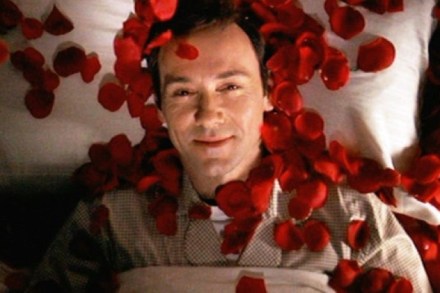
A well-placed source told me recently that late last year the BBC pulled plans to show the Oscar-winning film American Beauty on BBC1. Why? Because it stars Kevin Spacey, who had at that point just been accused of sexually inappropriate behaviour. Spacey, who is now seeking treatment for his problems, has not been convicted in court of any of the offences levelled at him but the BBC seems to have decided it must shield licence fee payers from works of fiction he has appeared in anyway. No film involving Spacey has been broadcast by the BBC – or any other terrestrial TV channel - for months. The same goes for Woody Allen. In 1992 he was accused of sexually molesting his adopted daughter, Dylan.
The BBC must ask itself this question about Alan Yentob

From our UK edition

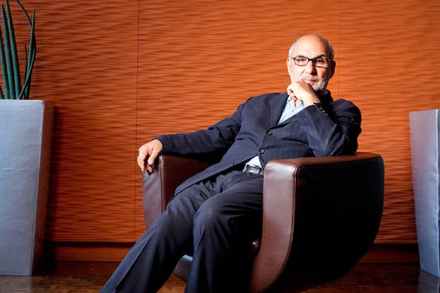
Why is Alan Yentob still in charge of a seven-figure programme budget at the BBC? It’s a question that Yentob’s friend, BBC chief Lord Hall, should have asked himself a long time ago. It should be asked this week because Yentob is entangled in an Insolvency Service investigation which may be about to come to an end. As part of its ongoing inquiry into the notorious charity Kids’ Company, which Yentob chaired for 12 years until it closed in August 2015, the Insolvency Service has reportedly offered Yentob a deal. He has apparently been asked to accept by 20 December a five-year ban from holding any company directorships. If he does so, a line will be drawn under his part in the affair as far as the Insolvency Service is concerned.

Kids Company faces the music

From our UK edition

It was surreal to sit in the Donmar Warehouse and watch Committee, a musical based on the investigation into the charity Kids Company. The first oddity was that anyone ever thought to write a musical based on the transcript of a Public Administration and Constitutional Affairs Committee. The second, that this production wouldn’t have existed if The Spectator hadn’t published an article (by me) raising questions about Kids Company’s appallingly managed finances and the behaviour of its chief executive, Camila Batmanghelidjh. It’s strange that Camila has come to this. In February 2015, it was considered sacrilege to utter a word against her.

BBC1’s Kids Company ‘expose’ was nothing of the sort

From our UK edition

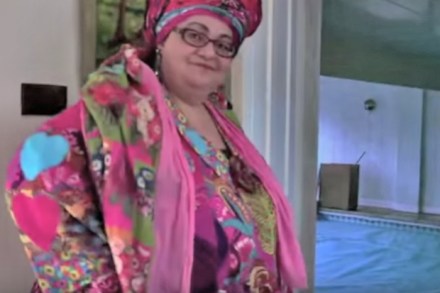
To her supporters, Camila Batmanghelidjh is a deeply caring woman whose charity Kids Company was cruelly extinguished last summer thanks to unfair press speculation about its finances which later turned into a fully-blown media witch-hunt. To those of us who know our way around the Kids Company story, Camila Batmanghelidjh is certainly deeply caring, but the person she appears to care most deeply about is herself. Exhibit A: Lynn Alleway's fly-on-the-wall film ('Camila's Kids Company: the Inside Story') broadcast on BBC1 last night. In it, Batmanghelidjh didn’t bother to mask her love for the camera.

Kids Company: How the Spectator first blew the whistle

From our UK edition

A year ago, The Spectator blew the top off the Kids Company scandal - it was to take Fleet Street months to catch up. Here's Miles Goslett's original article, revealing not just the chaos within the charity but how civil servants wanted to stop charity boss Camila Batmanghelidjh's funding but were overruled by 10 Downing Street. In 2006, when David Cameron was leader of the opposition, he made an infamous speech that is remembered as an exhortation to hug a hoodie. Feral youth, he said, should be helped rather than demonised. He was reaching towards what he hoped would be a new, ‘compassionate’ conservatism inspired in part by the charismatic social activist Camila Batmanghelidjh. She was the perfect lodestar for the young Tory leader.

The trouble with Kids Company | 29 December 2015

From our UK edition

We continue our rundown of the top 10 most-read Spectator articles of 2015: No7 is Miles Goslett’s exposé of Kids Company, published in February. As Goslett related six months later, this was the first piece to break the taboo on criticising the charity - and had it all. The questionable finances, the way civil servants were nervous about continuing funding but were overruled by No10. Only newspaper awards recognise 'scoop of the year' and we're a magazine so we don't qualify. But this, surely, was the scoop of 2015. In 2006, when David Cameron was leader of the opposition, he made an infamous speech that is remembered as an exhortation to hug a hoodie. Feral youth, he said, should be helped rather than demonised.

Alan Yentob’s ‘resignation’ only makes him less accountable

From our UK edition

The BBC’s spin doctors will be broadly happy at the coverage Alan Yentob’s 'resignation' as BBC Creative Director has generated, but licence fee payers should not be so pleased. For, on closer inspection, the whole thing is a gigantic swizz. Yentob may have relinquished his £183,000 salary, and his executive status, but it is now obvious that he will remain a very well paid fixture at the BBC for some time yet – and an even less accountable one. Firstly, it is important to note that as the Daily Telegraph reported today, by standing down from this job, Yentob escaped an internal BBC inquiry into allegations that he interfered with BBC News’s reporting of the Kids Company scandal over the summer.

David Cameron cannot escape blame for the Kids Company scandal

From our UK edition

Today's National Audit Office report into the collapse of Kids Company shines new light on the scandal. It shows that the charity received at least £46 million of public money during its 19 year existence despite repeated warnings from civil servants that funding it was unwise. The report also shows that ministers thought they knew best, and that many senior politicians ignored the concerns being raised. These MPs happily approved of the public purse being dipped into at the request of the charity's founder, Camila Batmanghelidjh, and her chairman of trustees, BBC executive Alan Yentob, while at the same time other charitable organisations were given far less. Whether the state should bankroll any charity is a moot point.

How I blew the whistle on Kids Company – and Camila Batmanghelidjh

From our UK edition

Until February 2015, when The Spectator published my article on Kids Company, not a single bad word about it or its chief executive Camila Batmanghelidjh had appeared in the mainstream media. This may seem surprising now, as the scale of the scandal surrounding the now-defunct charity unfolds, but for the best part of 20 years it was treated by journalists and politicians with a reverence which I believe it had not merited for a long time. I first began looking into the charity in 2013. What struck me was the improbable statistics repeated ad infinitum in newspapers and on news programmes - notably those about the number of children and young people it claimed to 'reach' - when these were simply hard to believe on any logical basis.

Revealed: the emails which show how Kids Company is dealing with the allegations against it

From our UK edition

The charity Kids Company is under so much pressure that some people are starting to worry about its outgoing chief executive, Camila Batmanghelidjh. Recent reports of financial mismanagement published in The Spectator and elsewhere have contributed to Batmanghelidjh being forced to quit her £90,000 post, which she has promised to vacate by October 31, but uncomfortable questions remain: last week, a sex abuse investigation into the charity was launched by police.  In the small hours of yesterday morning I was sent, anonymously, a series of emails sent from Kids Company employee accounts over the last month. Some are written by Batmanghelidjh and provide an insight into how she is dealing with the revelations which have rocked the organisation she founded in 1996.

The trouble with Kids Company

From our UK edition

In 2006, when David Cameron was leader of the opposition, he made an infamous speech that is remembered as an exhortation to hug a hoodie. Feral youth, he said, should be helped rather than demonised. He was reaching towards what he hoped would be a new, ‘compassionate’ conservatism inspired in part by the charismatic social activist Camila Batmanghelidjh. She was the perfect lodestar for the young Tory leader. She began her drop-in centre — the Kids Company — in 1996 and within a few years, was helping thousands of disadvantaged inner-city children. She’s colourful, powerful but also a former Sherborne girl with whom Cameron and other members of the establishment felt at ease. Cameron told his shadow ministers that Camila embodied the Big Society.

The millions in EU funding the BBC tried to hide

From our UK edition

Over the last three years the BBC has secretly obtained millions of pounds in grants from the European Union. Licence fee payers might assume that the Corporation would have been compelled to disclose the source of this money in its annual reports, but they bear no trace of it specifically. In the latest set of accounts, for example, these funds are simply referred to as ‘other grant income’. Instead of making an open declaration, the BBC’s successful lobbying for this money had to be prised out of it using a Freedom of Information (FoI) request lodged for The Spectator, proving that there was never any danger of the state broadcaster’s bosses volunteering it willingly.

Leveson and Jimmy Savile

From our UK edition

Last December I received a telephone call concerning Jimmy Savile’s apparent sexual abuse of underage girls in the 1970s. The details I heard were pretty chilling, but the negative reaction when I tried (unsuccessfully) to report the claims in the national press was equally troubling. There is every indication that the Leveson inquiry into press standards was to blame. My source said that a Newsnight investigation into Savile’s activities had been shelved by the BBC in mysterious circumstances and encouraged me to find out more. I learnt that Newsnight had heard that Savile and two other celebrities, both still alive, had abused many different girls on BBC premises and in the Surrey countryside, when Savile visited an all-girls approved school called Duncroft.