Culture

Culture

The good, the bad and the ugly in books, exhibitions, cinema, TV, dance, music, podcasts and theatre.

Talking down to God

Music

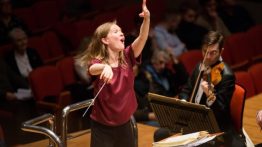
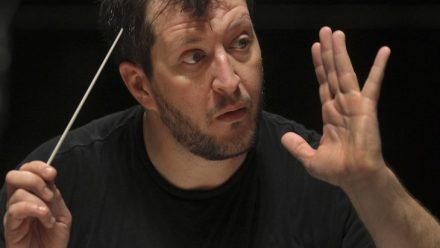
‘There is something enviable about the utter lack of inhibition with which Leonard Bernstein carries on,’ wrote the critic of the Boston Globe after the US première of Bernstein’s Third Symphony, Kaddish, in February 1964 — and looking at the forces arrayed at the Barbican, he had a point. In addition to the full LSO there was the London Symphony Chorus, a narrator, a solo soprano and the Tiffin Boys’ Choir. It barely fitted on stage. And if you thought the set-up was extravagant, a glance at Bernstein’s self-written text would probably have sent you screaming from the hall. ‘Lenny’ was classical music’s original bleeding-heart superstar: the man for whom Tom Wolfe coined the phrase ‘radical chic’.

Golden oldie

Cinema

Film Stars Don’t Die in Liverpool is plainly wonderful, and stars Annette Bening, who is plainly wonderful, as Gloria Grahame, a one-time Hollywood movie star who in later life hits on hard times — ‘a big name in black and white. Not doing too well in colour,’ comments her landlady at one point — and embarks on a romance with a young English actor who is 30 years her junior. It is based on a true memoir. It is a love story, told tenderly, bravely, smartly, movingly. And believably. Older women, it seems, can be interesting, complicated, vital, attractive and sexual. Who knew? (But don’t spread the word, or they’ll all want to be like that, and won’t take the shitty bit-parts any more.

Ill wind

More from Arts

A kindly cowboy, an East Coast bride, adultery, murder and madness. The Wind, Dorothy Scarborough’s 1925 Texas gothic novel (and Sjöström/Gish movie), offers rich pickings for dance narrative and was selected by Arthur Pita for his Covent Garden main stage debut. What could possibly go wrong? Pita has made some terrific dance dramas — notably 2011’s Metamorphosis for a treacle-glazed Edward Watson — but The Wind is a massive disappointment, looking thin and underwritten despite hefty production values. A miniature railway dollies pointlessly around the stage perimeter and the wind of the title is supplied in tedious abundance by two custom-built threshing machines (the cold front could be felt in the upper circle).

Disappearing act

Features

There are many wonderful scenes in the film version of David Mamet’s play Glengarry Glen Ross, but my favourite comes towards the end, between the broken and desperate real estate salesman Shelley ‘The Machine’ Levene, played by Jack Lemmon, and his vile manager John Williamson, played by Kevin Spacey. Levene, facing not merely the sack but probable imprisonment, is pleading for help, cringing and cowering. But he has gone to the wrong man. When he asks Williamson why he won’t help, the manager replies with a magnificent finality: ‘Because I don’t like you.’ And Spacey’s face, almost deadpan for most of the film as he suffers the abuse thrown at him by his salesmen, is now writhed in contempt.

Adult entertainment | 16 November 2017

Television

Any readers of the Sun who excitedly tuned in to Howards End on Sunday night with their pause button at the ready will, I fear, have been in for a disappointment. Before the programme went out, the paper had assured them that this new BBC1 adaptation would ‘do a Poldark’, with ‘a hot cast’ providing ‘a sexed-up remake’ of the 1992 Merchant Ivory film. (The sub-editors may have missed a trick by not headlining the piece, ‘It’s E.M. Phwoar-ster!’) In the event, what they got was a quietly thoughtful exploration of Edwardian intellectual life. The first episode, in fact, didn’t differ very much from the non-sexed-up film version — and when it did, it was generally by being even more faithful to the book.

Local heroes | 16 November 2017

Radio

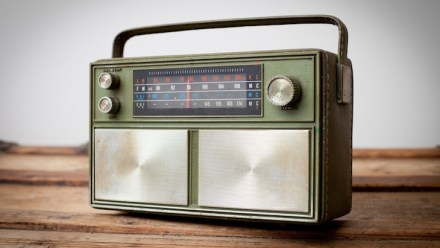
It’s 50 years since the first local radio stations were launched by the BBC in yet another instance of the corporation working hard to stay ahead of the game, on this occasion responding to the challenge of the pirate stations, whose audiences were local and known to be very loyal. Radio Leicester was the first to go on air on8 November 1967, launched by a very plummy-voiced postmaster-general as ‘the first hometown radio station in Britain’. (The BBC executive behind the idea, Frank Gillard, had spent time in America and been impressed by local radio there, wishing to replicate its homespun feel.) Others followed quickly, dependent on whether the local council was happy to provide part-funding (they are now solely funded by the BBC).

Faking it | 16 November 2017

Theatre

David Mamet’s plays are tough to pull off because his dialogue lacks the predictable shapeliness of traditional dramatic speech. He prefers the sort of meandering, oblique, backtracking and self-deluding conversation you might overhear in a hotel dining-room. Glengarry Glen Ross opens in a restaurant, where a handful of realtors are discussing the perils and joys of their craft. The scene culminates in one of the landmarks of American drama. Top salesman Ricky approaches a potential customer in disguise and delivers a sales pitch that sounds like a poetic meditation on destiny and existence. It’s impossible to say what darkness this little masterpiece emerged from but Christian Slater (Ricky) captures all of it, abruptly and shockingly, with laser-like precision.

Bring up the bodies | 9 November 2017

Arts feature

The moment you invite friends to some new ‘cutting-edge’ disability theatre or film, most swallow paroxysms of social anxiety. What if it’s dull? Am I allowed to yawn? What if I hate it? How interminably politically correct will it be? Do I want to think about ‘disability’ on a fun night out? While most objections can be overcome by a convincing performance, it is interesting to ask whether disability makes a difference to art, or does art transcend disability? If the current crop of plays and films, not to mention disability production companies, is anything to go by, the answer is yes to both, and we should want more of them.

The apple of his eye

Exhibitions

The critic and painter Adrian Stokes once remarked on how fortunate Cézanne had been to be bald, ‘considering the wonderful volume that he always achieved for the dome of his skull’. It’s a good joke, and all the better for being perfectly true — as is demonstrated by the superb sequence of self-portraits included in Cézanne Portraits at the National Portrait Gallery. These are the finest hairless craniums in the history of art. That, however, is only one of the attractions of the exhibition. This is the most impressive array of work, by one of the greatest of all painters, to be seen in London in more than 20 years. Cézanne once said, ‘I paint as I see, as I feel — and I have very strong sensations.

Hearts and minds | 9 November 2017

Music

Debussy’s Prélude à l’après-midi d’un faune begins with a sigh: a long, languorous exhalation played on the lower notes of a solo flute. The flute’s usual brightness and brilliance is gone. It’s a dusky, breathy sound, made of half-shades and velvet: the musical embodiment of luxe, calme et volupté. And it’s completely impossible to imitate on a piano. Not so much because of the tone-colour — the best pianists can create wonders — but because no piano in existence can play an unbroken melody. Wind and string players, like singers, produce and control a near-continuous stream of sound. A piano, though, is essentially a box of hammers. It hits notes, and then they decay.

Country music | 9 November 2017

Theatre

Americans may be able to draw on only 250 years of history, but they’re not shy of making a song and dance of it. In early December, Hamilton, Lin-Manuel Miranda’s $1 billion-grossing, hip-hop and show-tune extravaganza about one of the country’s founding fathers will finally open to sold-out crowds in London. It joins the Menier Chocolate Factory’s sold-out revival of Sondheim’s Assassins, the Tony Award-winning musical about the cranks and misfits who have, to paraphrase its opening number, exercised their right to follow their dreams by attempting to assassinate US presidents from Roosevelt to Reagan (but not, yet, Trump).

Ulysses on speed

Radio

It’s always odd to hear a familiar voice on a different programme, playing an alternative role. They never sound quite as comfortable behind the mike, as if they are wearing clothes that don’t quite fit. The voice has a different timbre, as it did on Sunday when Garry Richardson, who since 1981 has been keeping Today listeners updated on all the latest sports news, revealed his other passion. Since he was ten, when he was first taken to see the man from Knotty Ash at Blackpool in 1967, he’s been a fan of that extraordinarily tenacious star of the entertainment world, Ken Dodd. In Sir Ken Dodd: What a Beautiful Day!

To hell and back

Theatre

The Exorcist opened in 1973 accompanied by much hoo-ha in the press. Scenes of panic, nausea and fainting were recorded at every performance. Movie-goers showed up to witness mass hysteria rather than to enjoy a scary movie. This revival, produced by Bill Kenwright, targets the early 1970s demographic. At press night, the stalls were thronged with pensioners eager to relive a lurid evening from their adolescence. As one who dislikes shocks of any kind, I sat through this ordeal with my eyes bent towards the floor and my fingers wedged so firmly in my ears that their tips turned crimson. The show opened with a CRUMP loud enough to shake the theatre to its foundations. Everybody screamed. Then they all giggled. This pattern of shrieking followed by feathery tittering continued throughout.

May’s day

More from Arts

You may think you don’t know May Morris, daughter of William, but you’ll probably have come across her wallpaper. Her honeysuckle design was and remains a Morris & Co. bestseller, and it not only features in homes to this day, it’s been nicked by designer Jonathan Anderson for a Morris-inspired range for the very expensive fashion house Loewe. It’s all a bit dispiriting for a woman whose aesthetic sensibility, like her father’s, was bound up in her socialism. But it was embroidery that was May Morris’s art and craft and now a new exhibition at the Morris Gallery in Walthamstow lets us see it in its own right.

Netflix was wrong to fire Kevin Spacey

Being, as ever, years late to the party, my wife and I were only midway through season one of House of Cards when news emerged that star Kevin Spacey might or might not have drunkenly groped then-14-year-old actor Anthony Rapp in 1986. This presented us with a dilemma: continue to watch and marvel at Spacey’s bravura to-the-house performance, and possibly legitimise what he might have done (he now claims to be too drunk to remember) or consign the show to the e-recycle bin and watch Strictly instead? We didn’t have to think for too long. Possibly because we aren’t the parents of Anthony Rapp, and possibly because Strictly just isn’t the same without Bruce. We are now midway through season two – no spoilers, please.

The female gaze | 2 November 2017

Arts feature

Every weekday, I travel by Tube to The Spectator’s office, staring at the posters plastered all over the walls. I like looking at the plays and exhibitions that have recently opened or wondering whether that shampoo really will add more ‘oomph’ to my hair. Often there is a pretty girl on the poster. A picture of a woman can sell almost anything. I’ve rarely thought much about the individuals who produce the posters. But as a new exhibition at London’s Transport Museum called Poster Girls reveals, there is a rich history of female art running through the city’s concrete veins.

All black and white

Exhibitions

Leonardo da Vinci thought sculpting a messy business. The sculptor, he pointed out, has to bang away with a hammer, getting covered in the process with a nasty mixture of dust and sweat. In contrast the painter can sit at his easel, dressed like a gentleman, and portray the whole wide world and everything in it. (Michelangelo, not surprisingly, disagreed.) Such spats were by-products of the paragone — a sort of Punch-and-Judy debate, much enjoyed in 16th-century Italy, about which of the arts was the most powerful. Intriguingly, the National Gallery has revived the paragone in one section of its new exhibition, Monochrome.

The death of cosy Christie

More from Arts

This is not Midsomer Murders. The new film adaptation of Agatha Christie’s Murder on the Orient Express is thick with violence and sexual innuendo. It elevates Hercule Poirot, the diminutive, fastidious Belgian detective, with his egg-shaped head and pot belly, to part-time action figure, a man who chases bad guys down dizzying descents in exotic snowscapes before straightening his magnificent moustache with a twinkle in his eye. This is less cosy, golden age detective fiction than a cross between Daniel Craig’s 007 and Scandi noir. Kenneth Branagh, who stars and directs, has brought his experience playing the dejected Swedish police inspector Wallander to the fore, giving the usually reserved detective unusual passion and vulnerability.

Liam Gallagher: As You Were

More from Arts

Grade: C+ There was a certain thrill to be had from that first Oasis album, Definitely Maybe. Liam’s yob howl and Noel’s magnificent pillaging of T. Rex, the New Seekers, the Pistols, Zep and, of course, the Beatles. By the time the second one came along, you could count me out, what with the asinine, boring, big-bollocked ballads and Noel trying to get terribly meaningful — all reaching a crescendo of stupidity on the dismal Manc whine of bloody ‘Wonderwall’. Their later stuff was snidely put down as ‘Quoasis’ by their rival Damon Albarn — but chance would be a fine thing. At least Quo had a bit of a laugh. So, fast forward20 years. The fractious brothers are, as ever, estranged.

The gloves will come off

Cinema

You know where you aren’t with director Yorgos Lanthimos. The Greek allegorist creates parallel worlds which superficially resemble our own. In Dogtooth an overweening patriarch incarcerates his three adult children in a state of infantilised innocence. The Lobster punishes those unable to find a mate by transfiguring them into animals. His acerbic commentaries on flawed modernity feel like lurid horror stories the ancients forgot to write down. The Killing of a Sacred Deer invokes pagan sacrifice in its title. Iphigenia is even mentioned in dispatches — the subject of a schoolgirl essay that doubles as a mythological flare. The film opens on a close-up of open-heart surgery in which a sickly pink organ throbs garishly.

Follow the lieder

Music

If a symphony is, as Mahler famously put it, ‘like the world’, then songs and lieder are like seeing that world in Blake’s grain of sand. Their span may be short, but their emotional horizon is infinite — a lyric window on to an epic landscape. And yet there’s something about a song recital that sets up quite a different expectation. Maybe it’s the venues. Entering the Wigmore Hall or Oxford’s Holywell Music Room still feels like stepping into another, older world. Politeness, not passion, is the overriding sensation of well-heeled audiences with their well-thumbed programmes, prepared for 90 minutes of just-enough-but-not-too-much musical excitement.

Paradise lost | 2 November 2017

Television

Anybody who wants to maintain a strong and untroubled stance against mass migration to Europe should probably avoid BBC2’s Exodus: Our Journey Continues. In theory, the case for limiting the numbers may be more or less unanswerable — but this is a joltingly uncomfortable reminder of what it can mean in practice. Any viewers suspicious of the BBC’s pinko tendencies will presumably have noticed that all the refugees we’ve met so far are completely lovely. Yet, faced with Thursday’s episode, even they might have found it tricky to preserve a steely primacy of head over heart. Or not to notice that these are people very much like us — only a lot unluckier in where and when they were born.

Not with a bang but with a whimper

Theatre

Bang! A brand new theatre has opened on the South Bank managed by the two Nicks, Hytner and Starr, who ran the National for more than a decade. Located near a river crossing, their venture bears the unexciting name ‘Bridge’. If these two adopted a child, they’d call it ‘Orphanage’. Visitors approach along the Thames embankment and arrive at a soaring cliff of glass whose revolving doors usher them into a large anonymous foyer. It feels like a student union bar or a bit of an airport. Dangling from the ceiling are dozens of light bulbs, their radiance muted with tea-stained shades that cast an absolving glow over facelifts, hairpieces and liver spots.

Life after death | 2 November 2017

More from Arts

According to the accountants’ ledgers, DVDs are dying. Sales of those shiny discs, along with their shinier sibling the Blu-ray, amounted to £894 million last year, which is almost a fifth lower than in 2015 and less than half of what was achieved a decade ago. And last week we finally said goodbye to the postal DVD service Lovefilm, too. The explanation for this decline is the explanation for many modern declines: digital is taking over. Nowadays, downloads and streaming services make more money than the old physical formats. But accountants don’t know everything. From a different perspective, through the bloodshot eyes of a cinephile, DVDs are thriving — and they’re doing better in Britain than in most other countries.