Culture

Culture

The good, the bad and the ugly in books, exhibitions, cinema, TV, dance, music, podcasts and theatre.

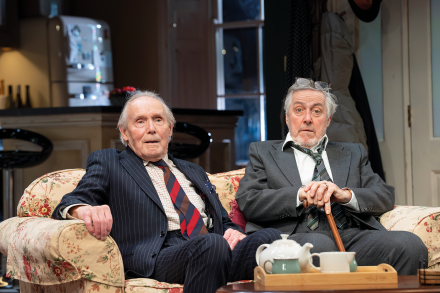
Every line in the new Alan Partridge is perfect

Television

By now, viewers of TV thrillers are no strangers to a baffling prologue – but this week brought a particularly extreme example. Nine Bodies in a Mexican Morgue opened with shots of a desert, a cactus, an animal skull nailed to a cross and a moustachioed man driving a battered pick-up truck with a Virgin Mary on the dashboard. So we were definitely in Mexico. For a while, however, that was about all that was clear, as the words ‘Day Nine’ flashed up and the truck’s unidentified female passenger spied on a dilapidated military base through binoculars.

Like Gabor Mate set to club beats: Lady Gaga, at the O2, reviewed

Pop

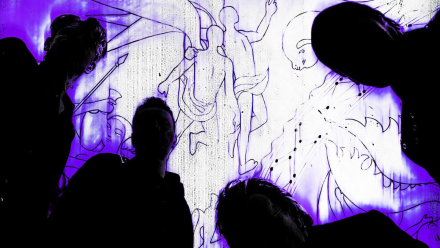
Lady Gaga’s show was to begin at 7.30  prompt, we were told. No opening act. And at 7.30 something did happen: the big screen over the stage started showing a film of Ms Gaga, clad in scarlet finery, writing on a scroll with a peacock-feather quill, while the PA played opera’s greatest hits. For more than an hour the film ran, an impassive Gaga doing nothing but writing. An hour. It was nearly as dull as a Paul Thomas Anderson film, and it’s a miracle it took 45 minutes for the handclaps to start ringing around the arena. Was she about to do a Madonna – who had to keep cutting short her O2 shows because she was about to break their curfew? In the end, no. Gaga just managed to end in time, but it was tight. And she won back her crowd.

Was Serbia the real birthplace of the Renaissance?

Arts feature

Where did the Renaissance begin? There has been an official answer to that question since 1550, the date that Giorgio Vasari’s Lives of the Artists was first published. According to this version, it all began in Florence and the first painter in the long line that ended with Leonardo, Raphael and Michelangelo was named Cimabue. But here’s another suggestion: you could just as well try looking in the rolling hills of Serbia. My wife and I went travelling there earlier this year. For a couple of nights we stayed in the town of Novi Pazar in the south-east of the country. From the religious point of view this town is a remnant of the Ottoman Empire; according to the census of 2022, nearly 80 per cent of the population is Muslim (with just 71 atheists).

Mr Bates this isn’t: The Hack reviewed

Television

As we know, when terrestrial television has a big new hit these days, its response – once it’s got over the surprise – is to serve up a variation on the same formula. In the case of The Hack, the hit that inspired it is clearly Mr Bates vs the Post Office, as another real-life plucky underdog takes on a shadowy, powerful cabal – this time over phone-hacking – and struggles to get the story heard. In the first episode, the formula remained strong, but the variation bit fell somewhere between the unnecessary and the badly misguided. The episode opened with a voice-over urging us to imagine a country where ‘people believe they are living in a democracy’, when in fact they’re ‘being abused by a treacherous combination of press, police and politicians’.

Northern Ireland Opera have a hit: Follies reviewed

Opera

Never judge a musical by its score alone. Even more than with opera, the music is only ever half the story and if you judge a classic show from the cast recording, you might get a shock when you see it staged. Leonard Bernstein’s Candide is generally reckoned to be one of the fizziest, funniest Broadway scores ever composed. But in the theatre, the storyline is so intractable that the combined efforts of Richard Wilbur, Lillian Hellman, Stephen Sondheim and even (it’s said) Dorothy Parker haven’t succeeded in establishing a definitive, stageable version.  No such problem with Sondheim’s own Follies: you’d be hard put to find a smarter piece of stagecraft. But even there, what you hear is not at all what you get.

Magnificent: V&A’s Marie Antoinette Style reviewed

Exhibitions

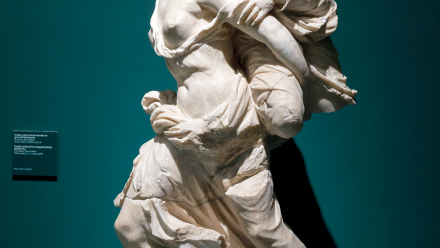
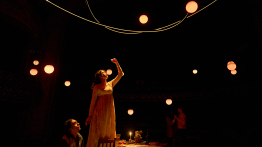
This exhibition will be busy. You’ll shuffle behind fellow pilgrims. But it’ll be worthwhile. It’s a tour de force that tells the story of Marie Antoinette’s 17 years on the throne with detail, focus and flair. There are 34 items here that she owned personally – opulent, carefree objects that resonate with impending disaster. These precious items need protecting from light, and in the first room curator Sarah Grant cleverly runs with this, evoking the candlelit ambience of a Versailles ball by hanging silver baubles from the ceiling and covering the walls with smoked mirrors. Here we have a taste of Marie Antoinette’s wardrobe – its annual budget peaking at £1.

An amazing piece of entertainment: Reunion, at the Kiln Theatre, reviewed

Theatre

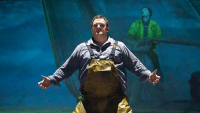
What a coincidence. Two plays running in London have the same storyline: an obsessed lover bursts into a family gathering to reclaim the woman who spurned him.The Lady from the Sea, written and directed by Simon Stone, is based on a late drama by Ibsen. Alicia Vikander stars as the neurotic Ellida, who feels repelled by her charming, erudite, handsome and successful husband, Edward. Ellida can’t shake off the memory of a fat, bearded eco-warrior, Finn, who raped her when she was 15. And when Finn shows up at her beautiful home in Cumbria, she has to choose between Edward (Andrew Lincoln) and her rapist (Brendan Cowell). It’s Paul Newman vs Shrek. Naturally Ellida chooses Shrek. After all, this is Ibsen. Poor Edward has other problems.

Michael Keegan-Dolan’s How to be a Dancer is worthy of Flann O’Brien

Dance

Michael Keegan-Dolan’s show doesn’t even pretend to live up to the arresting proposition in its title – anyone hoping to glean a few useful tips on becoming a dancer would come away bitterly disappointed. What the Irish choreographer offers instead is a witty and touching exercise in autobiography in which he is ably abetted and illustrated by his resourceful wife, Rachel Poirier.  Born into a large and unlettered working-class family in north Dublin, Keegan-Dolan grew up jiving to Talking Heads and emulating Gene Kelly. Pigeon toes hobbled his four gruelling years in ballet training and as a performer he didn’t make it beyond the chorus line in West End musicals. He switched to choreography, mainly for opera, but soon jumped off that unrewarding treadmill.

Emma Thompson is surprisingly convincing as the star of this action thriller

Cinema

Dead of Winter is an action thriller starring Emma Thompson and you have to hand it to her. Has such a thoroughly ordinary, sixty-something-year-old woman (no superpowers) ever carried an action thriller before? Not that I can think of. That’s not to say it’s devoid of clichés. I think we all know that it’s best to steer clear of cabins miles from anywhere. But it’s well made, tense, fun, and if you’ve longed to see an ordinary, sixty-something-year-old woman brandish a gun or put a claw hammer through someone’s foot you will not be disappointed. Directed by Brian Kirk, from a script by Nicholas Jacobson-Larson and Dalton Leeb, it’s set within the vast, wintery landscape of Minnesota (though actually filmed in Finland).

Uplift from an odd couple: James Yorkston & Nina Persson reviewed

Pop

Let’s hear it for the odd couples of popular music: Bowie and Bing. Shaggy and Sting. Metallica and Lou Reed. Nick Cave and Kylie. U2 and Pavarotti. The ongoing collaboration between James Yorkston and Nina Persson isn’t quite so wildly unlikely as any of these but still seems intrinsically counter-intuitive; until, that is, the realisation dawns that each has a stakehold in the other’s natural territory. Yorkston is a fifty-something Scottish folkie with the honed melodic instincts of a pop aficionada. Persson is a former rock star from Sweden whose voice has the controlled command found in the best traditional singers. Which perhaps explains why a pairing that makes little sense on paper makes perfectly imperfect sense in the flesh.

Is Grey Gardens the greatest documentary ever made?

Arts feature

A middle-aged woman wearing what looks like Princess Diana’s infamous ‘revenge dress’ and a balaclava from an IRA funeral approaches the hole in the floor. The raccoon that lives there, clearly used to her presence, looks up expectantly. Sure enough, the woman empties a bag of dry food into the hole. The scene is framed by the intricate fluted wainscotting of the room’s door frame. I am not exaggerating when I say I believe it to be one of the great scenes of modern cinema. The vignette comes from Grey Gardens, the Maysles brothers’ cult documentary, which turns 50 this autumn. Like many great documentaries – from Tiger King to  The Imposter to The Queen of Versailles – the film’s purpose changed over the course of filming.

Sondheim understood Seurat better than the National Gallery

Exhibitions

In Sunday in the Park with George, Stephen Sondheim catches something of what makes Georges Seurat so brilliant – not just his technical flair, but his engagement with ordinary life. Sondheim has Seurat sing, or rather woof, a little duet between two dogs meeting on the island of La Grande Jatte; later, Sondheim gives Seurat a pointillist melody as he works, crotchet-dabs of blue, blue, blue, red, red… Seurat’s muse, meanwhile, is called Dot. Seeing the National Gallery’s somewhat overloaded presentation made me long for the light touch of Sondheim.

The makers of Doc don’t seem to trust the show

Television

The drama series Doc began with the most literal of bangs. While the screen remained black, the sound-effects team knocked themselves out by creating a spectacular crashing noise. When the lights came on, we saw a smashed-up car containing ‘a female, unresponsive’. By the time she did respond – one major brain operation and seven seconds of the show later – it was apparent to the doctors that there was something high-concept wrong with her. As her colleagues at Minneapolis’s Westside hospital, they knew she was right to say her name was Amy Larsen, but her answers about her children’s ages, her current job status and the name of the president were all eight years out of date. Amy had forgotten everything between 2016 and the present day.

R.S. Thomas – terrific poet, terrible husband

Radio

Love’s Moment is one of those quiet radio programmes you’re unlikely to have read about. It aired without fanfare at 4 p.m. on Tuesday, an understated yet engrossing one-off, half-hour documentary. It can now be found in the recesses of BBC iPlayer. It opened with a compelling question: ‘What happens when two artists fall in love and marry, and as one’s reputation soars, the other’s is slowly forgotten?’ Narrator Gwyneth Lewis, former National Poet of Wales, might have been alluding to any artistic couple in history, but her subjects were R.S. Thomas and Mildred Eldridge. Thomas was one of the most popular poets in Wales in the last century. He was an Anglican priest, a fervent Welsh nationalist and something of a misanthrope.

Suede turn their fine new record to mush at the Southbank

Pop

I think a lot about Wishbone Ash. A disproportionate amount. Partly because I have had to listen to them for around ten hours while researching a book. Partly because when I was a kid, I always found it curious that Wishbone Ash were advertised in the weekly music press but never reviewed. Back then, broadsheets barely covered rock, so there was no room for their gigs and albums there. But they were never on Top of the Pops or The Tube or even Whistle Test  either. Perhaps Tommy Vance occasionally gave them a spin on the Friday Rock Show, but other than that they were not on Radio 1. They existed entirely outside of what I perceived of as the world of rock. At that point Wishbone Ash were 15 years on from their first album. Suede are 32 years on from theirs.

Anna Netrebko’s still got it

Opera

In the opera world, you’re never far from a Tosca and last week we had two of them, both brand new. That’s healthy: any opera company with a functioning survival instinct is wise to maintain a stock of solid, revivable Puccini favourites. Critics yawn, academics snipe, but Puccini prevails because the simple fact is that Tosca is a straight-up banger. I took a Tosca virgin to the first night in Cardiff. She hadn’t read a synopsis or done any of those homeworky things that novice opera-goers are told they should do, but which they really, really shouldn’t need to. ‘This is bloody marvellous, isn’t it?’ was her reaction after Act Two. Welsh National Opera has acquired the American Psycho-ish updating that Edward Dick originally directed in 2018 for Opera North.

A Big Bold Beautiful Journey is anything but

Cinema

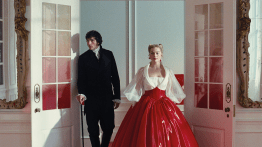
A Big Bold Beautiful Journey is, I have to tell you, anything but. I should have trusted the trailer. When I caught this, my first thought was ‘heck, that looks bad’. Stupidly, I was not put off. The film is written by Seth Reiss (co-writer of The Menu) and directed by Kogonada (if you haven’t seen After Yang, more fool you). And it stars Margot Robbie and Colin Farrell. It can’t be that bad, surely? Reader, I swear to you, it is. The direction is prosaic and sentimental while Robbie and Farrell have zero chemistry, not a squeak It’s a romantic fantasy about two people who have resolved to stay single but whose lives are changed via a magical GPS system – and if I’ve already lost you, fair play.

No, Big Thief’s Double Infinity is not the greatest folk album ever

The Listener

Grade: B- ‘I feel within myself a constant dialogue between my masculinity, my femininity and the part of me that is neither of those things. I’m just trying to talk about it because I feel like I’m something that is very ambiguous,’ explains lead singer and songwriter Adrianne Lenker. This may explain why the first song on the new album from this New York indie-ish folk-rock band is called ‘Incomprehensible’, a title which could easily be appended to a good 60 per cent of the lyrics on an album which, given its heralding as the greatest folk album ever, is something of a let-down. It ain’t quite John Prine, let alone Woody Guthrie. Hell, it’s not even Conor Oberst.

The very essence of jazz: Mingus In Argentina reviewed

Grade: B Charles Mingus arrived in Buenos Aires at the start of his 1977 Argentinian tour with aching joints, an ominous first sign of the muscle-wasting Lou Gehrig’s disease that would claim his life two years later. Musically, he was at a musical crossroads too. His record label, Atlantic, had insisted on adding electric guitarists John Scofield and Larry Coryell – associated with lucrative jazz-rock fusion – to his latest album Cumbia & Jazz Fusion, while his once stable touring quintet had become more of a revolving door. Jazz has often been written up as a sequence of landmark recordings and concerts captured at prestigious venues, but the value of Mingus In Argentina is precisely that it’s neither.

Lower your expectations for Spinal Tap II

Cinema

This Is Spinal Tap is now such a deserved comedy behemoth that it’s easy to forget how gradual its ascent to generally agreed greatness was. Only over the years did so many lines and scenes from a low-key 1984 mockumentary about a heavy-rock band (amps that ‘go to 11’, a tiny Stonehenge, a classically inspired piece called ‘Lick My Love Pump’) become part of our lives. Spinal Tap II: The End Continues, by contrast, comes amid a loud fanfare – which may be part of the problem, because the result certainly doesn’t live up to expectations that are inevitably sky-high. Then again, the sad truth is that it mightn’t have lived up to lower ones either.

Why are there so few decent French symphonies?

The Listener

Grade: B Here’s a blind-listening game for you: spot the difference between proficiency and genius. Kazuki Yamada and his Monte-Carlo orchestra have recorded three first symphonies by three 19th-century French composers. With a few barnstorming exceptions (I’m looking at you, Berlioz), the French never really got the hang of the romantic symphony. Berlioz recounts with horror how Parisian editors picked through the scores of Beethoven’s symphonies, meticulously correcting Big Ludwig’s supposed errors.  The kindest thing to say about the first symphonies of Gounod and Saint-Saëns is that they sound like Beethoven with the inspiration snipped out. Bright, polite and completely harmless, they’re both blown out of the water by the 17-year-old Bizet’s glorious Symphony in C.

Shallow and silly: Born With Teeth, at Wyndham’s Theatre, reviewed

Theatre

Born With Teeth is a camp two-hander starring a pair of TV luminaries, Ncuti Gatwa and Edward Bluemel, as Marlowe and Shakespeare. The year is 1591 and the great dramatists are holed up in a tavern working on an early draft of Henry VI (Part 3). Not much writing gets done. It’s all rhetoric and bombast. Marlowe is a bullying egomaniac who boasts of his ‘throbbing quill’ and parades a peacock’s feather which he strokes lasciviously. Both playwrights are gay, of course, and they live in a world that views heterosexual couplings as a mystifying aberration. Marlowe prances about on the table and re-enacts his conquests of grateful gay aristocrats. He peels off his undershirt and flings himself at Shakespeare who responds with fake reluctance.

Both thin and overblown: Royal Ballet’s A Single Man reviewed

Dance

A common flaw in narrative ballet today is the attempt to tell stories that are too complex and ramified for the vocabulary of dance to convey. With Jonathan Watkins’s adaptation of Christopher Isherwood’s slim novella A Single Man, the flaw is the opposite. George, a middle-aged prof, is traumatised and in mourning for his recently killed lover Jim. The consolations of ordinary life fail, but he feels the twinge of desire returning for one of his students. After they spend an erotically charged night together, he can move on. There’s just not enough in this fable to sustain 100 minutes of dance drama. To fill this scenario out, Watkins introduces the ghost of Jim and a spectral corps de ballet, who haunt and mirror George’s grief and anxieties.

The problem with Chappell Roan

Pop

There is a downside to being fast-tracked into the position of this season’s newest pop sensation, and it became more and more obvious the longer Chappell Roan’s self-proclaimed ‘biggest ever show’ went on. A freshly risen pop star promoting their debut album should, by law, be performing a 40-minute hit-and-run set in a sweaty club, showcasing the absolute cream of their catalogue. Bang, bang, bang. Over and out. But the fast-track these days moves at positively breakneck speed. Barely a year after her first hit, Roan found herself playing to an audience of some 100,000 fans, convening over two nights on an ugly plot of land adjacent to an airport as part of the Edinburgh Summer Sessions series, whose fervour demanded the full event experience.

Britain’s loveliest, most thoughtful festival

Pop

The last weekend of August is my favourite of the year. That’s when I pootle down to Cranborne Chase to the loveliest, most thoughtful festival in the UK. End of the Road is a festival for those who look at TV coverage of Glastonbury and see only the size and the heaving crowds and come out in a cold sweat. It’s lovely because it’s small – around 15,000 people. You can walk from the furthest campsite to the furthest part of the festival area in 25 minutes or so. If you’re not enjoying what you’re watching, you’ll be able to find something else within five minutes’ walk, via an array of bars without punishing queues.

What a joy to welcome back the Metal Gear series

More from Arts

Grade: A As gamers of my generation who grew up on the Metal Gear series will know, its creator Hideo Kojima is a got-dang genius. The attention to detail and love and inventiveness he gave to 1998’s Metal Gear Solid and its sequels was second to none. There were quirks (smoking was good for you); there was devilment (to beat the Mantis fight you had to use the other controller); and there were silly names (Revolver Ocelot, anyone?). So it’s with great joy that – amid a rash of rereleases and remasters and reboots aimed squarely at nostalgic middle-aged gamers – we see this, a new-generation redo of the third game in the series.