Culture

Culture

The good, the bad and the ugly in books, exhibitions, cinema, TV, dance, music, podcasts and theatre.

In defence of Katie Mitchell

Opera

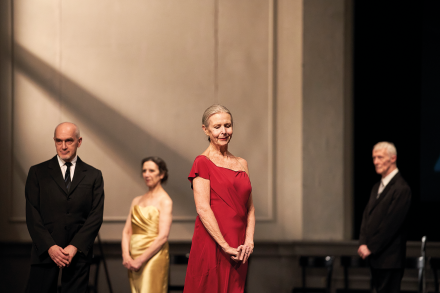
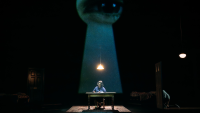
Janacek’s The Makropulos Case is a weird and very wonderful opera, but its basic plot isn’t hard to follow. Still, it seems to send directors into a tailspin. One recent production (since revised) had a cast member break character and pull out a flipchart to recap the story so far. Katie Mitchell’s new staging for the Royal Opera takes the more familiar route of updating the action to the present, and it’s always fascinating to see what opera directors think we’ll find relatable. Luxury hotels, recreational heroin use, Tinder hookups with locally sourced hotties: no, me neither. How the other half live, eh? In short, it’s a bit like Mitchell’s 2022 re-imagining of Handel’s Theodora.

Bleak but gripping: Channel 4’s Trespasses reviewed

Television

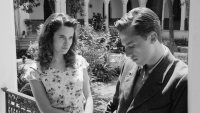
Yeats famously summarised Ireland in the four words, ‘Great hatred, little room’. But, as Louise Kennedy’s 2022 debut novel Trespasses showed, in 1970s Northern Ireland the hatred had grown even greater and the room even littler. Channel 4’s faithful adaptation began – as it would continue over its four parts this week – with the suffocating omnipresence of sectarianism. As 24-year-old Cushla (Lola Petticrew) drove through her small town, everything she saw screamed Catholicism or Protestantism: the graffiti, the flags, the ash on children’s foreheads at the start of Lent. By night, Cushla worked in a bar where the punters were either nervously or aggressively aware of each other’s religion.

Mrs Göring is far too sympathetic: Nuremberg reviewed

Cinema

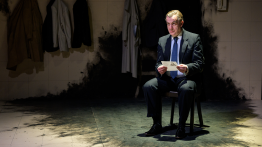
Nuremberg is one of those films that falls short on everything it wants to be and everything it could be. It’s a historical drama, set just before the trials, where an American psychiatrist (Rami Malek) is charged with assessing whether Hermann Göring (Russell Crowe), Hitler’s second in command, is fit to stand trial and to ascertain what his defence might be. This should be electric and terrifying and take us inside the Nazi mind. In other words, I had expected a tense two-hander. But it’s serviceable rather than inspired, plodding rather than tense, its running time (two and a half hours) trying. (Keep a Red Bull to hand.) It also takes some horrible missteps. Mrs Göring, sympathetic? Please.

Was Queen Victoria’s doctor the first psychoanalyst?

Radio

Queen Victoria began to experience dark visions after giving birth to her second child. Concerned that she might have inherited the madness of her grandfather, George III, Prince Albert summoned her doctor. Robert Ferguson was not the obvious man for this scenario – he was an obstetrician – but the doughty queen had heard that he ‘paid much attention to mental disease’, and willingly consulted him. It wasn’t until 2009 that the precise nature of Victoria’s ‘mental disease’ came to light. Dr Ferguson’s diaries, formerly kept in private hands, came up for auction that year and entered the collection of the Royal College of Physicians. Their contents made for sad and startling reading.

The rise of psychedelia

Pop

On YouTube – and I urge you to look it up – there is a magnificent piece of footage from German TV, in which big band leader James Last leads his orchestra into a medley of hard rock hits, opening with Hawkwind’s deathless space-rock drone ‘Silver Machine’. And damn it if they don’t nail it. The members of the band with electric instruments play it just as Hawkwind did: the whooshing synth, the thudding bass, the fuzzing guitar. But instead of Lemmy growling out the topline melody, there is a huge rush of brass from the band, the brightness cutting unexpectedly through the murk. It is, unironically, brilliant. I have no desire to investigate much else of Last’s colossal oeuvre, but I can watch those few minutes over and over again.

This Othello is almost flawless

Theatre

Othello directed by Tom Morris opens with a stately display of scarlet costumes and gilded doorways arranged against a backdrop of black nothingness. This is Venice at night with no hint of sea or sunshine. Crimson-robed senators gather to discuss Othello’s alleged abduction of Brabantio’s daughter. And here he comes, David Harewood as the Moor, wearing a gauche two-tone suit like a tasteless guest at a wedding. The scene is stiff, arid and over-ornate but the show opens up when the location shifts to Cyprus. Warmth and light fill the stage and the costumes improve. Othello and his men wear creamy white battle fatigues that look stylishly and subtly masculine.

Del Toro’s Frankenstein offers nothing new

Film

Guillermo del Toro’s Frankenstein stars Oscar Isaac (Baron Victor Frankenstein) and Jacob Elordi (‘the creature’) and retells the basics of Mary Shelley’s story – man creates monster, man rejects monster, monster goes off on one – with high-camp sumptuousness. Del Toro’s spin is to include a redemptive arc, plus he throws in some invented characters. ‘The creature’, meanwhile, is portrayed with great sympathy, as a soulful, mistreated innocent. In other words, there’s no Boris Karloff lumbering around in that blazer a size too small with a bolt through the neck. It opens with a Danish expedition-ship stuck in the Arctic ice and the crew rescuing an injured Victor.

Violin concertos from two Broadway legends

The Listener

Grade: B+ The 20th century, eh? What a lark that was. Vladimir Dukelsky studied in Kiev under Glière and looked set to be one of the smarter Russian composers of his generation. He even wrote a ballet for Diaghilev. Then communism happened and Dukelsky ended up in the USA where to the bemusement of his friend Prokofiev he reinvented himself as Vernon Duke, Broadway songsmith. ‘Autumn in New York’ and ‘Taking a Chance on Love’ are both by Duke; classic Americana by way of Tsarist Ukraine.  Duke’s Violin Concerto (1943) is recorded here alongside the 1941 concerto by Robert Russell Bennett – better known as the king of Broadway orchestrators; the man who clothed Oklahoma! and My Fair Lady in silken strings.

One of the best plays about the 1980s ever staged

Theatre

Alan Hollinghurst’s The Line of Beauty has been turned into a stage show directed by Michael Grandage. We’re in the early 1980s and Nick has just left Oxford with a literature degree. He lodges with his wealthy friend, Toby Fedden, in their family home and he offers to keep an eye on Toby’s troubled sister, Cat, who suffers from depression. Despite her disorder, Cat is a rebellious type who quizzes Nick about the intimate details of his casual flings with men. Her father, Gerald, wins a safe Tory seat and persuades Mrs Thatcher to attend a ball at their mansion in the country. The prime minister’s arrival throws the Feddens into a panic but Nick saves the day by smoothly asking Mrs Thatcher for a dance. ‘Do you know,’ she says, ‘I would like that very much.

What a joy La Fille mal gardée is

Dance

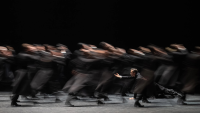
The winter nights may be drawing in and everyone is down with stinking colds as the civilised world inexorably disintegrates, but in La Fille mal gardée, it’s sunlit springtime and young love is busting out all over. Frederick Ashton’s bucolic masterpiece, revived by the Royal Ballet, manages to be both child-like in its innocence and wickedly sophisticated in what it demands of the dancers – it looks so artless, so easy, and it just isn’t. Of Ashton’s supreme genius in the devising of it all there can be no doubt, but John Lanchbery and Osbert Lancaster deserve credit too – Lanchbery’s pasticcio score is a chocolate box filled with toe-tapping tunes, and Lancaster’s affectionately witty designs have a perfectly judged lightness of touch.

Film and TV are run by satanists

Television

I once came up with a brilliant idea for a children’s Sunday-evening TV series. It would follow the adventures of young Jesus in Britain, circa AD 16, and his rich, tin-trading great uncle Joseph of Arimathea. There’d be dragons and giants and lots demonic figures, all trying to kill the boy Messiah before He achieved his true purpose. And young Jesus would continually be constrained from using any of His real powers because it was all a secret and His time had not yet come. If you’re clever, you can probably guess the title. But it’s never going to get made because a) I haven’t written it and b) the film and TV worlds are run by satanists. Not literal satanists, perhaps. Well, not all of them.

The Two Roberts drank, danced, fought – but how good was their art?

Exhibitions

The Two Roberts, Robert MacBryde (1913-66) and Robert Colquhoun (1914-62), are figures of a lost British bohemia. Both born in Ayrshire, they met on their first day at the Glasgow School of Art, becoming lifelong partners and painters. Well-connected in louche literary London, their conversational barbs were recorded by Julian Maclaren-Ross, their jig-dancing antics noted by Joan Wyndham, their drunken fights observed by Anthony Cronin – so that one sometimes forgets what sort of art they made. This show, staged in a former municipal building in Lewes, is a reminder. The work is haunted, unbeautiful British neo-romanticism, second cousin to Piper and Sutherland. They established this angsty, angular modernist style in the 1940s.

Lice combs, vaginal syringes and cesspits: at home in 17th century Holland

Exhibitions

The room is dark, the lighting deliberately low. At its centre stands a solitary object: a yellow and green earthenware vessel decorated with biblical symbolism. It’s a fireguard – or ‘curfew’ – used to keep households safe as peat fire embers smouldered through the night. Around it is a mocked-up fireplace, conjuring up that liminal moment when everyone is still asleep and the day has yet to stir. Ths scene is set, the world outside silenced. This is how Amsterdam’s Rijksmuseum has chosen to answer one of its most frequently asked questions: what was daily life really like?

The melancholy genius of Joseph Wright of Derby

Arts feature

If you lived in the 1760s and were affluent enough – and curious enough – science could be a family affair. The instrument maker Benjamin Martin actually marketed scientific equipment for amateurs, complete with an instruction manual listing simple, edifying experiments for home enjoyment. And so in 1768, in ‘An Experiment on a Bird in the Air Pump’, Joseph Wright (1734-97) painted a group of family and friends attempting Experiment 42 in Martin’s manual. You’re sure to have seen it: a darkened room with a white bird wilting in a glass bulb while the faces of the participants – a magus-like scientist, a fashionable couple, a frightened little girl burying her face in her dad’s coat – are half-illumined in a pure, almost supernatural light.

Remembering The Spectator’s chief art critic Laura Gascoigne (1950-2025)

Readers of this journal will be shocked at the death of Laura Gascoigne, the brilliant chief art critic at 22 Old Queen Street for five years (2020-24), in succession to Martin Gayford. She contributed over 200 articles to The Spectator between 2001 and 2024 that would well deserve being reprinted in a compendium of art criticism. She wrote widely, with care and discrimination, for Apollo, the Tablet, and the Daily Telegraph among other papers. First and foremost, she regarded herself as a writer who loved stories and loved the telling of them, but who also happened to know a lot about art.

Laura Gascoigne in 1967. Image: Laura Gascoigne

There is little sadder than the death of a language

Arts feature

The last Yana-speaker in the world died in 1916. When Ishi was born, the Yana were still a small but healthy collection of tribes ranging the Sierra Nevada mountains of California, where they lived off what they could hunt and the salmon they caught in the rivers. But gold had been discovered in California and every year tens of thousands of settlers were arriving to stake out a claim. When Ishi was four years old, there was a massacre of Yana people near what’s now Mill Creek; Ishi’s father was one of the people killed. The last few survivors disappeared into the hills. The white settlers never encountered them again; as far as they knew the Yana had been wiped out.

A cracking little 1967 opera that we ought to see more often

Opera

Ravel’s L’heure espagnole is set in a clockmaker’s shop and the first thing you hear is ticking and chiming. It’s not just a sound effect; with Ravel, it never is. He was an inventor’s son, half-Swiss, half-Basque, and timepieces, toys and Dresden figurines were in his soul. For Ravel, they seem to have possessed souls in their own right. ‘Does it not occur to people that one may be artificial by nature?’ he remarked, and few artists have shown such tenderness towards these small, lovingly made things that strive so tirelessly, and so hopelessly, to be alive. So that was something to think about, as Alexandra Cravero conducted the opening bars of this new production from Scottish Opera.

Unesco are idiots

Exhibitions

Of all the moronic decisions made by cultural organisations over the past 50 years, probably the most insulting and retrograde is the decision, in 2021, by Unesco to strip Liverpool of its world heritage status. Unesco said the development of the docks amounted to an ‘irreversible loss’. The regeneration of the waterfront, including the building of Everton’s new £500 million stadium, was blamed for destroying Liverpool’s ‘outstanding universal value’.  I walked up Liverpool’s Regent Road for half an hour to see for myself. Doing so took me through one of the most derelict wards in the country, the old docklands. I didn’t pass another human being for a good 20 minutes, only cars screaming. There was some majesty in the buildings. The Tobacco Warehouse is beautiful.

Peak wackiness: Lanthimos’s Bugonia reviewed 

Cinema

Bugonia is the latest film from Yorgos Lanthimos (The Favourite, The Lobster, Poor Things) and it’s about a conspiracy theorist who kidnaps a pharmaceutical boss. It’s extremely wacky – possibly in a good way, still not sure. You certainly get value for money; it smashes together several genres (absurdist comedy, sci-fi, thriller, body horror) and takes a swipe at everything from capitalism and conglomerates to echo chambers and internet rabbit holes. But whether it adds up to much or has anything to say, also still not sure. It has a script by Will Tracy (Succession, The Menu) and is a remake of the 2003 Korean cult favourite Save The Green Planet!.

Let’s face it, Sleeping Beauty is a bit of a bore

Dance

Let’s face it, The Sleeping Beauty runs the high risk of being a bit of a bore. A wonderfully inventive score by Tchaikovsky fires it up of course, but precious little drama emerges after nasty Carabosse gatecrashes the royal christening, and there’s too much imperial parading and courtly kowtowing throughout. Connoisseurs may relish what survives of Petipa’s choreography as a lexicon of academic classicism, but it has to be magnificently danced if it is to be animated. And it almost never is. English National Ballet has revived Kenneth MacMillan’s production, originally staged by American Ballet Theater in 1987. On the first night of the current run, the lighting was prosaic and the puff-of-smoke and dry-ice effects were laughably feeble.

The joy of Mortimer and Whitehouse: Gone Fishing

Television

If you didn’t already know that Down Cemetery Road was based on a novel Mick Herron wrote before the Slough House series – later adapted into TV’s Slow Horses – it mightn’t be too difficult to guess. After all, main character Zoë Boehm (Emma Thompson, no less) is a cynical sixty-something with a dodgy hygiene regime, who works in a ferociously shabby office and communicates mainly through the medium of the heartless yet undeniably funny wisecrack – but who nonetheless shouldn’t be underestimated by the arse-covering intelligence services she’s up against. She is, in other words, a female version of Slow Horses’ Jackson Lamb (also played by an Oscar-winning Brit).

No band should play Ally Pally

Pop

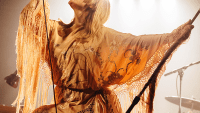
The last time Gillian Welch and David Rawlings played in London it was a different world: the world of David Cameron and Barack Obama and a Manchester United at the top of the Premier League. Welch and Rawlings have changed, too: Welch is silver rather than red, and Rawlings as grizzled as a bear. Welch was in brown floor-length dress and Rawlings in suede jacket and cowboy hat. With a rather younger upright-bass-player, Paul Kowert, the trio looked like farmers trying to save their land from The Man in some Taylor Sheridan TV series. And then they started singing. Welch and Rawlings have released records under their own names and as a pairing.

Perfection: Hampstead Theatre’s The Assembled Parties reviewed

Theatre

The Assembled Parties, by Richard Greenberg, is a rich, warm family comedy that received three Tony nominations in 2013 following its New York première. Hampstead has taken a slight risk with this revival. The cryptic title doesn’t suggest an easygoing drama full of excellent jokes. The Yiddish slang may be unfamiliar to English ears, and the social pedigree of the family needs explanation. These are wealthy New York Jews living in a 14-room apartment which they rent but don’t own, so their fortune is insecurely anchored. And the action starts in 1980 and fast-forwards to 2000 so it feels like a period piece aimed at the over-sixties. Those drawbacks aside, the show is a sensation.

The triumph of classical architecture

Arts feature

It is very hard to imagine the University of Oxford ever constructing a modernist building again. This is the significance of the new Schwarzman Centre for the Humanities. In its sheer scale, in its prominence both within the city centre and within the university – the first multi-department, purpose-built structure to open in its history – it is the most important building to be erected in Oxford in half a century and an endstop to an architectural era. One can imagine that its use of a restrained classicism won’t just influence the architectural aesthetics of Oxford but also of other universities within historical cities, both in the UK and internationally. Its impact is all the more profound given its radical – in Oxford terms – proposition.

The best artist alive? Probably

Exhibitions

Taking place every October in Regent’s Park, the Frieze fair is probably the biggest event in London’s art calendar. It is also, as a spectacle, by far the least enjoyable. With works crammed into cubicle-sized booths, and punters battling a crossfire of air kisses and the palpable stress ricocheting around the flimsy partitions, I struggle to think of a worse context in which to look at art of any stripe. Still, it always used to be an occasion to take the pulse of the contemporary art world, to pick out the visual signatures of the reigning avant-garde tendency and clock what Jeremy Deller was doing with his facial hair at any given moment. This year’s iteration proposed no such insights.

Why was the 19th century so full of bigots and weirdos? 

Theatre

Da Vinci’s Laundry is based on an art world rumour. In 2017, Leonardo’s ‘Salvator Mundi’ sold at Christie’s for $450 million but some experts claimed that the attribution was inaccurate. Could the world’s costliest artwork be a fake? Writer, Keelan Kember, considers the provenance of a fictional Leonardo owned by a thuggish oligarch, Boris, who claims to have bought the masterpiece at a flea market. He invites two posh British experts, Christopher and Milly, to authenticate the painting and when Christopher questions its origins he earns Boris’s instant displeasure. Boris threatens to toss Christopher from the roof of his luxury mansion. Enter a brash American, named Tony, who wants to buy the Leonardo on behalf of a rich Saudi clan.