Culture

Culture

The good, the bad and the ugly in books, exhibitions, cinema, TV, dance, music, podcasts and theatre.

A gallery that refuses to dumb-down

More from Arts

The DNA of Dulwich Picture Gallery is aspirational, in the sincerest sense. Opening in 1817 when private collections were still the norm, it’s the world’s first purpose-built public art gallery. (It’s also a credible contender for inspiring the design of the red telephone box.) After a significant reworking, and the addition of a new children’s space and sculpture garden, the Gallery is again hoping to redefine what it means to make art accessible. The Grade II*-listed building was Sir John Soane’s utterly original embodiment of the dying wish of the founders: for their collection of old masters to ‘go down to Posterity for the benefit of the Public’.

‘Modern pop makes me want to kill myself’: Neil Hannon interviewed

Arts feature

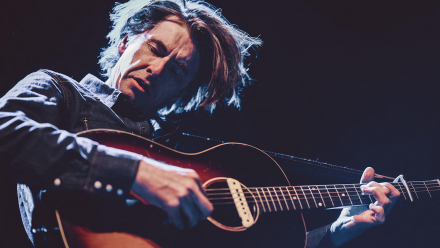
Search for a successor to Tom Lehrer, and you’ll be hard pressed to find any decent candidates. One of the  few, however, who can match the wit and sophistication of the late musical satirist is the Northern Irish musician Neil Hannon. The 54-year-old is the sole permanent member of his band the Divine Comedy, and his elegant records mix Lehrer-esque wordplay with swooning orchestral pop that is in equal measure Dusty Springfield, Scott Walker and Michael Nyman. But matters have darkened somewhat on his newest LP, Rainy Sunday Afternoon. Here, we are far from the cheeriness that many will remember on his 1990s records Casanova and Fin de ​Siècle.

The man who can save classical music

Arts feature

John Gilhooly is sick of talking about the Arts Council of England. ‘Please tell me you’re not going to ask about that,’ he groans. ‘I walked into an interview last week where it was only about that, and if I’d known I would’ve declined. There have got to be broader things now.’ That’s awkward; because in the (admittedly grey) world of UK arts funding, Gilhooly’s announcement in March that he was taking the concert hall he manages – the Wigmore Hall – out of the Arts Council’s funding portfolio has been the story of the year. He’s dead right, though. We’re sitting in one of the world’s great music venues: an art-nouveau jewel just off Oxford Street, consecrated to Schubert, Beethoven and Bach.

I could never sit through it again: The Cut reviewed

Cinema

What set this apart, I would suggest, is its deep and unremitting unpleasantness The Cut stars Orlando Bloom as a boxer who comes out of retirement for one last shot at glory. You may be wondering: how does this film about a boxer coming out of retirement for one last shot at glory differ from all the others? It’s a story that’s been told umpteen times but what set this apart, I would suggest, is its deep and unremitting unpleasantness. If I were given the choice of having to sit through it again or losing one of my limbs I would need to put some serious thought into that. Bloom has been among the ensemble casts of successful franchises (Pirates of the Caribbean, Lord of the Rings) but this is his shot at leading man glory.

Huge Fun: Le Carnaval de Venise reviewed

Classical

Summer’s lease hath all too short a date, but there’s still time for one last opera festival. Vache Baroque popped up in 2020 during that weird first release from lockdown, but to be honest, if you were starting a new festival, late August is probably the best part of the calendar to colonise. The big boys (even Glyndebourne) have left the stage, Edinburgh is done and the Proms are the only game in town. And the place to do it would be within easy reach of the capital: in this case, a fold of the Chilterns just off the rural top end of the Metropolitan Line. Anyway, Vache Baroque seems to have made a name very quickly, and like the more established opera startup at Waterperry, it still has that youthful, hands-on energy: let’s do the show right here!

Shambolic, spontaneously chaotic and combustible: the Lemonheads at SWG3 Galvanizers reviewed

Pop

I enjoyed watching the Lemonheads fall apart on stage more than perhaps I should have Nowadays, when the default setting for live music is ruthlessly choreographed efficiency, there is a queasy kind of thrill in watching a performance forever teetering on the edge of pure unprofessional pandemonium. Which is to say, I enjoyed watching the Lemonheads fall apart on stage more than perhaps I should have.  The Lemonheads are and always were Evan Dando fronting whatever revolving cast of associates are willing to put up with him. This is both the band’s great superpower and its eternal Achilles’ heel. Dando is a fine and heartful singer, songwriter and interpreter. He is also the loosest of loose cannons.

Another Traitors rip-off – and it might be even better than the original: Channel 4’s The Inheritance reviewed

Television

Another week, another show striving desperately to become the new Traitors. So it is that The Inheritance brings a group of disparate people together in a very big house, gives them tasks that win them money and invites them to pretend to cooperate while secretly behaving treacherously. In fact, about the only surprising thing about it is that it’s pretty good. It’s also, I think, pretty knowing: aware of its possible absurdity, often quite camp, yet still going about its business with a face set resolutely to po. The premise is that the very big house’s owner has died, leaving a rather implausible will that requires 13 strangers to compete for her money by collecting stuff and betraying each other.

Mercifully short: Interview at Riverside Studios reviewed

Theatre

Interview is a blind-date play. Only it’s not a blind date but a showbiz interview for a journal called the New York Chronicle. The characters (played by Robert Sean Leonard and Paten Hughes) bicker, flirt and get emotionally involved during a 90-minute conversation. Naturally it all starts badly. The interviewer, Pierre, arrives at Katya’s Brooklyn apartment and tells her straight off that he’s never seen her perform on TV or in a movie. He hates covering the lives of brattish starlets because he used to be the Courier’s ace political reporter but his career has been terminated. At least his journalistic skills are still intact and he makes her admit that she can’t name her mother’s birthplace in Georgia. She’s fibbing. So the games begin.

Picasso’s ravishing work for the ballet

Arts feature

Visitors to the Victoria and Albert Museum’s new storehouse in Stratford’s Olympic Park are being enthralled by an atmospherically lit chamber devoted to the display of one vast and magnificent work of art: Picasso’s 10 metre-high, 11 metre-wide drop-curtain for Le Train Bleu, a popular hit of Diaghilev’s Ballets Russes, first seen in 1924. The canvas, for many years rolled up in storage, isn’t strictly the work of Picasso himself: Diaghilev’s scene painter Prince Alexander Schervashidze had meticulously expanded it overnight from a small gouache on plywood known as ‘Two Women Running on the Beach’ (1922), but Picasso was so delighted when he saw the result that he decided to endorse it with his signature on the bottom-left-hand corner.

An English Chekhov: The Gathered Leaves at Park200 reviewed

Theatre

Chekhov with an English accent. That’s how Andrew Keatley’s play, The Gathered Leaves, begins. The setting is a country house where a family of recusant English Catholics meet for a weekend of surprises and high drama. The audience was on its feet, cheering and clapping, some of them in tears At first, the main conflict seems a little flimsy. William Pennington, a pompous grandee born in the 1920s, won’t forgive his children for being who they are. His daughter Alice scooted off to the south of France where she raised an illegitimate girl whom William has never met. His sons, Giles and Samuel, were sent to boarding school where Giles had to protect the autistic Samuel from bullies who mocked his eccentric behaviour.

Fails to outshine the original: The Roses reviewed

Cinema

The Roses is a remake of The War of the Roses (1989), the diabolically funny black bitter comedy that was directed by Danny DeVito and starred Kathleen Turner and Michael Douglas as a couple who start out in love, then hate each other like poison, and once their battle is under way it’s no holds barred. You remember the dinner-party scene and what he did to the fish course? You remember him sawing the heels off all her shoes and her serving him that liver pâté on crackers? (Let’s just say: no pets were spared.) Of course you remember. Will you remember this ‘reimagining’ in 36 years? It has an excellent director, an excellent scriptwriter, an excellent cast (Benedict Cumberbatch, Olivia Colman) but no, you probably won’t.

In defence of Notting Hill Carnival

Pop

This isn’t going to be a piece celebrating the rich cultural tapestry of London’s Afro-Caribbean community, sombrely expressing the importance of preserving its heritage and history. I just like going to Carnival. I see it as an opportunity to make the most of the last dregs of the summer. I’ll meet my friends, dance to a grizzled Rasta’s tunes with a Magnum or two (a syrupy, 16.5 per cent alcohol, Jamaican tonic wine), watch the steel drums and befeathered dancers, before decamping with a box of jerk chicken and fried plantain. There’s no £499 VIP Platinum wristband you can buy to have the premium Carnie experience I spent the first decade or so of my life in London, and returning here as an adult is a disillusioning experience.

A revelation: Delius’s Mass of Life at the Proms reviewed

Classical

Regarding Frederick Delius, how do we stand? In the 1930s, Sir Henry Wood believed that Proms audiences much preferred Delius to Holst, and most critics back then would have described him as a major British composer. Times change: if you took your music GCSE in the late 1980s, you’ll have sensed that the Bradford lad was no longer quite up there. But you might well have been taught by people who still remembered him as a giant, and there was also the legacy of that greatest of composer biopics, Ken Russell’s Song of Summer, in which Delius’s music explodes in sunbursts of passion and colour against Russell’s austere black and white cinematography.

The brilliance of BBC Alba

Television

During lockdown, a friend and I moved into a flat that had a difficult relationship with the TV aerial. Ineptitude and laziness combined to ensure that the only channels we were able to watch were BBC ones via the iPlayer app. So most nights – if there was no live sport – we found that our entertainment was at the behest of the state broadcaster. And what a drag it was. Every time, we’d reject the populist crap on BBC1, the parochial crap on BBC2, the braindead crap on BBC3, the boring crap on BBC4, the insane crap on BBC News, the wrist-slashing crap on BBC Parliament. And then we’d get to the end of the nav bar, to see one option left, and my flatmate would put on a Scottish accent and say: ‘Alreet, what’s on Alba?

Loving salute to a book I wouldn’t touch: The Thursday Murder Club reviewed

Cinema

Richard Osman’s The Thursday Murder Club, which is set in a retirement village and features pensioners solving murders, was a publishing sensation. (There are now four books in the series, with combined sales of more than ten million copies.) I’ve never read it. ‘Cosy crime’, as it’s called, is either your bag or it isn’t. This adaptation, however, feels exactly like the book that I haven’t and would never read. I hope Mr Osman et al. will take this as praise. In other words, the film knows what it is doing, who it is for, and fans will, I’m convinced, be delighted. It’s reminiscent of Enid Blyton’s The Famous Five, but at the opposite end of the age spectrum It’s not cinematic.

The masterpieces on your doorstep

Arts feature

I do not, if I can help it, catch a train to anywhere on a Sunday. Yet there I was at 9.14 a.m. heading out from Woodbridge in Suffolk towards Cambridge to view a painting by Walter Sickert, a work I had not seen before and whose vital statistics – what even the work was of – I had no way of knowing; its owner had refused to send a photograph or describe it over the telephone. Arriving at the owner’s address, I was met by a neighbour who told me that in the name of letting go and embracing surprise, they had decided to visit a relative in Scotland the night before.

I’ve had it with Anselm Kiefer

Exhibitions

August is always a crap month for exhibitions in London. The collectors are elsewhere, the dealers are presumably hot on their heels, and the galleries are filled with makeweight group shows staged to hold the fort until the end of the holidays. This year, however, even events of that kind are thin on the ground: many establishments have simply shuttered for the month – and given the dire state of the art market, I’m inclined to wonder how many will reopen come September. The doom-auguring sunflower paintings here would look great on the cover of a Metallica record Still, I caught the two Anselm Kiefer shows running concurrently.

Alien: Earth is wantonly disrespectful to the canon

Television

I once spent a delightful weekend in Madrid with the co-producer of Alien. His name was David Giler (now dead, sadly, I’ve just discovered) and he’d hit upon the bizarre idea of trying to get my anti-eco-lunacy book Watermelons made into a Hollywood movie. The film project never came off but I did learn an important lesson in our time together, hanging out in nice restaurants and pretending to work: if you want a happy life cushioned from financial care, the secret is to wangle yourself percentage points of a successful franchise. Another example of this is Franc Roddam, with whom I once spent an even stranger weekend in Accra, Ghana. Roddam devised the format for the MasterChef concept and has been sitting pretty ever since.

The Seeds are primitive but magnificent

Pop

I have nothing but admiration for those men who burn a candle for the music of 1966. Partly because, like them, I believe 1966 to be pop’s greatest year, but mainly because being a psychedelic hipster requires a commitment that invites ridicule. It’s one thing to be an ageing fella who likes rock’n’roll – sharp denim and a well-tended quiff can look just fine. And you can never really tell the age of a metalhead – they just look like a metalhead. But to wear your hair in an outgrown bowl cut, and to strut around in tight red trousers as Seeds singer Paul Kopf does, is inevitably to invite catcalls of ‘Oi, Austin Powers!’. You have to really believe in it to go through life like that.

Glorious: Good Night, Oscar, at the Barbican, reviewed

Theatre

Good Night, Oscar is a biographical play about Oscar Levant, a famous pianist who was also a noted wit and raconteur. The script starts as a dead-safe comedy and it develops into a gripping battle between the forces of anarchy, represented by Oscar, and the controllers of NBC who want to censor his crazy humour. The backstory is complicated. Oscar has been secretly committed to a mental asylum and his wife gets him released for a few hours so he can do an interview on Jack Paar’s TV show. It takes two long scenes to explain this improbable set-up but it’s worth it because Oscar (Sean Hayes) is such a lovable character. He’s a total wreck, addicted to drugs, suffering from OCD, and afflicted by aural and visual hallucinations that leave him curled up on the floor like a baby.

The mystical hold of the 1990s over Gen Z

Radio

At some point during the past decade and a half, it was decided that the 1990s were a golden age. While Britpop, New Labour and acid house do not immediately evoke the same spirit as, say, Versailles under Louis XIV or Augustan Rome, compared with what followed they were certainly characteristic of something. Appetites for what the energetic Sawyer calls ‘the last nutty pre-internet age’ have never been greater Members of Gen Z who have known only the colourless, anodyne first years of the new millennium speak of the Nineties in mystical tones. At a party last week, I found myself holding court over some twentysomethings who’d discovered that I am a millennial. ‘What was it really like?’ they asked, as if coming face-to-face with Shackleton or Francis Drake.

The decline of Edinburgh International Festival

More from Arts

Edinburgh International Festival was established to champion the civilising power of European high culture in a spirit of postwar healing. But its lustre and mission have now been largely eclipsed by the viral spread of its anarchic bastard offspring, the Fringe. In competition with the latter’s potty-mouthed stand-ups and numberless student hopefuls, the dignified old Festival proper struggles to make much mark on the hordes who descend on the city in August, inflating prices and infuriating the residents. Perhaps the kids will love it, but if this is the future of ballet, then count me out Nicola Benedetti, a splendid woman and a wonderful violinist, is now in her third year directing this beleaguered institution.

A Brigadoon better than most of us ever hoped to see

Opera

The village of Brigadoon rises from the Scotch mists once every 100 years, and revivals of Lerner and Loewe’s musical are only slightly more frequent. The last major London production closed in 1989; and if you know Brigadoon at all it’s probably through the lush 1954 movie. The new staging at Regent’s Park takes a very different approach. The songs, the basic story and the heather (lots of it, pink and looking only slightly artificial) are all still there, but the director Rona Munro has rewritten the book, backdating the action to the second world war and turning Lerner and Loewe’s American tourists into a pair of shot-down bomber pilots. The music swings, the park supplies the scenery and the downpour only added to the fun It's a bold stroke, and it pays off.

How the railways shaped modern culture

Arts feature

Cue track seven of Frank Sinatra’s 1957 album Only the Lonely and you can hear Ol’ Blue Eyes pretending to be a train. It’s not that he’s a railway enthusiast (though Sinatra, like many musicians, was an enthusiastic collector of model trains). No, it’s written into the words and music of Harold Arlen and Johnny Mercer’s song ‘Blues in the Night’: ‘Now the rain’s a-fallin’, hear the train a-callin’ “whoo-ee”.’ And so Sinatra sings it, just as Ella Fitzgerald, Peggy Lee and Louis Armstrong sang it. It’s an American classic, defined by the sounds that permeate the soul of American popular music: the sounds of the railway.

The problem with psychiatrists? They’re all depressed

Theatre

Edinburgh seems underpopulated this year. The whisky bars are half full and the throngs of tourists who usually crowd the roadways haven’t materialised. There’s a sharp chill in the air too. Anoraks and hats are worn all day, and anyone eating outdoors in the evening is dressed for base camp. Perhaps tourists don’t want to travel because they’re too depressed. That’s the specialism of Dr Benji Waterhouse, an NHS shrink, who writes and performs comedy about his patients. Dr Benji is an attractive presence on stage with his crumpled Oxfam clothes and his dreamy, half-shaven look. He could be the guy who tunes up U2’s guitars. His act is very funny and it contains some amazing revelations.

I love how awful My Oxford Year is

Television

The punters are saying My Oxford Year is a disaster. ‘Predictable, uninspiring and laughable,’ complains some meanie on Rotten Tomatoes. But they’re missing the point. My Oxford Year may be a work of accidental genius, but it’s a work of genius nonetheless. You will squirm, you will laugh derisively, you will cringe. By the end, though, you will be forced to admit that you secretly enjoyed every moment, for this is the very examplar of a so-bad-it’s-good masterpiece. You know it’s going to be awful from the very first frame: a still representing the bookshelf of our handsome, clever and poor heroine Anna De La Vega (Sofia Carson) who has come up to Oxford to spend a year doing an MA in Victorian poetry prior to taking up a job at Goldman Sachs.