Zoom

What I saw on the White Dudes for Harris Zoom call

From our US edition

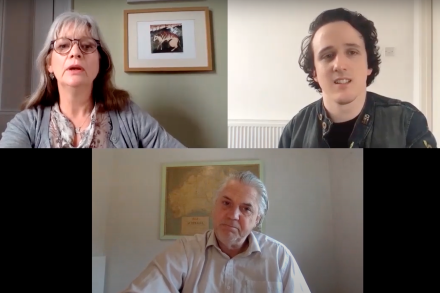
When I was a younger man, I found myself on the receiving end of a good bit of unsolicited advice for surviving as a member of the right — tried and true lessons in how to stay interesting without getting canceled or killed. Read all the archives of the Weekly Standard. Avoid talk of Israel, IQ and the Glorious Revolution. Don’t drink too much. Don’t drink too little. Take up smoking. And, most importantly, don’t involve yourself with any organizations predicated on white identity. I have never been very good at following sound advice, which is why I joined “White Dudes for Harris” on Monday. The existence of such an affinity group is remarkable in itself.

Kamala becomes presumptive nominee… over Zoom

From our US edition

Tonight on a series of Zoom calls, a majority of DNC delegates endorsed Kamala Harris, helping her secure the required number to become the presumptive Democratic nominee for president.  The lesson? Destroying democracy is bad, unless it's done over a video call. In which case, it’s totally fine. Earlier, at the now-Harris campaign headquarters in Delaware, Kamala read from a teleprompter before making an awkward phone call to Joe Biden. I was waiting for the part in the movie when the record scratches, the frame freezes and then the narrator Harris says, “Yup, that’s me. You’re probably wondering how I ended up in this situation.”  The fifty-nine-year-old’s haphazard road to the general election is the best scenario she could have hoped for given her shortcomings.

kamala harris

The evidence is in: remote learning doesn’t work

From our US edition

As the omicron wave crests and public schools face teacher sickouts, strikes, and a rash of student absences, it is worth reviewing some basic facts about the pandemic and public education. The results of last year's experiment in remote learning have confirmed what any minimally competent teacher could have told you from the outset: instructing students online yields disastrous consequences. Indeed, the results are so bad that defenders of a maximally cautious approach can only argue about terminology (please don’t say “learning loss!”) while proposing that we shouldn’t actually measure how far students fell behind under lockdown. Meanwhile, the psychological costs of the pandemic era continue to mount.

zoom

Remote learning has failed our kids

From our US edition

With omicron cases rising, many school districts are returning to remote learning for the first few weeks of January. That, of course, could be extended, as we have seen happen so many times during the pandemic. As a school social worker, I can attest that remote learning has been an absolute disaster. Far from the “abundance of caution” approach, school closures have devastated our youth, with many still struggling to function. It boggles my mind that many large cities are repeating this mistake. While nearly all students suffer amid virtual schooling, our most vulnerable suffer the most. The following three hypothetical students exist in every school, as I have witnessed over the past 15 years working with New York City teenagers.

The death of the phone call

From our US edition

Scientifically, the jury is still out on whether women are better multitaskers than men. A 2013 study suggested that women do, in fact, outperform men, while a 2019 German study found no demonstrable differences between the sexes. In my entirely unscientific opinion, I think the stereotype is real. Women are engaged in all kinds of things at the same time. At any given moment, I’m engrossed in my work while also contemplating the contents of my freezer, making a mental note to order more diapers, and simultaneously clipping my daughter’s toenails. A New York Times piece on why women do the household worrying described a woman’s mental load as a “combination of anxiety and planning that is part of parenting.

zoom

Is lockdown’s tech bubble about to burst?

Netflix is not signing up subscribers at the rate it once did. Disney+ has stalled. At Boohoo, growth is not as red hot as it was just a few months ago, while Deliveroo’s float on the London stock market was quickly dubbed ‘flopperoo’ by City wags. Zoom’s shares price has stopped, er, zooming, at least in the upward direction. A random collection of snippets of business news? Well, to some degree. But there is also a common theme to all these stories, and one that is significant for investors. We are about to witness a serious bout of what might be termed the post-pandemic blues. The companies that did brilliantly while the world locked down are going to see a significant slowdown as it opens up again.

A last hurrah for the Zoom play

Lockdown is about to end but some theatres are gripped by cabin fever and want to explore the two new formats created by the pandemic. One is the Zoom play with multiple actors, the other is the sequence of filmed soliloquys linked by a theme or storyline. Tim Crouch has directed a Zoom version of B.S. Johnson’s satire House Mother Normal, which is set in an old folks’ home in the 1960s. The inmates are detained in a communal ward run by a sadistic nurse, the ‘house mother’, who enforces a programme of singalongs and party games. The house mother carries a weapon and feels free to beat anyone who defies her authority. That sounds peculiar but in the mid-20th century it was common for medical staff to lord it over their patients like public school prefects.

The hidden cost of free technology

Back in late 2019 I met someone from Zoom who was visiting London. The company, then as now, offered free video-conferencing calls for up to 40 minutes, but charged a fee of around £10 a month to users who wanted longer calls. Towards the end of the conversation, I flippantly asked what I thought was a hypothetical question: ‘How much would you charge to give full Zoom access to the whole UK population?’ I didn’t think much more about it, but to my surprise they came back to me a few days later: ‘If you know anyone in the government who’d be interested in this, we’d like to talk.’ In the end, I never got round to doing anything, and then the pandemic hit, which solved their adoption problem overnight.

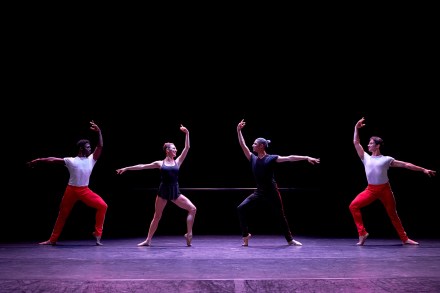
Zippy and stylish, with a glint of mischief: William Forsythe’s The Barre Project reviewed

In the early Noughties there was a Hollywood subgenre (by which I mean a few cult movies, each with terrible sequels) about ballerinas who shake off their classical shackles and liberate the cool girl within. The crown jewel is Center Stage, in which an aspiring prima sticks it to her ballet masters after they affront her with some light criticism of her turnout. She’s not some faceless, uptight swan! She’s a free spirit who dances for fun, as signalled by the presence of not one but two Jamiroquai songs on the soundtrack.

This fabulous play is like a Chekhov classic: The One Day in the Year reviewed

The One Day In the Year is an Australian drama about the annual commemoration of the Gallipoli campaign in 1915. It was written in 1958 but it could have been dashed off last week. What makes it thrillingly topical is that the personality of Churchill and the truth about Britain’s colonial past are central to the story. The main character, Alf, is a veteran of the second world war who works as a lift operator. He detests the new Australia and he calls the younger generation a ‘stink lot of imitation Yanks’. For him, Churchill is the greatest Englishman in history. But his rebellious son, Hughie, describes Britain’s wartime prime minister as ‘a big bloated bloodsucker’.

The rise of Zoom cooking: which classes to try online

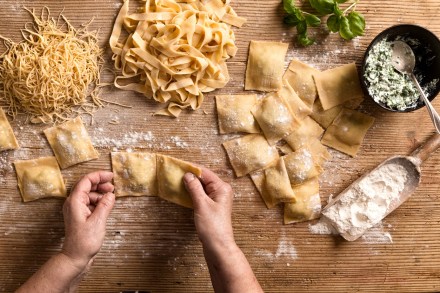
Pasta proficiency from Italy, noodle knowledge from Thailand, dumpling education from Georgia, taco tips from Mexico. We might have lost something in the intimacy, the sociability, the hands-on help when it comes to virtual cooking courses, but what we have gained is access to culinary masters from ardour the world, encompassing an extraordinary diversity of cuisines and techniques. There are plenty to get stuck into, but here are a few of the best, taking your tastebuds and your techniques from Tbilisi to Koh Tao. Pasta with an Italian Nonna For the last few years, on the outskirts of Rome, Nonna Nerina has been initiating cooking enthusiasts into the art of pasta.

Our obsession with city living is out of date

In March last year, the world made an interesting discovery. We found that a high proportion of knowledge-work could be performed remotely. Significantly, this came as a surprise to everyone. It should be a source of mild shame that, for all their talk of innovation, very few companies or institutions had experimented with this possibility beforehand. Given that this technology might help solve the housing shortage, geographical inequality, intergenerational wealth inequality, the transport crisis, the pensions crisis, the environmental crisis and almost everything else people worry about, it seems odd that it attracted so little consideration until a pandemic forced our hand.

My fateful appearance at the Bank of England’s Christmas drinks

Tidings of comfort as the vaccination programme advances, but shortage of joy. That’s my summary of a season in which there’s no Spectator Christmas bash for the first time in my 29 years on the magazine; in which my panto-dame ball gown hangs forlornly as a decoration in the foyer of the theatre where social distancing has made it impossible for us to mount a show; and in which I can’t even offer my customary restaurant tips, because there have been so few opportunities to eat out anywhere and, apart from a brief French escape in July, no chance at all to travel abroad. Nevertheless I count my blessings, the greatest being is that I’m still here writing for you.

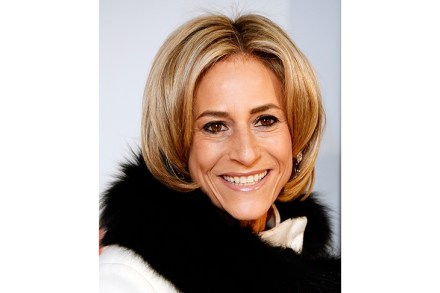
Can £3,000 make me as pretty as Emily Maitlis?

If you’re a journalist with a fondness for appearing on television — and, let’s face it, most of us are — the Covid crisis has been a double-edged sword. On the one hand, you’re no longer expected to drag yourself off to a studio at the crack of dawn, whether it’s Broadcasting House in the West End or Sky’s headquarters in Isleworth. You simply tumble out of bed, open your laptop and do a ‘down the line’. You don’t even have to put your trousers on. But the big drawback is, you look terrible. In a television studio, you have the benefit of make-up, professional lighting and proper cameras and microphones. Broadcasting from home, by contrast, is a pride-swallowing siege.

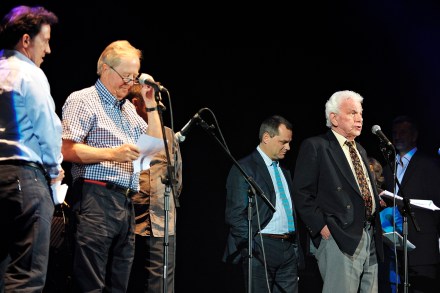
The genius of I’m Sorry I Haven’t a Clue

I’m Sorry I Haven’t a Clue has just been voted the greatest radio comedy of all time by Radio Times, ahead of Hancock’s Half Hour and the brilliant Round the Horne. The first two episodes of series 73 (can you believe it?) are also the last Tim Brooke-Taylor recorded before losing his life to coronavirus earlier this year. Brooke-Taylor was part of the original cast of the self-styled ‘antidote to panel games’, which first aired in 1972 with Bill Oddie, Jo Kendall and the show’s deviser Graeme Garden as fellow performers (Barry Cryer joined during the first series and Willie Rushton two years later).

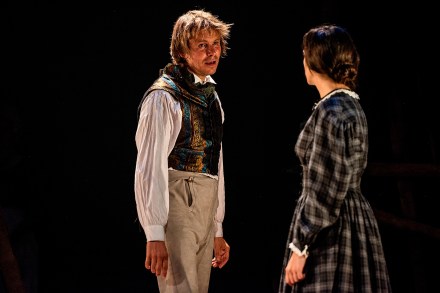
Absorbing and beautifully designed: Jane Eyre reviewed

Blackeyed Theatre is another victim of the virus. Its production of Jane Eyre was midway through a UK tour, and due to visit China for a month, when the pandemic shot its plans to bits. Last month the show was revived on stage and committed to film. Kelsey Short (Jane) leads a team of just five actors who tell the story as Charlotte Brontë wrote it. The costumes, hairstyles and habits of speech seem authentically Victorian. The director, Adrian McDougall, has rejected the fashionable habit of presenting Jane as a rad-fem freedom fighter surrounded by grotesque male oppressors. His version reminds us how sympathetic the novel is towards men. Mr Rochester (Ben Warwick) is a romantic enigma, a dashing, grizzled buccaneer who is also decent, honourable and kind-hearted.

What the books in our Zoom backgrounds really say about us

From our US edition

To cast your eye across someone’s bookshelves is to understand them. Alan Bennett certainly thought so: 'A bookshelf is as particular to its owner as are his or her clothes; a personality is stamped on a library just as a shoe is shaped by the foot.' Journeying across my own bookshelves I see the spines of my life, not curated or color-coded, but jammed in messily and haphazardly, out of chronological order, just like experience itself. Brideshead Revisited next to Healing the Child Within. Babar next to The Fallen of the Somme. Since I got married, my husband’s books now number among my own; political biographies next to novels, a literary record of our lives before we met, pages and pages of the past.

zoom

Watch: Boris Johnson’s Zoom nightmare

Oh dear. You would think with the Prime Minister still isolating (after coming into contact with a Covid-infected MP) that the Downing Street boffins would have set him up with a decent enough internet connection by now. Unfortunately though, it appears that the PM is still struggling when it comes to the tech. Boris Johnson dialled in virtually to Parliament today to announce his new tiered system for after lockdown. Only things started to go downhill rather quickly when the his audio cut out in the middle of an answer.  The Speaker of the House was left quizzing the PM to see if he’d hit the mute button, before eventually subbing in Matt Hancock to deal with questions instead.

How to go on a Zoom date

From our US edition

'You don’t have to wear anything below the waist!’ declares psychologist and dating coach Jo Hemmings, who’s advising me on Zoom dating. Heavens! This sounds saucy. 'Well, you’re not going to see it,’ she reminds me, as I wonder whether high heels are de trop for sitting indoors at my laptop. But won’t dressing up make it more exciting? Doesn’t it seem drab if you don’t bother? 'I think you should bother — you need to feel your best. But it’s more casual. It’s what you’d wear for a coffee date rather than a dinner date. I wouldn’t be dressing up in dinner suits or evening gowns,’ says Jo, as if she can see inside my brain.

zoom date

China’s rockstar-of-tech has fallen foul of Xi

FTSE indices soared as the Biden Bounce met vaccine euphoria, underpinned by the Bank of England’s announcement of another £150 billion injection of quantitative easing. It was heartening to see shares in airlines, hotels and Rolls-Royce, the aero engine maker, perking up — and hardly surprising to see lockdown winners such as Ocado and Just Eat among the fallers. Across the Atlantic, even mighty Amazon shed 5 per cent on Monday. But stock markets are one thing and real life is another. What matters in the short term is whether Boris Johnson can get us out of the lockdown he clearly didn’t want before the tide of redundancies, heading towards 150,000 a month, crushes the prospects for a consumer-led recovery, even after vaccine distribution has begun.