Will Collins

The Killer Angels still sings

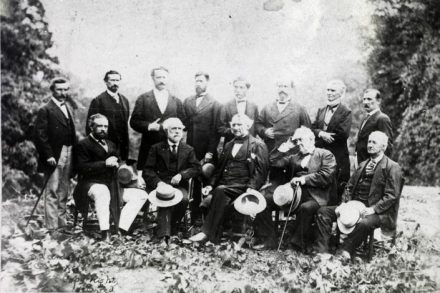
“Very fine people on both sides” was one of the first Trumpisms to enter our national lexicon. In the heady days of 2017, when Donald Trump’s presence in the White House was still a novelty and liberal resistance at its peak, the removal of a statue of Confederate General Robert E. Lee in Charlottesville, Virginia precipitated a full-blown political crisis. Trump, in his inimitable fashion, clumsily suggested that those protesting the statue’s removal had a point, an argument that was widely interpreted as proof of his secret affinity for Confederate sympathizers, white supremacists and other far-right fanatics. In truth, Trump was awkwardly defending a version of the Civil War that has lately been eclipsed in our national consciousness. Is Trump a history buff?

killer angels

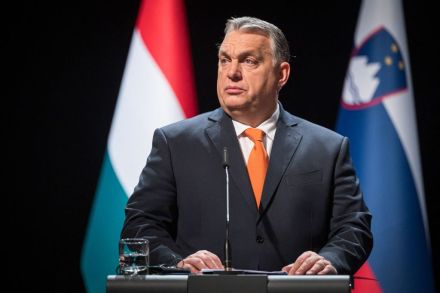
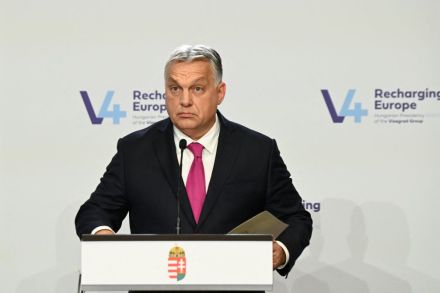
The end of the Orbán era

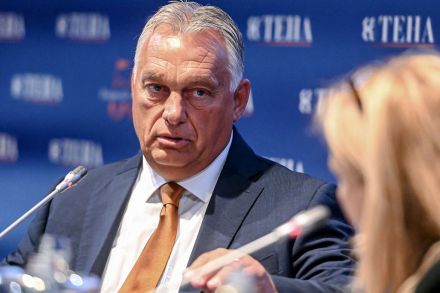
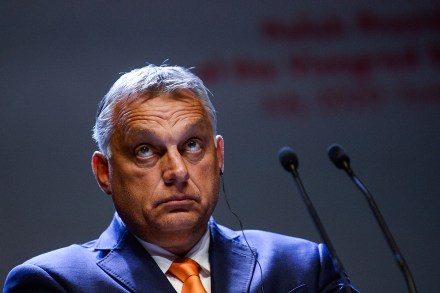
Over the headline “Peace Mission,” a recent cover from the conservative Hungarian periodical Mandiner shows an awkwardly photoshopped Viktor Orbán mediating between a bemused-looking Vladimir Putin and a grim Volodymyr Zelensky. Behind Orbán, a map of the world connects Kyiv, Moscow, Beijing, Washington and Budapest. One of these capitals, as they say, is not like the others. Even before Ukraine’s Kursk offensive, the chances of Orbán’s July trips to Kyiv and Moscow producing a peace settlement were slim. The Mandiner cover, however, is a revealing window into the mindset of Orbán’s conservative fans. The idea of a Hungarian prime minister mediating between squabbling great powers is both attractive and plausible to many of Orbán’s fervent supporters.

Orbán

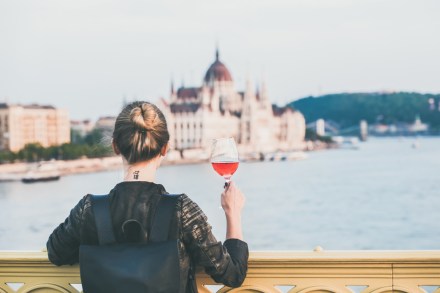
Natural wine and tacos on the Hungarian Riviera

In the summer of 2020, as impatience with quarantine and the urge to get out of town gradually displaced fears of Covid, a joke circulated on Hungarian social media about Lake Balaton, a favorite destination for domestic holidaygoers. The post-quarantine stampede had driven up prices at the lake to such an extent, the joke went, that penny-pinching travelers should consider less expensive destinations, such as Monaco or the French Riviera. Until recently, Balaton had always been the inexpensive Hungarian alternative to pricier (and, during the Cold War, politically restricted) foreign getaways.

Balaton

The Regime is bad eastern European pastiche

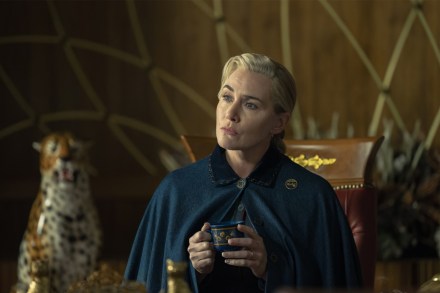
When you tire of trying to find the humor in The Regime, HBO’s new satire set in an unnamed “middle European” country, you can keep yourself occupied by trying to identify all of the historical references. The series was shot in Austria and the interiors have a dilapidated imperial feel, so perhaps we’re meant to think of one of the Visegrád countries — Czechia, Slovakia, Poland and Hungary — that inherited the heartlands of the Habsburg monarchy. The government, however, is led by a capricious and occasionally brutal authoritarian. Alexander Lukashenko of Belarus, often called Europe’s last dictator, immediately comes to mind. Chancellor Elena Vernham, played by Kate Winslet, is said to have studied medicine in Paris.

regime

Dune, an enduring monument to cultural appropriation

One of the Ukraine war’s minor celebrities is Ramzan Kadyrov, a Russian politician and Islamic hardliner who rules his native province of Chechnya as a personal fiefdom. Kadyrov and his combative underlings have been active on social media from the beginning of the conflict, posing with guns and trophies and boasting about their martial prowess.  Before they became villains in the Western press, tarred by their association with Russian aggression and Islamic fundamentalism, the Chechnyan mountain clans’ struggle for independence was a Victorian cause celebre, akin to Western support for Ukraine today.

dune

Poland and Hungary learn different lessons from history

For decades, the European Union was dominated by a combination of French élan and German economic clout. By the late 2010s, a conservative Budapest-Warsaw alliance seemed poised to challenge this arrangement. The ideological firepower was supplied by Hungarian prime minister Viktor Orbán, who emerged as an unlikely spokesman for the international right, while Poland’s booming economy and large population lent the partnership some much needed heft. The Polish elections in mid-October not only marked the end of the Law and Justice party’s near-decade of conservative rule; they offered another blow to a Polish-Hungarian relationship already fraying over the war in Ukraine.

poland

What did the Habsburgs ever do for us?

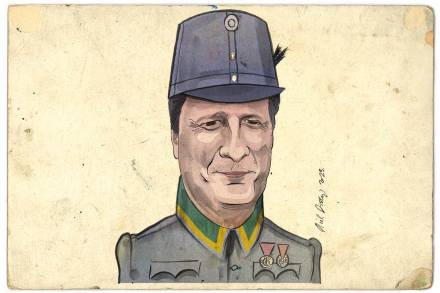
Do you have a favorite Habsburg? Mine is Maximilian I, the first and last ruler of the Second Mexican Empire. Americans may be vaguely aware of him because a defeat of his French allies is commemorated annually on Cinco de Mayo. His struggles echo the experience of many unlucky rulers supported by fickle foreign patrons: Abandoned by the French and besieged by belligerent locals, the ill-fated emperor stubbornly refused to abandon a throne he hadn’t much wanted in the first place. His last words to the firing squad were, “Aim well, muchachos.

habsburgs

Will US colleges’ brand power survive falling standards?

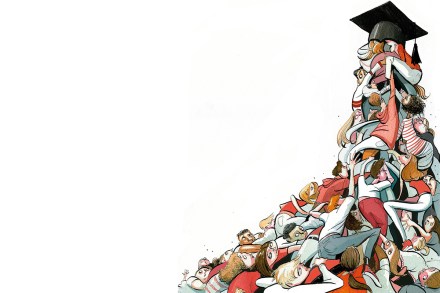
Nike. Supreme. Ralph Lauren. Abercrombie and Fitch. Harvard and Yale. On the streets of Budapest, style-conscious teenagers have collapsed the distinction between the Ivy League and streetwear. Maybe Americans still balk at wearing the logo of schools they didn’t get into, but the market for collegiate apparel in Eastern Europe is not limited to alumni, students and ambitious high-schoolers. Even kids with no interest in (or chance of) going to Harvard are drawn by the power of its name. Meanwhile, American higher education is being convulsed by a social-justice revolution that upends the basis of these schools’ claims to exclusivity.

university college

Hungarian wine is Europe’s best kept secret

From our UK edition

The Ottomans were evicted from Budapest in 1686, but you can still find reminders of Turkish rule if you look in the right places. All these relics are on the western, or Buda, side of the river, for Pest did not really exist in the 17th century. The original Turkish dome crowns the Rudas Baths, which are still in operation, public baths being one of the more salutary legacies of 145 years of Turkish occupation. Just north of the baths, on a slope leading up to the Buda Castle, an out-of-the-way cluster of graves is all that’s left of an old Muslim cemetery. From a distance, the weathered turban headstones look like pineapples. Other legacies of the Turkish era remain outside of Budapest.

A haunting novel remembers 1990s Ukraine

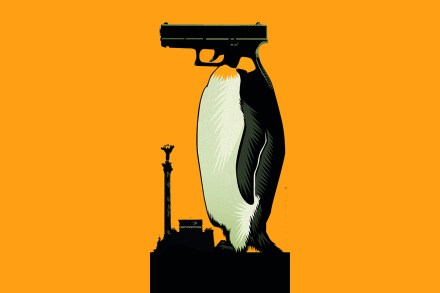
"They don’t treat people nowadays, let alone penguins.” When Americans ask what went wrong after the fall of the Berlin Wall, this wry comment on the state of Ukrainian healthcare in the 1990s isn’t a bad place to start. It’s also typical of the darkly funny Death and the Penguin, an account of a young writer in Kiev and his pet penguin, Misha, formerly of the city zoo. Did I say Kiev? Of course I meant Kyiv. It has lately become unfashionable to mention the commonalities between Ukraine and Russia, lest you give aid and succor to Vladimir Putin. But Putin’s propaganda resonates because it contains a grain of truth. Despite war and ethnic conflict, Russia and Ukraine have a great deal of shared history.

penguin

Giorgia Meloni and the reactionary axis that wasn’t

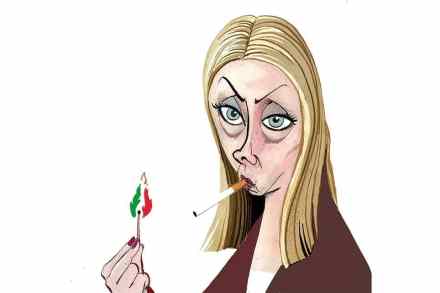
One is a blonde, photogenic woman who grew out of a youthful infatuation with Benito Mussolini to become the first female prime minister of Italy. The other is anything but photogenic, a grizzled veteran of more than three decades of political combat, who began his career as a student activist and became a respectable center-right statesman, only to reinvent himself as a populist firebrand. But if you were to judge Giorgia Meloni and Hungarian Prime Minister Viktor Orbán by the frequency with which they appear together in media coverage, usually with adjectives like “far-right” and “extreme” attached, you might assume that the two conservative heads-of-state are basically indistinguishable. The European Union and its assorted sympathizers certainly seem to think so.

giorgia meloni

Where Europe ends and the war begins

On a nondescript bridge in the northeastern Hungarian town of Záhony, the European Union ends and the war begins. Even amid the turmoil in Ukraine, the local border crossing is strangely quiescent. The flood of cars from the early days of the war has slowed to a trickle, and big eighteen-wheelers continue to cross over from Hungary into Ukraine. There are only two signs that something is amiss: a small notice on the door of the nearby Penny Market asking customers to help Ukrainian refugees, and a massive billboard of Hungarian prime minister Viktor Orbán’s stern face, promising voters that he will keep Hungary safe and peaceful.

viktor orban eu hungary

Even Hungary has soured on Vladimir Putin

As Russian tanks rolled across the Ukrainian border, the front page of the Hungarian tabloid Pesti Hírlap revived an old rallying cry to capture the national mood. “Ruszkik haza!” (“Russians go home!”) was the headline, with Budapest 1956, Prague 1968, and Kyiv 2022 listed below the fold. The line was borrowed from graffiti scrawled on Budapest street corners during the 1956 anti-Soviet uprising, a heroic but doomed effort that has since entered into Hungarian national lore. Is it 1956 all over again? Despite some eerie parallels, the political geography of Europe has changed considerably since the bad old days of the Cold War. Budapest is two hours from Vienna by train and Prague is actually further West than the Austrian capital.

The evidence is in: remote learning doesn’t work

As the omicron wave crests and public schools face teacher sickouts, strikes, and a rash of student absences, it is worth reviewing some basic facts about the pandemic and public education. The results of last year's experiment in remote learning have confirmed what any minimally competent teacher could have told you from the outset: instructing students online yields disastrous consequences. Indeed, the results are so bad that defenders of a maximally cautious approach can only argue about terminology (please don’t say “learning loss!”) while proposing that we shouldn’t actually measure how far students fell behind under lockdown. Meanwhile, the psychological costs of the pandemic era continue to mount.

zoom

Can Viktor Orbán’s conservatism work in America?

American conservatives are often accused of narrow-minded parochialism, but in recent years, the right has turned its gaze abroad. The Brexit referendum and the rise of Boris Johnson in the United Kingdom anticipated the potential appeal of conservative populism to working-class voters. Alt-right intellectuals look to Singapore’s curious mix of technocratic managerialism and libertarian economics as a blueprint for governance, while their more extreme (and extremely online) fellow travelers celebrate would-be strongmen like Brazil’s Jair Bolsonaro and the Philippines' Rodrigo Duterte. More recently, the presidential campaign of Éric Zemmour in France has captured the imagination of immigration restrictionists.