Whisky

In praise of Piedmontese wines

Authors hate it when reviewers refer to their book as a ‘weighty tome’ as it implies that the contents are going to be about as much fun as Deuteronomy. So I should make it clear that while Tim Hayward’s The Cocktail Hour (Quadrille, £20) is extremely weighty, that’s because the production values are off the scale. The monks at Lindisfarne could scarcely have put more effort into illuminating their work. And while the paper is heavy, Hayward’s writing is as refreshing as a perfectly made dry martini. There are hundreds of cocktail books out there, but none combine Hayward’s erudition, obsession and sense of humour. He is at once deadly serious and very, very funny. It’s the best book on the subject since Bernard DeVoto’s 1948 book The Hour.

Letters: Peter Hitchens is wrong about Ukraine

Peter’s denial Sir: In his article ‘The warmongers’ (24 October) Peter Hitchens is too extraordinary. In fact, General Sir Roland Walker is absolutely right to emphasise the threat from Russia. That is his job, especially when what he says is entirely in line with all the warnings from our Nato allies. The abject failure of Sir Keir Starmer and Andy Burnham to do so makes it even more essential, especially when one remembers how in the mid-1930s both British and French governments avoided alerting their own countries to the threat. For Hitchens to write of ‘stoking war with Russia’ puts him in the Donald Trump school of logic, pretending that Vladimir Putin, the shameless aggressor in Ukraine, is a ‘humanitarian’, no doubt adding to his reputation from Chechnya and Syria.

England and Scotland are fighting a whisky war

Not since the Battle of Bannockburn in 1314 have tensions between Scotland and England, ‘the auld enemy’, been so high. Forget the Border Reivers of the early 1600s, or the disgruntlement that followed the Treaty of Union a century later. As Mel Gibson might have hollered in Braveheart, ‘They’ll never take our freedom!’ But their whisky might still for the taking unless it puts up a strong defence. There have been Irish whiskies for centuries. Even Welsh ones. For all that the brown nectar is revered, it’s always had a secret life as a rough-and-ready kind of hooch too. But earlier this month, English whisky – a phrase which until recently sounded self-contradictory – was officially recognised, securing protected Geographical Indication status.

A Frenchman who does not drink wine is a disgrace

The world is in an even greater mess than was apparent. I am not referring to Ukraine, Gaza, Sudan or other swamps of mayhem and misery, although they are bad enough. No: the new crisis is in France, and it has two malign and reinforcing aspects. First, large numbers of the younger French have given up drinking wine. It is not clear what they are substituting: Coca-Cola, perhaps. If so, God help us (and them). A Frenchman who does not drink wine is a disgrace to his history and heritage. After the liberation in 1944, and in order to punish collaborators, the new French government created a crime: indignité nationale. As it is presumably still on the statute book, it could surely be used to bring condemnation on those who collaborate with teetotalism, or Coke.

Beaujolais – a refuge for impecunious wine lovers

With his three-piece suits, poodle hairdo and bizarrely bendy physique, Tom Gilbey looks like he was created in a secret laboratory beneath the streets of Turnham Green by the Wine Marketing Board. But I have it on good authority that he is a real person. Gilbey came to prominence last year as the self-styled ‘wine wanker’ who ran the London marathon, stopping every mile to taste a wine blind and guessing most of them right. Now we have the inevitable book; and while Gilbey isn’t an elegant prose stylist in the manner of Oz Clarke, Thirsty: 100 Great Wines and Stories (Square Peg, £20) is an enormously entertaining read. It’s part memoir, part guide to wine. The author comes from wine royalty.

When is a drink not a drink?

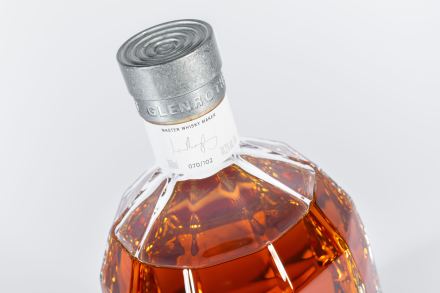
How do you drink a £37,000 whisky? That’s what I’m wondering as I make my way to Speyside to try the Glenrothes estate’s latest release, the Glenrothes 51. I don’t mean physically; I assume they’re going to pour it into an appropriately expensive glass for me, and I haven’t yet met a whisky I don’t enjoy in some way. I mean: how do you get your head around consuming something so expensive? I’m the sort of person who squirrels nice things away for a rainy day, and doesn’t eat the expensive chocolate bar because it seems like a waste. How do I square this with drinking a dram that must cost £1,300?

North Uist’s whisky is one to watch

There are at least two Long Islands. One of them, eternally famous for The Great Gatsby, is a fascinating blend of glamour and meretriciousness. It is separated from the other one by 3,000 miles of ocean and a totally different culture. In this Long Island – actually about 70 islands of various sizes, also known as the Outer Hebrides – Sabbatarianism is frequent, but glamour and meretriciousness are as wholly absent as anywhere in Europe. Over many centuries, the Hebridean Long Island was often beset by conflict. Viking raiders, Scottish kings, great clan chiefs: all fought for supremacy. The Scottish Crown eventually won, though the clan chiefs exercised subsidiary kingships, until the old Highland order was broken after the defeat of Bonny Prince Charlie.

Jeremy Hunt on Trump, Budgets and Welsh whisky

18 min listen

On this week’s special Saturday edition of Coffee House Shots, James Heale sits down with Jeremy Hunt to discuss his new book, Can We Be Great Again?. The former chancellor and foreign secretary argues that Britain remains one of the world’s most influential nations – but is in danger of losing its nerve. He reflects on working in the Foreign Office during Donald Trump’s first term, makes the case for the BBC as a tool of soft power, and admits he wanted to be the first chancellor since 1997 to deliver a Budget with a whisky in hand. Produced by Oscar Edmondson and Patrick Gibbons.

Why I am confident the Champagne tariff will not last long

From our US edition

I have to begin this column with a glass of Pol Roger cuvée Winston Churchill. It’s fancy stuff, and — according to some — it’s a bit early in the day to be quaffing Champagne.  “How early is too early?” I’ve often wondered that. The jury is out but most of the best authorities say that any time before actually awakening is too early.   Why the shampoo (as David Niven was wont to denominate the beverage)?  It seemed like the appropriate expedient in response to a bulletin I received from a Trump-skeptical friend. It came in over the headline, “Trump’s first mistake.

palm beach wine champagne

Why Japan is best at whisky, tailoring, cheese, pastries… I could go on

Many people visit Japan because of its food but few, surely, have pastries in mind. In fact, Japan has no discernible tradition in this culinary realm at all. But that didn’t stop a trio of Japanese bakers from winning the biannual pastry world cup, pushing the fancied host nation France into a chastening second place. Japan won last time too and thus became the first country ever to retain the title, which you might suppose would make this big news here in Tokyo. But the media has hardly mentioned it, probably because this kind of national stereotype-busting triumph is becoming quite normal. For example, Japan, believe it or not, is now one of the best countries in the world for pizza, especially the Neapolitan version.

10 Scotch whiskies to try on Burns Night

Burns Night always feels like a particularly well-timed celebration. Hot on the heels of ‘Blue Monday’ – supposedly the most miserable day of the year – it’s certainly nice to have a reason to get merry. It also happens to be the perfect refutation to those killjoys determined to make Dry January the new Lent.  ‘O thou, my muse! guid auld Scotch drink!’ So wrote Robert Burns in the winter of 1785 in his ode 'Scotch Drink'. The Scottish bard’s love of the stuff is no surprise and no Burns Night celebration is complete without a few drams.

A St Patrick’s Day guide to Irish whiskey

In the fifth century, Ireland suffered from a reptile dysfunction – it happens to the best of us. Pesky pagan snakes were everywhere, slippery anti-Christian evangelists making a nuisance of themselves, shedding their skin, swallowing hamsters whole and sticking their tongues out at everyone. But then the great Irish hero St Patrick came along. Except, Patrick, who had an Irish name (anglicized from Phádraig), was actually English. When he was 16, he was kidnapped and taken to Ireland as a slave, held there for six years before a brave escape back to England. Then, rather surprisingly given that ordeal, he decided to go back and preach Christianity. And now he’s a saint. Well done him.

How to drink whisky

Aside from Icelandic whale testicle beer and Korean wine made from baby mice, there are probably few drinks which the observation 'It's an acquired taste' is more applicable to than whisky.And with Burns night upon us, you can rest assured that there will be plenty of people who are already dreading the moment when the time comes to raise a glass in honour of Robert Burns, the 18th century 'heaven-taught ploughman-poet' whose birthday will be celebrated around the world on the night of January 25 with haggis, neeps - and, yes, whisky. Lots of whisky.

What to drink on Burns Night

The Burns Supper is not so much a dinner as it is a celebration of Scotland’s great contributions to poetry, distilling, and sausage making. Even though this year’s celebrations are set to be smaller scale than usual, the 25th of January still represents an opportunity to defy the winter gloom and raise a few glasses of guid auld Scotch drink. A dram or two, taken neat or with water, is traditional for toasting – but this is by no means the only way to enjoy your whisky on Burns night.  Scotch represents a broader range of styles and flavours than any other spirit and as such has enormous cocktail potential. A good serve can convert purists and whisky-sceptics alike so there’s lots to be gained by getting creative with your malt.

Drinking with James Bond

From our US edition

James Bond’s most impressive talent is not his prowess as a spy or his skills of seduction. It’s his ability to always get exactly what he wants at the bar. In the 1954 novel Live and Let Die he orders a round of Old Fashioneds while on a train to meet Felix Leiter, his CIA opposite number. Not only does the buffet car make them for Bond, they even have his preferred brand of bourbon, Old Grand-Dad. You try pulling that sort of thing on the Acela from Penn Station to DC. ‘Sorry Solitaire, they wouldn’t do us a cocktail, but I’ve got a cup of Lipton’s and a bag of pretzels.’ We’d all like to drink like Bond but, lacking his miraculous powers, we need to be in the right sort of bar to do it.

bond

Two bottles to help eradicate cabin fever

The virus is in retreat, the lock-down is crumbling, the sherbet dispensaries will shortly reopen and there is a second spike of summer. Every prospect pleases, and only demonstrating man is vile. In London, we have been subjected to the most ridiculous public protests since the Gordon riots or the agitation in favour of Queen Caroline. During the latter follies, Wellington, riding back to Stratfield Saye, found his way blocked by a crowd of yokels who declared that they would not let him pass until he had toasted the Queen. ‘Very well, sirs, if you will have it so, God bless Queen Caroline and may all your wives be like her.’ He then spurred away, leaving open mouths in his wake. In recent weeks, it has been less about open mouths, more a matter of empty minds.

Drinking in isolation is far less appealing

Spring sense, caressing sunshine: last week, London enjoyed village cricket weather. Even in normal circumstances, the season would not have begun; the anticipation would. Soon, one would be watching the run-stealers flicker to and fro, a pint of beer at hand. ‘A pint of beer’, four simple words, but in these times my tastebuds were flooded with memory. Où sont les boissons d’antan? Friends of different strategems were fighting off that lowering virus, cabin-fever. I am re-reading Macaulay — there is no more joyous prose in English — and alternating him with Gibbon, whom I am ashamed to have never read all the way through, at a ratio of four Macaulay to one Gibbon.

Which water goes best with whisky?

Peaty water ought to be classed as a luxury. You have spent a day on the hill, a’chasing the deer. This means coping with the rigours of topography, the cunning of the quarry and the vindictiveness of the elements, though that has its compensations. Rain keeps away the midges. You arrive back damp and knackered, but there is an instant restorative: a bathful of broiling peaty water, with a glass of peaty whisky as a chaser. Suddenly, all the day’s hardships are sublimated into pure pleasure (especially if you have killed a beast). Naturally, the water is brown. This can give rise to misunderstandings among the ignorant. A girl I know owns a shooting lodge. Once, towards the end of breakfast, someone from the kitchen team informed her that there was no hot water.

Sweet drams

‘What seas what shore what grey rocks what water lapping the bow’. So evocative, which seems strange: one would have assumed that Eliot would have been seasick crossing the Channel. Yet he understood the gentle little tides — and also the beauty and the fear, the other-worldliness, the implacable grandeur, of the great waters’ vast dominions. In these islands, throughout the centuries, men have earned their bread from the sea. But it was rarely an easy harvest. The ‘-Mingulay Boat Song’ captures the perils of the quest. ‘When the wind is wild with shouting/And the waves mount ever higher/ Anxious eyes turn ever seaward/ Wives are waiting, since break of day/ To see us home, boys, to Mingulay.’ Not all those boys made it home.

The true island spirit

Arran, in the Firth of Clyde, is an island whose charms vary with the seasons. In summer, the hills are verdant. By midwinter, there is a grandeur of rock and snow. These days, the attractions are enhanced by a better class of visitor. Time was, when it suffered from proximity to Glasgow, but the Gorbals-ites who want to start the morning with a cocktail of Buckfast and Irn-Bru now do so in Torremolinos. So: gentle sounds, sweet airs and a formidable amount of history. For centuries, Arran was on the front line in the constant warfare between Norsemen, Gaels, the lowland kings of Scotland and aristocratic factions. It is near Campbell territory: never a safe place to be. When it came to looting, burning and slaughtering, the Campbells could have given tuition to the Vikings.