Usa

Bradley Manning awaits sentence. Would the real Julian Assange please stand up?

Bradley Manning’s relationship with Wikileaks has, inevitably, brought Julian Assange back into the papers. Viewed on the frontpage, Assange is egimatic. We know what he’s done; but we know little of him. Alex Gibney’s compelling new documentary film We Steal Secrets: The Story of Wikileaks presents an extensive and revealing biography of Assange — and much more besides. Gibney’s camera is impartial. We hear from Assange cultists, former collaborators and alleged rape victims. No two people will react in the same way to what they see. A white-haired Icarus formed before my eyes; a charismatic brought down by his own narcissism and hubris.

Anthony Weiner’s wiener and the left/right divide

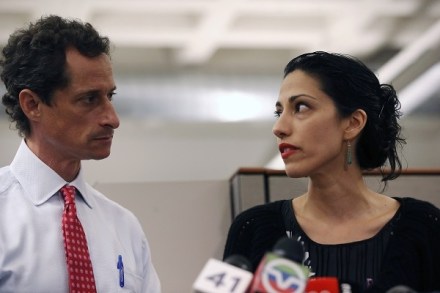
Everyone needs something to brighten up their day. And Anthony Weiner has once again come up with the goods. Readers will recall that the Democrat politician had to resign from the US Congress two years ago after a technological mishap meant he sent a photo of his penis (or ‘wiener’ in American slang) to all of his Twitter followers instead of to the one woman he had meant to. Initially claiming that his account had been hacked (see here) Weiner then had to admit that the wiener was his (as were a string of ‘sexting’ conservations with young women) and humiliatingly stood down from office (the attempted cover-up being significantly larger than the offence).

Across the Pond, by Terry Eagleton – a review

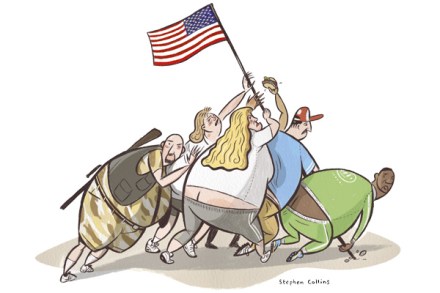
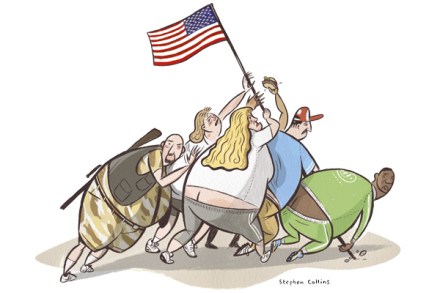
The esteemed literary critic, serial academic and one-time Marxist firebrand Terry Eagleton is, at 70, still producing books at an admirable rate. Across the Pond (Norton, £9.99) is subtitled ‘An Englishman’s View of America’, and begins with a rigorous justification for the use of national stereotypes in writing about a country’s population. Eagleton then proceeds to make hay with these stereotypes in typically combative style and to consistently amusing effect. ‘America is a country where it’s difficult to do things by halves. Some people are surreally fat, while others are life-threateningly thin. Some think of nothing but sex, while others seem to regard sex as more reprehensible than genocide.

The Unwinding, by George Packer – review

The Unwinding is a rather classy addition to the thriving genre of American apocalypse porn. The basic thesis can be found online in Jim Kunstler’s The Clusterfuck Nation Manifesto, which runs to a few thousand words, but over hundreds of pages George Packer gives it the full literary treatment. He signals his ambition by taking as his model the USA trilogy of John Dos Passos, which spliced mash-ups of newspaper cuttings and pop lyrics, brief lives of public figures and longer episodic biographies of obscure ones, into an indignant portrait of America in the first three decades of the 20th century.

George Packer interview: The American Dream is dangerous because people yearn for it to be true

George Packer is a staff writer at The New Yorker and the author of The Assassins Gate: America in Iraq, a book that received several prizes. Packer’s other non-fiction books include, The Village of Waiting and Blood of the Liberals, the latter winning the 2001 Robert F. Kennedy Book Award. He is also the author of two novels, The Half Man and Central Square.  Packer’s latest book, The Unwinding: An Inner History of the New America, is a work of non-fiction that attempts to document the massive political and economic changes that have taken place in the last three decades in the United States.

The Washington Post brings the Guardian back down to Earth

The Washington Post has had a crack at Mr Steerpike’s favourite game: trashing the Guardian. Full marks to them for a knock out job. The Post describes Britain’s most sanctimonious rag as ‘a newspaper that’s small and underweight even by British standards’. ZAP! Then the Groaner really gets it where it hurts: ‘... the Guardian has its own sacred cows. Unlike its American media cousins, which have traditionally sought neutrality in their news reporting, the Guardian hews to the British model of identifying with a political party. The paper has been liberal since its founding by Manchester mill owners and cotton merchants; in the last British elections it supported the minority Liberal Democrats. BOOM!

The View from 22 — Osborne’s spending review, the return of America and goodbye to Mervyn King

George Osborne's latest spending review has demonstrated how little progress he has made on pushing Britain towards fiscal sanity. On the latest View from 22 podcast, James Forsyth and Isabel Hardman analyse Osborne's statement to the Commons yesterday, the political significance of his plans and how Labour managed to fluff their response. Colleen Graffy, a former US state department official under George W. Bush, also joins Fraser Nelson to discuss our cover on the return of America as a significant presence on the world stage. How has the superpower regained its economic clout and what role, if any, did Barack Obama play in this miraculous recovery? Plus, Martin Vander Weyer discusses Mervyn King's departure as Bank of England governor. How was his final Mansion House speech received?

While Britain stagnates, America is roaring back

Predicting the decline of the United States has been in vogue since the birth of American hegemony. Sputnik, Vietnam, stagflation, budget deficits, trade deficits and even the end of the Cold War all triggered predictions of the end of America. With the 2008 financial crisis, however, there seemed to be a sense that this time was different. Tomes with titles like The Post-American World and The End of Influence began to appear on bookshelves. Germany’s finance minister confidently predicted that the United States was entering its last days as a financial superpower. Serious commentators spoke about how a ‘Beijing consensus’ would supplant the ‘Washington consensus’. America looked as if it would disappear in a vortex of debt.

The Worst Argument Yet for Intervening in Syria: If We Don’t, Other Countries Will Snigger At Britain

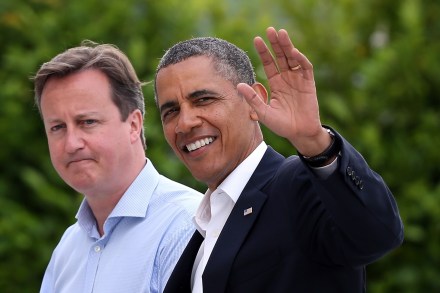
We should, I suppose, be grateful to Benedict Brogan for his column today examining some of the reasons for why Britain should become more heavily involved in the Syrian civil war. Grateful, that is, because Mr Brogan's article reveals how pitifully inadequate these reasons are. Here's Mr Brogan's conclusion: The coalition against intervention in Syria appears to have all the arguments on its side. It is, by any measure, a terrible idea, and on current standings the Prime Minister would struggle to secure necessary support in the Commons. But Mr Cameron says he wants to save Britain from international relegation. In which case, membership of the league of front rank nations comes with a price that is sometimes quite awful.

To Move the World, by Jeffrey Sachs – review

Jeffrey Sachs is the world’s best-connected development economist. An academic with highly developed communication skills, he has always managed to secure access to policy makers and to offer them advice. His record is controversial. Back in the 1990s he worked on Russia’s transition from a command to a capitalist economy. He advocated the approach that Yeltsin adopted — shock therapy. The result was pensioners on the streets selling off furniture, jewellery and even their clothes to raise cash for food. Whilst there were many other factors at play, it now seems obvious that China’s transition to capitalism was better handled. China didn’t take Sachs’s advice.

God, guns and America

While training as a playwright, I was taught that any gun brought onstage must go off. Anton Chekhov said, ‘One must not put a loaded rifle on the stage if no one is thinking of firing it.’ But thinking of firing is not enough. The gun foreshadows the action that will – that must – occur. Its appearance is a contract with the audience. The gun becomes the story, the conflict, and the resolution due to its presence and our expectations. If ‘all the world’s a stage’ it is most noticeably in America where the gun is downstage, front and centre. Its firing has become our narrative. In a nation founded by religious radicals, it is no surprise that the right to freedom of worship is in our Bill of Rights, the first of our amendments.

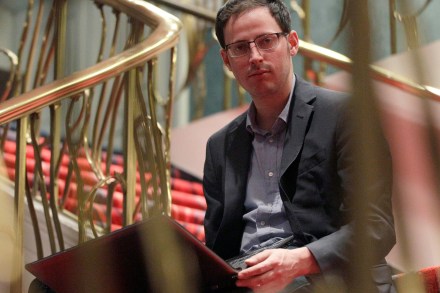
Nate Silver interview: ‘Politics is uniquely full of bullshit’

Nate Silver doesn't suffer fools gladly — especially fools who pass themselves off as experts. In the second chapter of his book, The Signal and the Noise: The Art and Science of Prediction, he describes just how bad most political pundits are. And in person, he goes even further. 'I think some of them are very skilled at the art of bullshit; I think some of them are just deluded; some of them aren't very smart; some of them are immoral; some of them are well-intentioned but wrong; some of them are behaving as party hacks. And there's not a lot of incentive for them to change that.' Most columnists are 'a waste of space', he says. 'A lot of them are nice people, but they're literally a waste of column inches.

If there was ever a time to intervene in Syria, it has passed

It is more than ten years since I first sat down with members of the Syrian opposition. Back then they included real moderates, but even these didn’t predict a bloodless transition. ‘We will have to unite the country against the Alawites,’ I remember one saying, referring to the minority from which the Assad dynasty comes. ‘Kill them?’ I asked nervously. ‘Or chase them into the mountains,’ he replied. Now, more than two years into the Syrian civil war, there may still be some Alawites but, as Paul Wood points out opposite, there are hardly any moderates. What good opposition elements there were have been killed, have fallen away or otherwise become insignificant since calls for outside help began.

America, like Europe, is dishonest about Islamic extremism

I have been in the US over recent weeks, during the period of the Boston bombings and the hunt for the perpetrators. It may surprise some British readers to know that although American public debate is undoubtedly wider and more robust than in Britain, even America displays denial and deflection when it turns out that the culprits are radical Islamists. I think of this as ‘Toulouse syndrome.’ Much of the reaction to Boston is very reminiscent of what we saw last year after the shooting of seven people in France. From the first attacks on French soldiers until after the third shootings at a Jewish school, both national and international news focussed on the possibility that the lone gunman had been a far-right extremist.

The moronic inferno, pt. 1,478

Is it the stupidity of Americans, or the stupidity of people who use social networking sites, that is responsible for the following letter, sent shortly after the Boston bombers had been identified? 'As more information on the origin of the alleged perpetrators is coming to light, I am concerned to note in the social media a most unfortunate misunderstanding in this respect. The Czech Republic and Chechnya are two very different entities - the Czech Republic is a Central European country; Chechnya is a part of the Russian Federation. As the President of the Czech Republic Miloš Zeman noted in his message to President Obama, the Czech Republic is an active and reliable partner of the United States in the fight against terrorism.

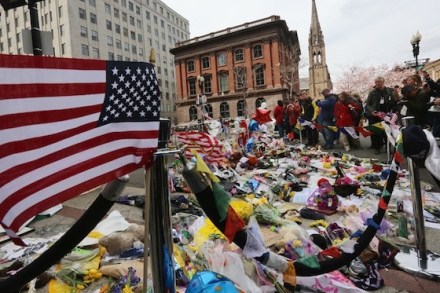
Boston bombing suspect taken into custody

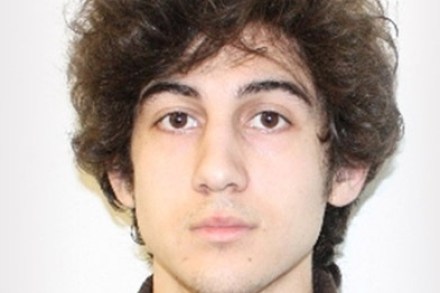
After a day-long man hunt, Dzhokhar Tsarnaev, the second named suspect in the Boston marathon bombing, has been taken into custody. He was found hiding in a boat that was parked behind a house just outside the search area. He has, we are informed, various gun-shot wounds and is in a critical condition. His capture alive means that there is a chance for the US authorities to establish whether he and his brother were, if they are guilty, working alone or in cooperation with others. The US authorities have already said that he will not be informed of his Miranda rights, essentially his right to remain silent, on public safety grounds.

Boston Marathon blasts kill two and injure many more

Update CBS News in the US are reporting that a Saudi national is being questioned by the FBI. He denies any involvement in the attack In a press conference just now, President Obama has made clear that the Federal Authorities do not know who is responsible for the attack on the Boston Marathon. But it was noticeable that he did not call it a ‘terrorist’ attack. Meanwhile in Boston, the authorities there have denied reports that anyone is in custody—there had been chatter in the US media that a Saudi male was under arrest in Boston. So far, no individual or organisation has claimed responsibility for this attack.

Interview with James Wood

James Wood is arguably the most celebrated, possibly the most impugned, and definitely the most envied, literary journalist living. By his mid twenties he was the chief book reviewer for The Guardian. From there he moved to America’s The New Republic, then, as of 2007, The New Yorker. He also teaches at Harvard. There is a tendency, therefore, for critics to spend more time reviewing the superlatives other reviewers have used about him than his books themselves. His previous collections have tilted on an axis of religious belief and philosophy: he writes that our investment and belief when we read fiction is a metaphorical substitute for religious faith because it ‘resembles’ real belief.

45 years ago: The death of Martin Luther King

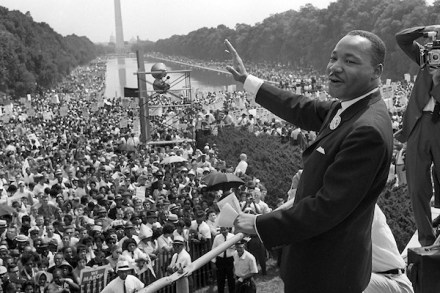
45 years ago tonight, Dr Martin Luther King, Jr was shot and killed as he stood on a motel balcony, aged just 39. Here is the leader from the following week's Spectator: The agony of America, The Spectator, 12 April 1968 The assassination of Dr Martin Luther King at Memphis, Tennessee, on Thursday 4 April has brutally reminded America and the world of the existence of a cancer that is even more menacing than the Vietnam war itself. For the well-intentioned but horribly mistaken imperialist adventure in Vietnam will eventually be ended by American withdrawal. What the conditions of that withdrawal will be, when it will occur, and what political regime will exist in the South after it has been completed, are matters for speculation — and for negotiation.

‘O My America!’, by Sara Wheeler – review

You might not expect Sara Wheeler, the intrepid literary traveller, to be anxious about passing the half-century point. Surely a person who can survive the mental and physical rigours of Antarctica, as she brilliantly documented in Terra Incognita, can cope with ageing and menopause? Wheeler herself was not so certain. In her restless, creative way, she met the advent of what she calls ‘the Frumpy Years’ by taking to the road, following the trails of six indomitable Victorian women across the United States. The combination of that nation of eternal makeover and of Wheeler’s travelling companions makes O My America! a curious and teasing book.