Usa

High life | 28 February 2013

‘I was distressed to learn of some of your current problems and wanted to send you a word of encouragement. Since the time Bob Tyrrell introduced us a few years ago, I have been one of your admirers...’ This letter, dated 23 January 1985, was addressed to me and was signed by Richard Nixon. I had it framed and it hangs in my office. The only other letter hanging next to it is from Sir Denis Thatcher, after he and the Lady visited me in Switzerland. Nixon and Thatcher, two vastly misunderstood leaders who one day will be seen rightly as giants among the midgets who preceded and followed them. Lady T I do not know well. President Nixon and I grew close during the late Seventies and Eighties.

The staircase too scary for Bruce Willis, and other Oscar party stories

From a wedding to an awards ceremony, no self-respecting Los Angeles beano can take place without endless fixtures around the main event. The Oscars barely get a look in between a clutch of warm-ups and afterparties. The Friday night (Oscar night being Sunday) is traditionally the preserve of the agents, the most high-profile of whom throw open the doors of their Hollywood homes to their clients — and no one else. It was a rarity, then, that at the party given by the super-agent Ari Emanuel, stars (‘Talent’, in the argot) schmoozed and ate macaroni cheese with a certain number of the not-so-famous (‘civilians’). Marooned somewhere between Dustin Hoffman and Wales’s most glamorous export, Catherine Zeta-Jones, I felt horribly conspicuous.

Interview with a writer: John Ashbery

John Ashbery is recognized as one of the most eminent American poets of the twentieth-century. He also been called America’s greatest living poet today. Ashbery published his first book of poems Some Trees in 1956; it earned him the Yale Younger Poets Prize: a competition that was judged by W.H. Auden at the time. He has picked up many literary prizes, including the Pulitzer Prize for Poetry, the National Book Critics Circle Award and the National Book Award. At 85, he shows no signs of putting down his pen. He has recently published a collection of poems entitled Quick Question. Although the majority of critics have recognized his talent, many have also pointed to the fact that his poems don’t have — in the traditional sense — a specific subject matter.

Abraham Lincoln ‘somehow’ became the great redeemer

Abraham Lincoln, in Walt Whitman’s celebrated phrase, contained multitudes. M.E. Synon showed yesterday quite how many there might have been. There is evidence of prejudice, callousness and corruption. Yet there is also the 13th amendment (1865): the basis, whatever the wider context of its adoption, of Lincoln’s right to be called the Great Emancipator. Steven Spielberg’s Lincoln is a film of a book: Team of Rivals: The Political Genius of Abraham Lincoln by Doris Kearns Goodwin, a blockbuster that paints a little more of the good Lincoln than the bad, but which accepts Lincoln's complexity freely by describing a determined politician at work. Daniel Day-Lewis’s often mesmerising, twinkling Lincoln is not wholly angelic.

Abraham Lincoln, the ‘specious humbug’

This post by M.E. Synon is the first in a series about Stephen Spielberg's Lincoln. A counter-argument will be published tomorrow, followed by a comparison of screen and literary adaptations of the last months of Abraham Lincoln's life. Last week in Dublin there was the European premiere of Spielberg’s film on Lincoln. Why Dublin? Because the star Daniel Day-Lewis lives in Ireland and he wanted the premiere as a fundraiser for an Irish charity.

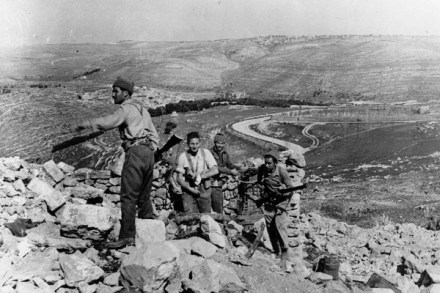
Yoram Kaniuk, reluctant soldier in 1948

Yoram Kaniuk was born in Tel Aviv in 1930. After his experience in Israel’s 1948 War of Independence, Kaniuk moved to New York where he became a painter in Greenwich Village. Ten years later he returned to Tel Aviv, where he has lived ever since, working as a novelist, painter, and journalist. He has published various fiction, non-fiction, and children’s books over the course of his distinguished career. In 1948 — for which he was awarded the The Sapir Prize in 2010 — Kaniuk recalls fighting as a teenage soldier in Israel’s War of Independence. Told in the first person the book looks at how memory is a selective process; one that favours myth making and narrative, rather than recalling actual events.

EU Shocker: The United States agrees with the British Government! – Spectator Blogs

Good grief. Are we supposed to be surprised that senior officials at the US State Department take the view that Britain should, all things considered, remain a member of the European Union? Of course not. Are, however, we supposed to be shocked by Foggy Bottom's impertinence in saying so? Apparently so. Of course, if the Obama administration were to say that it's in America's interests for Britain to leave the EU then I hazard many of those pretending - for surely it must only be a pretence? - to be outraged by this damned interference in our own affairs would instead welcome the Americans' intervention in the debate and use it as yet more evidence the EU is a busted flush and that the future lies in some grand Churchillian alliance of the English-speaking peoples. Well, fine.

Which words would you ban?

Which words in current use would you ban? Lake Superior State University answers this question each year, with its famous ‘List of Words to be Banished from the Queen’s English for Misuse, Overuse and General Uselessness’. Words are recommended by members of the English speaking world, and then selected by the university. Top of the list is ‘fiscal cliff’: the catchall phrase for the various political (and cultural) difficulties that have arisen from America’s fiscal and economic crises. Opinion is split on which of ‘fiscal’ or ‘cliff’ is the greater offence. Other irate correspondents object to the vague metaphor: is America trying to scale the cliff or trying not to fall off it?

Dreaming of the Cold War

I’m thoroughly enjoying the playground spat between the USA and Russia. The Americans have banned Russians with dodgy human rights records from visiting the country, but have no such objection to travellers from Iran, Pakistan or Somalia dropping by, no matter how psychopathic they might be. In retaliation, the Russkies have voted to halt their most valuable export to the USA – that of small Russian children, who are used by middle class Americans as mantelpiece ornaments and garden furniture. I assume that adopting a little black child from, say, Malawi, is now considered a little de trop. Whatever, there seems to be a yearning, on both sides, for this row to be ratcheted up as far as it can possibly go, with tit for tat acts of spite flung hither and thither.

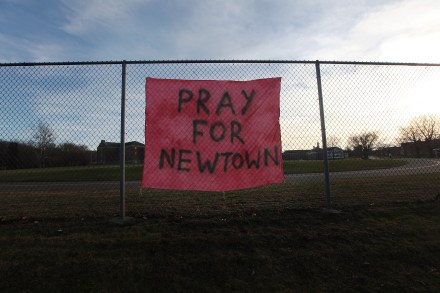
Newtown, Connecticut: A Very American Tragedy – Spectator Blogs

I've not written anything for a few days because, well, I've been trying to organise what I think about the awfulness of the shootings in Newtown, Connecticut. Trying, also, to find a way of writing about it that seems appropriate. There are moments, I think, when a too-polished piece of prose risks seeming distastefully narcissistic, too close to being from the School of Martin Amis. I remember Amis describing the "sharking" trajectory of the second plane hitting the World Trade Center more than a decade ago and thinking that, as apt and vivid as the image was, there was something unpleasant about it. Something that suggested the author was too admiring of his own imagery. The event made self-consciously fine writing seem superfluous and even oddly obscene.

Shootings in US suburbia, what would J.G. Ballard make of them?

These shootings. I think we need J G Ballard back. Looking back through previous such apparently random events, we might observe that: • The perpetrators are almost always white. • They are almost always lower middle class or middle class. • The areas in which the shootings take place are almost always comfortable, although not luxurious, suburbs, a good distance from the local metropolis. In demographic terms they tend to have a rather lower racial mix than is average for the state. • The median income is always bang on average for the state. They tend to be places with otherwise low crime figures. I don’t really know what this tells us.

The Connecticut shooting

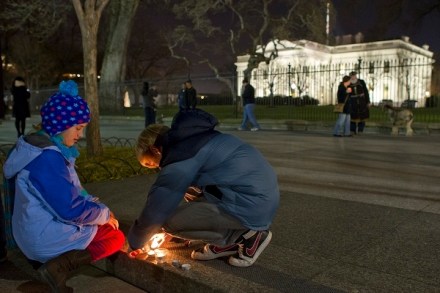
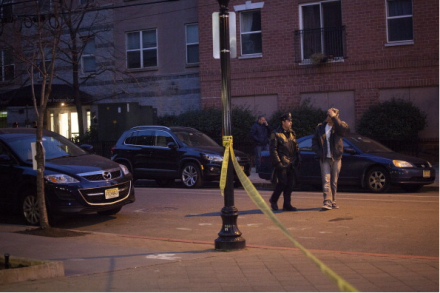
The news coming out of Connecticut is just awful. 18 children have been gunned down at their school and, reports suggest, that another nine people—including the gunman—are also dead. The gunman’s mother apparently worked at the school, and is believed to be among those he murdered. If this death toll is accurate, it will be the second worst shooting in US history, behind the Virginia Tech incident in 2007. Early reports indicate that the weapon was legally purchased and licensed. It can seem tawdry to talk about politics at a time like this. But there’s no doubt that the gun control debate will now return to Washington. The White House has already indicated that it wants to see the assault weapon ban, which elapsed in 2004, renewed.

Barack Obama’s best voice: Michael Grunwald

No Obama policy – not even ‘Obamacare’ – has been derided quite as much as his stimulus package and the $787 billion Recovery Act passed in February 2009. It became a byword for failed big-government liberalism, and the Republicans’ staunch opposition to it underpinned their 63-seat gain in the House of Representatives in 2010. Yet, in this engaging and insightful attack upon the received wisdom of Obama’s failure, Michael Grunwald launches a lucid defence of the Recovery Act. Grunwald’s key argument is that, whatever its imperfections, the US would have been a far worse place without the Recovery Act. Independent analysts agree that it has saved or created over 2.5 million jobs. But its impact went far beyond these jobs.

The Way the World Works by Nicholson Baker – an ideal Christmas present

Nicholson Baker is intensely interested. He looks at the world like he has never seen it before, fixating on the mundane and capitalizing upon the strange lacunae which exist between seeing and understanding. In the purist sense, his interest makes him interesting. The Way the World Works is a colourful digest of his essays, conference papers, feature articles, and observations, divided into five main sections: Life (his own, principally), Reading, Libraries and Newspapers, Technology, and War. Well over a decade’s worth of eloquent umming and ahhing is encased in a single volume, a follow-up to his first, The Size of Thoughts.

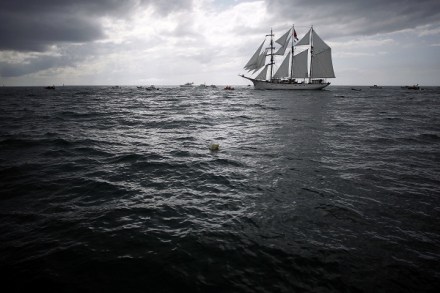
The Atlantic, the ocean that made the modern world

Just as the classical world was built around the Mediterranean, the modern world was built around the Atlantic. The Romans called the Med ‘Mare Nostrum’ – Our Sea. The Atlantic, on the other hand, was a place of contest for centuries. European nations fought for supremacy and plunder upon it, traded for wealth across it, and scrambled for territory around it. According to John K. Thornton, author of A Cultural History of the Atlantic World 1250-1820, the creation of an ‘Atlantic World’ was driven by the hunger of European states for hard cash. Money was needed to support the fantastically expensive armies which, from the late Middle Ages onwards, European nations were obliged to maintain as they engaged in a prolonged arms race.

Philip Roth retires

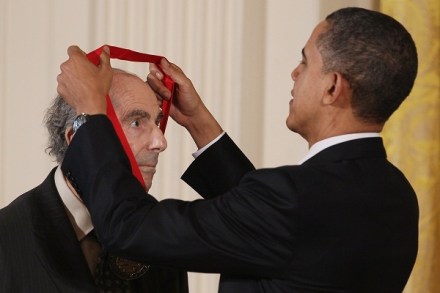
Philip Roth has retired. He told a French magazine that, at 79, he was ‘done’. There will be no more books. For the little it is worth, I think he ought to be a Nobel Laureate – American Pastoral stands as one of the best books written since the war about, among other things, the failings and failure of the post-war era, and The Human Stain and Portnoy’s Complaint aren’t too bad either. Roth is an obvious choice for the Nobel committee; but it is simply perverse of them to be scared of his renown, or even to mistrust it. Roth’s retirement recalls Martin Amis' view that writers die twice: the mind weakens, even though the flesh remains willing. Amis’ belief carries a negative, mournful air.

Thornton Wilder’s theatrics in The Cabala

I was on a date once in Atlanta, Georgia. We decided on the theatre and there was only one show playing, The Skin of Our Teeth by Thornton Wilder. After a night time drive under the arms of blue mossed oaks we made it to Emory University and took our seats and the curtain rose on a Victorian living room. Cautiously, with a canine playfulness, from out behind a sofa, tromped a dinosaur. I kept thinking of this moment as I read Wilder’s first novel, The Cabala.  Originally published in 1926 before he became a renowned playwright, Wilder attempted the same tricks here. He interjects Keats, Virgil, and even incarnate Mercury, into a contemporary 1920s narrative, in order to argue that the human condition has never improved, that culture is only a jacket that fits over a skeleton.

Back to the start – Train Dreams, by Denis Johnson

Train Dreams, the Pulitzer nominated novella by playwright, poet and U.S National Book Award winning novelist Denis Johnson, is the life story of Robert Grainer, a man who ‘had one lover... one acre of property, two horses, and a wagon... [had] never been drunk... never purchased a firearm or spoken into a telephone.’ Born at the end of the nineteenth century and dead a year before the Summer of Love, Robert labours in the American West, cutting timber for railroad tracks and then, when he’s too old for that work, carting people’s possessions around the countryside. The book’s chronology is loose, or, rather, Grainer’s whole life comes at us at once.

George Osborne’s Afghan letter from America

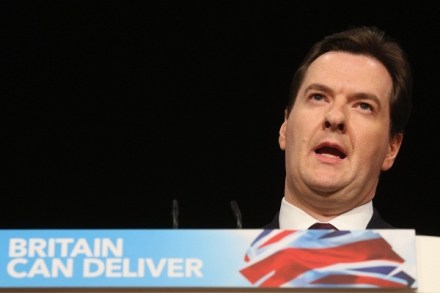
George Osborne is a keen observer of American politics, so perhaps it is little surprise to read in the Telegraph that the chancellor is arguing for faster withdrawal from Afghanistan. The American presidential race has confronted national war-weariness. The Obama camp has long held that the 2014 drawdown date is firm; that is when the troops will come hom. It is even thought that US training and logistical support to Kabul will be curtailed together with combat operations. The Romney camp’s view has been less clear, which suggests that it has not wanted to leave itself exposed during the campaign by committing to anything from a position of comparative ignorance next to Obama.

Interview: James Lasdun’s art

James Lasdun published his first book of short stories The Silver Age in 1985. The debut won him The Dylan Thomas Award, and was followed by Three Evenings another book of stories. In 1998, Italian filmmaker, Bernardo Bertolucci, directed the film ‘Besieged’, which was an adaptation of Lasdun’s short story ‘The Siege’. In 2002 Lasdun published his first novel The Horned Man. The book earned him the New York Times Notable Book of the Year and the Economist Best Book of the Year. His second novel Seven Lies was shortlisted for the 2007 James Tait Black Memorial Prize. Lasdun is also a highly acclaimed poet. His collections include A Jump Start; The Revenant and Landscape with Chainsaw, which was shortlisted for the T. S.