Universities

You can’t beat Corbyn with Miliband

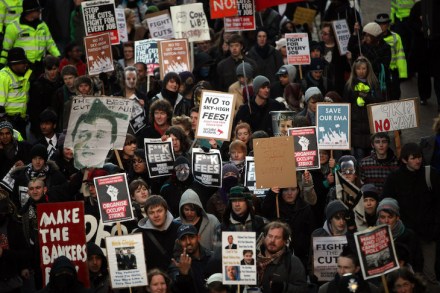
Tuition fees have all but killed the Liberal Democrats. The breach of their manifesto pledge to abolish the charges, compounded by them voting for a fees increase, broke the party. Even the opportunities presented by Brexit have not revived them. In their defence, they can plead that tuition fees make fools of all parties. The Conservatives opposed them at first, then raised them to £9,000 a year. The Labour party introduced them, yet now campaigns to abolish them. In 2018, we seem to be in for another bout of tuition-fees silliness. No. 10 is clear that Jo Johnson was moved from the universities brief in the reshuffle because he was obstructing a review of the current policy.
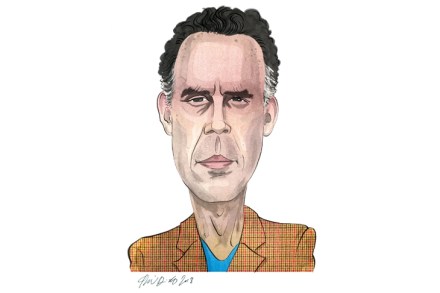
A star is born

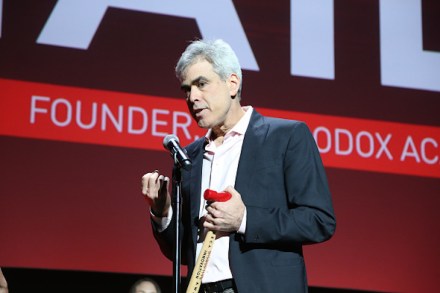
Last Sunday night a capacity crowd of mainly young people packed into the Emmanuel Centre in London. Those who couldn’t find a seat stood at the back of the hall. When the speaker entered, the entire hall rose to its feet. It was his second lecture that day, the fourth across three days of sold-out London events. For an hour and a half the audience listened to a rambling, quirky, but fascinating tour of evolutionary biology, myth, religion, psychology, dictators and Dostoyevsky. Occasionally a line would get its own burst of applause. One of the loudest came after the speaker’s appeal for the sanctity of marriage and child-rearing. Yet this was not a Christian revivalist meeting. At least not explicitly or intendedly so.

How to make economists fight like ferrets in a sack

One of the funniest passages of writing I have read in the past few years appears within the pages of Richard Thaler’s memoir Misbehaving. He describes what happens when the University of Chicago economics faculty moves to a new location. The economists simply have to agree among themselves who will occupy each office in the new building. Now in theory, at any rate, this should be a breeze. You have a group of people who should be among the most rational in the world; their discipline, economics, defines itself as dedicated to the study of the ‘allocation of resources under conditions of scarcity’: here is a problem tailor-made for economists to solve. It was, as you can imagine, a fiasco.

Letters | 2 November 2017

Equality of outcome Sir: Rod Liddle exposes some deep flaws in the way children are prepared to play their part in adulthood (‘The kids aren’t all right’, 28 October). But one in particular merits further analysis. He is right to say that teachers’ imperative is to raise the D grade students at GCSE to a C, as a school is judged on the number of A-C grade passes it secures. So all the best teachers and all the extra resources are focused on the D grade children. An A grade student who could, with a bit of help, achieve an A* and thus begin their journey to Cambridge is ignored, and if he or she achieves only a B, that is a tick in the box; a success.

Diary – 2 November 2017

Where better to be than in Liverpool on a crisp autumn evening, haranguing an open-air meeting of students? I hadn’t done a soapbox speech since my Trotskyist days 45 years ago, and had forgotten how exhilarating it is — the questions sharper, the audience more alert, the tempo brisker, and the missionary feeling of spreading the word. Also, the students didn’t cough all the time, which they tend to do in stuffy lecture rooms. But I had never meant to do this. Months before, Tom Willett, of Liverpool University’s politics society, had asked me to come and speak about my favourite subject, the fact that there is no ‘War on Drugs’.

Critics of grammar schools are wrong

Bright but poor kids have been failed for decades. Since the abolition of grammar school expansion some forty years ago, an educational bottleneck has been created, through which children from disadvantaged backgrounds cannot squeeze. State primary schools are banned from teaching how to pass the 11-Plus test, leading to the creation of an incredibly unfair system. Full disclosure; I live in Kent (grammar school territory) and both my kids were tutored and sat the test: one failed, one passed, no big deal either way as I too had failed the 11-Plus (and the world kept turning). A private tutor was essential if my kids were to stand a chance of understanding the questions, let alone answering them. In my day we were taught the 11-Plus in school.

MPs are undermining Britain’s world-class university system

The debate about universities in the last few days has been extremely frustrating. Britain has the two best universities in the world, according to The Times Higher Education rankings, and five of the top 25. This should be a cause for national celebration. Politicians should be seeking to build on this strength, not doing anything to undermine it. But instead, MPs on both the left and the right are behaving in reckless and irresponsible ways. Oxford is the best university in the world. But a former universities minister, David Lammy, the shadow Education Secretary, the Tory chair of the Education Select Committee and 100-odd other MPs want to massively interfere in how it is run. They want Oxford to move to a more centralised admissions system.

Wealthier by degree

It is not a great advert for university when the universities minister says he is not especially bothered whether his own children go or not. ‘The days of degree or bust are long gone,’ Jo Johnson told the Sunday Times recently. ‘There are alternative ways into the workforce these days. Absolutely I would say to my own kids to consider them.’ But hasn’t he got it the wrong way round? Is it not the case that a degree is more essential now than ever? That the chances of getting a good job without one have greatly diminished since a generation ago, when East End barrow boys went straight into the City and industry was full of leaders who had pulled themselves up by their bootstraps?

How to conquer America

Teenagers, in my experience, divide into the unmotivated and the motivated sort. You can spot the symptoms: given a free day, the unmotivated one will go out to buy a new phone charger, while the motivated one will go on an advanced sailing course. If you’re the unmotivated sort, read no further. This piece is not for you. You have as little chance of getting a place at an American university as my lazy dog does of winning Crufts. And when I say motivated, forget the Oxbridge level of motivation.

Letters | 31 August 2017

Campus censoriousness Sir: I am so grateful to Madeleine Kearns for having the courage to speak out about her experiences at university when others, including myself, remain silent (‘Unsafe spaces’, 26 August) . I have done the reverse of Madeleine in that I, a young American woman, moved from New York City to the UK for graduate school. One of the main factors in this decision to continue my education here is because I feel I have more academic and intellectual freedom. The idea of a balanced argument at my undergraduate university was ‘neoliberal’ versus ‘radically liberal’. We spoke of the importance of diversity, but political diversity was never considered.

Letters | 24 August 2017

In defence of General Lee Sir: In your leader ‘America’s identity crisis’ (19 August) you state that ‘When General Lee emerged as a leader of that rebellion [the secession of the Southern states], we said that he had no cause that stood up to scrutiny.’ The irony is that Lee did not disagree with that view. Unlike Jefferson Davis and other Confederate leaders, he was opposed to secession and believed that the Union should be kept intact. Nor was he an enthusiast for slavery. A slave owner by proxy, he appears to have loathed the experience. In 1856 he wrote to his wife saying that ‘In this enlightened age, there are few I believe, but what will acknowledge, that slavery as an institution, is a moral & political evil in any Country.

The big business of teaching

As expected, the prospect of charging £9,000 (and rising) per annum, per student has universities abandoning any pretence to maintaining standards in favour of piling ’em high. Ancient ‘universities’ knew all about it. Ancient education was private. A city might pay a ‘lecturer’ a small retainer, but he made his money through the fees he charged. But since all lecturers taught the same thing — rhetoric, with a view to a career in politics and law — each was in a constant, often literal, battle to attract students and stop them defecting. We hear of lecturers urging their students to waylay ‘freshers’ as they arrived in port and drag them to their classes. Libanius (c.

The Spectator Podcast: Campus tyranny

On this week's episode of The Spectator Podcast we look at the issue of 'safe spaces' on campuses and beyond. We also discuss Donald Trump's military strategy, and look at Indian independence, 70 years on. First up: In this week's Spectator cover piece, Brendan O'Neill slams British universities for what he sees as a burgeoning liberal conformism within their walls. Is he right to despair? Or is this just a grumpy older generation railing against change? He joins the podcast along with Justine Canady, Women's Officer for UCLSU, and Madeleine Kearns, who writes about her experiences at NYU in the magazine. As Brendan says: "In the three years since The Spectator named these Stepford Students, the situation has become far worse.

Unsafe spaces

As a child in Glasgow, I learned that sticks and stones might break my bones but words didn’t really hurt. I’m now at New York University studying journalism, where a different mantra seems to apply. Words, it turns out, might cause life-ruining emotional trauma. During my ‘Welcome Week’, for example, I was presented with a choice of badges indicating my preferred gender pronouns: ‘he’, ‘she’, ‘they’ or ‘ze’? The student in front of me, an Australian, found this hilarious: ‘Last time I checked, I was a girl.’ Her joke was met with stony silence. Later I realised why: expressing bewilderment at the obsession with pronouns might count as a ‘micro-aggression’.

Varsity blues

A vast cohort of bright young things have secured their university places with A-level success this week. But things are not so rosy at the universities they will set off to join: after 25 years of rapid expansion, the sector is drifting away from both the core principles of education and the world of work. A few figures illustrate the problem: 2.3 million students are in higher education; 47 per cent of young people are in university; 51 per cent of A--level students will begin undergraduate study aged 18. And almost three quarters of them will get a 2:1 or a first. What exact distinction does a university degree confer? True, the vast majority of students enter paid work or further research within six months of graduating.

Donald Trump is cutting the Fulbright programme, but I won’t miss it

Now Donald Trump really has done it. He’s cutting nearly half the budget of the Fulbright programme, the fund that has paid for 12,000 Brits to travel to the US to study and for a corresponding number of Americans to come here. Given that the beneficiaries include people who’ve done terrifically well for themselves - alumni and alumnae include Bill Clinton, Yvette Cooper, Onora O'Neill, Liam Byrne MP, the philosopher, and, er, Sylvia Plath – there has been a corresponding fuss. Some of the beneficiaries have written to The Times to suggest that the cuts will “devastate the programme and damage irrevocably the most successful cultural diplomacy initiative in the history of the United States.” Well, maybe, maybe not.

Are conservatives a bunch of neanderthals? Some on the left seem to think so

How tragic that the country – and indeed the world - is being dragged rightwards by a bunch of Neanderthal conservatives who relish ignorance and despise experts. That, in as many words, was the argument advanced here by Nick Cohen on Monday, as well as by many others on the Left. Nick wrote: '…in Britain and America one trend is clear: the better-educated you are the less likely you are to vote for the right. Like Mill, I am not arguing that educated people are always clever. Intellectuals have always included fanatics and cranks among their number. But I can say this: in a country where ever more people are going to university, no party can hope to survive as a party of government if it sells itself as Michael Gove’s know-nothing party'.

Universities should offer one-year courses

In every respect bar one, those bloody Corbyn-supporting students have a much tougher time of it than I did, what with my full grant and my tuition fees paid. But by God, learning stuff is easy nowadays. The young of today just cannot conceive what a chore it was to eke out enough material for an essay in 1984. To find out anything took hours of mostly wasted effort in a library. If you imagine a world where every page of Wikipedia took half an hour to load, it should give you some idea of what it took to educate yourself back then. That’s why we were all drunk and on drugs: we needed to recover from a tiring week finding out the significant dates of the Delian Confederacy. So why, pray, do university courses still last three years? Can people not learn any faster now?

Race, gender and a terrifying witch hunt

A leading article appeared in Nature last week in defence of intelligence research. It lamented the fact that it is not included on the undergraduate psychology curricula of many leading US universities, and attributed this to its association in the minds of students and faculties with elitism and racism. That, in turn, is due to the misuse of intelligence research in the past by eugenicists and ‘race scientists’ to justify their poisonous beliefs. The article expressed the hope that this toxic baggage can be discarded and intelligence rehabilitated as an important strand of psychology. This optimism is often shared by academics who study the genetic basis of human differences; not just variations in intelligence but in other personality traits too.

Jewish students are turning their backs on British universities. Who can blame them?

Universities up and down the land are clambering to recruit students in time for the start of the new academic year. International students – those from outside the EU – are the most lucrative market, not least because there are no legal restrictions on the fees that they can be charged; top universities, such as Oxford, can charge as much as £23,000 a year for some courses. But there are also sound academic reasons why we should recruit internationally. We want our campuses - which are places of education as well as training - to be centres of social, religious and ethnic diversity. We also want, of course, to recruit the best students. Yet the signs are that the sector is failing in its mission to make campuses as cosmopolitan as possible.