Universities

When a student mob came for my job, my college did not support me

From our US edition

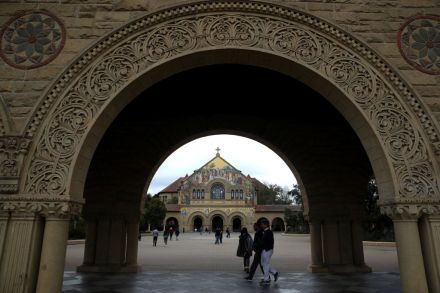
Sarah Lawrence College claims that its mission is to graduate students who are, ‘diverse in every definition of the word.’ Unfortunately, recent events which have been in the national eye, suggest otherwise. And this story involves me. Seizing on an op-ed I wrote for The New York Times a few months ago, in which I questioned the lack of ideological balance of the school’s extracurricular programming, a group of student protesters calling themselves the Diaspora Coalition labeled me a racist misogynist. They demanded that my ‘position at the College be put up to tenure review to a panel of the Diaspora Coalition and at least three faculty members of color.

sarah lawrence college viewpoint diversity

Unconditionally yours

I know what it is like to receive an unconditional offer for university. In 1984, when I took the Cambridge entrance exam, if you passed, you then only had to meet the matriculation requirements of the university, which were two Es at A-level. For someone predicted straight As (virtually all Oxbridge candidates), that wasn’t asking a lot. It was hard not to slacken off a little, to take a mental gap year, or six months at any rate, for the last two terms of the sixth form. I slipped to a B in further maths, which seemed an embarrassment at the time, though I know others who took a bigger plunge. What with a real gap year, too, I never really did get back into numbers.

Operation Varsity Blues and the wrong sort of college corruption

From our US edition

We knew Felicity Huffman from Desperate Housewives, but we didn’t know how desperate a mother she was until now. Huffman and Lori Loughlin of Full House are the two celebrities caught in the Operation Varsity Blues dragnet, along with 31 other individuals who paid as much as $500,000 per dimwit child to one William ‘Rick’ Singer, all so their pampered, ignorant, SAT-flunking little darlings could get into ‘good’ schools where they could snort Xanax, butt-chug ketamine, and slob around in sweatpants and flip-flops like inmates in a mental hospital — just like their more intelligent peers, apart from the Asians, who actually study and are America’s last chance. Let us count the ways in which college admissions are corrupt.

operation varsity blues felicity huffman

Why I hate ‘the n-word’

One of the depressing aspects of writing a column attuned to social hypocrisy is so rarely running short of new material. Any pundit keen to highlight the grievous injustices committed haughtily in the name of justice these days is spoilt for choice. So: Augsburg University, Minneapolis, Minnesota. A student reads aloud a quote from James Baldwin’s The Fire Next Time: ‘You can only be destroyed by believing that you really are what the white world calls a nigger.’ The last word causes a stir. When the white professor, Phillip Adamo, asks the class what they think of the student’s reciting of the quote verbatim, he repeats the word. The next day, the students kick Adamo out of his own classroom; since as ever the animals are running the zoo, he complies.

Will history survive?

From our US edition

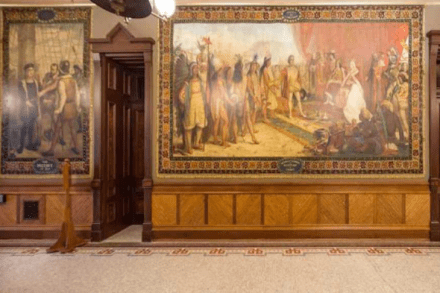
The news that the University of Notre Dame, responding to complaints by some students, would ‘shroud’ its 12 134-year-old murals depicting Christopher Columbus was disappointing. It was not surprising, however, to anyone who has been paying attention to the widespread attack on America’s past wherever social justice warriors congregate. Notre Dame may not be particularly friendly to its Catholic heritage, but its president, the Rev. John Jenkins, turned jesuitical when queried about the censorship. He said, apparently without irony, that his decision to cover the murals was not intended to conceal anything, but rather to tell ‘the full story’ of Columbus’s activities.

history

Universities should resist calls to ‘decolonise the curriculum’

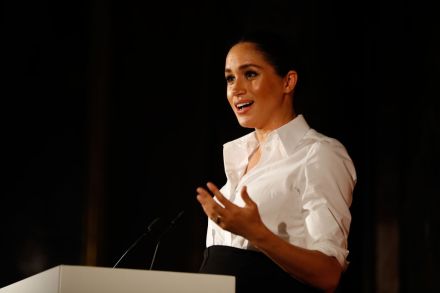
Meghan Markle has reportedly backed calls to ‘decolonise the curriculum’. This campaign to promote ethnic minority thinkers in place of 'male, pale and stale' academics also has support from the Labour party. Angela Rayner, shadow education secretary, has said that 'like much of our establishment, our universities are too male, pale and stale and do not represent the communities that they serve or modern Britain'. If Labour comes to power, Rayner promised to use the Office For Students to change things. But this move to ‘decolonise the curriculum’ is in fact a big mistake. Firstly, the campaign conjures up images of dusty old men engaged in an unconscious conspiracy to ensure ‘non-western’ worldviews are stamped out.

What happened when I was banned from a free speech debate on campus | 11 February 2019

It's clear that our universities have a problem with free speech. We’ve recently witnessed students at the University of Oxford not only protesting Steve Bannon’s appearance at Oxford Union, but attempting to prevent others from even attending the talk. Only last week, Peter Hitchens had a talk he was due to give cancelled at the University of Portsmouth because the university felt that this would not chime with the students’ union’s LGBT+ month. I've also fallen foul of this tendency towards censorship on campus: when I shared a Spectator article in November asking 'Is it a crime to say women don't have penises?

Ohio State lecturer bans students from saying ‘illegal immigrants’

From our US edition

A little row at Ohio State University, which Cockburn would like to document, if he may. Victor Espinosa, a lecturer in sociology at Ohio State University, has been telling students that they are forbidden from using the term ‘illegal immigrant’ to describe immigrants who did not enter the country through the legal method. Because – drum roll – it is offensive. Mr Espinosa has written to at least one student telling them they ‘will not be allowed to use the term illegal to refer to an unauthorized immigrant’ because it ‘dehumanizes, marginalizes and racializes the people it seeks to describe.

ohio state illegal immigrant

What’s the truth about university grade inflation?

It's a well-worn complaint that universities are dishing out firsts as never before. Today, a report by the Office for Students (OfS) confirms the true extent of 'grade inflation' at our universities: 124 of the 148 higher-education providers they assessed in England show ‘a statistically significant unexplained increase’ in the proportion of firsts and 2.1s awarded, compared with figures in 2010-11. Between 2011 and 2017, the average percentage of firsts and 2.1 degrees rose from 67 per cent to 78 per cent. The figures uniformly document the same upwards trend.

Will Noah Carl get a fair hearing?

A letter appeared in the Times this morning defending Dr Noah Carl, the young Cambridge scholar who was branded a ‘racist pseudoscientist’ and accused of making ‘errors’ in an ‘open letter’ signed by over 200 academics in fields like ‘critical race studies’ and ‘media and communications’. The letter in the Times today is signed by three postgraduate students from Nuffield College, Oxford, where Dr Carl, who describes himself as a ‘conservative’, did his PhD. They argue that ‘popularity should not be allowed to take the place of intellectual debate’ and urge the Cambridge authorities not to be swayed by ‘popular opinion’.

Academics who dare not speak their names

When I first read about plans for a new academic periodical called The Journal of Controversial Ideas, I got the wrong end of the stick. Fantastic news, I thought, particularly when I saw the distinguished group of intellectuals behind it. They include Jeff McMahan, professor of moral philosophy at Oxford; Peter Singer, the well-known Australian philosopher; and Francesca Minerva, a bio-ethicist at the University of Ghent. An authoritative magazine bearing the imprimatur of these distinguished free-thinkers is a great way to persuade other, less celebrated academics to stick their heads above the parapet and publish essays that dissent from groupthink. Then I spotted an important detail: all the material will be published pseudonymously.

A league of their own

 New York There comes a point in a New York expat’s life when you suddenly realise that the liberal elites that run this town have feet of clay. You have watched them joining anti-Trump marches, opening their beautiful homes for Democrat fundraising parties and noisily bidding ludicrous sums at charity auctions. Then the time comes for their children to apply to university and the whole elaborate façade comes crashing down. My wife and I couldn’t help noticing that the parents of our daughter’s American friends didn’t exactly share our blind panic as we tried to work out where she should apply for university.

The censorship of Norman Geras

To anyone who knew the late and much-missed Norman Geras, the idea that the state could consider his work an incitement to terrorism would have been incomprehensible. Geras was an inspirational politics professor at Manchester University, and a polemicist and moral philosopher of exceptional insight. He devoted much of his energy to opposing the murder of civilians, and lost many friends on the left in the process. You could level all kinds of charges against him, we would have conceded. But incitement to terrorism?  The charge would be insane. We should have known better. We should have realised that academic bureaucrats could find reasons to label any and every work ‘threatening’ or ‘triggering’ if the mood so took them.

The dangerous silence in higher education

From our US edition

It’s well known that the question of who can speak and on what topics has become a flashpoint for controversy on our nation’s college and university campuses. I experienced intimidation firsthand after publishing an op-ed in the New York Times in which I questioned some of seemingly liberal, lopsided programming at Sarah Lawrence College (one of the most proudly progressive schools, where I am a tenured professor). I suggested that more balance was needed given our polarized times and reiterated my concerns about collegiate ideological echo chambers. Within hours, my office door and surrounding corridor was vandalized. Pictures of my family were taken and bumper stickers that I had placed on the door to create a welcoming environment for students were stripped off.

sarah lawrence college higher education

Creating inequality by degrees

Imagine a world where employers judged applicants solely on their dress. Anyone in frayed clothes or scuffed shoes would never get a job. This would be unfair to poorer applicants so, in the name of equality, the government might offer favourable loans up to £1,000 to buy interview clothing. At first glance this would seem a wonderful way to promote fairness. Yet if the number of jobs remained constant, such a policy would have the opposite effect: it would merely ratchet up the level of wasteful, zero-sum competition for what limited chances exist. Soon, anyone not sporting Savile Row tailoring and handmade shoes would be written off. Rather than widening opportunity, it would raise the bar to existing opportunities still higher.

American universities need to chop the hand that feeds them tyrants’ cash

From our US edition

Political correctness is the yoga of the modern Western mind. The salutations and poses of rationalised irrationality are nowhere aped more sedulously than in the American university. At the same time, the infinite cupidity of the American university, its appetite for money from parents, corporations and even foreign powers, brings the soft conscience into contact with hard cash from the kind of regimes for whom ‘political correctness’ retains its original sense, which is repeating the regime’s propaganda so you don’t get shot or sent for re-education in the local equivalent of a liberal arts facility.

harvard university universities

Free speech and expensive schools in South Dakota

From our US edition

In nearly every state, the legislature is nervous about the public universities it finances. And fair enough. Apart from sports, the state colleges in America tend to make the national news only when protests break out, and protests tend to be driven by a radicalism that reveals the school protesters are far to the left of the legislatures of even the more liberal states. Such national news embarrasses the legislators, who send querulous letters to the school officials, with distant threats of cutting state funding. Which tempts those officials to surrender preemptively to activists, in the hope of avoiding protests. Conservatives in America typically blame the radicalism of college administrators for, say, the academic banning of conservative speakers on campus.

university of south dakota

Freshers week is torture for an ageing academic like me

A fellow academic once said that working at a university is one of only a few places where you grow older while everyone around you stays the same age. It was this remark that occupied my mind this week as I trundled through campus, smiling and greeting our ever-younger-looking first-year undergraduates. The whole idea of ‘Welcome Week’ was no doubt conceived by a university bureaucrat with good intentions. But having experienced it first-hand, and as the one doing the welcoming, I can only conclude that it is torture. Once a year, like clockwork, we older folk must be visibly reminded not only of the relentless passing of time but also of our general insignificance amid life’s great generational churn.

The neo-Marxist takeover of our universities

According to Greg Lukianoff and Jonathan Haidt, America’s universities have succumbed to ‘safetyism’, whereby students are protected from anything that might cause them anxiety or discomfort. In their book The Coddling of the American Mind, published this week, they attribute the spread of ‘trigger warnings’, ‘safe spaces’ and ‘bias hotlines’ on campus to a misplaced concern about the psychological fragility of students. In their view, millennials aren’t ‘snowflakes’, but imagine themselves to be on account of having been surrounded by over-protective parents and teachers.

neo-marxist stepford students universities

The neo-Marxist takeover of our universities

According to Greg Lukianoff and Jonathan Haidt, America’s universities have succumbed to ‘safetyism’, whereby students are protected from anything that might cause them anxiety or discomfort. In their book The Coddling of the American Mind, published this week, they attribute the spread of ‘trigger warnings’, ‘safe spaces’ and ‘bias hotlines’ on campus to a misplaced concern about the psychological fragility of students. In their view, millennials aren’t ‘snowflakes’, but imagine themselves to be on account of having been surrounded by over-protective parents and teachers.