Geoffrey Alderman

Should rabbis dabble in politics?

From our UK edition

Should rabbis dabble in politics? Should they use their influence to persuade their congregation to follow a certain political path? Should this authority extend to interventions in parliamentary elections and other matters of national debate? I pose these questions because in recent days British Jews has been confronted with some dramatic instances of very public rabbinical interventions which are of a shamelessly political, not to say party-political, nature. Consider two recent examples.

Are British universities institutionally racist?

From our UK edition

How genuine and inclusive are complaints about institutional racism affecting non-white academics and students in British universities? To find out, over the past half year I’ve made it my business to attend academic conferences (four in all) focused or largely focused on alleged racism at UK universities and the experience of Black, Asian and Minority Ethnic (BAME) students and staff. I had been shocked by the insistence of my colleagues and peers that racism on university campuses is not merely alive and well, but flourishing and growing. Could this be possible, when it seems that every UK higher education institution has draconian policies and procedures in place to combat racism?

Britain doesn’t need another Holocaust memorial

From our UK edition

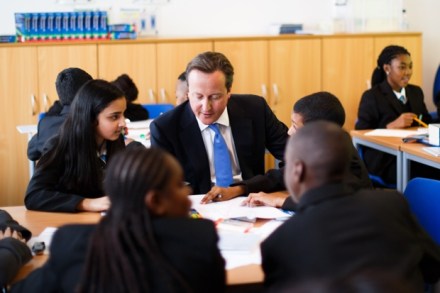
David Cameron announced five years ago that he was establishing a “Holocaust Commission”. The purpose? To “investigate what more needs to be done to ensure Britain has a permanent and fitting [Holocaust] memorial and the educational resources needed for generations to come.” Out of this Commission came a Holocaust Memorial Foundation; and out of this Foundation – technically an Advisory Board to the Ministry of Housing, Communities & Local Government – a breathtaking proposal has been issued: to construct within Victoria Tower Gardens (next to the Houses of Parliament) a gigantic edifice incorporating a learning resource centre to honour Jewish and other victims of the Nazi Holocaust, such as Roma, disabled and LGBT people.

Is Jeremy Corbyn really anti-Semitic?

From our UK edition

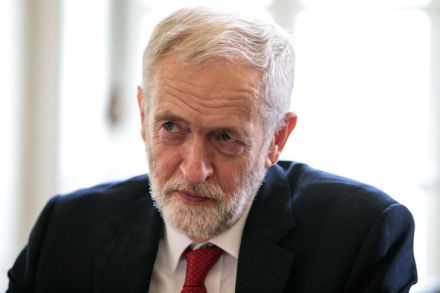
Is Jeremy Corbyn an anti-Semite? I began researching the answer to this question well before Danny Finkelstein’s recent revelation in the Times that eight years ago Corbyn had written a glowing foreword to a new edition of Imperialism: A Study, written by the radical economist John Atkinson Hobson, first published in 1902. Context is paramount. That’s why I feel obliged to censure Finkelstein’s exposé. We all know what Hobson thought of Jews and capitalism. But to conclude – as Finkelstein does – that in writing the foreword Corbyn had praised a 'deeply anti-Semitic book' is to give a totally false impression of what this influential study is actually about.

How the Tories’ education shake-up risks alienating Jewish voters

From our UK edition

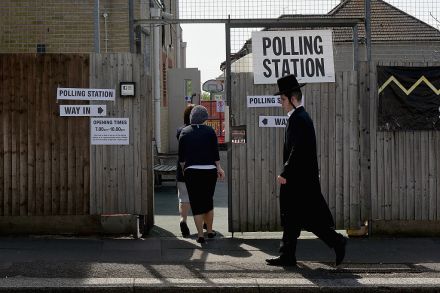
Labour desperately needs to win over Jewish voters if Jeremy Corbyn is to make it to Downing Street. At the snap election, the party was damaged by underperformance in seats with large Jewish populations: Hendon (held by the Tories by a only 1,072 votes) and Finchley (Tory majority 1,657) are two examples. Labour's summer of anti-Semitism has made winning over such voters even trickier. But while the Tories look well placed to keep hold of these seats, they appear to be doing their best to imitate Corbyn and alienate Jewish voters. An increasingly bitter row between the government and orthodox Jewish communities across Britain is to blame for this.

Academic freedom is now being betrayed by academics

From our UK edition

The ultimate purpose of a university is, without fear or favour, to pursue the truth, and in furtherance of that ideal I try, as an historian, to go wherever the evidence leads me. That some folks – even some academic colleagues – may not feel comfortable with the end results is of absolutely no consequence. I’ve always been supported by the institutions at which I’ve worked and by the colleagues with whom I work with.  But it’s now becoming clear to me that this world and these norms are under attack, and – scarcely less worrying – that they are being betrayed from within.

Jewish students are turning their backs on British universities. Who can blame them?

From our UK edition

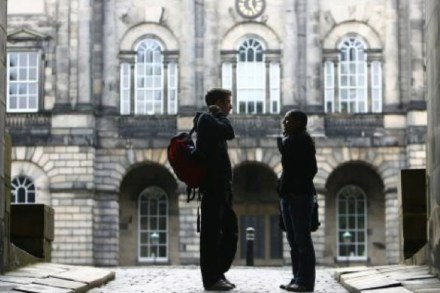
Universities up and down the land are clambering to recruit students in time for the start of the new academic year. International students – those from outside the EU – are the most lucrative market, not least because there are no legal restrictions on the fees that they can be charged; top universities, such as Oxford, can charge as much as £23,000 a year for some courses. But there are also sound academic reasons why we should recruit internationally. We want our campuses - which are places of education as well as training - to be centres of social, religious and ethnic diversity. We also want, of course, to recruit the best students. Yet the signs are that the sector is failing in its mission to make campuses as cosmopolitan as possible.

Rhodes Must Fall activists are curiously selective in their targets

From our UK edition

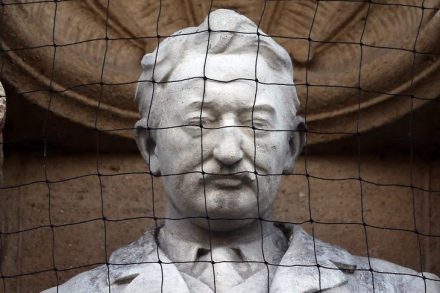
A campaign is currently underway to have Bristol's Colston Hall renamed because Edward Colston was a slave trader. This has set me thinking. How gross does someone’s moral turpitude have to be before memorials to him are considered ripe for removal? Two years ago, the Rhodes Must Fall campaign successfully lobbied for the removal of a statute of Cecil Rhodes from the campus of the University of Cape Town. The campaign then spread to Oxford, of which Rhodes was a graduate and at which he endowed the scholarships that bear his name. Rhodes was targeted as an architect of repressive anti-black colonialism. But not everything that was done in the name of colonialism was necessarily bad. In 21st-century terms, Rhodes harboured racist views.

Everyone loses when universities lower their entry requirements

From our UK edition

The UCAS deadline for the receipt of applications for university entry this coming autumn has just passed.  In terms of lifetime earnings a university degree – especially a degree from a top-drawer Russell Group university - is still excellent value for money, so thousands of students now working hard to complete their sixth-form studies will soon be waiting anxiously to see if their A-Level grades match university entry requirements.    I have some bad news for them. Some of them, who reach grades that would normally have guaranteed them a place, will nonetheless have been deliberately denied an offer, just so that others – who have not done so well at A-Level - can take their place. Why?

The ‘Alan Turing law’ and the danger of trying to rewrite the past

From our UK edition

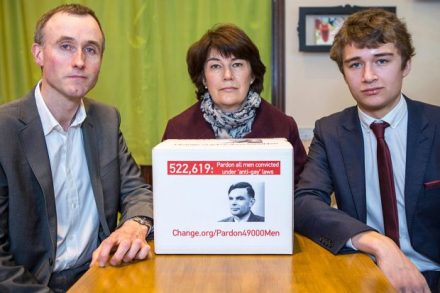
It may come as a surprise to some that, in itself, being homosexual has never been illegal in Britain. But, for hundreds of years, homosexual acts between consenting males were regarded as criminal offences. Thousands of men of all ages were prosecuted, sent to prison – or worse. One of these was Alan Turing, whose brilliant work on artificial intelligence was pivotal to the success of the Bletchley Park code breakers in World War Two. In 1952, Turing was convicted of gross indecency and, in order to escape imprisonment, agreed to undergo chemical castration. But while Turing's ordeal is difficult to imagine now, does pardoning him - and others convicted under such laws - do any good? When Turing received his Royal Pardon, there was much celebration.

Will Labour finally stop sweeping anti-Semitism under the carpet?

From our UK edition

In February, the co-chair of the Oxford University Labour Club, Alex Chalmers, resigned after having publicly accused the Club of harbouring and articulating rank prejudice against Jews and other minority groups. Mr Chalmers – who is not Jewish – declared that a 'large proportion' of Club members had 'some kind of problem with Jews'. He also suggested that individual members of the Club’s executive had employed offensive language 'with casual abandon', and that some had gone so far as to voice support for Hamas, the terrorist organisation that currently controls Gaza and which is proud to be governed by a charter that calls upon its followers to murder Jewish people. These were grave charges.

Why Jeremy Corbyn is absolutely right not to resign as Labour leader

From our UK edition

Jeremy Corbyn is absolutely right not to resign as Leader of the Labour Party. Those calling for his resignation – including those members of the Parliamentary Labour Party who supported the vote of no confidence against him – betray an astonishing misunderstanding of what the project called 'The Labour Party' is all about. Here’s the history lesson they all need to read, mark, learn and inwardly digest. The project now called 'The Labour Party' owes its origin to a conference called in London in 1899 to discuss the palpable erosion of trade-union rights as a result of a succession of legal judgments. Out of that conference something called 'The Labour Representation Committee' was established (it changed its name to 'The Labour Party' in 1906).

Social inequality is a problem, but universities can’t solve it alone

From our UK edition

In 1962 I made the leap of a lifetime - from a severely cash-limited working-class household in Hackney (my father had been a packer in a Whitechapel warehouse) to Oxford University. No obstacles were put in my way. Educated at an LCC secondary school, I spent a week at Lincoln College, taking exams for admission to the BA (Hons) in Modern History, and answering questions at a series of intellectually punishing academic interviews. No concessions were made to my socio-economic background. Nor, incidentally, did I benefit from any private tuition, which my parents could never have afforded. I was awarded an Exhibition (a form of scholarship) on merit.

Trade unions should foot the bill for any economic damage they cause

From our UK edition

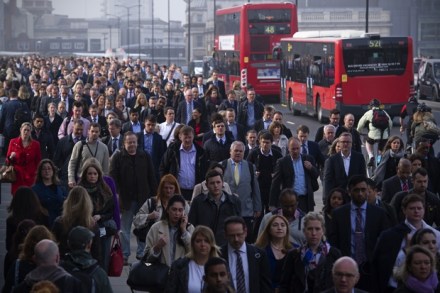
As of 6.30pm this evening, Londoners will (once again) suffer miserably at the hands of the transport unions, which have called another 24-hour strike on the Underground system in support of a demand for higher payments for operating a night-time service on parts of the network. Many commuters – forced onto overcrowded buses - will arrive late for work, while many more will be unable to work at all. Shops and restaurants will lose custom. When the last such strike took place, on 15-16 July, the Federation of Small Businesses estimated the cost at around £300 million. With more tourists in the capital, the cost of this next strike is likely to be even higher. But the unions will bear none of these financial consequences.

Student visa reforms will be a nightmare for university vice-chancellors

From our UK edition

As the dust settles on the outcome of the 2015 general election, one group of business executives who we can be sure are less than ecstatic at what the future may hold in store for them are the university vice-chancellors. During the last parliament, Theresa May was responsible for a raft of ministerial directives aimed at reducing the number of students coming to the UK from outside the European Economic Area. She introduced a quota system for these international students, and forced (through the withdrawal of visa sponsorship licences) the virtual closure of scores of non-taxpayer-funded educational institutions.

If ‘non-violent extremists’ can’t express their views at universities, where can they?

From our UK edition

Last month, the government’s Counter-Terrorism & Security Bill became law. One provision is the legal obligation it places upon ‘specified authorities’ to ‘prevent people from being drawn into terrorism’. ‘Specified authorities’ includes universities, whose vice-chancellors made several interventions as the legislation made its way through Parliament. The Education (No.2) Act of 1996 places a duty on universities and colleges to ‘ensure that freedom of speech within the law is secured for members, students and employees of the establishment and for visiting speakers’.

Israel has become a life-insurance policy for many British Jews

From our UK edition

Weekends are quality time in the Alderman household. On Saturday evenings, following the termination of the Sabbath, my wife and I are accustomed to sit together, review the week that has just ended, and map out the week ahead. But last Saturday the conversation took a very different turn. My wife and I considered the drama that had unfolded in Copenhagen, and asked ourselves, for the very first time in over forty-one years of marriage, whether we should not make plans to leave (flee?) England – this green and hitherto pleasant land in which we had both been born and educated– and seek shelter in some foreign field.

Here’s how politicians can convince British Jews that they have a future in the UK

From our UK edition

A recent study has suggested that over half of Britain’s Jews feel they have no future in the UK. At first glance this might seem outrageous, indeed incredible. Arguably (one might say) we Jews are the most successfully integrated of all the UK’s ethnic minorities.  A miniscule set of communities – comprising in total 0.5 per cent of the UK’s total population -  British Jewry punches well above its weight in all walks of life: the learned professions; the arts; the entertainment industries; academia; big and not so big business; even politics. Of course (you might retort) Jews have a future in the UK! A more pertinent question might be to ask what sort of a future we Jews have. Our places of worship must be guarded night and day.