Ukraine

Has the Assisted Dying Bill been killed off?

The reported decision to postpone the implementation of the Assisted Dying Bill until 2029 might, one must pray, turn out to be a form of legislative euthanasia. MPs, looking at the process, began to resemble a patient who, having first of all declared his wish to end it all, then begins to worry that it will not be as simple or painless as he had been led to expect. It is one thing to express a fervent wish to release people from unbearable suffering and quite another to frame safe procedures which involve the state, the judiciary and the medical profession in helping people kill themselves. It was a bad mistake, too, for Labour, under Keir Starmer’s leadership, to indicate that although MPs would have a free vote, assisted suicide was a modern, cool, Labour idea.

How many peacekeepers can Europe send to Ukraine?

We may look back to find Sir Keir Starmer partly defined by the phrase ‘coalition of the willing’. It is hard to fault the prime minister’s energy in rallying nations to implement a peace settlement in Ukraine, but there are issues to unpick. Who makes up the coalition? What is its role in Ukraine? What forces and capabilities will it need to fulfil that role, and where will it get them? The answers to these questions are both vague and subject to change, so let us see what we can establish. Only two months ago, President Zelensky told the World Economic Forum that enforcing a peace settlement would require a force of ‘at least 200,000… a minimum. It’s a minimum, otherwise it’s nothing.

Portrait of the week: Welfare war, gold prices soar and gang jailed for toilet heist 

Home Sir Keir Starmer, the Prime Minister, entertained 29 other national leaders online to seek a way of guaranteeing the future security of Ukraine. He then invited European defence leaders to meet in London. He spoke by phone to President Volodymyr Zelensky after the inconclusive conversation between President Donald Trump and President Vladimir Putin. John ‘Paddy’ Hemingway, thought to be the last Battle of Britain pilot, died aged 105. The government faced resentment in its own party against welfare cuts outlined by Liz Kendall, the Work and Pensions Secretary: the eligibility criteria for Personal Independence Payments would be tightened; incapacity benefits under universal credit would be frozen for existing claimants and those under 22 would not be able to claim it.

Ukraine is just one part of Trump’s Great Game

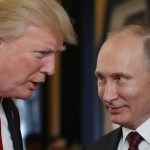
Washington D.C. For Donald Trump and Vladimir Putin, it’s a case of today Ukraine, tomorrow the world. In their much-hyped telephone call this week, the Russian leader didn’t appear to give much away: a step towards a sort-of ceasefire, a prisoner swap and a few other bits and bobs. But Putin knows that Trump wants a lot more than just an agreement on the Donbas. Settling the most significant conflict in Europe since the second world war is merely a prelude to a much bigger deal in the Holy Land, a truly historic arrangement that could satisfy the Donald’s desire to be thought of as a peace legend. That’s why Trump sent Steve Witkoff, his special envoy to the Middle East, to Moscow to pre-negotiate with Putin last week.

Putin is outwitting Trump

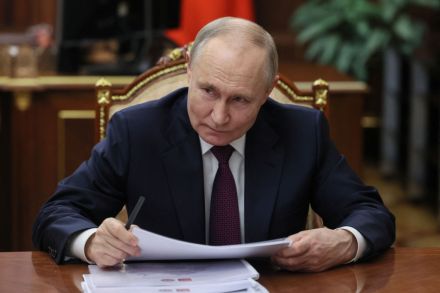
In the incessant conflicts of life and politics, people who know what they want tend to win. That is why Stalin won at Yalta and why, despite the extreme disadvantages of his country’s polity and economy compared with those of the United States, Vladimir Putin is outwitting Donald Trump. He wants Ukraine (and has related revanchist imperial ambitions), and has spent many years working out how to get it. His probing has taught him just how much both the United States and Europe, in their different ways, do not know what they want. The only real mistake Putin made was to think that Ukraine itself did not know what it wanted. It turned out that Ukraine most definitely does not want him. What about Trump?

Donald Trump, Putin and the Concert of Arabia

From our US edition

For Donald Trump and Vladimir Putin, it’s a case of “Today Ukraine, tomorrow the world.” In their much-hyped phone call this week, the Russian leader didn’t seem to give much away: a step toward a sort-of ceasefire, a prisoner swap, and a few other odds and ends. But Putin knows that Trump wants much more than just an agreement on the Donbas. Settling the most significant conflict in Europe since World War Two is merely a prelude to a much bigger deal in the Holy Land — a truly historic arrangement that could fulfill Trump’s desire to be seen as a legendary peacemaker. That’s why Trump sent Steve Witkoff, his special envoy to the Middle East, to Moscow last week to pre-negotiate with Putin.

putin

Trump’s foreign policy isn’t unprincipled

From our US edition

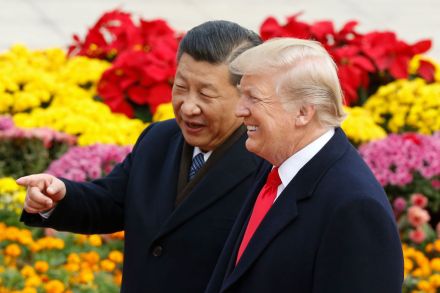
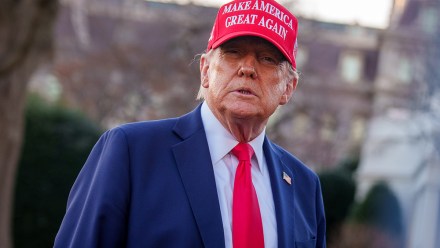
"He [Donald Trump] sees American leadership as merely a series of real estate transactions." That was the verdict of the Democratic senator Elissa Slotkin following the President’s address to Congress. Trump 2.0 does, admittedly, have the appearance of a political version of The Art of the Deal, in which the Donald is prepared to leverage a bilateral compact with every country in the world — so long as the price is right. There are no friends in The Art of the Deal, no permanent friends anyway, only prospective business associates. Ukraine wants the flow of armaments to resume? Sign over the rights to half your natural resources.

Trump

The problem with putting US nukes in Poland

From our US edition

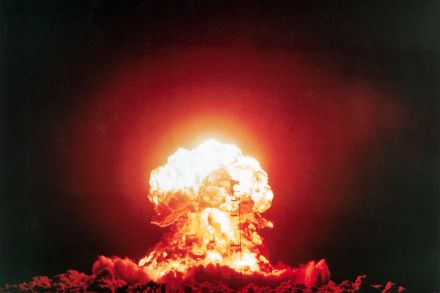
Nuclear weapons are becoming a major issue for Poland. One way or another, both the Polish president and prime minister want their country to host tactical nuclear weapons as a deterrent against President Putin’s Russia. In the latest — but by no means the first — statement on this issue, President Andrzej Duda revealed that he recently discussed stationing American tactical nuclear weapons in Poland with Keith Kellogg, the US special envoy for Ukraine. In an interview with the Financial Times, Duda said: “I think it’s not only that the time has come, but that it would be safer if those weapons were already here.

Will Putin give peace a chance?

From our US edition

At a summit meeting in Moscow, Ronald Reagan was asked about his basic approach. He famously answered, “Here’s my strategy on the Cold War: we win, they lose.” Vladimir Putin has the same strategy for Ukraine. That is certainly his first response to President Trump’s offer to mediate an end to the war and bring a reluctant Ukraine to the negotiating table. If “we win, they lose” is Putin’s final response, then the war cannot end without Ukraine’s surrender or Russia’s collapse. Putin’s initial reply, filled with his maximalist demands, indicates he is still committed to the conquest of his neighbor, whose independence and sovereignty he has long rejected.

putin

‘I had two jobs: to run the country and to survive’: an interview with President Trump

From our US edition

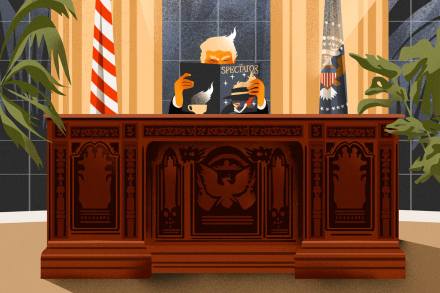
From the moment you enter Donald J. Trump’s Oval Office, you are surrounded, not by staff or Secret Service, but by presidents. In his second term, he has chosen to envelop himself in Americana to an unprecedented degree. He faces Franklin D. Roosevelt whenever he sits at his desk. Looking back are Teddy Roosevelt, Lincoln, McKinley, Polk, Jackson, Jefferson, and alone among them as a non-president, Franklin. Ronald Reagan looks over his shoulder for every decision he makes. “We took them out of the vaults. We have incredible vaults of things,” he tells me. “They have 3,900 paintings.” It’s a roster of the greatest American leaders assembled in an oval around him in their most sterling depictions. They serve as motivation.

Letters: Wokery is a form of dictatorship

Democracy rules Sir: I share the sentiments of both Rod Liddle (‘Trump displays weakness, not strength’, 8 March) and Douglas Murray (‘How MAGA turned on Ukraine’). I am one of those peculiar political animals who finds himself in agreement with certain elements of the right, including those represented by Donald Trump, on just about everything except Ukraine. Nevertheless, I see his election as an essential antidote to the poisonous ideology of the woke that has all but conquered the rest of the West in terms of the manner in which we live and are governed. Nor is the US immune.

Portrait of the week: Spies in Norfolk, rats in Birmingham and Denmark ditches letter deliveries

Home Three Bulgarians were found guilty of spying for Russia as part of a cell that plotted to kidnap and kill targets in Europe, under a fellow Bulgarian who lived in a former guest house in Great Yarmouth, Norfolk. The court heard that the spies reported to Austrian-born Jan Marsalek, who sought refuge in Moscow after the collapse in 2020 of Wirecard, the German payments company he helped run. Walgreens Boots Alliance, the US owner of Boots the chemist, was taken over by a private equity firm, Sycamore Partners. The government introduced the Planning and Infrastructure Bill, which will enable councils to seize land. The cost of a first-class stamp will go up 5p to £1.70 on 7 April.

Trump has breathed new life into Davos Man

So bad was the debut of this Labour government that many think it has already failed. But now, I suggest, there is at least a chance it will succeed. If it leads industrial recovery based on defence and security, tackles the flawed basis of large areas of welfare spending and sweeps away planning restrictions to build more, it will have confronted problems which the Tories evaded for years. Labour can do this, of course, only if it abjures the beliefs that Sir Keir Starmer has espoused throughout his political career, but that seems to be exactly what his managers, led by Morgan McSweeney, are now (rightly) forcing upon him. Rupert Lowe is not the first Lowe to split Reform.

Has Ukraine called Putin’s bluff?

12 min listen

Last night there was a huge breakthrough in Ukraine peace talks, with Zelensky accepting a US proposal for a ceasefire and placing ‘the ball in Putin’s court’, according to Marco Rubio. While getting Zelensky to accept is a huge diplomatic win, the proposal hinges on Putin agree to the terms of the ceasefire – which will last for 30 days but can be extended by mutual agreement. ‘I’ll talk to Vladimir Putin. It takes two to tango,’ said Donald Trump. Can Putin afford to reject the deal? And could this be the basis for a lasting peace? Meanwhile, Keir Starmer has been getting a lot of credit for his role in the Ukraine peace process and the perception that he has stepped up to meet the crisis.

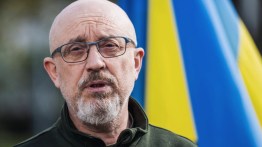
Oleksii Reznikov: ‘Trump and Zelensky fall-out was a clash of emotions’

‘What just happened – the suspension of military aid – was predictable. I expected it. It wasn’t too hard to predict,’ the former Ukrainian defence minister tells me. Oleksii Reznikov, speaking to me from Kyiv and wearing a ‘Saint Himars’ T-shirt, remains as upbeat as ever, chuckling as he recalls how, back in 2022, Ukraine was supposed to fall in three days. ‘We knew we wouldn’t. It was a matter of survival – three days became three weeks, three months, and now three years. These current events? Just another phase. We have tough negotiations ahead. This isn’t a two-player game – it’s multilateral, with competing interests and big personalities.’ Back then, among Ukraine’s allies, there was no consensus even whether Russians would invade or not.

Why Putin could reject a ceasefire

From our US edition

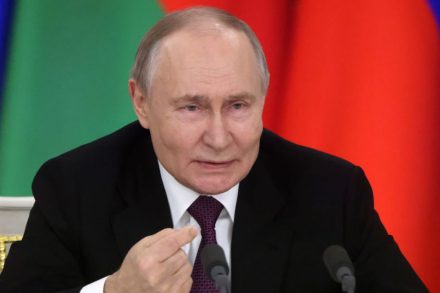
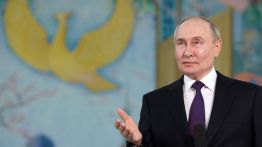
With all the good news coming out of the Jeddah talks about a 30-day ceasefire in Ukraine, there’s only one question that needs to be answered: Will President Putin be interested in any kind of deal right now? President Trump is convinced that Putin wants peace. But if the Russian leader truly wants to end his war, will he do so on America’s terms, or will he wait until he achieves one of his main objectives — the total subjugation of the four provinces in eastern Ukraine that he claimed to have annexed in the first seven months of the invasion? At a ceremony in St. George’s Hall at the Kremlin in September 2022, Putin declared that Russia now had four new regions: Donetsk, Luhansk, Kherson, and Zaporizhzhia.

Putin

Why Putin could reject a ceasefire

With all the good news coming out of the Jeddah talks about a 30-day ceasefire in Ukraine, there is only one question that needs to be answered: will President Putin be interested in any sort of deal right now? President Trump is convinced that Putin wants peace. But if the Russian leader really wants to bring his war to an end, will he do so on America’s terms, or wait until he has fulfilled one of his main objectives: the total subjugation of the four provinces in eastern Ukraine that he claimed he had annexed in the first seven months of the invasion? At a ceremony in St George’s Hall at the Kremlin in September 2022, Putin declared that Russia now had four new regions – Donetsk, Luhansk, Kherson and Zaporizhzhia.

What Zelensky needs to do in Saudi Arabia

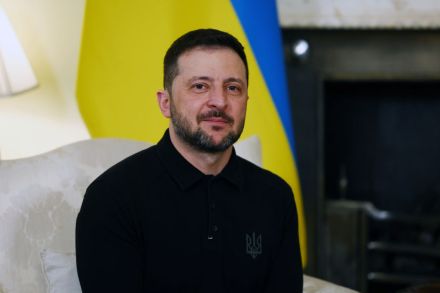
President Volodymyr Zelensky needs all the advice he can get, as he prepares for talks with American negotiators in Saudi Arabia tomorrow. A statement over the weekend from the Ukrainian presidential office disclosed that the latest western visitor to make the long train ride into Kyiv was Jonathan Powell, Sir Keir Starmer’s national security adviser and veteran crisis negotiator. The meeting between Powell and Andriy Yermak, the head of Zelensky’s office, provided further evidence that the UK is currently attempting to play an influential role in moderating what might seem, at present, to be a one-sided effort by the US to bludgeon the Ukrainian president into signing a deal to end the war with Russia.

Freedom of speech in the UK is very, very under threat

From our US edition

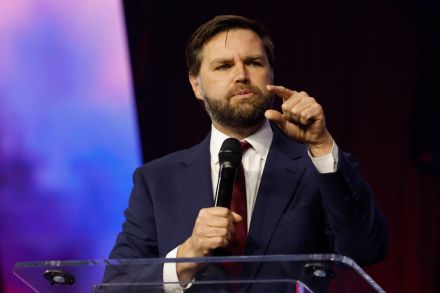
With all the transatlantic back-and-forth over Ukraine, and J.D. Vance’s contentious remarks on Fox News about some “random country that hasn’t fought a war in thirty or forty years,” it’s easy to forget that just three weeks ago, the vice president gave a landmark address about free speech in Europe and Britain, in particular. Last week, when Keir Starmer visited Washington, DC, Vance raised his concerns more directly with the prime minister about “infringements on free speech … that affect American technology companies and by extension American citizens.