Ukraine

Portrait of the week: Shoplifting surges, Trump eyes Gaza Strip and Norway’s government collapses

Home Sir Keir Starmer, the Prime Minister, flew to Brussels for an EU summit, sought a ‘reset’ of relations and had celeriac soup and sea bream for dinner. AstraZeneca dropped plans to invest £450 million in a vaccine manufacturing plant in Speke, Liverpool, blaming the government’s ‘final offer compared to the previous government’s proposal’. Rachel Reeves, the Chancellor of the Exchequer, said that she supported the expansion of Leeds Bradford Airport; she had already backed a third runway at Heathrow and the reopening of Doncaster Sheffield airport. Water bills in England and Wales will rise to an average of £603. Some councils will be allowed to raise their tax by more than 5 per cent – Bradford by 10 per cent.

There’s only one way to end the war in Ukraine

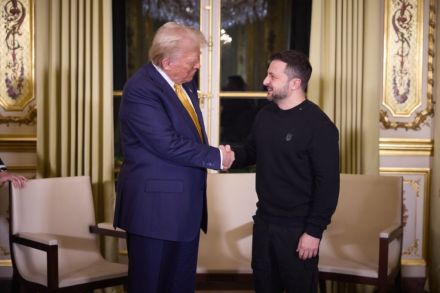
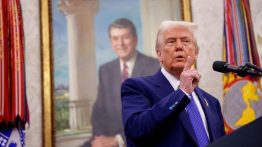
Donald Trump has told Vladimir Putin to end the war in Ukraine. ‘Settle now, and STOP this ridiculous war!’ he wrote on Truth Social yesterday. ‘IT’S ONLY GOING TO GET WORSE.’ But if the new president wants the war in Ukraine to end, American diplomats may have to open talks with Russia on issues much wider than Ukraine. Russia’s problem, after all, is not just with Ukraine, but with the West. Is there a deal that will make Russia, Ukraine, the US, Europe and the rest of the world, happy? Russia went to war to prevent Ukraine joining Nato and to regain for Russia a say in European security issues, and Donald Trump made it clear in a meeting with French President Emmanuel Macron that his administration will not support Nato membership for Ukraine.

Is Starmer doing enough for Ukraine?

13 min listen

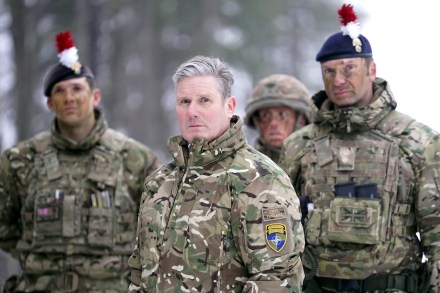
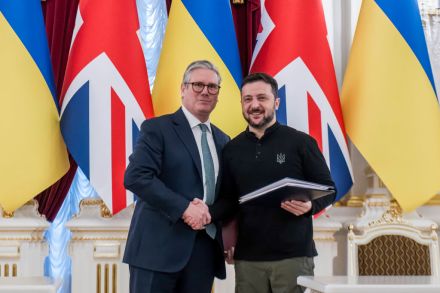
Keir Starmer is in Ukraine today, on his first visit to Kyiv since becoming Prime Minister. And he came bearing gifts: a 100-year partnership agreement between the UK and Ukraine, covering nine ‘pillars’ from culture to science. It is hoped that the new pact will define the relationship between the two countries well beyond the current conflict with Russia. This is all in the context of Donald Trump’s return to the White House, with his administration agitating for a peace deal. Is peace on the horizon? Also on the podcast, Kemi Badenoch's big speech – in which she criticised the decisions made by successive Tory prime ministers – was overshadowed by the announcement that there will be  government-backed inquiries into grooming gangs. Is this the right call?

Where have Russia’s Zs gone?

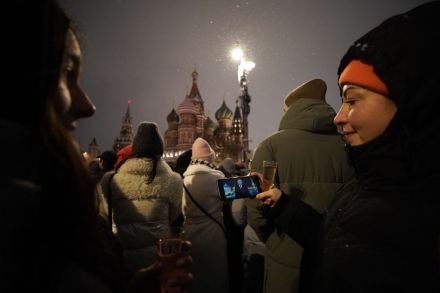
A social media post on 30 December: photographs of admittedly-splendid new year decorations in Moscow, archly captioned ‘back to 2021.’ The poster is alluding to the fact that obscene and extravagant references to Putin’s war in Ukraine – notably the letter Z, which has come to symbolise it – were notably absent from city decorations this new year. Moscow’s mayor, Sergei Sobyanin, has never seemed especially enthused about the war. He has done what the Kremlin required – diverted resources to help raise ‘volunteer regiments’; wallpapered the city with recruitment adverts; renamed Europe Square Eurasia Square – but he has avoiding too close an identification with the war, unlike so many of his less-secure counterparts across the country.

The heterodox cabinet

From our US edition

As Inauguration Day approaches, the second Trump administration is staffing up. The president-elect’s picks are more or less what everyone expected, outside of a few curveballs. To be honest, the lack of outrage from Trump critics is the big surprise: apparently Trump Derangement Syndrome is a passing fever; even many who’ve argued against him seem to see some logic in the administration of outsiders he’s been signaling he’ll pick for years. In Washington, where almost nothing changes from administration to administration, these cabinet picks might actually be able to effect some meaningful disruption. In almost every role that matters, Trump has opted for a nominee who has been an extreme critic of the very body he or she is set to oversee.

cabinet
Trump

Trump’s new world order

From our US edition

Donald Trump’s ascension to his second presidency comes with a new cadre of followers and sidekicks, in the form of a cabinet built almost entirely from fresh faces. This is not a president interested in continuity, which he signaled early on, stating on social media that Nikki Haley and Mike Pompeo — his erstwhile United Nations ambassador and secretary of state — would have no place in his second administration. The first name wasn’t a surprise, given the obvious tension he had with the woman who was his last challenger in the primary. The second was because Pompeo had been a dutiful supporter of Trump while in office, wrote a book defending their shared record on foreign policy and rejected the opportunity to run himself.

Eastern

How Eastern Europe is leaving Western Europe behind

From our US edition

I'm in the tiny riverside town of Virpazar, in the little Balkan country of Montenegro; and under the white geisha face of a late summer moon I am warily ordering the celebrated local delicacy. It is carp — caught from the nearby, slivovitz-clear waters of Lake Skadar (biggest lake in the Balkans!). But what makes me wary is the preparation. The carp is apparently marinated, and served cold, with boiled potatoes and greens. Cold slimy fish with hot spuds and spinach? It sounds like some nightmare culinary “specialty” from the old communist bloc (of which Montenegro was once a part, within Yugoslavia). I’m veteran enough to remember a few of these. “Famous” flatbreads that came with rancid lard.

Steven Pinker: The inside story of my Covid ‘bio bet’

Betting men Sir: The bet between Martin Rees and me that Matt Ridley recounts pits two kinds of scruples of disinterested rationality against each other (‘Wuhan wager’, 7 December). One is the scientific ethos that calls for factoring in all relevant information in updating one’s degree of credence in a hypothesis. The other is the logic of the epistemological tool of betting, which demands an agreed-upon fixed criterion and deadline for resolving the bet. My degree of credence has been influenced by Matt and Alina Chan for the lab leak hypothesis, but also by counter-arguments from Peter Miller for the zoonotic theory.

The joy of our village Christmas play

We are just recovering from the village play. This annual Christmas event was taken over last year by our son William, who writes it and acts in it, and his wife Hannah, who directs. Last year, it subverted the genre (as critics like to put it) of ghost stories. This year, it did a similar trick with whodunnits. It was entitled Death on the Dudwell, a reference to the trickle of a tributary which runs beside our fields. The play, set in 1935, opens with the idle would-be heir Arthur Prince (William) reading a contemporaneous Spectator on a sofa. It concerns the murder of his father, the unsavoury Lord Haremere (played by William’s former prep-school head, David Chaplin) who, though already dead before the play starts, has a good many lines.

Portrait of the year: Subpostmasters scandal, Rishi in the rain and Syrian rebels topple regime

January After an ITV drama, the government suddenly proposed to do something about the unjust prosecution of sub-postmasters. Junior doctors went on strike. There was a surge in scabies. The King went to hospital and was later found to have cancer. The Princess of Wales was in hospital with what turned out to be cancer. Five migrants died boarding a boat for England off Wimereux. In Beirut, Israel killed the deputy head of Hamas. Israel said that it expected war in Gaza to continue throughout the year. The United States, with token British support, struck sites in Yemen to deter Houthi attacks on shipping. Russia mounted the biggest missile bombardment of its war against Ukraine. China’s population fell by 2.08 million to 1.41 billion.

Why is Poland building a barrier with Ukraine?

A ceasefire in Ukraine is far from being agreed, yet Poland is already preparing for its collapse. In recent months, Warsaw has been digging an anti-tank ditch along its border with Russia and Belarus – and has decided to extend it to Ukraine. The 400-mile-long ‘East Shield’ will almost double in size and include minefields and bunkers, anti-drone systems and AI-powered defences to protect Poland from possible invasion. Ukraine’s closest neighbour clearly puts little trust in Donald Trump’s promise of peace with Russia: if Vladimir Putin rearms and comes back for more, Poland must be ready to meet battle-hardened Russian troops at its border. Donald Tusk called the £2.5 billion project an ‘investment in peace’ to deter and discourage any possible aggressor.

Trump is already the diplomat-in-chief

From our US edition

The United States only has one president at a time. Until January 20, that’s Joe Biden. But President-elect Donald Trump and his skeleton foreign policy team are waiting in the wings, plotting policy behind the scenes on issues — Ukraine, Gaza, Iran, Middle East peace — that have stymied the Biden administration for the last year. In fact, Trump is already influencing the respective calculations of allies, partners and adversaries before he even steps foot in the Oval Office. And Biden’s advisors seem perfectly fine with it. Trump fancies himself as a master negotiator, somebody who’s inherently skilled at poking, pressuring and sweet-talking the opposite side of the table until he gets what he wants.

diplomat

The deepening unpopularity of Zelensky

Perhaps all political careers must end, inevitably, in failure. But few politicians have had careers as meteoric, as surprising, as consequential or as heroic as that of Ukraine’s President Volodymyr Zelensky. In just five years he has gone from TV comedian to victor of the biggest presidential landslide in his country’s history to inspiring wartime leader who impressed the world with his resolve and personal bravery. But now with the war entering its third (and probably last) winter, Zelensky’s extraordinary story as Ukraine’s leader has reached its final chapter.

Is Ukraine heading towards a Korean-style demilitarised zone?

It is the strangest place, the demilitarised zone (DMZ) that separates South Korea from North Korea. It is simultaneously a historic battlefield, a sombre graveyard, a tourist honeypot full of coach parties from Seoul, and a Cold War frontier, hotly defended on either side. One minute you are looking at a kiddies’ funfair, or a shop that sells ‘souvenir North Korean money’, the next you are staring at endless barbed wire and monuments to failed North Korean defectors, shot dead as they attempted to cross the two-and-a-half-mile strip of landmines. Which itself has turned into an Edenic eco-haven, full of deer and eagles, as the humans have vanished.

SAS betrayal, the battle for Odesa & in defence of film flops

48 min listen

This week: SAS SOS The enemy that most concerns Britain’s elite military unit isn’t the IRA, the Taliban or Isis, but a phalanx of lawyers armed with the European Convention on Human Rights (ECHR), writes Paul Wood in The Spectator. Many SAS soldiers now believe that if they kill a terrorist during an operation, they’ll spend decades being hounded through the courts. Paul speaks to former SAS soldiers who say that stories of men being ‘dragged back to be screamed at in interview rooms’ are ‘flying around the canteens now’. Soldiers feel like ‘the good guys have become the bad guys – and the bad guys are now the good guys’. This is hurting morale and may eventually hit recruitment.

Here’s what Putin wants from Ukraine

Donald Trump is still two months away from becoming the 47th president of the United States, and yet his return to the Oval Office in January has already provoked a flurry of policy U-turns by the White House and rising expectation, even in Moscow, of a deal to end the war in Ukraine. Elements of a potential settlement reportedly agreeable to President Putin emerged on Reuters today based on kite-flying suggestions by Russian officials. While there is nothing particularly new in the broad outline of Moscow thinking, the fact that Russian officials are pushing it out in some detail reflects an awareness in the Kremlin that with Trump in power, the potential for a deal that will satisfy Putin after 1,000 days of war might be on the cards.

A prayer in Ukraine

From our US edition

By the summer of 2024, Kyivans could joke that there was no way the Russian army could take their city now — they’d never get through the downtown traffic. The simple normality of urban congestion, crawling through grand boulevards in the shadows of buildings that, with fresh coats of paint, would suggest a Wes Anderson vision of Mitteleuropa, could lull a visitor into thinking he could be in any capital on the old Orient Express route. So, too, would the world-class Fenix restaurant, run by a celebrity chef and festooned with Chihuly-inspired decor. It was between the salmon tartare eclair and the rabbit ravioli that I heard for the first time, face-to-face, what it’s like to be persecuted for worshipping God in the wrong way.

ukraine

Biden’s missiles will do Ukraine no favours

With just over 60 days left in office, Joe Biden’s White House has significantly escalated the Ukraine war it had tried so hard to contain by authorising the use of US-supplied medium-range ATACMS (Army Tactical Missile Systems) and antipersonnel mines against targets inside Russia. Biden’s U-turn breaks a long-standing convention on US presidential transitions that lame-duck presidents aren’t supposed to make major foreign policy changes – especially not ones that severely constrain the stated policies of their elected successor. The immediate result has been a direct Russian threat to the US embassy in Kyiv and what German defence minister Boris Pistorius has called ‘sabotage’ of undersea internet cables in the Baltic.

Portrait of the week: Rising inflation, electric car targets and a tax on flatulent livestock

Home Thousands of farmers protested in Westminster against inheritance tax on farms. Tesco, Amazon, Greggs and 76 other chains belonging to the British Retail Consortium said that costs introduced by October’s Budget ‘will make job losses inevitable and higher prices a certainty’. The annual rate of inflation rose to 2.3 per cent from 1.7 a month earlier. The British economy grew by 0.1 per cent in the third quarter, but shrank during September; in the second quarter it had grown by 0.5 per cent. Beth, the Queen’s Jack Russell, died. An additional 50,000 pensioners will live in relative poverty next year as a result of cuts to the winter fuel allowance, the government estimated.

Could Ukraine go nuclear?

Should Ukraine have nuclear weapons? This is a question that was raised, a little insincerely, by President Zelensky recently as he discussed Nato membership and its alternatives. If Ukraine was not in Nato, Zelensky mused, the only alternative would be to look for protection of another kind: nuclear arms. A recent story in the Times said that Ukraine could make a ‘rudimentary’ nuclear bomb ‘within months’ if Donald Trump withdrew Ukraine’s military assistance. Russia has not used its nuclear weapons, but they have been the major reason no western power has directly intervened on Ukraine’s side. Ukraine had its own nuclear arsenal after the fall of the Soviet Union left it with a significant stockpile.