Ukraine

Putin’s stranglehold on the Russian press

Since Vladimir Putin came to power in 2000, the Russian press has been slowly, methodically strangled, which has forced existential choices on newspaper and TV journalists. Twenty-one have been killed – beaten, poisoned or gunned down. Others, such as Andrei Soldatov and Irina Borogan, highly regarded investigative reporters, have been forced into exile. Yet others, like the ‘dear friends’ of this book’s title, have chosen a different path – to cleave ever closer to the regime. The authors tell the fascinating story of those choices and allow us a glimpse of why they were taken.

Portrait of the week: Spending review, LA protests and Greta Thunberg deported

Home Yvette Cooper, the Home Secretary, was the last minister to agree funding in the government spending review. Once the NHS and defence were settled there wasn’t enough to go round. The police wanted more. Everyone over the state pension age in England and Wales with an income of £35,000 or less will receive the winter fuel payment after all, at a cost of £1.25 billion, Rachel Reeves, the Chancellor of the Exchequer, announced. Capital spending included £39 billion on social housing over the next ten years. The government also committed £14.2 billion for the new Sizewell C nuclear power station, but did not say where the money was coming from. Rolls-Royce was selected as the preferred bidder to build the country’s first small modular reactors. Unemployment rose to 4.

Will Putin help Trump’s Iran deal?

From our US edition

Spectacular. Stunning. Game-changing. These are just three of the adjectives news reporters have used to describe Ukraine’s attack deep within Russia last weekend. There’s no doubt that the “Spiderweb” operation was technologically ingenious, well-concealed and brilliantly executed. Ukraine claimed its 117 drones destroyed or damaged some 41 strategic Russian bombers and caused $7 billion worth of damage to the Russian armed forces. But can an attack really be game-changing if the game doesn’t change? US officials have suggested the strikes hit only 20 Russian aircraft and, while Spiderweb must have shocked Russia’s leadership, the Kremlin is still more than willing and able to continue bombing Ukraine with relative impunity.

Trump

Can Ukraine secure its military survival?

From our US edition

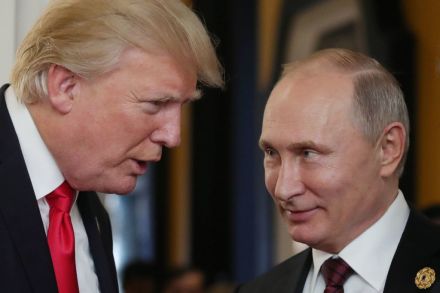
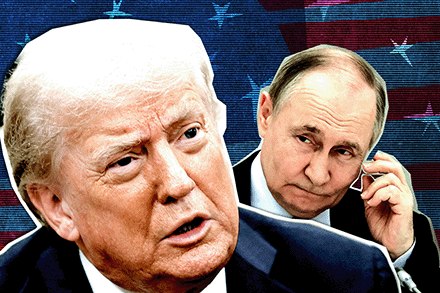
The Trump-Putin honeymoon is over. After three months of lengthy one-on-one phone calls, a handful of false starts on negotiations and flashes of Trumpian boosterism over the prospect of great commercial deals with the Kremlin, a fourth summer of war in Ukraine looks inevitable. Vladimir Putin will pretend to negotiate, while at the same time continuing to pound Ukraine’s cities with missiles and pressing forward on the ground. The Ukrainians will continue to scramble for men and resources with which to defend themselves. And the White House will continue to blame both sides for not reaching a deal. Over these three months of false hope, Putin has made two things very clear.

Ukraine

Portrait of the week: Liverpool parade crash, Starmer sacrifices Chagos Islands and an octopus invasion

Home Sir Keir Starmer, the Prime Minister, announced that ‘more pensioners’ would qualify for winter fuel payments, but did not say how many or when. Nigel Farage of Reform said he would scrap net zero to fund things like abolishing the two-child benefit cap and reversing the winter fuel cut in full. Millions of public-sector workers such as doctors and teachers were offered rises of between 3.6 and 4.5 per cent. From July, typical household energy costs will fall by £129 a year, still higher than a year earlier. South Western Railway was renationalised. Thames Water was fined £122.7 million by Ofwat for breaching rules on sewage and shareholder dividends. Devon fishermen complained of Mediterranean octopuses eating crabs in their pots.

Is Trump’s unified Republican front fracturing over Russia?

From our US edition

For the most part, President Trump hasn’t had to worry too much about the loyalty of his fellow Republicans on Capitol Hill. Sure, he needed to make a trip to the other side of Pennsylvania Avenue to pressure a few Republican holdouts to support his “big, beautiful” package of tax cuts and spending cuts, but the rank-and-file has tended to blindly follow whatever the White House wants.  Yet over the last several days, a slight divide has emerged between Trump and Republicans – or more specifically, Trump and Senate Republicans – on Ukraine and Russia policy.

russia republican

How Biden became Trump’s useful political milksop

From our US edition

It turns out that Joe Biden is one of the best things ever to happen to Donald Trump. Sure, Trump was so peeved by his loss to Biden in 2020 that he inspired an abortive insurrection against Congress, but his defeat gave him a grace period of four years to prepare for a fresh term. If the rapidity with which he is upending the federal government is anything to go by, Trump benefited immensely from his protracted exile in Mar-a-Lago, not to mention the welter of court cases, federal and state, that he endured. Now Trump is exploiting Biden once more to provide a further fillip to his political fortunes.

Putin orders new offensive

‘You want a ceasefire? I want your death,’ said Russia’s chief propagandist Vladimir Soloviev during prime time television, the camera zooming in on his face. His message was aimed at both Ukrainians and Europeans urging the Kremlin to stop the war. Soloviev, alongside a chorus of other Kremlin loyalists and military experts, has lately been gloating about how Vladimir Putin weathered western pressure and secured Donald Trump on his side. There will be no peace, they say, until Ukraine capitulates to Russian demands. Putin, as if to prove the point, announced yesterday that he had ordered the military to begin creating a ‘security buffer zone’ along the Ukrainian border – which is not quite the peace process Trump has been calling for.

Putin only wants to talk to one man

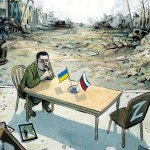
A week of diplomatic manoeuvring, ultimatums and psychological gambits has ended with a sadly predictable result: Vladimir Putin will not be coming to the negotiating table in Istanbul. Nor will he be sending a single cabinet-level negotiator. Instead the Russian delegation will be headed by former culture minister Vladimir Medinsky – the same low-level minion that Putin sent to the last round of talks in Istanbul in March-April 2022. Instead of a breakthrough, the great diplomatic effort led by Zelensky and the combined leaders of Europe have elicited nothing beyond a calculated insult from a defiant Kremlin.

Putin and Zelensky just want to appease Trump

Ceasefire then talks, or talks then ceasefire? This has emerged as one of the pivotal issues in the diplomacy around the war in Ukraine, even if one could question just how genuine both sides are in their respective positions. The proposed talks in Istanbul on Thursday may help clarify matters, but both sides seem more committed to appeasing the White House than talking peace. On Saturday, the usual suspects of Europe – the leaders of the UK, France, Germany and Poland – met in Kyiv and demanded Vladimir Putin call an immediate 30-day ceasefire, on pain of further sanctions. The usual pattern for peace talks is indeed a cessation of hostilities first, talks later, but there was no serious plan for negotiations in that span.

J.D. Vance makes nice with Munich

From our US edition

It was an emollient J.D. Vance who showed up at the Munich Leaders Meeting in Washington, DC. Gone was the Vance who dissed the Europeans in Munich on February 15 by complaining that they were practicing censorship of political views and who met with a representative of the far-right Alternative für Deutschland party. Gone was the Cerberus who barked at Ukrainian President Volodymyr Zelensky on the Oval Office on February 24 that he had exhibited a dismaying lack of gratitude toward America for its assistance to his beleaguered nation. Gone was the Ohio senator who declared in July 2024 that he didn’t give a fig about Ukraine’s fate and was more interested in pursuing an Asia First policy.

jd vance
biden russia

Biden has learned nothing from his foreign-policy experience

From our US edition

Historically, ex-presidents spend their golden years on the speaking circuit, writing their memoirs or planning for the inauguration of their presidential libraries. What they don’t do is lash out at their successors when they disagree with a policy or decision. Joe Biden, however, has no intention of keeping quiet. A little more than three months after vacating the White House, Biden is unencumbered from conventional decorum and feels free to speak his mind. Last month, he gave his first post-presidency speech in Chicago, where he blasted the Trump administration for taking a sharp hatchet to the federal workforce, including the Social Security Administration.

What does Putin want? Whatever he can get away with

The US general Mark Clark knew a thing or two about dealing with Russians. In the aftermath of the defeat of Nazi Germany, Clark commanded the American occupying forces in Austria. His Soviet opposite number, and nominal ally, was Marshal Ivan Konev. The two war heroes were tasked with pacifying the conquered and divided country at the dawn of the Cold War. ‘The Russians were not interested in teamwork,’ recalled Clark in his 1950 memoir, Calculated Risk. ‘They wanted to keep things boiling… They were accustomed to the use of force. They were skilled in exploiting any sign of weakness or uncertainty or appeasement. This was their national policy.’ Two things infuriated Clark more than anything.

Will the assassination of another Russian general change anything?

Friday morning, Lieutenant General Yaroslav Moskalik was heading out from his flat in Balashikha, a commuter town east of Moscow, when a car bomb exploded, killing him. There can be little doubt this is an operation by Ukrainian intelligence, another example of their capacity to launch skilful targeted assassinations in the heart of Russia. But will it actually change anything? That is more doubtful. It is hard not to assume this was another killing by the Ukrainians Moskalik was not a high-profile figure, but as deputy head of the General Staff’s Main Operations Directorate (GOU), he was a capable officer and potentially on a career track for even higher office.

Portrait of the week: Pope dies, EU cheese banned and trans women aren’t women

Home Sir Keir Starmer, the Prime Minister, no longer believes that a trans woman is a woman, his official spokesman said at a lobby briefing. He was asked about this six days after the Supreme Court of the United Kingdom ruled that a woman is defined by biological sex in equalities law. The justices unanimously allowed an appeal by the campaign group For Women Scotland in a case against the Scottish government. Sex-based protections, notably in the Equality Act 2010, the court found, only apply to people who are born in that sex, not to those whose gender is reassigned. The court emphasised that transgender people still have protections against discrimination and harassment written into the Equality Act. J.K.

There was Easter but no truce on Ukraine’s frontline

Kramatorsk, Donetsk region In a wooden Greek-Catholic church on the frontline of a warzone, encircled by red tulips and military vehicles, the priest’s sermon is woven through with the war – just like the soldiers’ Easter baskets, packed not only with paska bread, pysanky and sausages, but also with drones, waiting to be blessed. ‘This drone will be at work tonight – enforcing the ceasefire,’ a soldier whispers to me, smiling. The priest looks over a hundred soldiers in front of him, the church so packed that some must listen from the outside, and says that Ukraine will defeat evil, just as Jesus did. ‘The enemy is killing Him in our men and women, they are torturing Him in captivity, our mothers wash their faces with His tears,’ he says.

Security-consumed Prince Harry chooses war-torn Ukraine as latest backdrop

From our US edition

Prince Harry’s clandestine dash to Ukraine this week, trailing last year’s faux royal tours to Colombia and Nigeria, lays bare a brazen hypocrisy. He bangs on about the UK being too perilous for his family, waging legal crusades over security provisions, yet here he is, swanning into war zones and countries with travel warnings, trading on his fading royal luster to clutch at relevance – all while dodging the duties he willingly jettisoned. Bereft of official standing in America or Britain, his quest to play maverick royal smacks of pantomime, one that jeers at his claims of craving a secluded, secure existence. Take his Ukraine jaunt to Lviv’s Superhumans Center, where he mingled with wounded soldiers and civilians.

Portrait of the week: Trump’s tariffs, a theme park for Bedford and a big bill for Big Macs

Home In response to President Donald Trump’s global tariffs, Sir Keir Starmer, the Prime Minister, said: ‘This is not just a short-term tactical exercise. It is the beginning of a new era.’ He wrote in the Sunday Telegraph: ‘We stand ready to use industrial policy to help shelter British business from the storm.’ The FTSE100 fell by 4.9 per cent in a day, its biggest such fall since 27 March 2020. The government published a 417-page list of US products upon which Britain could impose retaliatory tariffs after 1 May. Figures from the Office for National Statistics showed that, although in 2023 the UK imported £57.9 billion of goods from the US (10 per cent of all goods imports) and exported £60.4 billion’s worth (15.3 per cent of all goods exports), it exported £126.

My DC bunker

From our US edition

Washington, DC My office this week has been the Starbucks on Capitol Hill. Any random subscriber to my Substack can get a half-hour with me if they book a slot. I do this a lot when I travel and oddly, given the rot of this rotting world, I rarely come away with the feeling that here were 30 precious minutes I’ll never see again. I often want to spend an hour or two. And no one yet has killed or even attacked me. A leftist policy wonk did show up without an appointment, but he just wanted to talk about Ezra Klein. One of this week’s characters was a Russia expert at a foreign policy thinktank, who seems to really know his stuff. He filled in important nuances ofthe Prigozhin coup. Yevgeny Prigozhin never meant to overthrow Vladimir Putin, he said.

curtis yarvin dc
nightmaring

Play Putin at his own game by ‘nightmaring’ his world order

From our US edition

There’s a delicious Russian verb that derives from the criminal underworld: “koshmarit,” literally “to nightmare someone.” It usually denotes how authorities give criminals, or anyone they dislike, so much relentless hassle from so many different angles they bend them to their will. Vladimir Putin, always keen to bring mafia language into politics, was the first Russian statesman to make use of it in public – he once instructed his authorities to stop “nightmaring” the business community. I keep returning to that word when I think of how Putin’s own foreign policy could be restrained to make real the Reaganite slogan that helped Donald Trump win the election: “peace through strength.