Ukraine

Portrait of the week: Foreign aid cut, Pope in hospital and King pulls a pint

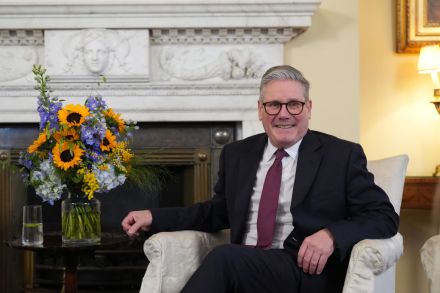
Home Before flying to Washington, Sir Keir Starmer, the Prime Minister, said: ‘We have to be ready to play our role if a force is required in Ukraine once a peace agreement is reached.’ He told the Commons that Britain would raise defence spending to 2.5 per cent of national income by 2027, funded by cutting development aid from 0.5 per cent to 0.3 per cent of GDP. The government surplus for January, when much tax comes in, was £15.4 billion, the highest ever, but far below the £20.5 billion predicted by the Office for Budget Responsibility. Average household energy bills will rise from April by £111 to £1,849 a year. BMW said it was shelving reintroduction of electric vehicle production at its Oxford Mini plant. BP dropped its goal of cutting oil and gas production.

Trump holds first Cabinet meeting

From our US edition

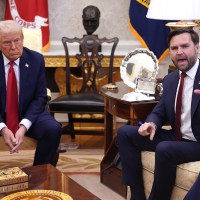
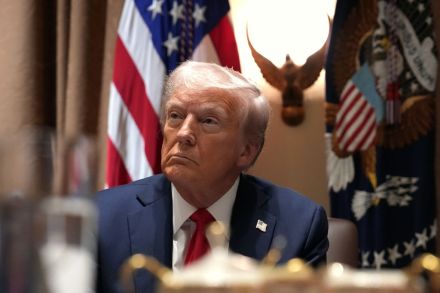
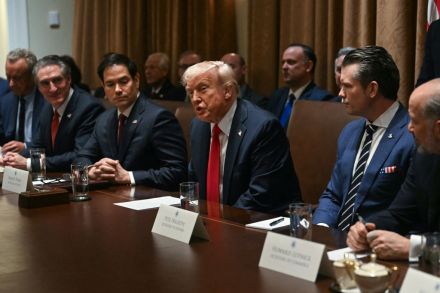
The Cabinet Room was packed. President Trump sat in the middle of the full oblong table. On his right was his secretary of state, Marco Rubio, who was voted in unanimously by the Senate; on his left a newcomer to politics, secretary of defense Pete Hegseth, whose appointment only passed the Senate thanks to the deciding vote of Vice President J.D. Vance. Vance was directly opposite the president — and crowded between the VP and the back wall were several journalists equipped with microphones and cameras, leering over Trump’s appointees.In his introductory remarks, Trump said he was reelected to cut taxes, handle the border and balance the budget. He reaffirmed that his mandate to accomplish these tasks came from the US electorate.

Donald Trump is utterly wrong about Ukraine’s leadership

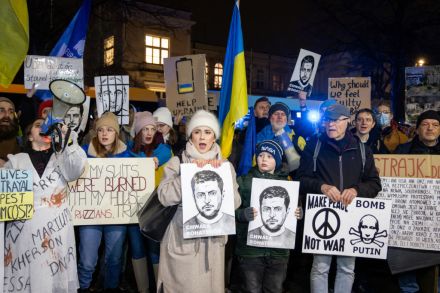
The Anti-corruption Action Centre, the NGO I chair, is probably one of the loudest watchdogs in Ukraine that is monitoring President Volodymyr Zelensky and his administration. We expose corruption, advocate for comprehensive rule-of-law reforms, and demand better governance ­– even during war. For over a decade we have built anti-corruption infrastructure in Ukraine, and endured persecution for simply carrying out our work. We want to strengthen Ukrainian institutions and build a more effective, resilient democracy. It’s unacceptable for any foreign leader (even of the United States) to humiliate our president, decide on behalf of the Ukrainian people that we should hold elections, and spread falsehoods about who started the war.

DoGE’s Office Space efforts delayed by some

From our US edition

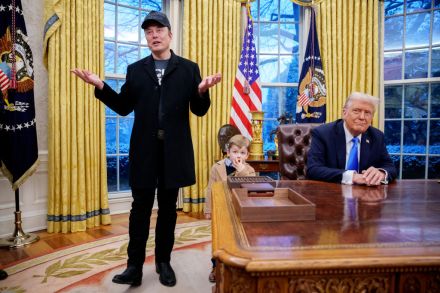
The federal government is not becoming Office Space — yet.The Elon Musk-led effort to require all federal government employees to report back with what exactly they do here was met with pushback from throughout the administration, including from several of President Trump’s new appointees.The Office of Personnel Management’s email, with the subject line, “What did you do last week?” mirrors how Musk has operated companies he owns, like Twitter/X, where he asked similar questions.OPM’s moves came after Trump issued an ultimatum on Truth Social for Musk to double-down on his aggressiveness with the efforts of the Department of Government Efficiency (DoGE), which many thought might not be possible. For some, the measures are a bridge too far.

pencil free trade

The tale of two budget bills continues

From our US edition

The Senate may be filled with octogenarians, but it defied the odds this week with a marathon “vote-a-rama” that lasted almost ten hours — just in time to set it up on a collision course with the Republican-led House across the Capitol.Despite the stated preference of President Donald Trump for “one big, beautiful bill” for reconciliation, the Senate pushed through a giant reconciliation bill, which will be smaller than whatever the House seems poised to pass. The Senate’s version tackles one of Trump’s top priorities, border security, while punting votes on other Trump measures, like extending his namesake 2017 tax cuts, to later.

Is Trump right about Ukraine?

24 min listen

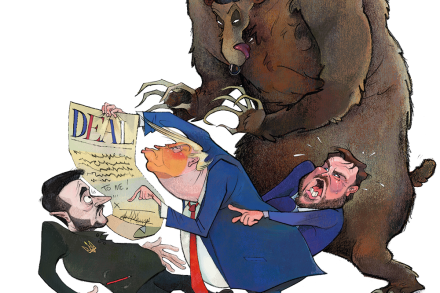
Donald Trump attacked the Ukrainian President overnight, describing him as a 'dictator' and saying he's done a 'terrible job.' In return, Zelensky has accused Trump of 'living in a disinformation space.' The West has invested a huge amount of capital in the fight against Russia – and failed to secure peace. Is Trump using these offensive and odious methods in order to secure an end to the conflict? Is he the only person with the power to do so? Freddy Gray discusses with The Spectator's Russia correspondent Owen Matthews, and Sergey Radchenko, historian and author.

My Valentine’s Day car crash

Marco Rubio, the US Secretary of State, is not a MAGA groupie, but a believer in the Nato alliance. He knows about working with allies. Yet he says that the Americans should go right ahead with Russia, the murderous aggressor, without bringing Ukraine, ally and victim, or the Nato member states, into the talks. This is President Trump’s will, he says. Compare with the Middle East. Would Rubio – or Trump – say that Hamas, the murderous aggressor, was the key player, and should therefore have bilateral talks with the US whereas Israel, ally and victim, should just sit and wait to be told later what is happening? Trump helped bring Hamas to heel by announcing, before his inauguration, that they would have all hell to pay if they did not release the hostages.

Who lost Ukraine?

In the America of the 1950s, one question dominated foreign policy: ‘Who lost China?’ The Communist victory in the Chinese Civil War and the defeat of America’s ally, the Kuomintang regime, provoked agonised debate about the principles that should guide statecraft – the balance between containment and pushback, the relative importance of winning hearts and minds or prevailing by strength of arms. The question that we might ask today is: ‘Who lost Ukraine?’ Of course, the war between Kyiv and Moscow is not over. Ukraine’s army continues to fight with a tenacious courage that is inspiring. Volodymyr Zelensky’s diplomatic efforts to maximise support for resistance are unflagging. But all the winds blowing now are ominous for Ukraine.

Portrait of the week: US and Russia talk, Chiltern Firehouse burns and Duchess of Sussex rebrands

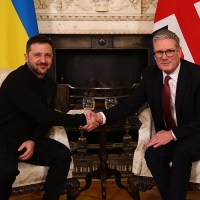
Home Sir Keir Starmer, the Prime Minister, said that, to guarantee the security of Ukraine, he was ‘ready and willing’ to put ‘our own troops on the ground if necessary. I do not say that lightly’. Parliament would be allowed a vote on such a deployment, the government said. Earlier, Sir Keir took an unannounced telephone call from President Donald Trump of America about their forthcoming meeting. Afterwards, Mr Trump said: ‘We have a lot of good things going on. But he asked to come and see me and I just accepted his asking.’ The Chiltern Firehouse hotel in Marylebone burnt down.

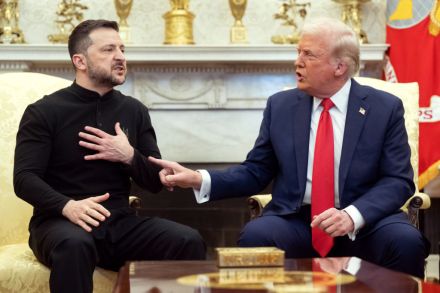
Donald Trump speaks his ‘Truth’ about Ukraine in attack on Zelensky

From our US edition

Negotiating peace can be delicate business. Often it requires a steady hand, a strong sense of compassion and inexhaustible patience. As Senator George J. Mitchell, a leading architect of the Northern Ireland peace process, once wrote, "In order to understand what another person is saying, you must assume it is true and try to imagine what it might be true of." Cockburn was reminded of Mitchell's sage words when he read the president's Truth Social post about Volodymyr Zelensky on Wednesday afternoon, which he republishes in full below: Think of it, a modestly successful comedian, Volodymyr Zelenskyy, talked the United States of America into spending $350 Billion Dollars, to go into a War that couldn’t be won, that never had to start, but a War that he, without the U.S.

donald trump zelensky

The US and Russia must not force Ukrainian elections

After four hours of talks in Saudi Arabia, Russian and American negotiators have reportedly come up with a three-stage plan to end the war in Ukraine. According to Fox News, the plan includes a ceasefire, elections in Ukraine and the signing of a final agreement. Ukrainian leader Volodymyr Zelensky, who was neither informed nor invited to the talks, said that Russia and the US are discussing the same old ultimatum Moscow set at the start of full-scale war. ‘I wonder – if we didn’t accept such ultimatums in our most difficult moment, why does anyone think we would now?’, he said. Back in February 2022, Russian president Vladimir Putin said he invaded Ukraine to protect people from the ‘Nazi regime in Kiev’.

How Europe’s consensus on Ukraine broke down

14 min listen

The future of Ukraine is being decided in a meeting between US and Russian diplomats in Saudi Arabia today. So far, we understand that America will insist that Ukraine is recognised as a sovereign nation, but NATO membership remains off the table. Meanwhile, European leaders have been cut out of the conversations. In response, they held their own summit yesterday, but it didn’t seem like they were all singing from the same hymn sheet. While the UK is pushing for higher defence spending and is willing to commit troops, other European nations seem more dovish, especially Germany and Italy. This is reflected in opinion polls as well. What's going on?  Oscar Edmondson speaks to James Heale and James Johnson, director at JL Partners. Produced by Oscar Edmondson.

Modernisation has sent Russia spinning back to the Stone Age

When Howard Amos first came to Russia, in 2007, it was a country you visited with interest, even enthusiasm. Modernisation, potentially a progressive development, was on the cards; America was getting ready to ‘reset’ US-Russian relations; foreigners were able to volunteer at Russian orphanages. That was what Amos did, working with disadvantaged children in Pskov Region. In the 2010s, he returned to Russia as a journalist and reported from places high and low. He draws on his experiences in this book’s 17 essays, centred on topics ranging from politics to poetry, religion to rural affairs. Inevitably, war is a recurring theme. One of Amos’s interviewees, Sergei, works for a German organisation set up to give fallen soldiers marked graves.

What does Putin want from America?

From our US edition

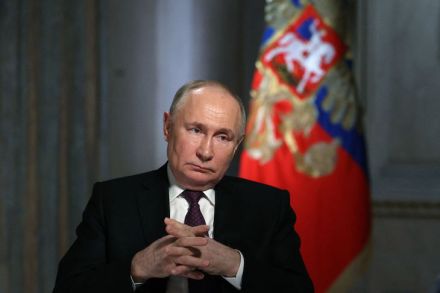
If I had a penny for every time I have been told that Russian president Vladimir Putin only wants respect. Or that he is only interested in eastern Ukraine. Or that if Kyiv is only denied NATO membership, then he will call off the tanks. Well, in the last seven days President Donald Trump has given Putin all this and more. And, though it is still early days, so far the war is showing no sign of slowing. And what has the man who wrote The Art of the Deal asked for in exchange for all this diplomatic largesse? Absolutely nothing. In fact, the only substantive demand Trump has made so far is of the Ukrainians. Last week Washington sent Treasury secretary Scott Bessent to Kyiv with an extraordinary demand.

Putin

Can Starmer be the bridge between Europe and the US?

14 min listen

There is lots to make sense of today in a huge week for European and world politics, with the fallout of the Munich Conference and today’s emergency summit in Paris. European powers are trying to navigate peace in Ukraine in the face of a belligerently isolationist Trump administration. The UK is caught between preserving its privileged position with the US and the desire for a European reset, as well as the need for an end to the war in Ukraine without giving in to Russia. Can Starmer bridge the transatlantic chasm that has opened up? Do the Europeans want us, and do the Americans need us?  Events in Europe will be incredibly consequential here in the UK.

Europe cannot be surprised by Trump’s approach to Ukraine

There’s something about Donald Trump that sends Europeans mad. The President and Vladimir Putin agreed last week to commence talks about ending Russia’s war in Ukraine. From the hysterical reaction, you would have thought Trump had handed Putin the keys to Kyiv. Shrill cries of surrender, betrayal and appeasement are premature; extremely difficult negotiations lie ahead, involving Ukraine, on the precise terms of any deal. And Putin himself has blinked by abandoning many of his pre-conditions for talks set out last year. The mood among European security panjandrums at this weekend’s Munich Security Conference was fraught.

The utterly idiotic reaction to the Trump-Putin phone call

From our US edition

President Donald Trump called Russian president Vladimir Putin yesterday and discussed various topics, including the war in Ukraine, for an hour and a half. According to Trump, the two agreed to begin negotiations on ending the three year-long conflict immediately and even set up preliminary talks about traveling to one another’s capitals. Shortly after the call with Putin, Trump dialed Ukrainian president Volodymyr Zelensky for yet another conversation that reportedly went ”very well.” Trump’s call with Zelensky, of course, wasn’t the controversial part. Nobody had a problem with it. The dialogue with Putin, however, was apparently blasphemy, akin to violating all of the Ten Commandments on the same day.

call

Tulsi caps off a big day for ‘realism and restraint’ in foreign affairs

From our US edition

For the proponents of what they like to call realism and restraint in foreign affairs, it’s been a banner day. President Donald Trump has initiated peace talks with Russia by sidelining Ukraine. And Tulsi Gabbard has been confirmed to become director of national intelligence — overseeing eighteen agencies — on a 52-48 vote. At the White House, where she was sworn in by Attorney General Pam Bondi, Trump declared that Gabbard is “an American of extraordinary courage and exceptional patriotism.”   The sole Republican to dissent from her nomination was Mitch McConnell who has vowed to uphold oldline Republican internationalism during what is more than likely his final term in the Senate.

tulsi gabbard

Trump is like Shakespeare’s Fool

President Trump’s role in relation to other countries resembles that of the Fool in Shakespeare. He provides a sort of running satire on how rulers behave, and his antic wit expresses, amid the foolery, certain truths. In relation to Gaza, the prevailing idea of the ‘international community’ is that, because of the 7 October massacres and Israel’s subsequent decapitation of the Hamas leadership, the answer is ‘a two-state solution’. This orthodoxy is tragi-comic in its lack of reality. Mr Trump looks at the matter differently.