Ukraine

Zelensky’s address was strange, but sensational

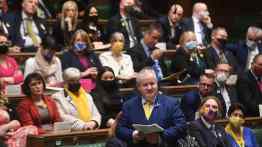
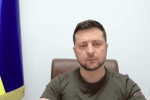
This afternoon, the Ukrainian President Volodymyr Zelensky addressed the House of Commons. A single flat-screen TV broadcast his speech to a packed chamber. Zelensky appeared in plain green fatigues next to Ukraine’s blue-and-yellow flag. He looked pale, tired, fearless and determined. Squads of foreign killers are roaming his homeland trying to find him. His words were spoken in English by a translator who probably had no advance sight of the text. The halting, ungrammatical phrases made the address strangely powerful. ‘I would like to tell you about the 13 days of war. The war that we did not start.’ Zelensky’s goal is simple. ‘We do not want to lose what is ours.

Could Turkey rejoin the West?

Istanbul, Turkey Wherever you go in Istanbul, Atatürk is rarely far away. Portraits of the man who founded the Turkish Republic hang in the Grand Bazaar and in apartment building foyers. His face is etched on everything from street signs to café mugs. With his vision of Turkey as a liberal, secular state, Atatürk set his nation on the path to western alignment and, ultimately, Nato. When he died in 1938, Winston Churchill said his ‘death is not only a loss for the country, but for Europe is the greatest loss’. Yet in recent years, Turkey’s position as a western ally has all but disintegrated.

Republican hawks squawk at each other

From our US edition

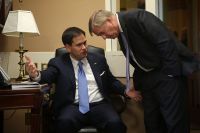
Cockburn has never been much of a hawk, unless you count his begrudging deficit hawkery over the massive tab he ran up at his local bar. But many elected Republicans are very hawkish on foreign policy, supporting "peace through strength," as Ronald Reagan put it, as well as occasionally war through strength. So how are the GOP's highest-flying hawks handling Russia's invasion of Ukraine? Cockburn was surprised to find them divided. Nearly every Republican lawmaker (and Democrat for that matter) agrees that we need to throttle Russia with economic sanctions. It's on the question of whether the United States should implement a no-fly zone over Ukraine that the cracks begin to show.

Putin miscalculated. Let’s not do the same

Only the Russian people can decide how long Putin remains in the Kremlin, but the invasion of Ukraine will likely shorten his reign. In a lengthy interview when he assumed power 22 years ago, Putin answered a question about the forced resignation of German Chancellor Helmut Kohl by saying that ‘after 16 years, any people – including the stable Germans – get tired of a leader’. Russians have been more patient, but they didn’t expect to be led into pariah status. Change could come from within the political elite, many of whom are aware how counterproductive this war is for Russia, and some of whom feel shame for the suffering inflicted on Ukraine.

Russia’s war on Ukraine: the lessons so far

The sheer complexity – and horror – of Russia’s war on Ukraine makes it difficult to distil the essential points. To take only one example, the battlefront north of Kiev, where the Russian convoy is stalled, is significantly different from that along the Black Sea, where Russian forces from Crimea have made substantial progress. A third front, in the east, is consolidating in Russia’s favour, though the fight was much harder and longer than Moscow expected. Amid this complexity, it is important to summarise what we know so far: 1. Vladimir Putin’s decision to invade Ukraine appears to be the most catastrophic strategic mistake since the end of the Cold War and by far the most dangerous.

How close is Russia to collapse?

Russia is now as closed off to the world as the Soviet Union was before Mikhail Gorbachev made his first tentative steps towards glasnost more than 40 years ago. Pretty much all the progress that post-Soviet Russia had made towards becoming a 'normal' country has been reversed within the space of two weeks. Vladimir Putin’s presumed legacy – of stability, predictability and hugely improved living standards for the vast majority of Russians – is vanishing before their eyes. In recent days, Netflix and TikTok have joined what had already become a mass western boycott of Russia. American Express followed Barclaycard and Mastercard in leaving the Russian market.

Vladimir Putin, deep statist

From our US edition

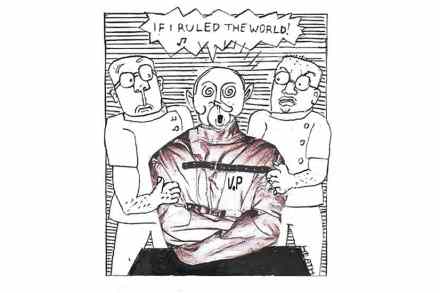
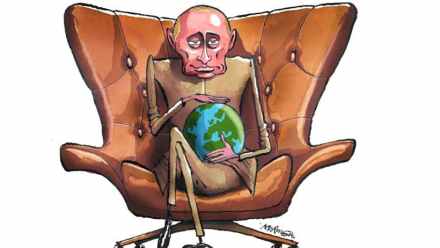
Vladimir Putin's brutality in Ukraine is only going to get worse. The Ukrainians have fought valiantly, far better than anyone expected, but then that only means the Russians will have to up the slaughter in the coming days. As for Putin, he's reportedly fuming over his army's setbacks, threatening reprisals, while hunkering down in — I'm not making this up — his "mountain lair" deep in the Urals. If that makes Putin sound like a Bond villain, then that's just one of the many images of him that's emerged in recent days (the most popular is Putin as Hitler). The seemingly insane nature of his Ukraine invasion has left observers grasping for a reference point. Is Putin addled by cabin fever? Under the sway of extremists? Mentally ill? Who is this Vladimir Putin anyway?

propaganda

Watch out for Ukrainian social media propaganda

From our US edition

Stop me if you’ve heard the one about the Ukrainian beauty queen who volunteered to fight the invading Russian forces. If you’ve been on social media these past few weeks, you’ve probably seen the striking photo of the woman clad in tactical gear and holding a rifle. “We are living in a materiel world, and I’m a materiel girl,” the stunner says to the viewer through her steely glare. Or the one about the Japanese ambassador to Ukraine kitted out in his ancestor’s samurai gear and ready to defend his adopted homeland? You’ve surely heard about the “Ghost of Kyiv,” a Ukrainian fighter pilot who has been terrorizing his Russian counterparts, accomplishing the feat — uncommon in contemporary air combat — of becoming an ace.

Boris Johnson is operating in a new political reality

Boris Johnson is attempting to carve out a role for himself as the figure who can lead the West in its response to the invasion of Ukraine. Over the weekend, the Prime Minister penned an article for the New York Times – in which he set out his 'six-point plan' to defeat Putin. The points are closer to general principles than firm action. They include forming an 'international humanitarian coalition' for Ukraine and resisting Russia's 'creeping normalisation' of its actions.  Russia's decision to launch a full scale invasion of Ukraine has certainly stopped all talk of an imminent confidence vote in the Prime Minister over partygate Today Johnson will attempt to show he can be the mobiliser when he hosts Canadian Prime Minister Justin Trudeau and Dutch PM Mark Rutte.

Remember the Russians who will really suffer from sanctions

When I was in Russia in the very early 1990s, there was a generic figure who seemed to stand at the entrance to every metro station: an ancient babushka in a headscarf and tatty coat, face creased with age and weather, holding out a flimsy plastic bag rolled into a little triangle, begging for kopeks. The collapse of communism had its winners and its losers – and these old women were the losers. The 'social umbrella' of the necrotic Soviet system may have provided its pensioners with a miserable existence, as a local explained it to me, but it had provided; and these women, having discovered that freedom is all very well but you can’t buy food with it, could be forgiven for pining for Uncle Joe and his grey-hatted successors.

The trouble with boycotting Russian food

As the war in Ukraine worsens, the horrific scenes filling our screens have prompted a visceral reaction from the British public: 78 per cent now support Russian sanctions – up from 61 per cent in late February. Economic sanctions have undoubtedly hit the Kremlin’s spending power ­– and that’s to be encouraged. But what should we make of the broader cultural boycott of Russia that is rapidly gaining pace? So far, Britain's boycotts have had a peculiarly culinary bent. While Putin continues his onslaught, British shoppers have been encouraged to shun vodka and caviar. Lockdown revived an intense interest in cooking amongst the house-bound middle classes.

Putin will escalate

From our US edition

“I can’t tell you how this ends. All I can tell you is that I just hope millions of people don’t die, or that both Ukraine and Russia aren’t both destroyed in some way thanks to this war.” Those words, spoken to me on an encrypted smartphone app yesterday, are from a Ukrainian commander actively fighting Russian soldiers that I have known for years thanks to wargames I helped organize that brought together national experts, military officials, and policymakers from around the world.

Rise of the dimwit vodka dumpers

From our US edition

Passive news absorbers across the nation haven’t been able to avoid this thing they heard about some guy named Poutine, who’s, like, Russia’s Orange Man, invading Ukraine, which is, like, a peaceful society of hunter-gatherers and supermodels who live harmoniously with nature, talk to animals, and invented Democracy. This is a super important, really bad thing. The Crane people have been forced to take up arms and defend their way of life. Now, Americans across social media are also stepping up to let you Cranes know they’re paying attention, they care, and they’re ready to strike back at the invaders. Yellow and blue are this season’s black square.

Are we cheering on Ukraine to destruction?

We’re just ten days into Russia’s assault on Ukraine and the western world has painted itself in Ukraine’s colours. Cities and towns have hung out Ukrainian flags and lit their public buildings in blue and gold. The BBC has changed the pronunciation of the Ukrainian capital from Kiev to Kyiv. Tesco is driving the supermarkets’ charge to rename chicken Kiev. And leading the cheers for Ukraine’s heroes have been the legislatures, from London to Brussels to Washington DC. MEPs watched a video message from Ukraine’s president, Volodymyr Zelensky, in respectful silence before erupting in applause and tears. The US Congress gave the blue-and-gold clad Ukrainian ambassador a prolonged standing ovation at Joe Biden’s State of the Union address.

Do Russians support Putin’s war?

Everyone is calling the conflict in Ukraine Putin’s war and insisting that it has nothing to do with the Russians themselves. The nightmare would end – they tell us – if only Vladimir Putin were to disappear in a coup. They used to say the same thing not only about Adolf Hitler but also Benito Mussolini. Yet both the Fuhrer and the Duce would have been as powerless as the speakers at Hyde Park Corner if they had not enjoyed the willing consent of a critical mass of Germans and Italians.

The myopic focus on racism at the Polish-Ukrainian border

There are already a hell of a lot of foreign correspondents and human-rights workers at the Ukrainian-Polish border – an immigration problem all by themselves, perhaps. Quite a few of these reporters seem to be desperately seeking ‘racism’ stories, since that is increasingly the only news which the English-speaking media seems able to process. The heart-warming scenes of Ukrainian women and children being given shelter isn’t the story. Because those refugees are white. At the border at Medyka on Thursday the Poles put out barbecued sausages, fruit juice and water for the incoming women and children. There were boxes of toys to cheer the traumatised little ones. At the train station in Przemyśl, the scene was busy but orderly.

Ukraine and the art of viral war

From our US edition

The sky is dull and gray, the sun obscured by clouds. The camera pans down past some desolate Soviet housing blocks. Some wintry, apocalyptic trees line a road. It could be Kyiv, it could be Bucharest, it could be any city where the residents liberally pepper their words with the -sky suffix. Suddenly, a flash of metal across the sky, a fighter plane roars into shot, then out again. The caption proudly declares, “This is the Ghost of Kyiv, the bravest fighter pilot in the Ukrainian Air Force. He has downed six Russian planes just today.” You don’t know that much about Ukrainian fighter pilots, but placed among a million other viral clips of heroic Ukrainians fighting against Goliath, you think it seems believable enough. You retweet it. You send it down group texts.

lindsey graham

Lindsey Graham unites the world

From our US edition

It was a beautiful moment of bipartisan unity when, left and right, American and European, young and old, united to call Lindsey Graham a moron. The South Carolina senator made headlines Thursday night after appearing on Sean Hannity’s show on Fox. He openly called for Vladimir Putin to be assassinated: How does this end? Somebody in Russia has to step up to the plate. Is there a Brutus in Russia? Is there more successful Col. Stauffenberg in the Russian military? The only way this ends, my friend, is for somebody in Russia to take this guy out! You would be doing your country a great service and the world a great service. Graham doubled down on his insanely dangerous comments on Twitter right after. Best to put this kind of stupidity in writing, in case there was any confusion.