Ukraine

Russia’s brutal strategy of war is failing

From our US edition

Ukraine’s devastating attack on the Crimean Bridge and Russia’s sickening response — deliberately targeting civilians — perfectly encapsulate how these adversaries are fighting this war. Ukraine has a coherent strategy, effective operational design, and close coordination among its forces. Russia is failing because it has none of this. The centerpiece of Ukraine's strategy is eviscerating Russian combat power without getting into a raw slugfest that would sacrifice its own troops. That means knocking out Russian combat power without a head-on battle, wherever possible. How does Ukraine do that?

penguin

A haunting novel remembers 1990s Ukraine

From our US edition

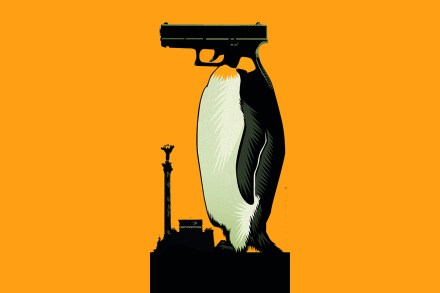
"They don’t treat people nowadays, let alone penguins.” When Americans ask what went wrong after the fall of the Berlin Wall, this wry comment on the state of Ukrainian healthcare in the 1990s isn’t a bad place to start. It’s also typical of the darkly funny Death and the Penguin, an account of a young writer in Kiev and his pet penguin, Misha, formerly of the city zoo. Did I say Kiev? Of course I meant Kyiv. It has lately become unfashionable to mention the commonalities between Ukraine and Russia, lest you give aid and succor to Vladimir Putin. But Putin’s propaganda resonates because it contains a grain of truth. Despite war and ethnic conflict, Russia and Ukraine have a great deal of shared history.

Why is Biden giving up on nuclear deterrence?

From our US edition

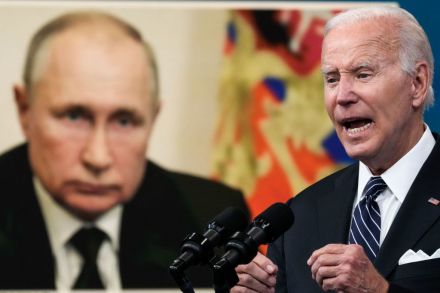
What’s more alarming than President Trump trying to frighten Kim Jong-un with “fire and fury”? President Biden trying to frighten Americans with Putin. “I don’t think there’s any such thing as the ability to easily [use] a tactical nuclear weapon and not end up with Armageddon,” the president riffed at a New York fundraiser, while fretting to supporters about his need to find that elusive off-ramp for the Russians. Biden’s loose talk about Putin’s formidability contrasted with US handwringing fits a pattern. Pervasive throughout Putin’s war has been far too much focus on what the United States should do to help Putin find these mythical off-ramps, and on how to restrain Ukraine to prevent it from getting nuked.

putin

How the Ukrainians personally humiliated Putin

From our US edition

The Russian army has been the source of an endless list of shortcomings and embarrassments over the last eight months. There are simply too many of them to count, from the failure to move through Kyiv’s suburbs in March to the sinking of the flagship Moskva in April to the loss in September of more than 3,000 square kilometers of territory in just days. But by far the most humiliating to Vladimir Putin personally was last weekend’s attack on the twelve-mile bridge that connects mainland Russia with Crimea, the peninsula Moscow annexed in 2014. That bridge, which cost more than $7 billion to build, was one of Putin’s pet projects, a visible signal to the world about Moscow’s staying power in the region.

Vladimir Putin is simply mad

From our US edition

Vladimir Putin is mad: not in the cognitive but in the emotional sense of the word. He is an odd mixture of the cold, the plotting, the calculating, and the bloodless; the emotional, the impulsive, the hotblooded, and the sentimental. He is mad, in other words, in precisely the way that Adolf Hitler was mad. And like Hitler, Putin is disconnected from the world of fact but not of logic. This is a fundamental truth about the man that I think the West had never experienced before February. His condition became apparent in the diatribe against the West that he gave on Friday, which corresponded almost exactly to Hitler’s customary rants.

nuclear tactical putin war

What Elon Musk doesn’t get about peace

The power one person can hold should never be underestimated. They can take people’s lives, as Vladimir Putin does, or save them as Elon Musk did in Ukraine. Two days after Putin’s invasion, Ukraine’s minister for digital transformation, Mykhailo Fedorov, tagged Musk on Twitter and asked him to help Kyiv with Starlink. The communication centres were one of the first targets for Russian missiles. ‘While you try to colonise Mars, Russia tries to occupy Ukraine! While your rockets successfully land from space, Russian rockets attack Ukrainian civil people!’ tweeted Fedorov. The answer was immediate. Musk tweeted: ‘Starlink service is now active in Ukraine. More terminals en route.’ It was stunning – and transformative.

Biden goes nuclear

From our US edition

At a swanky fundraiser in Manhattan, President Joe Biden alluded to the prospect of “Armageddon.” The biblical reference was not intended to woo the Christian evangelicals who form part of the base of the Republican Party, but to alert bien-pensant liberal opinion that something a trifle more threatening than global warming looms large in world politics. For the “first time since the Cuban missile crisis, we have a direct threat of the use [of a] nuclear weapon if, in fact, things continue down the path they are going," Biden said. For anyone with lingering memories of the Cold War, his remarks about the prospect that Russian president Vladimir Putin might reach for the nuclear button was bound to stir alarm coupled with — dare I say it? — a smidgen of pleasure.

Putin at 70: How The Spectator has covered his life

Vladimir Putin turns 70 today. Since he became Prime Minister of Russia in 1999, some of The Spectator's greatest contributors have asked the perennial questions: who is Putin, and what does he want? We've compiled the following pieces from our fully-digitised archive.  ‘Joking with a nine-year-old boy at a televised awards ceremony by the Russian Geographical Society, President Vladimir Putin said: ‘The Russian borders don’t end anywhere.’’ Portrait of the Week, 1 December 2016 Appointment as Prime Minister  ‘Not surprisingly, given his background, Putin has a lugubrious and somewhat sinister manner.

Will guns from Ukraine end up on the streets of Britain?

While visiting a Ukrainian militia this summer, I nearly trod on an anti-tank mine which was being used as a doorstop at the entrance to their HQ. ‘Don’t worry, it’s a broken Russian one that we found,’ said my breezy host, Eduard Leonov. ‘We’re trying to fix it so we can use it.’ Eduard’s militia isn’t exactly the SAS of Ukraine’s forces. It’s a volunteer army and he himself is a folk-singer-turned-fighter in his fifties. Eduard’s dozen-odd comrades are Dad’s Army age, yet even so they still have a formidable arsenal – everything from grenade launchers to Kalashnikovs.

How should the West respond to Putin’s threats?

Vladimir Putin clearly wants us to worry that he is crazy enough to use a tactical nuclear weapon in Ukraine. This fear was intensified this week when images surfaced that some – possibly in error – believed showed a train operated by the secretive nuclear security forces moving towards Ukraine. Despite this, many believe the likelihood of a nuclear attack remains extremely low. Yet it is a plausible enough threat for the West to be considering how it should respond if Putin were to unleash one. Russia has an estimated 1,900 non-strategic nuclear weapons (NSNWs), from artillery shells to warheads for missiles; their yields range from a mere 0.5 to 100 kilotons, more than twice the power of the bomb that devastated Nagasaki.

The trouble with Nick Robinson’s Thoughts for the Day

Thought for the Day appears every morning on BBC Radio 4. This preachy slot is hallowed by longevity, if not because of its content. But when Nick Robinson presents the accompanying Today programme, he often uses the moment after the hourly news and papers to contribute a political Thought for the Day of his own. Before he settles down to attack a government minister with his dentist’s drill, Nick likes to deliver his own wisdom about the foolishness of political leaders. ‘Making promises is easy,’ he told listeners on Tuesday. ‘Explaining how you’ll pay for them is rather harder, as the Chancellor and the Prime Minister are beginning to discover.’ What is the point of such remarks?

Portrait of the week: Tory party conference, gas supply warning and Denmark’s royals stripped of titles

Home Liz Truss, the Prime Minister, came up with a message for the Conservative party conference: ‘Whenever there is change, there is disruption… Everyone will benefit from the result.’ Her words followed a decision not to abolish, after all, the 45p rate of tax, paid by people who earn more than £150,000 a year. Backbench Conservative MPs had let it be known they would not vote for it. ‘The difference this makes really is trivial,’ said Paul Johnson, director of the Institute for Fiscal Studies thinktank. But the pound rose and the government was able to borrow a little more cheaply. Kwasi Kwarteng, the Chancellor of the Exchequer, told the conference: ‘I know the plan put forward only ten days ago has caused a little turbulence. I get it.

Why Russia could use nuclear weapons in Ukraine

From our US edition

Here is one fact about the war in Ukraine you need to understand: the longer it goes on, the more advanced Western arms will flow to Kyiv. And that could mean that Russian president Vladimir Putin will feel he has no choice but to use tactical nuclear weapons to even the odds — no matter what happens as a result. You think that sounds crazy, right? Well, let me ask you this: did you ever imagine Putin would invade Ukraine? That action alone casts doubts on how rational an actor he really is. But let's take a step back for a moment. In order to understand why Putin may very well consider using tactical nukes, let's get a sense of where he thinks he stands in this war.

sanctions putin russia davos oligarch

Europe is more bark than bite on Ukraine

From our US edition

Last Friday, President Biden signed a spending bill that will keep the government’s lights on until December 16, when lawmakers will have to cobble together a funding resolution to avert a shutdown. Tucked into that law was another tranche of security and economic assistance to Ukraine, to the tune of $12.3 billion. The signing came two days after the Defense Department announced the release of an additional $1.1 billion military package for Kyiv, which will include 18 more HIMARS systems, 150 armored vehicles, and ammunition of various calibers. The Biden administration has provided the Ukrainians with over $16 billion in security assistance since Russia’s invasion in February. Washington’s hands have been cramping up from writing so many checks.

macron europe blame

A short history of language in Ukraine

After six months of war in Ukraine, most observers agree that the roots of Russian aggression lie in the country’s deep-rooted attitudes to culture and history. In line with Russia’s nationalist traditions, Putin denies any place for a separate Ukrainian identity. The Ukrainians, in contrast, see themselves as a proud nation with their own history, culture, centuries long struggle for independence, and, of course, language. And while Ukrainian has been dismissed as a dialect of Russian in Moscow, it in fact has a long history – and is very much a language in its own right. That independence can be seen in the genesis of the word ‘Ukraine’ itself.

Will Nato accept Ukraine?

Shortly after the invasion of Ukraine, Volodymyr Zelensky made an offer to Vladimir Putin. Ukraine would drop its ambition to join Nato and would instead stay neutral, he said. It would not align with the West, in exchange for an end to hostilities. It was a sincere offer, and unpopular with Ukrainians. Yet it was significant: Putin had cited Ukraine’s Nato ambitions as the main reason for the invasion, saying it showed the West was somehow threatening Russia. But today, that offer ended and Zelensky is seeking the ‘accelerated’ Nato accession granted to Finland and Sweden this year. Will Nato accept? Jens Stoltenberg, Nato Secretary-General, dodged the question when asked today.

Why Putin might have attacked Nord Stream

From our US edition

As the world wonders what happened to the Nord Stream 1 and 2 pipelines, many suspect that Russian President Vladimir Putin is behind the sabotage. At first glance, it appears strange that Russia would damage pipelines that its own companies run. But Putin has several possible reasons for carrying out the attack. One reason could be that Gazprom (the Russian state-owned gas giant) wants to avoid paying penalties for failing to fulfill its contractual obligations. Since August 31, Russia has halted gas exports via both Nord Stream pipelines, which follows a similar move in July where the Kremlin cited erroneous maintenance issues as the cause of the short shutdown that month.

War has come home to Russia

Moscow A week of somewhat mixed messages from the Kremlin. One day Vladimir Putin opened Europe’s largest Ferris wheel and presided over citywide celebrations of Moscow’s 875th anniversary, full of calm and good cheer and mentioning the war only in passing. A few days later he appeared on national TV telling the world that he was ‘not bluffing’ about using nuclear weapons and announcing a partial mobilisation. Putin has never fought a contested election in his life, so he’s never been a great one for the common touch. But in his latest address he looked as pale and dead-eyed as Nosferatu. Russians know better than most that the more strenuously something is officially denied, the more likely it is to happen.

Life among the Russian refuseniks

Yerevan, Armenia It was getting dark outside Yerevan Airport when I arrived, but there were still a dozen flights from Russia yet to land. Groups of young men in their twenties and thirties were milling around the terminal building, stacking suitcases onto trolleys, changing money and working out what to do next. Armenia is one of the few countries they can still fly to since much of the western world closed its skies to Russian planes; it is almost alone in not requiring them to have visas. ‘I’m just here for a holiday,’ one weary traveller carrying four heavy bags insists, ‘everything is fine in Moscow.’ Others are more up front about their reasons for leaving.

Liz Truss showed up Biden at the UN

From our US edition

British prime minister Liz Truss’s speech at the United Nations this week was spot-on. It was clear, concise and left no question that the UK would do everything in its power to lead in the defense of the West and its values. President Biden’s address, by contrast, left you feeling overwhelmed and unsatisfied. That's not to say he failed to speak about Ukraine — he spent a reasonable amount of time on it — but the substance just was not there. Truss made a clear commitment to continue to “sustain or increase... military support to Ukraine, for as long as it takes,” a concrete and actionable statement. Though Biden issued a ringing condemnation of Putin’s war, he only made a vague pledge to “stand in solidarity against Russia’s aggression.