Norman Davies

Norman Davies is professor emeritus at University College London, an honorary fellow at St Antony's College, Oxford, and the author of several books on Polish and European history.

Ukraine could deliver a killer ideological blow to Putin

From our UK edition

As I write, four brigades of the Ukrainian army are advancing into the territory of the Russian Federation, and are establishing what looks like a bridgehead for further operations. They crossed the frontier from the Sumy Oblast, to the north of Kharkhiv six days ago, overpowered the Chechen frontier guards, and have been rolling to the East ever since. They occupied the town of Sudzha and are supported by air-defence, tanks, artillery, mine-clearers and heavy engineering equipment. Their activities are being called an ‘incursion’, although nothing to date suggests a short-lived raid for reconnaissance or hit-and-run purposes. By now, the Ukrainian-occupied area has passed the 1,000 km squared mark.

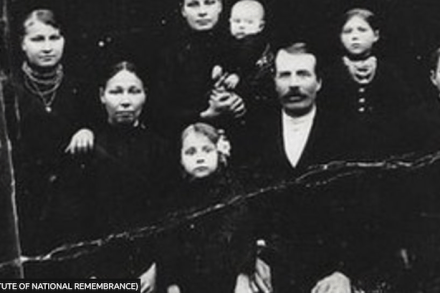
Volhynia and the forgotten massacre of the Second World War

From our UK edition

Completely innocent men, women and children have been slaughtered. 'Terrorism' hardly suffices to describe the savage rampage beyond the Gaza Wall undertaken by men from Hamas on 7 October. In the aftermath of the Second World War, when knowledge emerged of the crimes perpetrated by Nazi Germans and their collaborators, humanity vowed 'Never Again'. Yet the world has descended once more into ever lower levels of depravity. What is more, thousands of innocents are now being killed as collateral in the on-going counterattacks. The kibbutz of Kfar Aza and kibbutz Be’eri, where some of the most barbaric crimes were carried out by Hamas, joins the long list of places of infamy where scenes of murder and bloodshed have occurred. Some of these places are familiar. But many are not.

How Russia lost Kazakhstan

From our UK edition

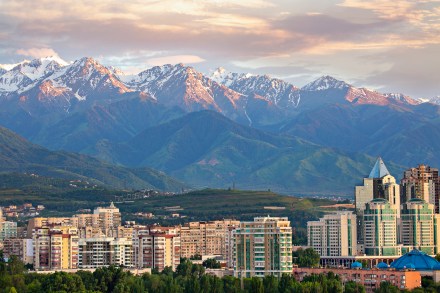
Prior to Russia’s invasion in February 2022, few westerners knew much about Ukraine, and even less about Kazakhstan. We all suffer from Moscow-centred perceptions and the bad habit of equating the Soviet Union with Russia.  But now we know that Putin is driven by spurious historical theories, in which Ukraine has no right to exist, one needs to ask how they might apply to other ex-Russian provinces. Nowhere is more affected than European Russia’s eastern neighbour, Kazakhstan, which separates Muscovy from China, in the same way that Ukraine and Belarus divide it from the EU and Nato.   Ukraine is half as big again as France or Germany. But ‘KZ’ dwarfs it. From end to end, Kazakhstan covers the same space as from Portugal to Poland.

Christmas in Ukraine and the ghosts of conflicts past

From our UK edition

In Ukrainian, the name for Christmas is Ridztvo (Різдво), meaning ‘Nativity’. The Russian equivalent, used by one in three citizens in Ukraine, is Rozhdyestvo (Рождество). It is a season for hope and rebirth. Since, in the Slavic languages, all wishes or implied wishes are followed by the genitive case, the term for ‘Happy Christmas’ in Ukrainian comes out, none-too-simply, as Shchaslivovo Ridztva   In western Ukraine – which until 1939 was part of Poland – Christmas was always celebrated twice: on 25 December by Catholics following the Gregorian calendar and on 7 January by the Orthodox and the Julian Calendar. In 2017, by agreement with the Patriarchs, the government in Kyiv officially adopted this dual custom.

What does Russia really want?

From our UK edition

The question of ‘why’ Russia invaded Ukraine has been forgotten amid war’s fog. Greed and malice partially explains it. History, geopolitics and culture reveals more. A country which has more land than anyone else on Earth is not grabbing territory for territory’s sake. Logically, Russia should be giving away land to anyone who might manage it better. But that’s not how Putin thinks. He is pursuing a dogged policy of annexations – first in Georgia, then in the Crimea, and now of four further Ukrainian districts.

War of words: a history of Ukraine’s language debate

From our UK edition

It’s not often that ex-KGB officers blame Lenin for anything. But in his speech of 21 February 2022, on the eve of his 'special military operation', Vladimir Putin rounded on the founder of Bolshevism for creating the artificial Ukrainian state.  'Modern Ukraine was entirely created by…Bolshevik, Communist Russia,' he declared; 'and…in a way that was extremely harsh on Russia…Soviet Ukraine can rightfully be called ‘Vladimir Lenin’s Ukraine’. He was its creator and architect.'  This false line of thought could equally accuse the Bolsheviks of having created the Ukrainian language. In reality, the concept of a separate Ukrainian nation and language long preceded the Bolsheviks.

A short history of language in Ukraine

From our UK edition

After six months of war in Ukraine, most observers agree that the roots of Russian aggression lie in the country’s deep-rooted attitudes to culture and history. In line with Russia’s nationalist traditions, Putin denies any place for a separate Ukrainian identity. The Ukrainians, in contrast, see themselves as a proud nation with their own history, culture, centuries long struggle for independence, and, of course, language. And while Ukrainian has been dismissed as a dialect of Russian in Moscow, it in fact has a long history – and is very much a language in its own right. That independence can be seen in the genesis of the word ‘Ukraine’ itself.

The Dnieper rapids and why Putin does not belong in Ukraine

From our UK edition

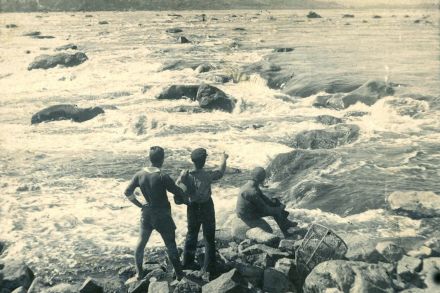
Za in Ukrainian – and other Slavic languages – means ‘Beyond’, and porohi means ‘the Rapids’; so Zaporizhia stands for ‘the place beyond the rapids’. It a nice irony that the place, whose threatened nuclear power plant has put it in the headlines, is connected to one of Europe’s most venerable historico-geographical sites. The Dnieper rapids rank with other spots, like the Bosphorus or the ‘Pillars of Hercules’ at Gibraltar, where pre-historic travellers were presented with an emotional rite of passage from one sphere of the world to another.

The forgotten history of Poland and Ukraine

From our UK edition

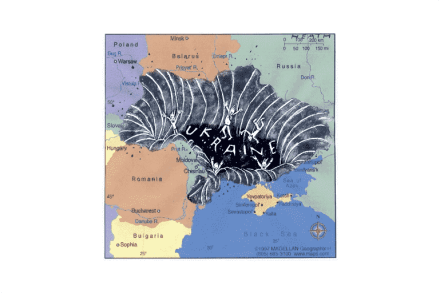
Since the outbreak of war in February there has been an overwhelming focus on the historical links between Russia and Ukraine, partly to counter Putin’s grand assertions that Kyiv belongs to Moscow. But this spotlight on Russia has meant the important history of Poland and Ukraine has been fatally overlooked. Ukraine was part of the Polish state for longer than it was inside Russia – and this is key to understanding why Ukrainians are different from Russians. In other words, it is impossible to comprehend Ukraine’s history without examining the impact of both Poland and Russia. A thousand years ago the people who now call themselves ‘Ukrainian’ had not yet adopted this term.

The rise and fall of Mariupol

From our UK edition

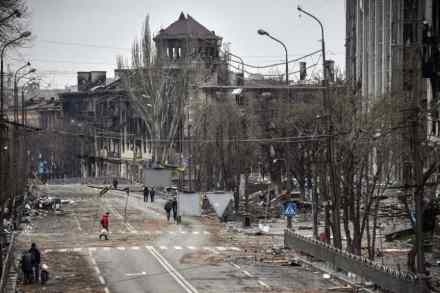
Now that the city of Mariupol on the Sea of Azov has been conquered by the Russian army, it is worth looking back at how the city was founded, conquered and destroyed. It is a history that both offers deep insight into the psyche of Russia – and also lays bare the remarkable foundations of the modern Ukrainian state. From time immemorial, nomads and migrating tribes drifted through what is now Ukraine, and the shores of the future Sea of Azov provided one of the most frequented routes. The European peninsula was populated in prehistoric times by migrant groups from Eurasia, shunting each other along like uncoupled wagons on a freight line. That lonely stretch of the Azov shore, and what would eventually become Mariupol in Ukraine, lacked permanent habitation.

God and mammon

From our UK edition

Krakow The greatest churchman of modern times is dead; and the most Catholic nation in Europe is bereft. John Paul II, ‘Papa Wojtyla’ has passed on to a better life. His faithful compatriots must fend for themselves. Men and women weep without shame. Requiem services are celebrated every hour from dawn till midnight. Congregations spill out on to the street, kneeling on the paving stones. Thousands of candles flicker in their coloured-glass holders before makeshift shrines. Radio stations play sombre symphonies or take calls from distressed listeners. The TV channels which aren’t closed down flip endlessly between ‘St Peter’s Square — Live’ and long prepared films about the late Pope’s life. The presenters wear black.