Ukraine

Kamala invades Poland

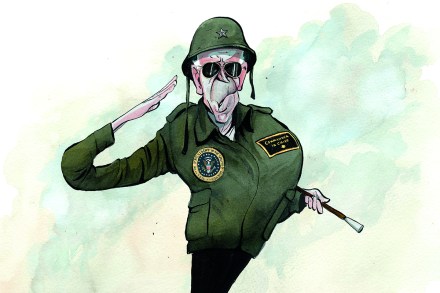
You can tell that the Biden administration is getting serious. They have unleashed their ultimate weapon, cackle diplomacy. The warhead is nicknamed Harris, and it is now in Poland cackling away, endeavouring to assemble the high-level Pierogis before Russia flattens Kiev or Putin decides to go nuclear – and by 'go nuclear', alas, I mean 'go nuclear'. Some observers say that sending Kamala Harris on this mission will give her a chance to 'burnish' her foreign policy credentials. Cynical folks – and I would include myself in that group – think it is just another emission of fog by America’s first certifiably senile administration.

Dostovesky and Putin’s useful idiots

When I was 17 I heard the name Dostovesky, and was enthralled. Just the name felt so glamorously intellectual, so deep. I began to read some of his novels, and my hunch was vindicated. A bit later I delved into his ideas, and my admiration became more nuanced. I partly admired his defiance of the rational humanist arrogance of the West, but I was also wary of his reactionary mystical nationalism, his faith in the anti-liberal Russian soul.  It seems that a lot of religiously minded intellectuals struggle to get past stage one. They are so taken with the flinty glamour of this writer that their critical faculties atrophy. They allow their aesthetic admiration to influence their religious politics.

This is what liberal war fever looks like

In a private letter written in 1918, the recently deposed German chancellor Theobald von Bethmann-Hollweg admitted that in the run-up to the Great War, 'there were special circumstances that militated in favour of war, including those in which Germany in 1870-71 entered the circle of great powers' and became 'the object of vengeful envy on the part of the other Great Powers, largely though not entirely by her own fault'. Yet Bethmann saw another crucial factor at work: that of public opinion.'How else,' he asked,'[to] explain the senseless and impassioned zeal which allowed countries like Italy, Rumania, and even America, not originally involved in the war, no rest until they too had immersed themselves in the bloodbath?

What’s behind Russia’s new Z symbol?

National symbols are usually proudly emblazoned for all to see. That’s the point of them. One, though, seems rather to have crept up on us in recent weeks, being flashed almost like a secret tattoo and then quickly covered up again. It is the letter ‘Z’ that Russians have started using to denote national solidarity and support for their country in the war in Ukraine. The Z came to international notice when a Russian gymnast, Ivan Kuliak, displayed it prominently on his strip two weeks ago while standing next to a Ukrainian competitor at a tournament in Qatar. He now faces a disciplinary inquiry as under the rules such symbols must not be worn.

Is global warming really more dangerous than Putin’s nuclear threats?

Having just dusted down my Geiger counter and argued with the family about whether or not there is room for our dog, Jessie, in the cellar fallout shelter, I thought I would check in with the Bulletin of the Atomic Scientists to see how long we’ve got before our recently acquired small paddock sprouts its first crop of Cobalt-60. The Bulletin of the Atomic Scientists was begun in 1945 by the physicists who, having devoted several years of their lives to the Manhattan Project, suddenly realised that their striving might not be, in the end, exclusively beneficial for the human race. As the most lionised of them, J. Robert Oppenheimer, put it at the time (without a great deal of cheer): ‘Now I am become death, destroyer of worlds.

What if Putin hasn’t miscalculated – but the West has?

Conventional wisdom dictates that Vladimir Putin has ‘miscalculated’ in his invasion of Ukraine. His blitzkrieg has been poorly executed. He has reinvigorated the Nato alliance and the EU and triggered heavy sanctions. And he has lost the ‘information war’ to Volodymyr Zelensky, the TV comedian turned global hero. But what if the West has ‘miscalculated’ in reading Putin’s intentions? What if the West’s sanctions, along with intensified military aid to Ukraine and a courageous local resistance, encourage Putin to double down? What if he decides to use a weapon of last resort, a nuclear, chemical or biological weapon, even at the risk of World War 3?

Border farce: Britain is failing Ukraine’s refugees

 Calais, France ‘The British government is not turning anybody around,’ Priti Patel told her French counterpart last weekend. ‘Ukrainian refugees are welcome in the UK.’ She doubled down on her claims in the House of Commons on Monday: ‘It is wrong to say that we are just turning people back; we are absolutely not.’ You don’t have to spend long in Calais to disprove the Home Secretary’s claims. As we checked into our hotel at 1.30 a.m. on Tuesday, we saw seven Ukrainian refugees resting on the couches in the lobby. There was nothing eye-catching about the group, apart from their obvious weariness and the pile of Ukrainian passports and documents on the table in front of them.

The myth that Russia and Ukraine are fighting over

It seems strange now that any of us ever imagined that Putin might not invade. He thinks of Ukraine as rightfully Russia’s, heart, mind and soul. It’s there in that essay he wrote last year: Russians and Ukrainians are ‘one people’, he said, meaning not that they’re brothers so much as that Ukrainians have no right to a separate identity. And I wonder whether, in attempting to take Kiev, he isn’t also trying to lay final claim to the founding myth that Russia and Ukraine fight over and both think of as their own. Kiev is the setting for the epic tale of Kievan Rus, the first great Slavic state founded in the 900s by enterprising Viking Swedes. Putin clearly identifies with its warlord saint, Vladimir the Great.

Why C.S. Lewis was right about war

Well, at least Covid is over. No sooner had Vladimir Putin’s tanks rolled into Ukraine than the UK’s Covid advisory group Sage disbanded. The same effect was felt in the US, where the outbreak of war in Europe led to the immediate, unlamented disappearance of Dr Anthony Fauci. After two years on primetime, suddenly the good doctor was nowhere to be seen. Covid already seems so very last season. The ‘climate emergency’ likewise seems to have drifted away. For years, whenever the world was facing no more proximate emergency, every politician from the Scottish parliament upwards insisted that we were all doomed and heading to hellfire.

The war is redefining Poland’s place in the world

The Polish government has for years been something of a pariah on the liberal international stage. Poland’s ruling Law and Justice party, which is firmly on the political right, is at odds with the EU establishment, particularly over its judicial reforms, which critics say will threaten the key democratic principle of separation of constitutional powers. The EU accuses Poland of undermining the ‘rule of law’ and the European Commission is, as a result, withholding the billions of euros that Poland is due from the Union’s coronavirus recovery fund. Russia’s invasion of Ukraine could transform all that. The war raises some almighty diplomatic, economic, security and humanitarian challenges for Poland as Ukraine’s neighbour.

Letters: Britain must offer immediate sanctuary to Ukrainians

Unintended consequences Sir: The West has got it wrong when it comes to putting a stranglehold on Vladimir Putin (‘Putin’s rage’, 5 March). Harsh economic sanctions will ultimately punish millions of ordinary Russians, many of whom are poor and probably against the invasion of Ukraine. If the products Russian workers produce do not sell then those workers become unemployed and forced into poverty. That could quickly turn more Russian citizens against the West, strengthening support for Putin rather than weakening it, thus prolonging the occupation and hostilities. So far, the West hasn’t done a great deal regarding this invasion, other than turn the wheels of Putin’s propaganda machine for him.

Portrait of the week: Zelensky channels Churchill, Russia blocks BBC and Bercow banned from parliament

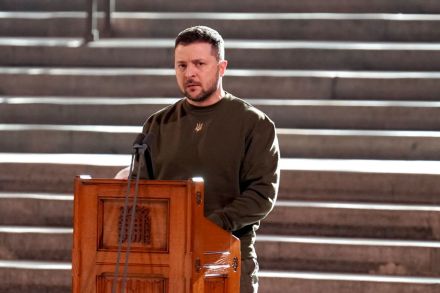
Home President Volodymyr Zelensky of Ukraine addressed a packed House of Commons by video, echoing Winston Churchill by declaring that Ukrainians would fight in the fields and in the streets. He said: ‘Please make sure that our Ukrainian skies are safe.’ Wearing a blue and yellow tie, the Speaker, clearly moved, thanked him. Earlier, Boris Johnson, the Prime Minister, announced a ban on Russian oil imports in the coming months, but no ban on gas imports. He proposed a six-point plan that included an international humanitarian coalition and maximising economic pressure on Vladimir Putin’s regime in Russia. Mr Johnson also said the government would publish a strategy for producing more energy in the UK. Petrol rose above 155p a litre.

The courage on Ukraine’s front line

Central to the question of whether or not Ukraine can survive as an independent state is that of re-supply, not just of drones and anti-tank weaponry but also of food, especially if the conflict lasts for months or even years. The vast agricultural centre of the country is not being seeded, with potentially catastrophic consequences. Nato governments are providing lethal weapons and other aid, of course, but from what I have just seen in Berehove in western Ukraine there is another very heartening sign. For there is a large underground network of private, non-governmental groups – largely based on Christian groups with long-established family connections – that is transporting huge amounts of food and other non-lethal supplies into Ukraine.

Africa’s lessons for Ukraine

Kenya During Russia’s invasion of Georgia in 2008 I got a close look at Moscow’s troops and their kit. These contractniki were a ragged bunch with rotting teeth, bad boots and homemade tattoos, using weapons and vehicles that seemed like hand-me-downs from a failed state in Africa. I had expected them to be much smarter. Recently my spooky friends told me that Putin’s military invading Ukraine was now a modernised, well-trained force. Instead it appears that Moscow’s generals have stolen the diesel, supplied the mechanised brigades with ageing knock-off Chinese tyres and sacked all the dentists.

Is Boris in denial about the looming economic crisis?

The priority for the UK and other rich democracies is to protect the people of Ukraine from the depredations of Putin's forces. A close second should be protecting the poorest people in our countries and vital public services from the cancerous impact of soaring inflation, made much worse by the West's economic warfare against Putin's Russia. The most basic costs of living are soaring. And that means a devastating recession that has already begun for all those but the richest. This blow to living standards will be the worst in living memory, more pernicious than the impact of either the banking crisis or Covid. Talking to ministers and MPs, it is clear to me that they as yet fail to appreciate the scale of the economic shock that is upon us.

The SNP won’t be happy until Boris is charged with war crimes

Blood streams through Ukraine. Tears run through parliament. At PMQs today, numerous members urged Boris to show more compassion towards Ukraine’s refugees. Poland has already taken 1.2 million. Barely a thousand have been received here, as Boris confirmed, but the number will rise sharply. Leading the pro-refugee campaign was the SNP’s Ian Blackford who seems to represent every region on earth apart from his own constituency. In a venomous speech he charged the home secretary, Priti Patel, with imposing a ‘hostile environment’ on refugees for ‘ideological’ reasons. Well, well. No one could accuse the SNP of embracing xenophobia for political gain. Blackford lambasted the government for ‘putting up barriers and bureaucracy’.

Ukrainian ambassador: my wife couldn’t get a visa

It's been a pretty dreadful few weeks for Vadym Prystaiko. Kiev's man in London has been doing his best to secure extra resources for his country's struggle against the Russian invasion, though the calls of President Zelensky for a 'no fly zone' have gone unheeded. As if he didn't have enough on his plate, Prystaiko has been summoned for a meeting of the Home Affairs Select Committee meeting, amid the ongoing crisis about visas for Ukrainian refugees. Prystaiko has become something of a familiar figure in parliament in recent days: he received a standing ovation from MPs before last week's Prime Minister's Questions and popped up again in the public gallery yesterday's before Zelensky's speech to both chambers.

In defence of mutually assured destruction

The slow return of the 1980s has reached its logical conclusion. The prospect of nuclear annihilation is haunting our nightmares once again. Vladimir Putin’s invasion of Ukraine has been marked by a willingness to engage in blatant nuclear sabre-rattling of a sort not seen since the end of the Cold War.  From his statement that anyone 'interfering from outside' would 'face consequences greater than any you have faced in history' to his placing Russia’s nuclear forces on 'a special combat duty regime', Putin’s strategy has been to threaten nuclear war to keep the West out of what he sees as his business. But these threats don't mean that Putin is about to send missiles soaring over Europe at any moment.