Uk politics

Corbyn, not Boris, was the real loser on Tuesday

The Remainers are celebrating after Tuesday night's defeat of the government and writing Boris off as a busted flush. ‘Johnson’s Brexit strategy in ruins as anti-no deal MPs inflict defeat,’ says the headline on this morning’s FT. But I’m not convinced this was such a bad night for the Prime Minister. Boris’s response to Tuesday's loss has been to table a motion calling for a general election. Corbyn’s position, as I understand it, is that he will only agree to an election after the ‘anti-no deal bill’ forcing Boris to ask for an extension of the Brexit deadline on 19 October has been approved by both Houses of Parliament. (Boris refers to it as ‘Jeremy Corbyn’s surrender bill’.

Boris tries to charm Tory MPs in Commons tearoom

The Tory rebels on tonight's motion are in the process of losing the party whip. There were many more than the whips had expected, but this may well be seen by those around Boris Johnson as being a way of getting rid of the sort of MPs who would always be a thorn in the Prime Minister's flesh. There is little point in having an election to get a majority if that majority turns out to be hollow, with a large group of backbenchers who won't actually back the government on the key issue of the day. All this might be true, but the Conservative party tonight is in a state of shock.

Government loses vote – Boris Johnson looks to early election

Boris Johnson tonight suffered his first government defeat in his first Commons vote since becoming Prime Minister. Tory rebels joined forces with opposition MPs to take control of the agenda tomorrow – the first stage of their attempt to pass a law to legislate against no deal. The Commons voted 328 to 301 – meaning the government lost by 27 votes. This was on the high end of Tory expectations. 21 Tory MPs rebelled tonight, including Ken Clarke, David Gauke, Rory Stewart and Nicholas Soames. A No. 10 spokesman confirmed that this group will now have the whip removed: 'The Chief Whip is speaking to those Tory MPs who did not vote with the government this evening. They will have the Tory whip removed.

Boris may now accept rebel motion – then call an election

I have belatedly worked out that Boris Johnson can and probably will accept the legislation delaying Brexit as the price of going to the country in a general election – because he would campaign on a manifesto of leaving the EU on 31 October. So if he wins the clear Commons majority he seeks, he could repeal that legislation in a single day before 31 October and could insist that the Lords do not block repeal (because repeal would have been in the Tory manifesto). So we are heading for a general election as a proxy for a referendum, with Tories campaigning to Brexit, deal or no deal, on 31 October. I really can’t see how Labour could refuse to sanction and fight an election on those terms. Robert Peston is ITV’s Political Editor.

Election on 14 October if government loses no-deal vote

There will be a general election on 14 October if MPs defeat the government tomorrow on no-deal Brexit legislation. Number 10 will publish a motion tomorrow which says that if MPs do take control of the Order Paper and pass legislation for an extension to the Brexit deadline, there will be a general election. Senior government sources have just briefed that they do not want an election, but that this motion will show MPs that they are voting for one if they back the legislation. The sentiments offered at this bullish briefing were much stronger than the ones given by Johnson. The official said: 'If you're an MP, you don't get to cancel Brexit in this way.' He also argued that Tory MPs who back the legislation will merely be handing control of the Brexit negotiations to Jeremy Corbyn.

Will Labour MPs really back a general election?

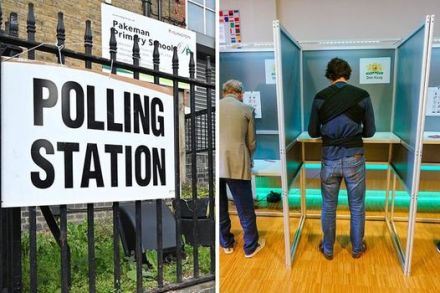
There's an assumption in Westminster that the Labour Party would have to back a snap general election if Boris Johnson called one this week. Jeremy Corbyn has said that 'an election is the democratic way forward', while his Shadow Brexit minister Jenny Chapman said Labour would vote against one that came after 31 October, adding that 'having a general election becomes one of the few ways that we are able to prevent no deal'. But that doesn't necessarily mean that Labour will provide the numbers to approve an election motion in the Commons. I have been speaking to MPs in the upper echelons of the party and on the backbenches and many of them privately say they would vote against the motion, even if whipped to do so.

Is Boris Johnson about to go for an election?

Things are moving fast in Westminster this afternoon, with speculation mounting that Boris Johnson might be about to call an election. The Cabinet is meeting this afternoon, and there will be a reception of Tory MPs in Downing Street this evening, too. Those involved are definitely discussing an early general election as one possibility. The reason this is under consideration is that Number 10 expects MPs to win their bid tomorrow to take control of the order paper, which would mean that Johnson is pitched into eight weeks of being Prime Minister but with no power. He will have lost around a dozen Tory MPs, meaning he has no majority. In these circumstances, he could argue, the only right thing to do is to ask the country what sort of parliament it wants in another general election.

The dilemma facing the anti-no deal Tory rebels

After the government confirmed James's story that any Tory MPs who rebel in a Brexit vote this week will have the whip withdrawn and be unable to stand as a Conservative at the next election, anti-no deal MPs find themselves in a dilemma. No 10’s aim is to present them with a simple choice: Johnson or Corbyn, making clear that the wrong decision will be career-ending. A number have been dissuaded from joining efforts tomorrow to legislate against no deal. Others – including David Gauke and Rory Stewart – appear to be holding firm. However, whatever happens this week with the votes, the dilemma for the anti-no deal Tories will remain much the same. The Conservative party under Johnson is set on a path that many cannot reconcile with their Brexit views.

Poles are in a quandary over Brexit

At first, Brexit was seen in Poland as a glorious but chaotic farce. As strange as it sounds, three long, grim years after the referendum, the whole thing seemed, to them, like a glorious chaotic farce. Most of them supported Poland's membership of the EU but the irreverent Nigel Farage was more relatable than a bunch of uptight bureaucrats; they could at least imagine having a beer with him. As reality sunk in, and the months ground by, these comical aspects paled. Poles are now as bored hearing about Brexit as many Brits. The national conservative Polish government has been in an interesting position when it comes to Brexit.

Boris Johnson clashes with Gaukeward squad over deselection threat

How many Tory MPs will vote against the government this week in a bid to stop a no deal Brexit? When MPs return to the House of Commons on Tuesday from the summer recess, a cross-party group of MPs – with the help of John Bercow – are expected to try to take control of the order paper and push through a bill to legislate against no deal. As James revealed at the weekend, No. 10 is planning to dissuade Tories from joining the efforts by threatening to deselect any Tory MPs who vote for such measures.

A guide to the different sorts of chaos looming over Westminster

What is going to happen next week in parliament? Most anti-no-deal rebels see it as their last opportunity to block Britain leaving the European Union without a deal, but what they haven't yet agreed on is how best to do it. There are a number of likely scenarios, some of which intertwine with one another, and to show how chaotic the next few days are likely to be, I've drawn up a flowchart of how things might pan out (you can click on the image to view a larger version of the chaos): The most likely parliamentary route is through an emergency debate under Standing Order 24, which the rebels hope they can use to seize control of the order paper. But that route alone is fraught with difficulty.

Tory MPs who vote for the extension legislation will be barred from standing for the party at the next election

Parliament returns on Tuesday and it is expected that anti no-deal MPs will – with John Bercow’s help – quickly seize control of the order paper. They will then try and rush through a bill designed to stop the UK from leaving the EU without a deal. I report in the Sun this morning that Number 10 will treat these votes as they would a confidence vote with anyone who doesn’t back the government being immediately disqualified from standing for the Tories again. They hope that this will keep some waverers in the government lobby next week. It would mean that if former Cabinet Ministers such as Philip Hammond voted for the legislation, as they intend to, they would be barred from standing for the party again; ending their time as Tory MPs.

The forgotten towns that will decide Boris Johnson’s fate

If Boris Johnson does call a snap election this year, his fortune will be decided in the same places that swung the referendum for Brexit. Britain's forgotten towns, places like my home town of Consett, perched high in the hills of north-west Durham, will determine the Prime Minister's fate. In Consett, there is little sign now that this was a place once home to one of the world’s biggest steelworks. Steel from here was used to build great structures, bridges and battleships for the whole Empire, from Blackpool Tower and bridges in far-flung places to Britain’s fleet of nuclear submarines. But Consett went from being a symbol of industrial might to an emblem of industrial decline.

Ruth Davidson’s departure doesn’t mean the end of the Union

The departure yesterday of Ruth Davidson as leader of the Scottish Conservatives has prompted much discomfort among some pro-Union commentators. There is no doubt that she was a stunningly effective campaigner but it is an exaggeration to claim that the revival in the fortunes of the Scottish Conservative and Unionist Party was solely down to her. Davidson received a substantial boost from the fact that the Scottish independence referendum in 2014 redrew the Scottish political map, creating a binary division between pro-independence and pro-union forces. In the aftermath of the vote, Davidson was by far the canniest operator, ensuring the Tories were the most staunchly pro-union party.

Boris Johnson’s Parliament shutdown isn’t unconstitutional

Has Boris Johnson done a Charles I and shut down Parliament indefinitely? The headlines this week might lead you to think so. 'Uproar as Boris Johnson shuts down parliament to protect Brexit plan', reported the FT. John Bercow called it 'a constitutional outrage'. 'It's tantamount to a coup against Parliament,' raged former attorney general Dominic Grieve. Nicola Sturgeon called it 'a dictatorship'. Yet the reality hardly lives up to the rhetoric. These are the facts: Parliament will return from summer recess on 3 September as planned. Parliament will not sit from mid-September to early October during the three-week party conference season – also as planned and as happens every year.

How Boris Johnson boxed his Brexit opponents in

As a Leave voter, it is satisfying to watch Boris's Johnson's bold Brexit plan unfold. The predictable backlash to it – what Jacob Rees-Mogg called the 'candyfloss of outrage' – is also an entertaining spectacle, with some of those most determined to stop Brexit resorting to ever lurid analogies to describe the Prime Minister. But why are the Government’s opponents now wailing so loudly? The answer is simple: because they know this week’s prorogation move has boxed them in. First, let's be clear: whatever some of Boris Johnson's supporters might say, the plan to suspend Parliament is a deliberate attempt to decrease the parliamentary time MPs have to act to pass anti no-deal legislation.

What will the Tory and Labour election campaigns look like?

We know that the Conservatives are gearing up for an election in the next few months. Their official line is that they don't want one, largely because it will appear better if they are apparently pushed into a poll, but that doesn't mean that preparations aren't well underway. One of the main benefits of proroguing parliament is that it allows the Tories to produce an election manifesto before there is an election, using the Queen's Speech. In today's Guardian, I've written about what's going to be in that manifesto/Queen's Speech: the focus will be on education and crime.

The rage against Boris

This morning, a petition demanding ‘Do not prorogue Parliament’ is doing the rounds. At the time of writing, more than 1.4 million people have signed it. Remainers are very excited. They’re holding the petition up as proof of a mass outpouring of democratic disdain for Boris Johnson’s decision to suspend Parliament for a few more days than is normal. It is no such thing. It looks more like yet another middle-class hissy fit against Brexit and the people who voted for it.  As the petition map demonstrates, the signatories are strikingly concentrated in certain parts of the country, especially the leafy, super-middle-class bits of southern England.

It’s time for Boris Johnson’s opponents to decide what they want

Boris Johnson sees method in and admires some of Trump's apparent madness: not the 'send them home' abusive chants about ethnic minority Democrat critics, but the refusal to play by the normal rules of politics or international relations (threatening to nuke North Korea before talking with its despot; imposing new tariffs on China while claiming to want a trade deal; ripping up the international entente with Iran prior to saying just days ago he could be the first US president since the toppling of the Shah to meet an Iranian leader). In case Johnson hasn't noticed, Trump hasn't enjoyed any conspicuous success with what can perhaps best be described as governing through organised chaos – though equally the world hasn't ended. Or at least not yet.