Andrew Willshire

Andrew Willshire is founder of the strategic analytics consultancy Diametrical Ltd

The Scottish independence lie

From our UK edition

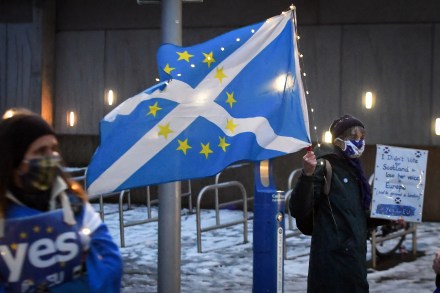
For the last 20 years, Scotland has been labouring under a lie. A lie that is so offensive that seemingly no-one dare mention it. A lie that has condemned it to perpetual one-party rule, even while that one party is bereft of either ambition or basic competence. For years, I have waited in vain for any Scottish politician to speak the truth to their compatriots, yet none ever do. The lie is too big, the offence is too great. This is the lie: “Scottish independence is possible.” In an economy like Scotland’s, cutting itself off from the financial lifeline of the Union would set off a chain reaction Many will scoff at this, arguing that it is plainly possible, that any country can be independent.
What James Cleverly gets wrong about net zero

From our UK edition

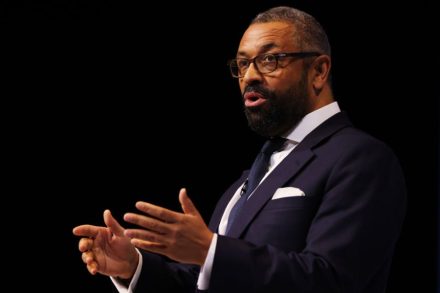
The Conservatives were nearly wiped out at last July’s general election, and the party is currently trailing Nigel Farage’s Reform in the polls. You might think then that the handful of remaining ‘big beasts’ on the Tory benches would decide to try and work together. Instead, a split appears to be emerging in the party over net zero. James Cleverly took a thinly-veiled swipe at Kemi Badenoch’s green policy in a speech to the Conservative Environment Network (CEN) last night. In one of her first major policy interventions as leader, Badenoch abandoned the Conservatives’ support for the country reaching net zero emissions by 2050. But Cleverly has now argued that the party should not give up on the climate agenda.

How the Tories can avoid a leadership election stitch-up

From our UK edition

Boris Johnson’s resignation has fired the starting gun on yet another Conservative leadership election. The race to succeed Boris is the fifth to have been fought under the rules introduced by William Hague in 1998. But there’s a problem with the way the contest is run: it forces MPs to second-guess the Tory membership – who ultimately pick the winner – rather than simply back the best candidate. Should he stand, Jeremy Hunt is quite likely to make the final cut again this year. Why? Because Hunt would lose to every other major contender among the 200,000 or so strong membership, according to the latest polling.

The question Boris’s Rwanda plan critics must answer

From our UK edition

There are many reasons to oppose Boris Johnson's government’s policy of removing migrants to Rwanda. There’s certainly a moral case against this asylum policy, one which the Church of England’s bishops have presented with some force; and there could be a legal case which the Supreme Court will consider in July. But given the lack of achievements of Boris's government, we should be grateful, at least, that this is a policy that attempts to actually achieve something. For one thing, the Rwanda plan has a definite purpose: to stop the flow of migrants using small boats, often dangerously unseaworthy ones, to cross the English Channel.

Partygate isn’t a constitutional crisis

From our UK edition

As you may have gathered despite the understated media coverage, Boris Johnson became the first serving Prime Minister to be found to have broken the law when he was issued a fixed penalty notice (FPN) by the Metropolitan Police for breaching Covid-related laws on gathering for non-work purposes. There has been much written about this in the press, with distinguished commentators and historians declaring variously that it is a ‘constitutional crisis’, that ‘a law-breaker cannot be a law-maker’ and all shades of outrage between. They may well be right that Boris Johnson’s position is untenable, politically speaking. But they are wrong to say this is a legal or constitutional crisis.

Greta Thunberg doesn’t like you

From our UK edition

Dorian Lynskey recently wrote a piece celebrating Bob Dylan’s 80th birthday entitled 'Bob Dylan doesn’t like you'. The article highlighted the disdain Dylan has for fans, critics, journalists, and even the Nobel Prize Committee. Feted as the voice of a generation, and often acting like it, he still has nothing but scorn for those who acclaim him as such. Another 'voice of a generation', some three generations removed, Greta Thunberg has been acclaimed by many politicians for her climate activism. But there is little sign that Thunberg has anything but scorn for them in return. It would be fair to say to most world leaders 'Greta Thunberg doesn’t like you'.

The tragedy of Dominic Cummings

From our UK edition

Dominic Cummings's main concern as he appears in front of MPs is to identify the failures of government and ensure everyone knows they weren't his failures, but those of the fools who refused to listen to him. It's rather a tragic final act, for the truth is that Cummings did fail (and, to be fair, he has admitted some of his failings in front of the committee). Not so much as regards the pandemic (although given his influence, it is hard not to assign some culpability to him) but in his stated desire to improve the overall performance of government. For those of us who admired his intellect, his drive and his ambition to use data and technology to improve the decision-making that affects millions of people, it is a crushing disappointment.

Why are the Greens so opposed to the hydrogen economy?

From our UK edition

As the COP26 Climate Summit in Glasgow approaches, it is only to be expected that charities, lobbyists, special interest groups and an alphabet soup of international bodies will attempt to steer the conversation in their direction. The IEA (International Energy Agency, not to be confused with the Institute for Economic Affairs think tank) has published its contribution this week, ‘Net Zero by 2050’, which contains more than 400 milestones that have to be met if net zero carbon emissions is to be achieved by 2050. Many of the policy suggestions are sensible, and many are inevitable, e.g. economies of scale and advances in technology will mean that wind and solar electricity generation will naturally make up a larger proportion of the generation mix.

How Boris can beat the SNP at their own game

From our UK edition

The re-election of a pro-independence majority to the Scottish Parliament shows that the next five years will be dominated by the quest for a second independence referendum. Conventional wisdom is that the Scottish Parliament will pass a Bill legislating for that referendum, daring Westminster to strike it down, making the separatist position more powerful, like a constitutional Obi-Wan Kenobi. This may be how things play out. Another option, of course, is that any interested party could refer the legislation to the courts as being ultra vires. However, it would still present a risk that permission to hold such a referendum would be given, putting Westminster on the back foot once again. But there is a third way: start the independence negotiations.

Scottish independence isn’t like Brexit. It would be a real disaster

From our UK edition

A sure sign of paying too much attention to politics is when the arguments of your own side begin to grate as much as those of the opposition. Currently number one in my personal sources of ennui is the frequent damning of the SNP by comparing them to Brexiteers, with their claims of self-determination, demonisation of the ‘other place’ (Westminster/Brussels, delete as appropriate), a certain unwillingness to face hard facts, and a tendency to be slightly economical with the actualité. And, of course, there is more than a grain of truth to the accusation. Understandably, the SNP would reject the suggestion. After all, it is only the rank injustice of Brexit which has converted Nicola Sturgeon, a member of the SNP for 35 years, to the cause of Scottish independence.

Independence would spark a citizenship crisis in Scotland — and the UK

From our UK edition

In the great debate around Scottish independence, one word is never far away: identity. ‘Who am I?’ is elevated from mere navel-gazing to expressive political allegiance. On one side are those who feel that one can be both Scottish and British without fear of contradiction, while on the other are those who feel that one crushes the other. By casting off Britishness, one’s Scottishness could flower more fully, or so it is supposed. Even so, it is something that, even in these times of performative politics, could remain between you, your God and your woad supplier. It certainly isn’t something to which an agency of the state would take much interest.

Joe Biden’s skewed climate change priorities

From our UK edition

It's not hard to see why politicians like Joe Biden and Boris Johnson want to talk about climate change.  First of all, it looks good to the electorate. Caring about the planet (or at least being seen to care about the planet) is one of the things that marks you out as 'a good person'. It also allows leaders to compare themselves to other leaders and take pride in being more hardline than others. It tends to result in massive government-sponsored infrastructure programmes, requiring the Prime Minister and various cabinet ministers to keep their hi-vis jackets and hard hats within easy reach. Most importantly of all, the results won’t be seen until well after their term of office has finished.

Starmer’s Labour fails the ‘broad church’ test

From our UK edition

Political parties like to think of themselves as being a 'broad church' when tackled about conflicting views among members. It makes it all the more ironic then that it was a visit to a church which exposed a challenging split in the Labour party. Keir Starmer’s trip to Jesus House last week resulted in him apologising for associating with people who believe homosexuality to be a sin. The Labour party can ill-afford to keep excluding groups of voters. The difficulty for Starmer (and for many who wish there to be a viable alternative government) is that left-wing politics is increasingly an 'AND' movement. This means that to be welcome on the left you must adhere to every item on an ever-lengthening slate of 'correct' beliefs.

Brexit could help Boris’s green revolution come to life

From our UK edition

Boris Johnson announced his new ten-point plan for Britain’s transition to a net-zero carbon emissions economy this week. It is expected that other countries will follow. The EU has a stated aim of achieving a net-zero economy by 2050, with a 60 per cent reduction in emissions from 1990 levels by 2030. This presents an opportunity to develop British industry to a position where it can capitalise on the opportunities presented. The word 'develop' is doing a lot of work in that sentence, of course. What might it involve? There is certainly an emphasis in the plans announced on more R&D, including innovations around hydrogen and nuclear power, low emission shipping and aviation, and carbon-capture and storage (CCS).

Could the Japan trade deal offer a shortcut to a UK-US agreement?

From our UK edition

The news over the last few days has been a tale of three trade negotiations. First came the threatened collapse of the trade talks with the EU over plans to override the Withdrawal Agreement. This was followed by a statement from Nancy Pelosi (the Speaker of the House of Representatives) that there could be no UK-USA trade deal unless the Irish question was sorted. And finally, the successful conclusion of the UK-Japan trade negotiations. Although relatively small in comparison to existing trade with the EU, this negotiation at least gives some direction to how the UK’s trade position might evolve.

The EU’s bizarre new climate change targets

From our UK edition

In recent years, governments have increasingly opted to legislate to ensure they do the things they say they are going to do. In the UK, for example, the commitment to allocate 0.7 per cent of GDP to the international aid budget is legally binding, and in 2019 the UK became the first major economy to pass laws to achieve net zero carbon emissions by 2050. The peculiar aspect of these laws is that Parliament is still supreme, and so a future government can repeal any laws it finds inconvenient. In reality, these legal targets have two effects. First, they help governments resist pressure from their backbenchers, for example when it comes to slashing international aid.

Why has Hope not Hate shifted its focus to climate change?

From our UK edition

Hope Not Hate is an organisation with a fine campaigning record which has done a lot of good in tackling extremism. But this week, they tweeted that 'the far-right and the climate crisis are linked. They spread disinformation, fear-monger about climate-driven immigration and engage in denialism to spark culture wars.' https://twitter.com/hopenothate/status/1275725024758988804?ref_src=twsrc%5Etfw I'm not entirely convinced by the assertion. For one thing, it seems unlikely that the primary reason for someone joining the English Defence League would be their stance on climate change, nor would I expect the BNP to focus on climate denialism in its manifesto. Yet in shifting its attention to a cause which seems to be outside of its remit, Hope Not Hate is far from alone.

How Number 10 should illustrate its Covid alert formula

From our UK edition

Following the Prime Minister’s address last night, Twitter was ablaze with mockery of the equation the government will use to determine our route out of lockdown. https://twitter.com/BorisJohnson/status/1259572964447653892?ref_src=twsrc%5Etfw In particular, people were keen to show their mastery of primary school-level maths, by observing that ‘if the number of infections is 183,000 and R is 0.7, our threat level is 183,000.7 – how does changing R change the threat level?’ Others were quick to point out that: ‘R is a ratio and the number of infections is an integer so it’s meaningless to add them.

How the west can really help tackle the ‘climate crisis’

From our UK edition

Researchers at the university of Leeds have published a study claiming that rich people use more energy than poor people; or as the BBC have it, “Climate change: The rich are to blame”. That article contains the rather obvious point that: 'The researchers found that the richer people became, the more energy they typically use. And it was replicated across all countries.' The inevitable consequence of having money is that you spend it. And it’s hard to think of anything that you can spend money on that doesn’t involve energy. Any sort of travel, obviously, whether that’s taking a private jet to Cannes, a Ryanair flight to Prague or just driving to the coast. Any goods that you purchase required energy to make and may well require energy to run.

Brexit won’t stop a coronavirus vaccine reaching the UK

From our UK edition

The Brexit culture wars are back. On Saturday, the Guardian published an article entitled: 'Brexit means coronavirus vaccine will be slower to reach the UK.' As usual with such pieces, the words 'if' and 'could' do more heavy lifting than Atlas. The gist of the article's argument is that leaving the European Medicines Agency (EMA) means the UK will no longer be able to benefit from processes that expedite the authorisation of pharmaceuticals for use. This is because manufacturers may decide to meet the approval process for the much larger EU market first before applying to the UK regulator for approval here. That might be true, but only if the UK sets its own regulations in this way.